The strategic placement of your Google Ads Display campaigns deserves just as much attention as crafting compelling ad creatives. Consider this scenario: It’s a rainy Tuesday, and you’re feeling confident about the leads your new display ads are generating. Suddenly, the phone rings, and you eagerly anticipate a promising prospect. However, it’s not a lead; it’s your mother. She’s calling to inquire about your new ad, which she encountered unexpectedly while researching Anatidaephobia - the fear of being watched by ducks.

This situation begs the questions: How did this happen? What measures can we take to rectify it? How can we prevent others from seeing it? And why was your mother researching Anatidaephobia? While we may not have the answer to every question, let’s delve into the crucial aspect of Google Ad Display placements.
Understanding Google Ad Display Placements
Placements refer to the specific websites where your Google display ads appear. While they can help avoid displaying your ad on irrelevant sites, their significance extends far beyond preventing your mother’s hypothetical distress. The display network offers two types of placements:
Automatic Placements
Google’s algorithm determines placements based on websites deemed relevant to your business.
Managed Placements
You retain control by selecting placements based on prospect behavior and relevance to your business. These are available for “Display Network Only,” “Search Network with Display Select,” and “Video” campaigns.
Fundamentals of Google Ad Display Placements
With a vast network encompassing over two million websites and reaching 90% of the web, Google’s display network presents both opportunities and challenges. Similar to keyword optimization for search campaigns, optimizing placements can enhance conversion rates and reduce cost per lead. However, placements should complement, not solely define, your display campaign targeting strategy. For instance, consider both the placements and the keyword-level targeting in conjunction.
The image below exemplifies a common pitfall:

This company’s ad appeared on a news site alongside an article about the downsides of coffee consumption, likely due to targeting the keyword “coffee” and the news site as a placement.
When fine-tuning your Google Ad Display placements, consider these additional layers:
Display Keywords
These contextually relevant terms, akin to search keywords, connect your ads with relevant content.
Topics
Targeting specific topics ensures your ads appear on websites aligned with those subjects. For example, selecting “Home and Garden” as a topic would display your ads on relevant home and garden websites.
Audiences
Target specific user segments, such as remarketing lists, in-market audiences, or affinity audiences.
Demographics
Factor in age and gender demographics. For instance, consider whether 18-year-olds are more likely to frequent news sites or blogs, or if a particular page on your site attracts a specific gender.
Device
Analyze whether your target audience primarily uses mobile or desktop devices, the mobile optimization of the target website, and the conversion rates across different devices.
Utilizing Managed Placements Effectively
While Google excels at content placement, no one understands your clients better than you do. Relying solely on automatic placements could lead to inefficient spending if Google targets low-converting websites. Unfortunately, the new Google Ads UI, with its shift away from the display planner, makes manually identifying suitable placements more challenging.
Follow these strategies:
Analyze Existing Placements (If Applicable)
Identify top-performing placements and consider your target audience’s online behavior patterns.
Research Website Conversion Rates
Investigate industry benchmarks and studies to gauge the overall conversion performance of different websites.
Review Placement Content
Before adding a placement, search for your top-performing keywords on the target website to assess the relevance of the content.
Evaluate Website Traffic
Consider the volume of traffic a website receives, as niche sites will generate fewer impressions compared to high-traffic websites.
App Advertising Considerations
While apps offer potential advertising avenues, data suggests that nearly half of in-app clicks are accidental, often due to smaller screen sizes or unintentional interactions.
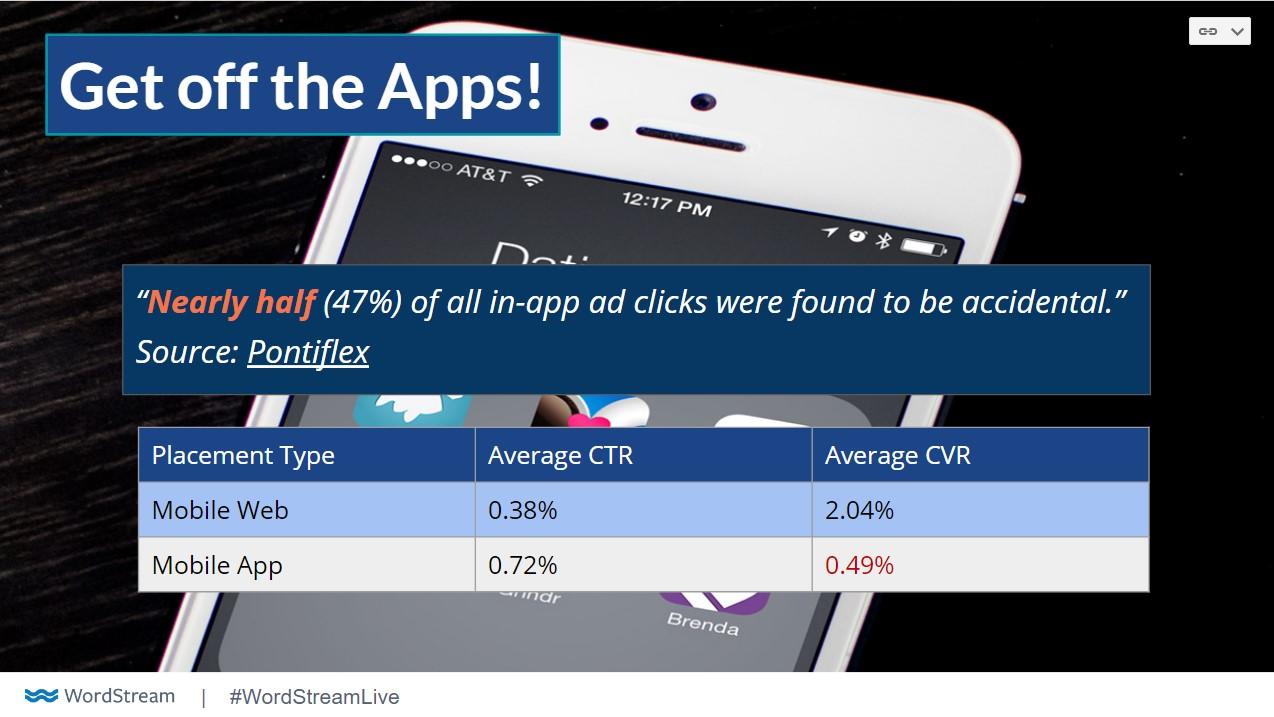
Stay informed about Google’s mobile app exclusion policies, particularly recent updates.
Optimizing Your Managed Placements
Regularly optimize your managed placements to adapt to market dynamics and maintain campaign effectiveness.
High-Performing Sites
For sites delivering exceptional results, consider increasing bids and exploring similar websites for additional targeting.
Low-Performing Sites
Investigate underperforming sites by searching for your brand or service on the site. If negative content is present, consider excluding the specific page. Evaluate the traffic volume, potentially decrease bids, or exclude the placement entirely and reallocate the budget.
By diligently managing and optimizing your Google Ad Display placements, you can ensure your ads reach the right audience while minimizing the risk of unexpected calls from concerned relatives. Now, go enjoy a well-deserved cup of coffee and maybe give your mother a call to reassure her about your strategic advertising choices.