When you take a quick look, the hosting industry might not seem very interesting. However, it’s the hard work happening in data centers around the world that keeps our digital world running. These data centers are essentially the foundation of the internet, and because of them, we can do so many things online, from shopping on e-commerce websites to using sophisticated mobile apps on our latest gadgets. All the difficult work happens in these data centers, not on our sleek smartphones or thin laptops.
Think about it: whether you’re building an online store, launching an app, or even just testing and developing software for someone else, you’re going to need powerful servers. Luckily, there are tons of options available. The hosting industry may not be flashy, but it’s constantly evolving. It’s a competitive landscape with aggressive pricing, lots of behind-the-scenes innovation, and regular hardware upgrades. The emergence of cloud computing, IaaS, and PaaS, all relatively recent advancements, has transformed how many developers and businesses function.
This article examines some fundamental hosting concepts from the perspective of a freelance developer, exploring what options are worthwhile and which ones to steer clear of. Why the emphasis on freelance software engineers? Because they often require their own development environment while simultaneously working with various clients. Unfortunately, this often means having limited control over deployment decisions. For instance, the client usually decides how and where a web application will be hosted, and a freelancer on a short-term contract usually has little input. While this is a management concern that won’t be fully addressed in this article, it’s crucial for freelancers to be aware of the available options. They might have limited influence, but in certain situations, clients might seek their input, and software engineers should be prepared to assist them in making well-informed decisions. Earlier this week, we explored one approach to bridging the gap between development and operations: DevOps. In case you missed it, I encourage you to read that article to see how DevOps integration can also affect hosting decisions.
Fortunately, the hosting industry recognizes the demands of developers, and many hosting providers offer plans specifically designed for them. But are these “developer” plans really that different from regular web hosting plans? Is it all just clever marketing and a way to game search engine results?
Cutting Through the Hype
So, how do you find the right hosting plan? A Google search seems like an obvious starting point, so I tried searching for “hosting for developers.” You can probably guess what happened next. That search resulted in 85 million results and enough ads to make Google’s investors celebrate.

There’s a good explanation for this, and I contacted several hosting professionals to get a clearer understanding of what’s happening behind the scenes.
Adam Wood, Web Hosting Expert and Author of Ultimate Guide to Web Hosting, advised:
Avoid searching for ‘hosting for developers’ on Google. This search primarily shows hosts that have invested heavily in SEO rather than focusing on building a truly excellent platform.
Wood confirmed what many of us already suspected: numerous “hosting for developers” plans are primarily marketing tactics. However, he stressed that these plans often still provide perfectly adequate hosting services.
“The ‘hosting’ is real, the ‘for developers’ part is just marketing,” he clarified.
Despite working for a hosting review website, WhoIsHostingThis, Wood believes that developers looking for a new hosting provider should rely on more than just online searches.
Rather than turning to Google, the best approach to finding a hosting plan that meets your development requirements is through word-of-mouth and traditional research:
- Explore major tech blogs written by developers who use the same technology stack as you.
- Reach out to your professional network and ask for recommendations.
- Examine the hosting plans offered by your current provider. Pay attention to features like rapid deployment tools, integration with other developer tools, and testing support.
- Clearly define your needs and priorities, leaving no room for ambiguity.
- Make your decision based on the most current information available.
Small Hosting Providers May Struggle to Keep Up
But what about the countless hosting plans specifically advertised as being for developers? In reality, they aren’t particularly special. In most cases, you can find comparable service and support with a standard hosting plan.
So, is there even a need for these small, budget-friendly plans? Yes, there is. While experienced developers might not use them, they serve an important purpose. They allow aspiring developers, hobbyists, and students to refine their skills without breaking the bank, utilizing shared hosting plans that are more affordable than a gym membership. No one is going to host a handful of personal websites on a platform like AWS, and beginners creating their first WordPress sites aren’t likely to opt for a VPS. In most cases, they’ll choose the most affordable option.
Many hosting companies rely heavily on these basic, shared hosting plans. You can get one from an industry giant or a small, local provider. The issue with smaller hosts is that many of them depend on traditional reseller hosting or repackage cloud hosting services from companies like AWS and other major cloud providers. They then market these plans as shared hosting, VPS, or reseller plans.
The key takeaway is this: If you encounter problems with your reseller plan from a small provider, who are you going to contact for help in the middle of the night?
Smaller hosting providers are gradually disappearing, and this trend is unlikely to reverse. Data centers are incredibly expensive to operate. They are to the internet what power plants are to electricity – they are becoming larger, more efficient, and are constantly competing to offer the lowest prices and the best service. This requires substantial investment, from massive facilities with top-notch security and on-site support to sophisticated cooling systems, redundant power supplies, and incredibly expensive internet infrastructure. Additionally, hosting providers need to stay current with the latest hardware, and top-of-the-line Xeon processors and SAS SSDs come at a premium.
In essence, there is little room for small players in the data center arena.
Small resellers still have a role to play, often by focusing on specialized services or localization, such as offering local support in languages not supported by the larger providers. However, for the average developer, these niches and potential benefits don’t hold much significance.
The Rise of PaaS
Less than ten years ago, the hosting landscape primarily consisted of dedicated and shared hosting. I won’t delve into explaining what they are and how they work, as these concepts are likely familiar.
Cloud services entered the scene a few years ago, introducing unparalleled reliability and scalability. Current industry advancements present developers with several intriguing options in the form of developer-centric Platform-as-a-Service (PaaS) offerings.
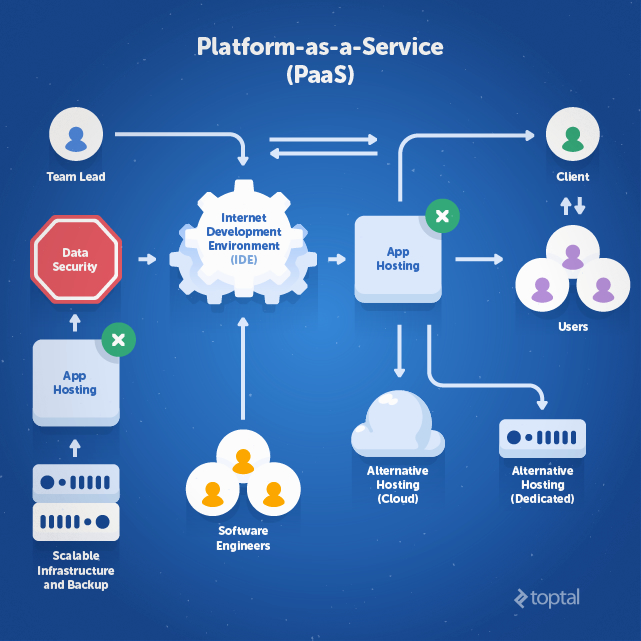
Most developers are already acquainted with prominent PaaS platforms such as Heroku, Pantheon, and OpenShift. Many of these providers began as platforms catering to a specific framework or application. For instance, Heroku initially focused on Ruby on Rails hosting, while Pantheon specialized in managed hosting for Drupal and later expanded to WordPress.
PaaS can be seen as the natural progression of managed hosting. However, unlike managed hosting, PaaS is almost exclusively tailored for developers. This implies that PaaS services are designed to fulfill the specific requirements of individual developers and development teams. It’s not merely about hosting; PaaS is about integrating seamlessly into a team’s preferred workflow by incorporating a range of features aimed at enhancing productivity. Typically, PaaS providers offer an array of valuable features:
- Integration with other developer tools such as GitHub.
- Support for Continuous Integration (CI) tools like Drone.io, Jenkins, and Travis CI.
- The ability to create multiple, easily cloned environments for development, testing, beta releases, and production.
- Compatibility with various automated testing frameworks.
One of the most appealing aspects is that many PaaS providers offer free developer accounts. Platforms like Heroku and Pantheon allow developers to experiment with their services, encouraging them to adopt them for future projects. Moreover, if one of these experimental projects gains traction, developers are more likely to continue using the platform.
It’s a smart marketing strategy and an offer many developers find hard to refuse. PaaS is here to stay, and if you haven’t explored it yet, it might be worthwhile to do some research and see what it offers.
Traditional Hosting and Cloud Options
Dedicated and shared hosting aren’t going away anytime soon. They have been the cornerstones of web hosting for two decades and remain relevant today. Many businesses rely on dedicated or VPS servers for their daily operations. Some opt to use cloud or PaaS for specific tasks alongside their existing server infrastructure.
In certain situations, PaaS can be prohibitively expensive. However, powerful dedicated servers also come with a hefty price tag. The positive side is that PaaS can help you estimate the resources you’ll need before committing to a dedicated server. Moreover, PaaS generally provides superior support compared to managed VPS or dedicated servers.
Of course, all of this is subjective and depends on your specific requirements and budget constraints.
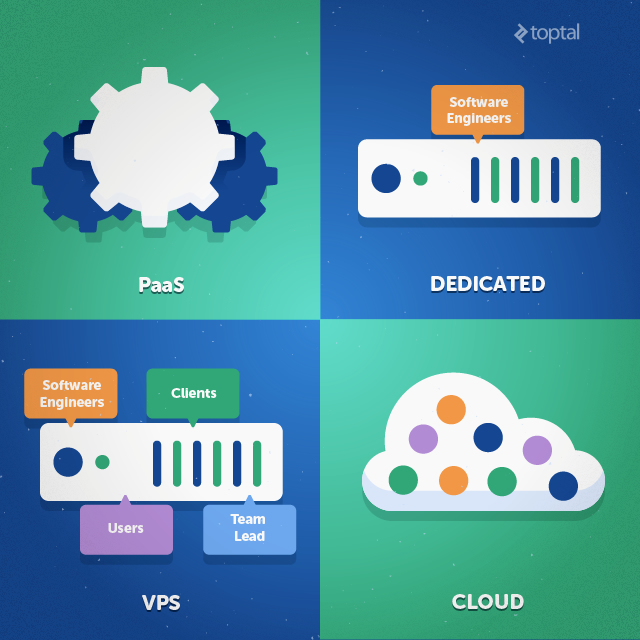
I may be a bit old-school, but I still believe dedicated servers are the optimal choice for hosting most things. However, this mainly applies to well-established projects. Development is a different story altogether. Managed dedicated servers offer exceptional reliability, strong support, and good value for the cost.
When used effectively, dedicated servers and PaaS can expedite deployment, as Adam Wood points out:
I can set up a new Ruby on Rails application on Heroku in a matter of minutes. Accomplishing the same task on AWS takes me half a day, and I constantly feel like I’m on the verge of breaking something.
Cloud services are inherently more efficient than dedicated hardware because you only utilize the resources you need at any given time. For instance, if you operate a service primarily used during business hours in the Americas, your dedicated server will be underutilized for 12 to 16 hours each day. Despite this clear efficiency advantage, dedicated servers can still be a more cost-effective option compared to cloud solutions. Moreover, they offer customers the flexibility to customize and upgrade them as needed.
Cloud computing is catching up, but dedicated servers are not going anywhere anytime soon. While they may not be a practical solution for individual developers, they remain relevant for many businesses. VPS plans are significantly more affordable than dedicated servers and are well within the budget of individual developers, even though they don’t offer the same level of control as dedicated servers.
Implications for Freelancers
The good news is that most freelance software engineers don’t have to obsess over every hosting option available. While different clients might have varying approaches, in most cases, it’s the client’s responsibility rather than yours.
This doesn’t mean that hosting choices have zero impact on freelancers. There are implications, but they are limited. It’s always wise to familiarize yourself with the infrastructure before joining a project, but there’s usually no need to be overly concerned. Most modern hosting services are designed to simplify developers’ lives and allow them to focus on their areas of expertise. One positive side effect of the adoption of PaaS and cloud services is increased standardization. Most technology stacks are mature and widely used, minimizing the risk of encountering major problems.
Moreover, you have limited influence over the client’s infrastructure choices, whether they’re favorable or not. But what about your own server environment?
There’s no single solution that fits everyone. The best choice depends on your specific needs, your preferred technology stack, and your budget. PaaS is gaining popularity, but it might not be ideal for developers on a tight budget or those who don’t need a hosting environment constantly. For many freelancers and small independent developers, VPS remains a practical option. Depending on your work, an entry-level managed dedicated server could be a possibility, and if you specialize in small, turnkey web projects, even some reseller packages might be worth considering.
The fact that major hosting companies actively compete for the business of developers is ultimately a positive development. It compels them to release timely updates and offer improved support across all their hosting plans to stay competitive. They may not be directly competing with PaaS and cloud services, but they still aim to secure a share of the market.
Recall how PaaS providers offer developers incentives to join their platforms, hoping to secure their business in the long term? One could argue that traditional hosting companies employ a similar strategy by attracting novice developers to their platforms, hoping to foster loyalty and that these developers will host numerous projects on their servers in the future.
The Future of Hosting
While the hosting industry may not seem as dynamic and innovative as other tech sectors, this perception isn’t entirely accurate. Naturally, it will always appear somewhat dull compared to fast-paced industries, but we’re discussing infrastructure here, not a get-rich-quick scheme.
The hosting industry is evolving and innovating. It simply takes a bit longer to implement new technology. Think of it this way: a logistics company might replace its employees’ smartphones every year or two, but its delivery trucks are updated far less frequently, even though they are essential to the business.
Let’s briefly examine some noteworthy trends in the hosting industry from a software development standpoint:
- The ongoing development and expansion of Cloud and PaaS services.
- The evolution of managed hosting to incorporate features resembling PaaS.
- Increasing integration with widely used industry tools.
- The potential for new hardware to make dedicated servers more affordable.
Cloud and PaaS will continue to mature and expand. More importantly, as competition intensifies, we can expect prices to decrease. The prospect of integrating various development tools and features into affordable hosting plans will further enhance their appeal from a financial standpoint. Moving up the price ladder, managed hosting might evolve to include some of the features and services offered by PaaS. If you’re interested in keeping up with trends in the hosting industry, I recommend checking out this Forbes compilation of cloud market forecasts for 2015 and beyond.
Dedicated servers will never be truly cheap, at least not compared to shared and VPS plans. However, their prices are decreasing, and this trend could be further fueled by the emergence of energy-efficient and cost-effective ARM-based hardware. ARM processors tend to be more power-efficient than x86 processors, and they are relatively inexpensive to develop and deploy. Some flagship smartphones are now equipped with quad-core processors based on 64-bit Cortex-A57 CPU cores, and these same cores are making their way into ARM-based server processors.
As someone passionate about processors, I could elaborate further. However, we plan to dedicate an upcoming blog post to exploring the emerging field of ARM servers, so stay tuned if you’re interested.