As the marketing director for Rentping Media, an apartment marketing agency, I’ve spent the last few years perfecting our Google Ads approach for hundreds of communities across the US. We’ve developed a highly effective strategy through trial and, let’s be honest, a fair bit of error, recognizing the specific hurdles apartment marketing presents.

This article will delve into why Google Ads for apartments has its own unique quirks and reveal the top five optimizations to supercharge your apartment campaigns.
Why Apartment Marketing on Google Ads is Different
Selling an apartment isn’t like selling a TV. You’re not targeting a massive audience. Success lies in pinpointing those few individuals actively seeking an apartment like yours, in your city, right this moment. And that’s a tough nut to crack.
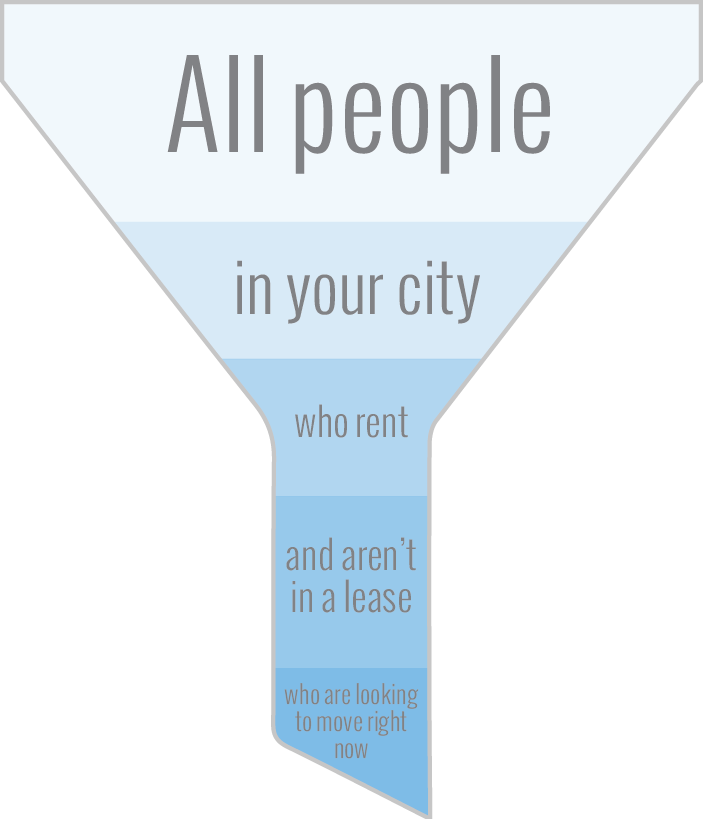
Firstly, apartments are location-dependent. You can’t ship an apartment to another city, so your Google Ads must laser-focus on people looking to live in your specific locale (even if they’re not there yet). Secondly, homeowners are off-limits. They’ll never be your customers, so exclude them from your targeting. Even among renters, only a tiny fraction are potential customers at any given time due to lease lengths. Advertising to someone who just signed a year-long lease is pointless. These factors make Google Ads invaluable for apartment marketing. No other medium, not TV, radio, or print, can match its ability to pinpoint qualified apartment hunters – if you set up your campaigns right. So, let’s dive into those performance-boosting tweaks!
Don’t Underestimate Branded Keywords
Bidding on branded keywords (e.g., “Community Name in City, State”) is crucial for apartment marketing. While always recommended, it’s particularly vital in the apartment industry due to the unique sales cycle. Prospective renters often discover your community through various channels – online listings, signs, referrals – and then head to Google to search for you directly. These are your warmest leads, and you need to capture them. Fail to bid on your branded terms, and a competitor’s ad or an online listing platform might snatch them. Even if a lead clicks the listing platform, they’re just one click away from comparing you to your rivals. This is especially critical on mobile, where click-to-call buttons make lead poaching easy, and large ads can push your community below the fold.
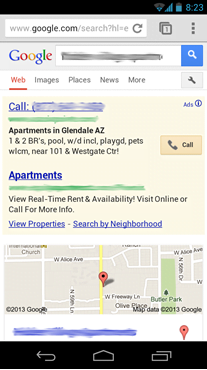
The screenshot illustrates this: a search for “[Community Name] in City, State” shows a competitor and an ILS ad dominating, with the actual community struggling for visibility.
Mastering Geotargeting for Apartments
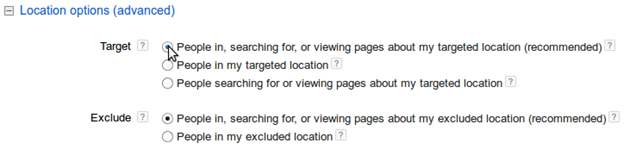
Under “Location Options,” stick to the default settings:
Generally, target the broadest relevant area. If your property is in Evanston, IL, target the entire Chicago metro area:
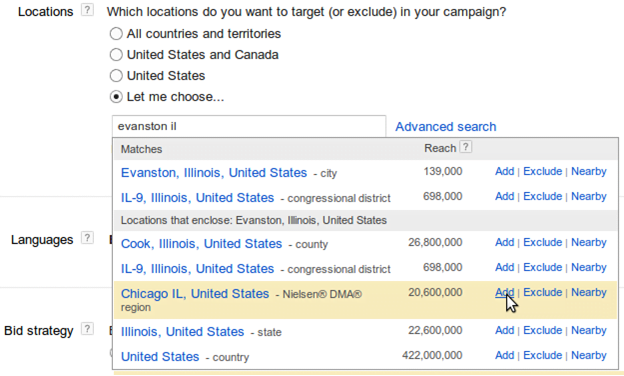
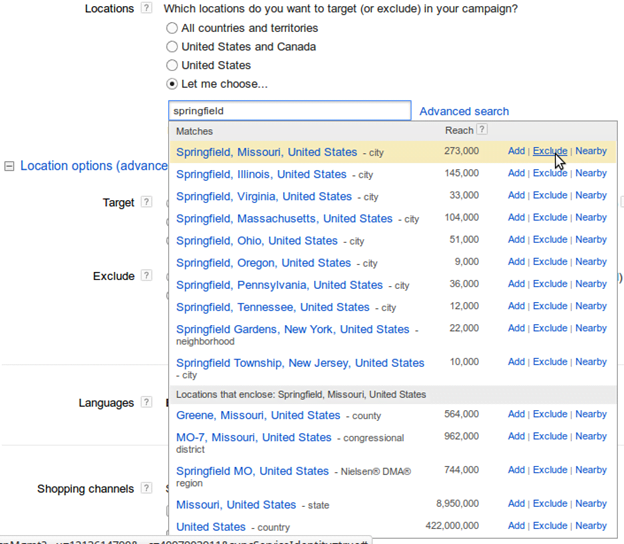
People move within cities, and you don’t want to miss someone relocating from one Chicago suburb to another. Crucially, exclude other cities sharing your city’s name. If you’re in Springfield, exclude all other Springfields to avoid irrelevant clicks.
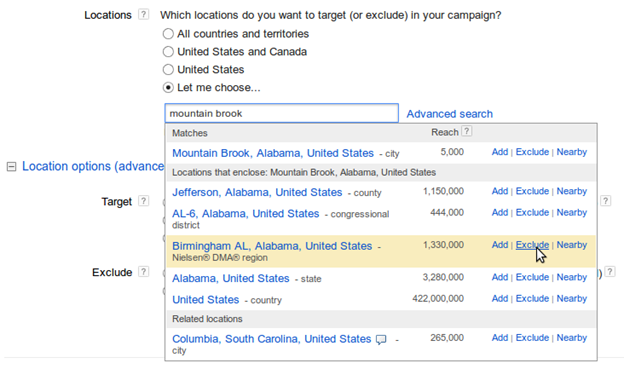
Consider if your community name demands extra exclusions. For example, “Mountain Brook Apartments” necessitates excluding Birmingham, AL, as Google might confuse searches for apartments in Birmingham’s Mountain Brook neighborhood with your community.
Negative Keywords: Your Secret Weapon
As with any AdWords campaign, negative keywords are crucial. While I’ve written extensively on Negative Keywords in Google Ads for Apartments before, two key principles apply here. First, mirror your geographic exclusions. If your community is “Stadium View Apartments” in Kansas City, MO, add negative keywords for all other cities with identically named communities (Minneapolis, MN; Lawrence, KS; College Station, TX; etc.). A quick Google search will reveal them. Second, exclude keywords indicating low intent, like:
- “fax number”
- “pool hours”
- “wifi password”
- “zip code” These typically come from current residents, not prospects. Someone searching for an apartment cares about having a pool, not the “pool hours.”
The Power of Ad Extensions, Especially Sitelinks
Since Google’s 2013 update, ad extensions, including sitelinks, have become critical for Ad Rank. For apartments, use location, call, and review extensions. But sitelinks deserve special attention. Use sitelinks to link directly to individual floorplan pages. People don’t rent communities; they rent specific apartments. Highlighting details like bedroom/bathroom count and square footage in your extensions can lead to impressive click-through rates (10-20% is common).
Landing Pages That Convert
Remember, each sitelink must lead to a distinct page, as per Google’s policy:
So, if using sitelinks for floorplans, you need unique landing pages with floorplan-specific content. High-quality photos and video tours are highly engaging. Include a strong call to action (call or email), and your campaigns will generate qualified leads, not bounces. Furthermore, Google considers your landing page’s quality, relevance, and usefulness in its landing page into your Quality Score. Floorplan-specific pages not only enable effective sitelinks, boosting your Ad Rank, but also improve your Quality Score, enhancing your ads’ effectiveness and cost-efficiency.
In Conclusion
Your goal with Google Ads for apartments is laser focus. Exclude unqualified traffic relentlessly to maximize investment in the most qualified leads. For more apartment-specific PPC strategies, check out my eBook: The Comprehensive Guide to Google Ads for Apartment Marketers. Jacob Gerber is the Chief Marketing Officer for Rentping Media, where he has spearheaded the company’s marketing strategy since 2009. He’s a prolific writer in the apartment industry, covering video marketing, SEO, Google Ads, and website design. Follow him on Twitter @JacobGerber or Google+.