Effectively managing pay-per-click (PPC) campaigns is akin to mastering a game: once you grasp the rules, you can unlock creative strategies. Account audits are essential for understanding these rules, essentially setting the stage for success.
While PPC audits involve various checks, some performed weekly or even daily, many boil down to five key questions:
- Does your account structure align with your business goals?
- Is your conversion tracking reliable?
- Does your creative resonate with your target audience?
- Are there areas of unintentional wasted spend?
- Should you focus on scaling or optimizing your campaigns?
This article delves into each question, providing tips and practical guidelines for addressing them. These questions encompass different aspects of PPC management, relevant to any account. Neglecting them, at least quarterly, could hinder your campaign’s performance.
1. Does your account structure support your business goals?
A well-organized account structure is paramount. A poorly structured one can undermine even the most compelling creative, wasting valuable resources.
A common pitfall is overcrowding campaigns with excessive ad groups or keywords. While understandable for businesses covering numerous services, markets, or products, an optimal campaign should ideally contain 5-7 ad groups and a maximum of 3-5 keyword concepts. This ensures adequate budget allocation per ad group and groups keywords by relevance and price.
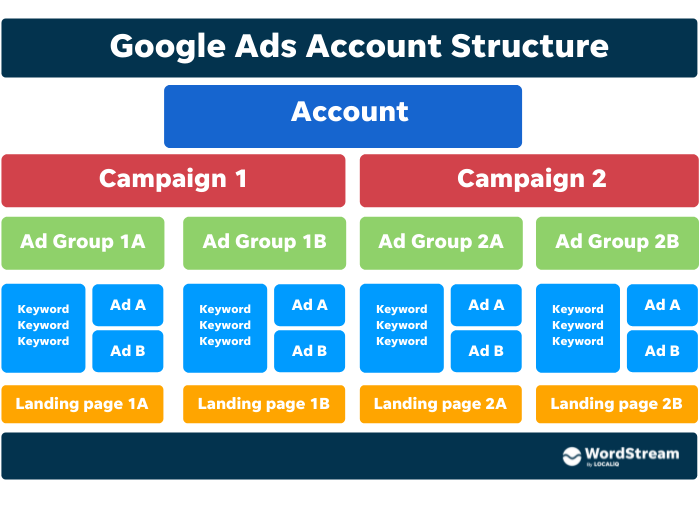
Identifying the most effective structure hinges on answering these business-oriented questions:
- What is a customer’s lifetime value?
- Do all markets hold equal significance, or are some more profitable?
- Should you invest equally across your business, or prioritize certain aspects?
These questions provide context for your current setup and guide future optimizations.
Furthermore, campaigns should target a maximum of one country (ideally a single time zone/major market). This is because ad serving relies on the account’s time zone, not the user’s. Additionally, managing multiple major markets with a single budget can be challenging. Leverage Impression Share (and impression share lost to budget) to gauge whether your budget is stretched too thin.
Dynamic Search Ads (DSAs) can effectively cover multiple business aspects, especially when budget constraints exist.
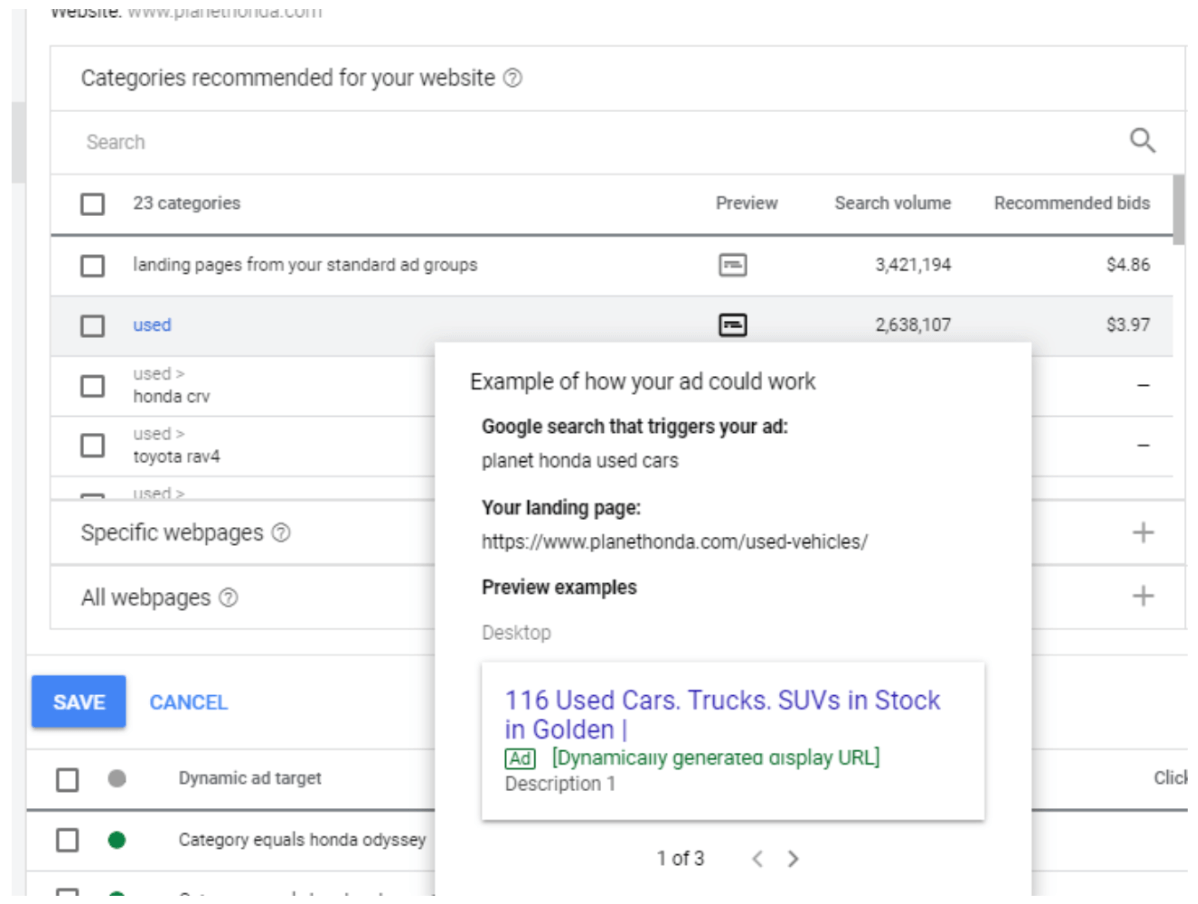
However, without proper negative keyword targeting, DSAs can deplete the budget of regular search campaigns.
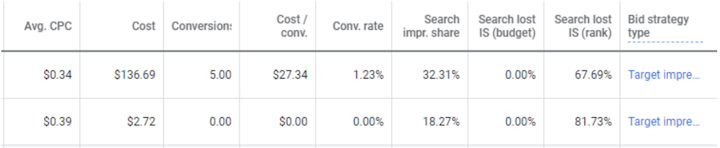 Both the regular campaign (top) and DSA campaign (bottom) are struggling due to competing over the same traffic.
Negative keyword lists offer the simplest way to implement negatives. Therefore, separate campaigns for DSAs are recommended. Applying negative keyword lists at the ad group level isn’t possible. If you opt to retain DSAs within the same campaign, ensure you add all actively bidded keywords as exact match negatives.
Crucially, for DSAs, setting negative targets is essential. This prevents budget wastage on irrelevant traffic directed to your homepage or blog content.
Ad extensions can provide cost-effective coverage for less profitable business segments. Utilize sitelinks, callouts, price extensions, and structured snippets for low-volume or expensive keywords. This prevents budget overspending while boosting your ads’ click-through rates (CTR).
By analyzing your account structure, you can pinpoint areas for alignment and adjustments.
Takeaways:
- Consider using extensions or DSAs for comprehensive coverage if your budget is limited.
- Overburdened campaigns with numerous objectives will underperform. Review the number of ad groups/keywords, targeted locations, and products/services covered.
- Verify campaign/ad group level negatives, and if using negative keyword lists, ensure no essential ad group negatives are missing (to properly direct traffic).
2. Do you trust your conversion tracking?
Conversion tracking is fundamental to PPC campaigns but prone to errors. Audits can lead to inaccurate conclusions due to flawed conversion tracking.
The primary check involves ensuring conversion tracking is set up and monitoring valuable actions. Navigate to Tools & Settings > Conversions.
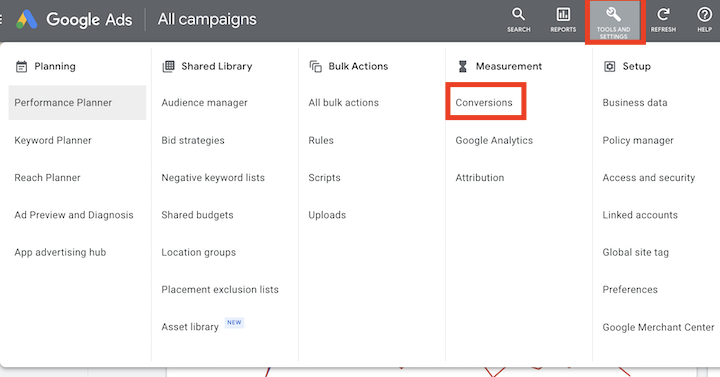
This section displays primary and secondary conversion actions.
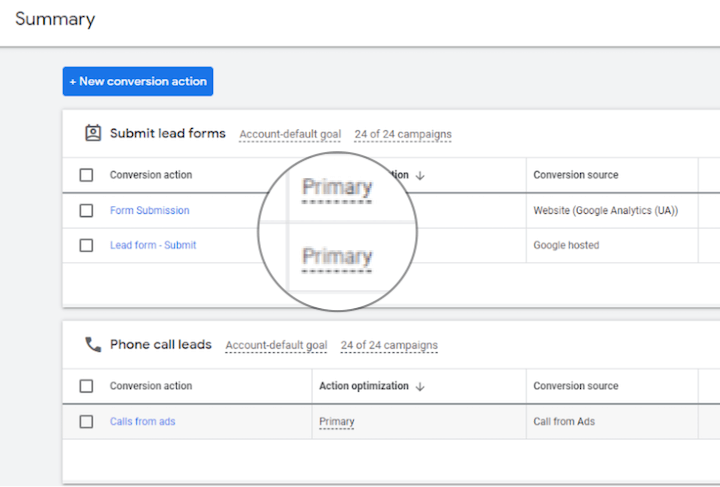
Primary actions impact recorded cost per acquisition (CPA) and influence bidding strategies, while secondary actions are recorded without influencing reports or bidding algorithms.
Correctly tracking and designating the right actions is critical.
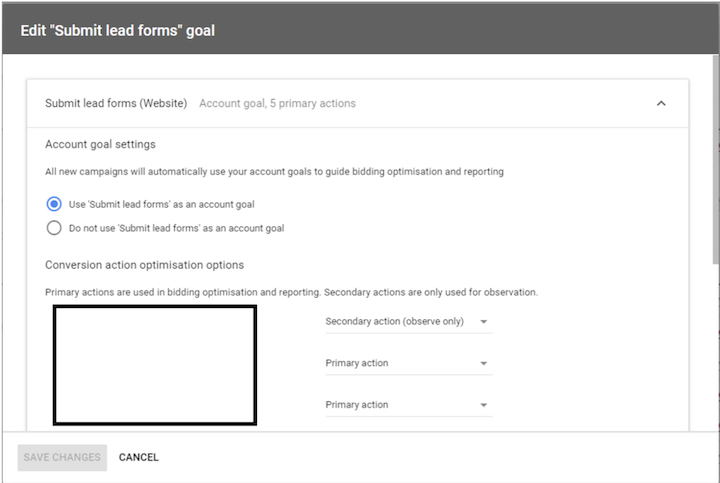
For phone leads, avoid double-counting conversions with call tracking tools. If you use one, leverage its analytics goal as the primary tracking method. Google’s call tracking is beneficial for call-only ads and extensions if you lack alternative tracking for your site.
Finally, ensure no duplicate tracking code exists. Multiple tools might require their own tracking snippets. Avoid duplicate Google Tag Manager (GTM) instances or hardcoded tracking alongside GTM. Inspect this using Google Tag Assistant or by viewing the source code (ctrl/command + u).
Takeaways:
- Set the appropriate conversion actions as primary.
- Eliminate any duplicate code instances.
- Employ a reliable call tracking system if phone leads are crucial.
3. How well does your copy/creative match your target persona?
Beyond structure and bids, ad copy and creative, tailored to your audience, significantly contribute to campaign success.
During audits, focus on these critical aspects:
- Does the copy/creative address the unique needs of the targeted ad group?
- Are audiences used for targeting/exclusion to optimize budget allocation?
A general guideline is to maintain one central creative concept per ad group (while accommodating A/B testing). Combining too many products, services, or personas within an ad group hinders targeted messaging, diminishing creative effectiveness.
This is particularly crucial for responsive search ads (RSAs) that inherently facilitate copy/creative A/B testing.
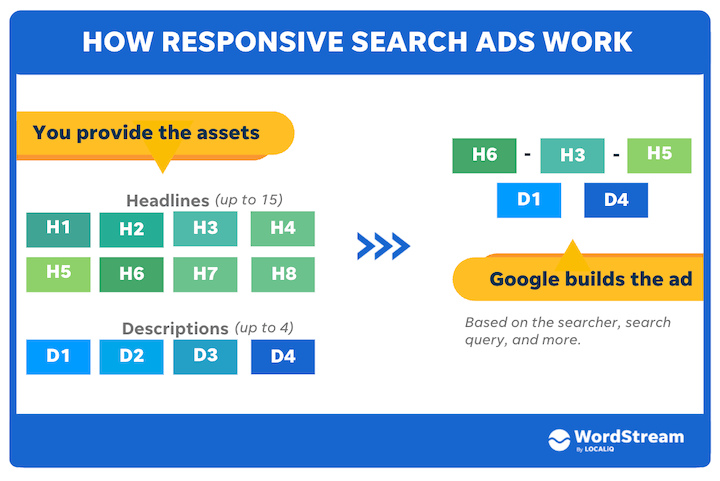
Ensure your attention-grabbing “hooks” are in headline one (H1) and calls to action (CTAs) in headline two (H2). Headline three’s visibility isn’t guaranteed, so reserve it for less critical messaging. Explore additional tips in this responsive search ad copy template.
Review your targeted and excluded audiences. Observe bid adjustments are disregarded in Smart Bidding campaigns. Checking them is worthwhile to ensure alignment with intended budget allocation. Directional audiences should always be set to Target and Observe (or excluded if irrelevant).
Takeaways:
- Align creative messaging to address a single buyer persona per ad group.
- Verify that observation audiences lack bid adjustments when using Smart Bidding.
- Prioritize your most compelling creative for headlines one and two in RSAs.
4. Are you falling into accidental waste?
Ad platforms aim to support brand success. However, specific settings, easily enabled and often overlooked, can result in unintended wasted spend. These settings span both manual and automated strategies.
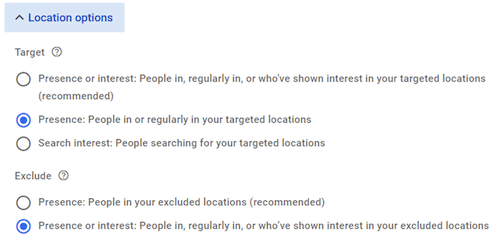
Location options deserve significant attention. Targeting a location can include individuals physically present, those showing interest in the location, or both.
The default setting often targets all, potentially leading to expenditure outside your desired area. Meticulously verify location settings for accuracy across all campaigns.
The Keyword Planner, while largely helpful, can contribute to unintentional waste. Accidentally adding numerous broad keywords to a single ad group, instead of distributing keyword concepts across multiple ad groups with appropriate match types, is a common mistake.
When adding keywords, ensure they aren’t duplicates and won’t trigger participation in irrelevant or unaffordable auctions.
Takeaways:
- Double-check the accuracy of your location settings.
- Add keyword suggestions using the correct match types and in the appropriate ad groups.
5. Should you be scaling or optimizing?
Many PPC audits focus on optimization (minimizing wasted spend). However, recognizing success and scaling opportunities is equally vital.
Impression share is a valuable metric for assessing account performance and potential. Low impression share due to ranking suggests structural issues impacting return on investment (ROI). Conversely, impression share lost to budget indicates untapped profit potential (provided your operations can accommodate increased volume).
Your click-through rate (CTR) to conversion rate ratio offers another indicator. High CTR and conversion rates imply a successful formula that can be replicated in other markets or supported with increased budget. Conversely, low CTR or conversion rates signal creative or targeting issues, necessitating optimization.
Takeaways:
- Utilize impression share to determine whether optimization or scaling should be prioritized.
- Confirm your capacity to manage increased business volume with sales and customer service teams.
- High CTR and conversion rates signify effective creative and targeting.
Ask these questions in every PPC account audit
PPC audits require ongoing attention. Consistently revisit these questions, aligning your strategies with key business metrics:
- Does your account structure support your business goals?
- Is your conversion tracking reliable?
- Does your creative resonate with your target audience?
- Are there areas of unintentional wasted spend?
- Should you focus on scaling or optimizing your campaigns?
Utilize our free Google Ads Performance Grader to streamline this process, identifying areas for improvement and scaling opportunities. Give it a try! Alternatively, contact us to explore how our digital marketing solutions can manage this process for you.