Web professionals known as CSS developers are tasked with ensuring a website appears polished and styled correctly when viewed in a user’s browser. CSS is a fundamental part of nearly every website, yet it often doesn’t receive the same level of recognition as other components within the modern web development landscape. Sadly, this can result in CSS being treated as an afterthought or even disregarded, which is a mistake.
When non-CSS developers handle CSS, it frequently introduces CSS hacks, leads to bugs in the code, and causes unnecessary frustration for the development team. This article aims to shed light on the responsibilities of a CSS developer, helping you understand why having a reliable and skilled CSS professional on board is crucial for any website.
What Does a CSS Developer Do?
Let’s begin with the fundamentals. Why is CSS so important, and what exactly does a CSS developer do?
CSS is a specific language, meaning it cannot function independently. It relies on HTML for structure and meaning. Therefore, one of the primary tasks of a CSS developer is to write HTML code.
The Importance of Clean and Organized HTML
Creating well-structured, clean, and properly organized HTML is crucial. A website’s HTML document is the first thing delivered to users, and its quality matters.
When building a production-ready HTML document, make sure to include all necessary and optional tags within the document’s <head>. This includes elements like the doctype declaration, language specification, meta tags, favicons, loading techniques, and SEO optimization.
These elements contribute to a website’s performance, accessibility, and visibility to both users and search engines, as well as other tools and services. Equally important is keeping the <body> of the HTML document streamlined. Understanding when to use semantic HTML tags, how to incorporate required HTML attributes, and how to avoid excessive nesting or divitis are practices that should be applied from a project’s beginning. No seasoned developer starts implementing best practices halfway through; yet, surprisingly, even seemingly basic aspects like HTML are often mishandled.
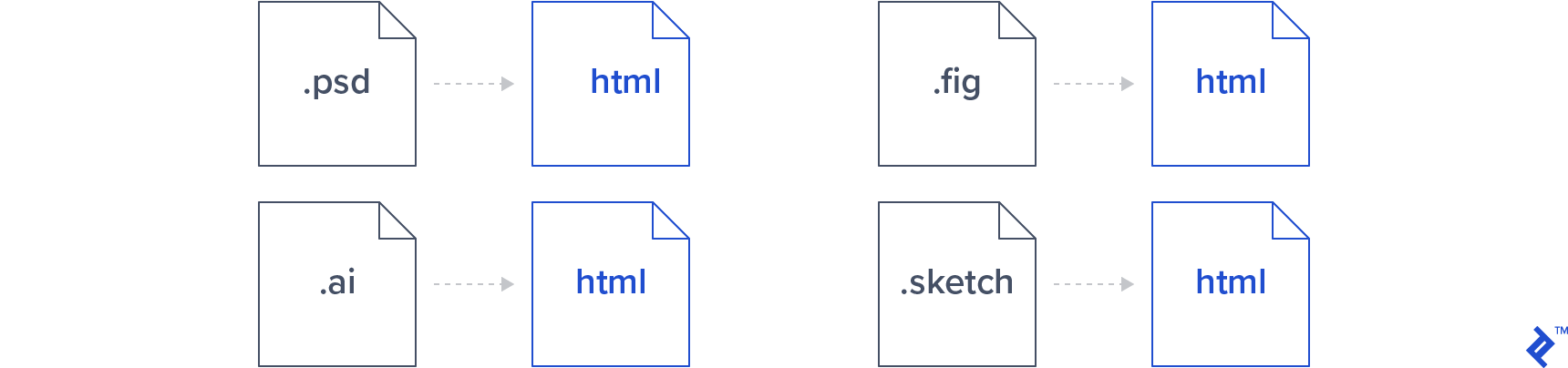
The way various HTML elements are structured is often determined by the overall design. CSS developers work in close collaboration with designers, and since designers don’t all use the same tools, familiarity with software like Sketch, Photoshop, InVision, or Figma and the ability to “slice” designs into their components are essential skills for CSS developers. When structuring a component, developers need to consider how the design will be applied. A robust naming convention, such as BEM or OOCSS, is crucial for preventing bloated HTML and difficult-to-maintain CSS code.
JavaScript’s Pervasiveness
Interactive components like modals and tooltips frequently require a good understanding of JavaScript. This doesn’t necessarily mean in-depth knowledge but rather proficiency in JavaScript events and DOM manipulation. DOM handling can be tricky, as developers need to avoid overusing resources and slowing down the website or, even worse, causing it to crash and become completely unresponsive.
The world of JavaScript is constantly evolving, with new frameworks and tools emerging seemingly every day. Keeping up with this rapid pace of change is essential, ensuring developers can leverage the latest best practices and provide users with an optimal experience.
CSS Evolution
While some might argue that CSS doesn’t evolve as rapidly as JavaScript, this isn’t entirely true. New features like CSS variables, CSS Grid Layout, and even Flexbox take time to master.
Furthermore, browser support remains a challenge. A website might look fantastic in a modern browser but fall apart in older ones. Even if a feature like Flexbox is technically supported in a browser like IE11, it might not behave as expected. Understanding how to navigate these issues is another aspect of a CSS developer’s job.
Fortunately, a supportive community and resources like Flexbugs or Gridbugs can help mitigate these challenges.
CSS Tools, Techniques, and Principles
Developers can use tools such as task runners or bundlers like Grunt, Gulp, and webpack to ensure reliable code. Linters, minifiers, Babel, or PostCSS can also be used to further enhance and transpile code.
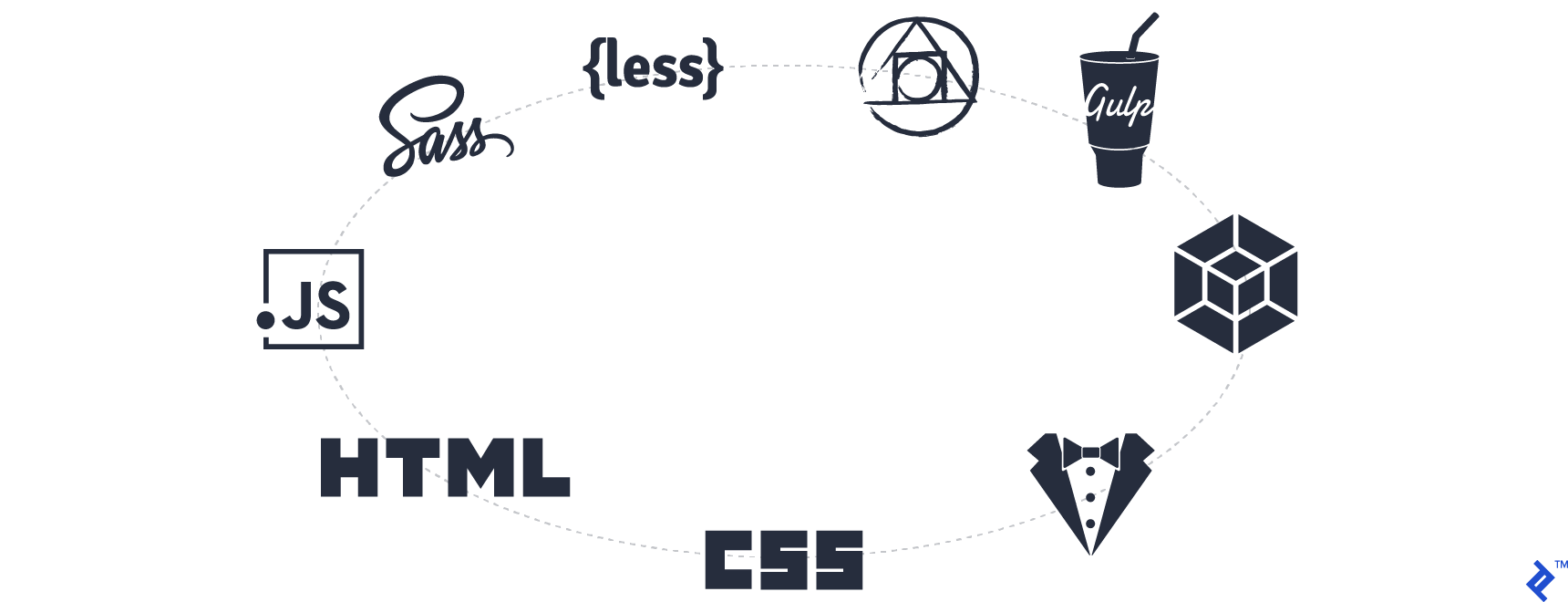
Additionally, CSS developers must consider and manage various aspects such as fonts, typography, images, icons, icon fonts, animations, transitions, and other abstract elements that are part of their everyday tasks. Each of these features has its quirks, limitations, problems, and solutions. Mastering a wider range of these features and techniques makes it easier to style and implement components within a project.
CSS encompasses a vast number of properties and values, making it impossible to know everything. Tools, particularly code editors and browser developer tools, can be incredibly helpful. However, even the best tools can’t solve every issue. Sometimes, the best way to learn is to troubleshoot a z-index problem.
This is especially true in CSS:
- You wouldn’t learn about stacking context without tackling z-index issues.
- You wouldn’t understand specificity if you’d never tried to override a Bootstrap class.
- You wouldn’t grasp the box model without attempting to fix a float problem.
Although the solution might be simple, even formulating the right question can be challenging. Unlike other programming languages, where you can directly ask why a loop isn’t working, troubleshooting CSS requires understanding the full context, particularly the cascade.
The cascade is arguably CSS’s most powerful feature, and it should work in your favor, not against you. Some developers try to circumvent it by creating custom approaches like CSS-in-JS. However, encapsulating CSS within an environment like React can limit its reusability, which is not ideal for a scalable platform. If you encounter challenges with the cascade, the key is to learn to work with it and eventually master it.
While I was writing this article, Max Böck wrote about the CSS mindset. This concept is at the heart of what CSS developers do. They think within the constraints of the box model, anticipate content changes, avoid fixed values whenever possible, and strive to write concise code without overriding default values or context.
Why You Need a CSS Developer
While many frontend or even full-stack developers can write CSS, not all possess the skills to effectively resolve every CSS bug or implement a design without creating overly complex HTML or relying on JavaScript unnecessarily.
A skilled CSS developer cares deeply about the code, finding satisfaction in creating layouts and components, even the most intricate ones, and they have the expertise to solve any CSS-related challenge or bug.
CSS Coding Standards
Before writing a single line of code, it’s wise to establish clear guidelines. CSS developers should adhere to coding standards, as this is crucial for a project’s maintainability and scalability.
Decisions should be made about the naming convention used throughout the project. Establishing this early on helps developers produce cleaner and more structured code. It also allows anyone involved in the project to understand the component structure and relationships by simply reading the HTML.
Further decisions should be made regarding indentation, selector types, shorthand properties, and units in CSS. For example, if the coding standard recommends using rem units, developers should avoid using pixel units. Every developer has their own coding style, but being adaptable and, more importantly, understanding various concepts is essential for professional development.
Implementing Designs in CSS
Before translating a design into code, it’s important to take time to understand each page, layout, and component. When possible, try to deconstruct each page, create a list of components, and identify patterns.
If a component appears on multiple pages, take note of its surrounding context and consider it as a standalone element. Similar components, such as cards or lists, can be treated as variations of the same base component. This enables reusing HTML code and writing minimal CSS to achieve variations.
Looking for patterns in areas like typography and spacing can also be beneficial. This sometimes leads to creating helper classes that can be reused across the entire project rather than being confined to individual pages.
Organizing Your CSS Code
CSS developers should prioritize code organization and create a logical structure that’s easy for others to understand. If using tools like CSS preprocessors, they should document the process used to generate the compiled code.
When necessary, CSS developers can create style guides to serve as a reference for creating new pages or working with existing ones. These style guides, containing information on color palettes, typography rules, coding standards, and even static page examples, should be accessible to the entire team, as visual context often facilitates decision-making.
CSS in a Production Environment
Writing CSS code involves addressing challenges related to cross-browser compatibility, bug fixing, animations, transitions, responsiveness, and print styles. These aspects can be difficult for general developers to manage. Many developers consider these tasks to be the least enjoyable, and not everyone possesses the necessary expertise. Specialized CSS developers, on the other hand, are well-equipped to handle these challenges and can produce code that accounts for various bugs, browsers, and environments.
While using modern techniques is advantageous, it’s also important to ensure compatibility with older browsers and respect user preferences like “reduced motion” settings.
Because CSS developers also work with HTML and JavaScript, asset delivery falls under their purview. They should be responsible for loading fonts, extracting and inlining critical CSS, implementing deferred and asynchronous JavaScript loading, and providing responsive images.
These techniques are not always easy to implement, and there is no one-size-fits-all solution.
How CSS Developers Can Benefit Your Project
The points outlined above highlight the value of a dedicated CSS developer. They play a vital role in:
- Enforcing coding standards across the team.
- Implementing designs effectively.
- Maintaining a well-organized codebase.
- Writing high-quality CSS code.
- Fixing bugs and resolving issues.
- Staying updated with new techniques and best practices.
- Continuously improving the codebase.
Final Thoughts
The debate surrounding the existence and importance of CSS developers has persisted for far too long. It’s time to acknowledge CSS development as a distinct and valuable specialization within web development.
In his article “The Great Divide” (https://css-tricks.com/the-great-divide), Chris Coyier cites several tech leaders who acknowledge the need for a clear division and a dedicated CSS-focused role that doesn’t necessarily require expertise in modern JavaScript frameworks. While having skills beyond CSS is beneficial, this role deserves recognition and should be considered on par with JavaScript-focused roles.
Ultimately, when it comes to your product, would you rather entrust it to a specialist who can perfect it, or are you willing to settle for “good enough”?