Similar to the rise of voice search, Stories have become the most talked-about feature on social media. Mobile users are increasingly engaging with products and brands in ways that demand instant gratification, effortless accessibility, and complete engagement.
This year alone, we witnessed the introduction of ads within Instagram Stories and the launch of Instagram TV, accompanied by discussions about its eventual monetization strategy and timeline.
Now, with Facebook Stories reaching a massive 150 million users (a milestone comparable to when Instagram Stories introduced ads), Facebook has announced that Facebook Story ads are on the horizon. This development is poised to significantly alter how advertisers approach ad placement strategies.
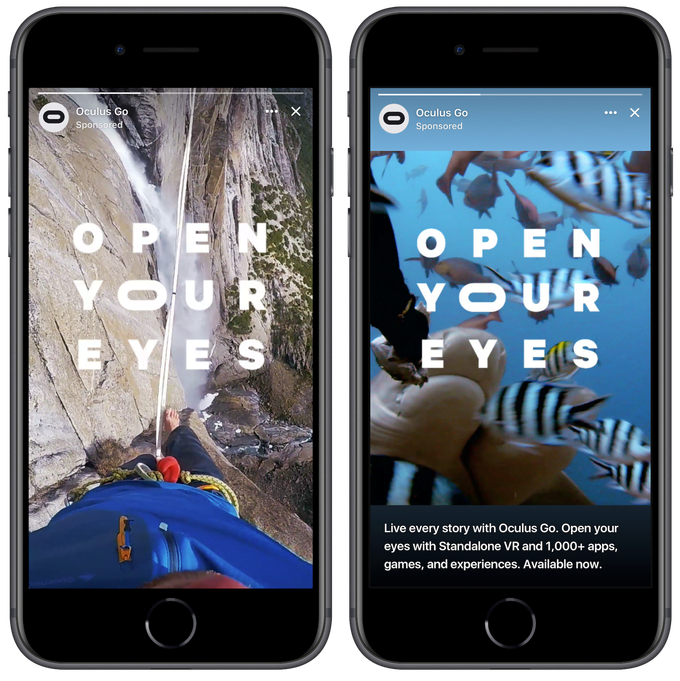
Those who have been keeping up with this evolution are aware that Facebook’s recent blog post on the subject served as a timely reminder rather than a groundbreaking revelation. Since F8 in May, when Chris Cox, the Chief Product Officer, predicted that Stories would surpass News Feed in terms of sharing activity by next year, Facebook has been emphasizing the development and rollout of Stories. Mark Zuckerberg’s insightful observation during Facebook’s Q1 2018 earnings call further underscores this point:
“One of the interesting opportunities and challenges over the coming years will be making sure that ads are as good in Stories as they are in feeds. If we don’t do this well, then as more sharing shifts to Stories, that could hurt our business.”
Clearly, not only is there a definitive shift towards Stories happening, but Facebook is also tying the future success of the platform to its ability to generate revenue from them. Today, we’ll provide a comprehensive overview of Facebook Story ads, encompassing their nature, implications for Facebook, and what advertisers can anticipate when they finally become a reality.
Unpacking Facebook Story Ads
The remarkable triumph of Instagram Stories partly explains why Facebook is placing such significant emphasis on the transition to Stories and emphasizing the need to get them right. To elaborate on Zuckerberg’s statement: “There’s real upside here, too, if we do a good job. We’re leading the way here with Instagram, and the results so far are promising, both on product quality and business performance.”
Instagram Stories’ daily active user count (400 million) now surpasses Snapchat’s 191 million by more than double, and early outcomes for Instagram Stories ads have been positive since they rolled out officially in March.
From a technical perspective, it’s reasonable to expect Facebook Story ads to resemble much the same as ads in Instagram Stories. Facebook has expressed its intention to enable advertisers to adapt existing creative assets for different ad formats (essentially, encouraging them to spend more). Therefore, if the formats are indeed consistent, we can anticipate the inclusion of 15-second video ads, 5-second image ads, and 45-second (cumulative) Carousel ads strategically placed between the organic Stories shared by your friends and family.
Users will be able to bypass an ad simply by swiping to the next Story (although we’ll delve into the possibility of Facebook potentially restricting this feature shortly). To reach a landing page, users would swipe up on a CTA.
Until specific details are unveiled, the most crucial aspect to grasp about Facebook Stories ads is their representation of the ongoing shift toward full-screen, vertical, immersive video formats. This is the future of how consumers will interact with mobile content, so it’s essential to adapt accordingly.
Implications of Stories Ads for Facebook
Facebook’s Q2 earnings call, which occurred last week, brought a couple of significant points to light. Firstly, it’s no secret that Facebook’s once-unstoppable expansion is showing signs of slowing down. Revenue growth experienced a 7 percentage point dip in Q2 and is projected to decline further by high-single-digit percentages in both Q3 and Q4.
Three consecutive quarters of such deceleration are noteworthy, and according to Facebook CFO Dave Wehner, there are multiple contributing factors, the most prominent being:
- In response to GDPR and Cambridge Analytica, Facebook is providing users with greater control over their data privacy.
- Facebook has plans to expand and promote specific engaging features, such as Stories, that currently generate lower revenue.
Considering the trajectory of Facebook’s revenue growth and the anticipated shift in social sharing patterns from News Feed to Stories, it’s logical to deduce that Facebook is heavily investing in Facebook Stories ads. The success or failure of this strategy will rely heavily on Facebook’s ability to transform Facebook Stories into a highly desirable platform for advertisers to allocate their budgets.
What Stories Ads Mean for Advertisers
Several factors can contribute to an advertising placement becoming highly sought after: a large and active user base, robust targeting capabilities, a wide array of creative options, and the flexibility to accommodate diverse ad formats. If Facebook Story ads mirror their Instagram Stories counterparts—and they likely will—advertisers can anticipate that their clients will soon be eager to capitalize on this opportunity.
The potential of repurposing creative assets for use across both platforms—and conducting A/B testing to determine the most effective approach—is a significant advantage. Moreover, it provides advertisers with a stronger incentive to invest time in developing Story ad content for one placement, knowing they can potentially leverage it on both.
When it comes to the creative content itself, the transition to Stories necessitates three key considerations: increased emphasis on video, a demand for higher-quality video production, and a general need for more visually appealing and, consequently, more expensive visuals. There’s no room to hide low-resolution visuals in a full-screen ad, particularly when surrounded by captivating boomerangs, vibrant stickers, and high-definition #brunch photos in the organic posts before and after it.
In terms of targeting, you can expect access to the same comprehensive targeting and remarketing options available in the News Feed, along with support for the same campaign objectives as Instagram Stories: brand awareness, reach, video views, conversions, app installs, website traffic, and lead generation.
Exploring the Potential of Unskippable Ads
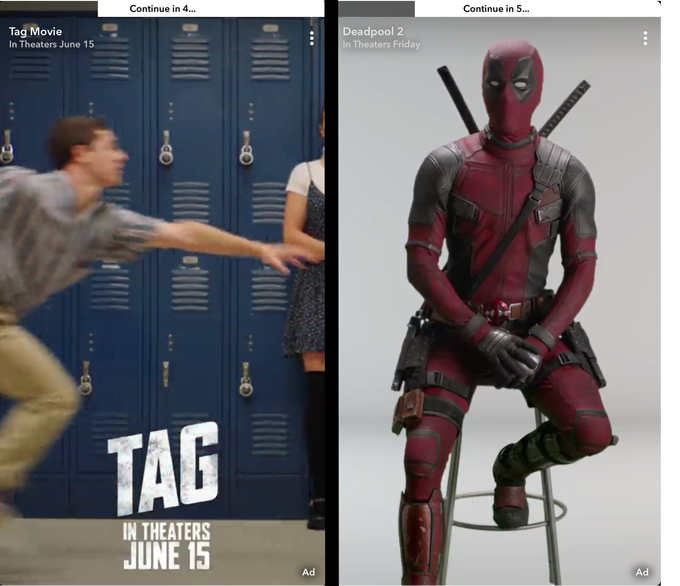
An example of Snapchat’s new Commercials.
A potentially advantageous feature for both Facebook and advertisers (though arguably not for users) would be the implementation of “unskippable” Story ads: a concept that Techcrunch offered an intriguing perspective on last week. The ability of users to effortlessly swipe through an ad to reach their desired content could discourage businesses and advertisers lacking the necessary skills or budgets from creating assets specifically for this placement. After all, why invest significant effort in an ad that’s likely to be skipped over?
Unskippable ads would guarantee that an impression is a genuine impression—users wouldn’t be able to breeze past a Story ad simply because they recognize it as paid content. Snapchat debuted unskippable ads (“Commercials”) back in May and expanded their availability to an additional 100 advertisers last week. If Facebook aims to maintain its dominant position, it’s plausible that they might follow suit. This also introduces the potential for a subscription-based model or a “paid” version of Facebook, offering an ad-free experience for users willing to pay.
What Does This Mean for Small Businesses?
As with other more immersive formats, there’s concern that, regardless of whether users can skip ads, smaller businesses might struggle to produce the high-quality creative content required to succeed. Until Stories gain wider acceptance as a mainstream ad placement, agencies, contractors, and larger enterprises are likely to dominate this space. Gaining an early foothold is crucial, and advertisers with the necessary expertise and resources will be the first to benefit.
However, this could also lead to an improvement in the overall quality and volume of mobile-created ad content. Facebook has already launched new creative tools within Ads Manager, providing tools like stickers, text overlays, and image croppers to simplify the process of crafting compelling ad content directly from mobile devices. Facebook could further empower amateur advertisers by enabling them to allocate budgets to Stories created within the app, similar to how posts can be easily promoted to the News Feed through the Instagram app.
As content quality improves and the demand for polished visuals rises, expect Facebook to continue seeking ways to ensure small businesses can participate effectively.
Embracing a Paradigm Shift
The rollout of Facebook Story ads, coupled with the gradual transition of content sharing from the News Feed to Stories, is poised to have significant implications in the coming months. If you’ve already experimented with Story ad campaigns on either platform, we’d be interested in hearing about your experiences in the comments section below. Stay tuned for a more in-depth analysis of strategies and features once these ads inevitably become available.