It seems like everyone uses Facebook these days – from everyday consumers to business leaders. With its massive user base, Facebook remains a popular choice for marketers looking to acquire new customers. The platform’s paid advertising options allow you to target specific audiences at a relatively low cost per click, placing your ads directly in their newsfeeds, messages, and sidebars.

However, running successful Facebook ad campaigns requires knowledge and careful monitoring. Many marketers assume they understand Facebook advertising, but the platform’s depth of data and features can be overwhelming. Effectively utilizing the Facebook Insights tab is crucial for success, but deciphering the ad performance data can feel like learning a new language. Understanding the Facebook Insights framework and its metrics is essential for maximizing your return on investment. This guide will navigate you through Facebook Insights, covering topics such as:
- Achieving results through Facebook
- Navigating the Facebook Insights dashboard
- Identifying key Facebook Insights data to monitor
- Optimizing ad campaigns based on insights Let’s delve into why marketers continue to dedicate significant portions of their budgets to Facebook ad campaigns.
Utilizing Facebook Insights for Customer Acquisition
Facebook consistently ranks high among marketers’ preferred platforms. When asked which social media platform they use for business marketing, a staggering 97% of B2C marketers and 89% of B2B marketers chose Facebook.
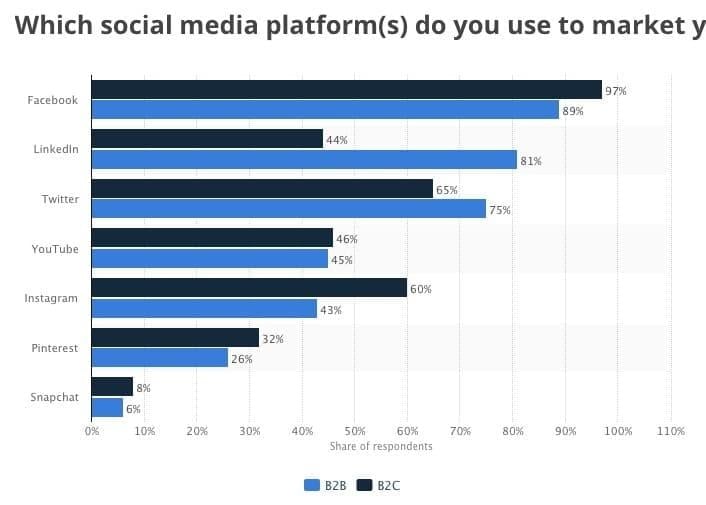
Image source From popular Amazon products to specialized B2B solutions, it appears everything is marketed on Facebook. This is largely attributed to the platform’s effective ad campaigns and low customer acquisition costs. Although Facebook ad costs have increased, they remain a cost-effective way to reach target audiences. In 2019, the average cost per click (CPC) on Facebook was $0.50, marking a a 5% decrease compared to the previous year. With compelling ad creatives and precise targeting, this cost can be significantly reduced depending on your industry.
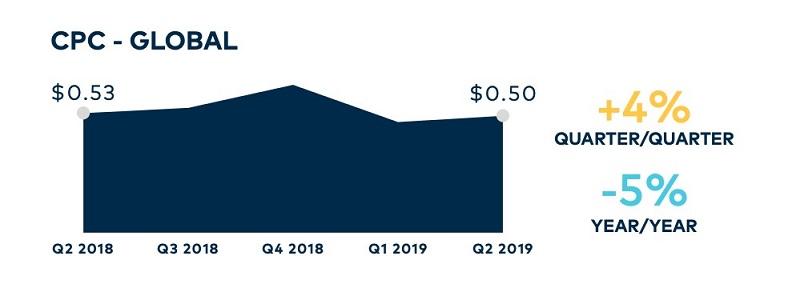
Image source To ensure optimal performance, marketers and ad strategists should analyze campaign data daily, if not more frequently, making necessary adjustments on the fly. Various strategies, such as incorporating influencers or producing product videos (as exemplified below), can contribute to a successful Facebook ad campaign.
Moreover, publishers are increasingly collaborating with freelance designers to enhance the quality of their ads. However, without consistent campaign data analysis, understanding what resonates with your brand becomes challenging. Facebook provides the necessary data for informed campaign decisions within the Facebook Insights dashboard, accessible through Facebook’s Business Manager. Let’s explore the dashboard’s basic features and the crucial insights it offers to enhance your next campaign.
Navigating the Facebook Insights Dashboard
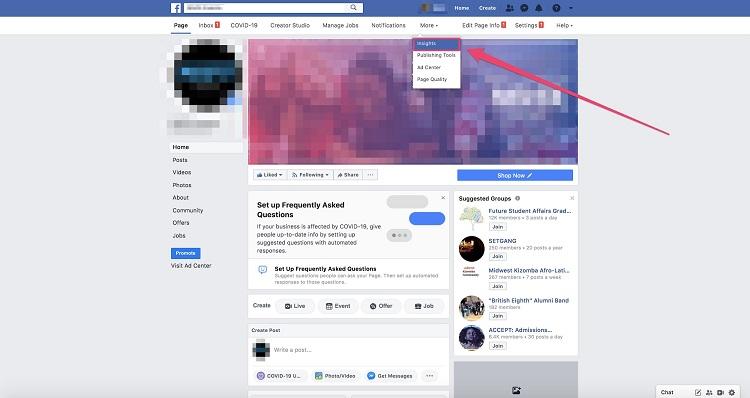
Start by locating the “More” tab at the top of your Facebook page’s navigation bar. Within the drop-down menu, select “Insights” to access the dashboard and its data.
The Insights tab’s home screen displays your “Page Summary,” providing a performance overview of your page. You can toggle the displayed data to reflect today, yesterday, the past week, or the past 28 days. It’s important to note that this data pertains specifically to your business’s Facebook page. Paid ad performance data is available separately in the Facebook Ad Manager dashboard. While both dashboards offer valuable data, our current focus is on Facebook Insights and its applicability to campaign optimization. The summary highlights key metrics such as page actions, views, previews, likes, post/story reach, recommendations, post engagement, responsiveness, videos, followers, and orders. This provides a quick overview of your recent Facebook performance, particularly useful for marketers with limited time.
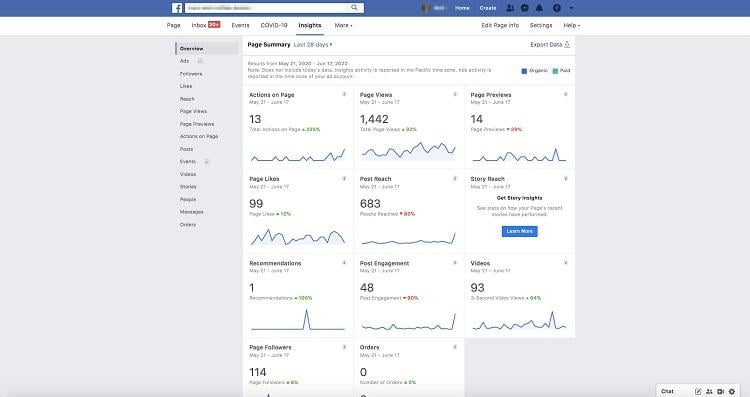
These metrics are also listed in the left-hand side navigation panel, each with a dedicated page within the Insights tab. Exploring this tab familiarizes you with the available insights, but leveraging this information for campaign optimization is what truly maximizes your Facebook reach. Here are some key insights to focus on and how to use them to enhance your Facebook ad campaigns.
Essential Facebook Insights
The abundance of data within the Facebook Insights tab can feel overwhelming initially. While all data holds some value, specific datasets are particularly relevant for Facebook ad campaigns. Every marketer should be familiar with fan demographics, geographic data, online habit data, and post type data. Let’s examine each of these closely.
Understanding Your Audience: Fan Demographic Data
Accurately identifying your target audience is crucial for effective marketing. Building personas and collecting data contribute to this understanding, which evolves over time. Thankfully, Facebook Insights provides valuable fan demographic data to clarify this. Begin by selecting the “People” tab on the left-hand navigation menu within the Facebook Insights page.
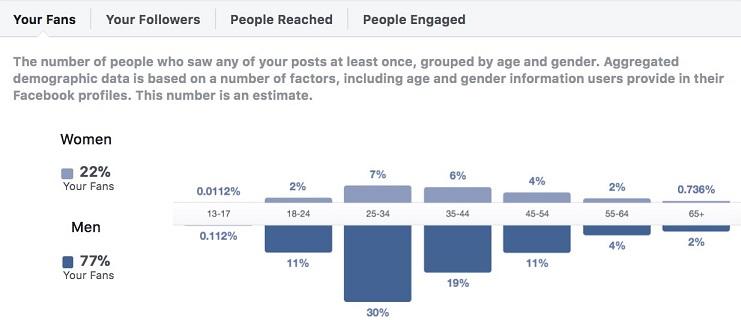
The “People” tab displays your audience’s demographic information. Toggle between your fans, followers, people reached, and people engaged at the top. Focusing on “Fans” provides the most detailed demographics of users who have liked your business page. This breakdown clearly illustrates the age and gender distribution of your audience, with further segmentation into male and female followers within specific age groups. Importantly, these age ranges align with those used in Facebook’s Ad Manager.
This demographic information is invaluable for campaign targeting. The example data highlights a predominantly male audience, with approximately three-quarters male and one-quarter female. Consider reflecting this distribution when setting your campaign’s targeting parameters, aligning with your campaign goals. For conversion optimization, allocate a larger portion of your budget (e.g., 75%) to target males and the remaining portion to target females. Alternatively, if you aim to engage demographics with growth potential, segment your audience by gender and secondary age ranges. This strategy benefits from creating separate landing pages tailored to each target demographic. Depending on your funnel’s complexity, start with a simple landing page, such as a squeeze page, to capture email addresses in exchange for valuable resources like ebooks or webinars. Once a user provides their email address, implementing an effective follow-up email strategy is crucial to capitalize on their interest while it’s still fresh. Failing to do so risks losing their engagement.
Location, Location, Location: Fan Geographic Data
Similar to demographics, geographic data adds another layer to your targeting strategy. Within the “People” tab of Facebook Insights, just below the demographic data, you’ll find geographic information presented in three tables.
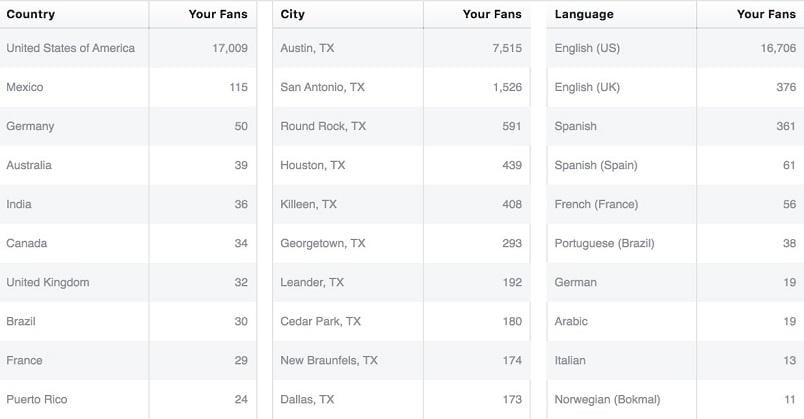
This data provides granular insights into your audience’s location, encompassing country, city, and language. Combined with demographic data, you gain a comprehensive understanding of your audience’s identity and location.
Timing is Key: Online Habit Data
Understanding your audience’s online behavior, particularly when they’re most active, is crucial for optimizing ad visibility. The “Posts” tab within Facebook Insights provides valuable insights in this regard.
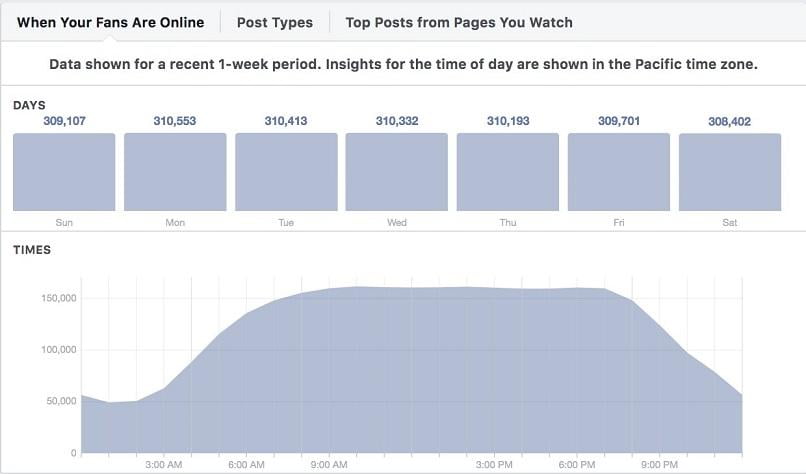
Running ads when your audience is inactive, such as 4 a.m., is inefficient. By analyzing post performance and identifying peak engagement times, you can schedule your ads for maximum impact. Furthermore, ensure your team is available to address customer inquiries during peak engagement hours. Consider integrating live chat software with Facebook Messenger to provide instant responses and address frequently asked questions. At a minimum, inform your audience about your response time and assure them that their inquiries will be addressed promptly.
Content is King: Post Type Data
Analyzing post type data is essential for understanding what content resonates with your audience. The “Posts” tab in Facebook Insights provides a breakdown of post type success based on average reach and engagement, including shared videos, photos, videos, and links.
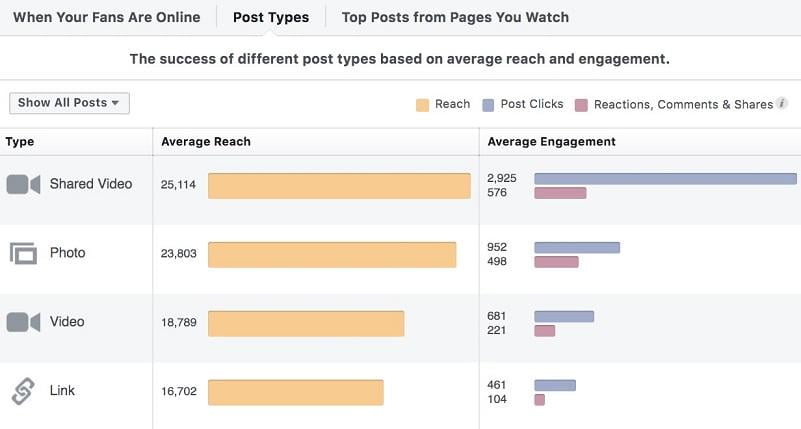
While organic performance isn’t directly translatable to Facebook ads, it offers valuable insights into the type of content your audience engages with. For instance, the data might reveal that shared videos reach a significantly larger audience compared to photos on your page. Identifying what works best for your audience allows you to double down on those strategies. However, it’s crucial to interpret the data accurately. If you rarely publish videos, their average reach might appear lower than other content types due to limited data. Despite the challenges of video production, its high average engagement makes it a worthwhile investment. Consider collaborating with a video production agency to elevate your content strategy. Video production can seem daunting, but it doesn’t have to be. A simple way to begin is by starting a blog first and repurposing your blog content into video and audio formats. This exemplifies omnichannel marketing, increasing the likelihood of your audience consuming your content in their preferred medium.
From Insights to Action: Informing Ad Campaigns
Armed with valuable audience data, you can now define the targeting parameters for your campaigns. Conveniently, Facebook Insights offers a direct link to the Ad Manager within the left-hand navigation menu.
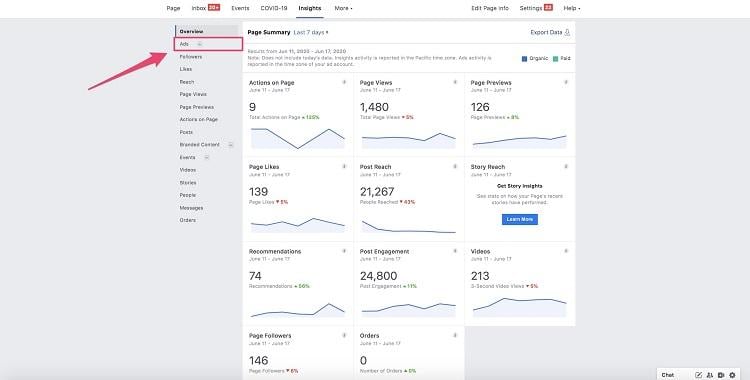
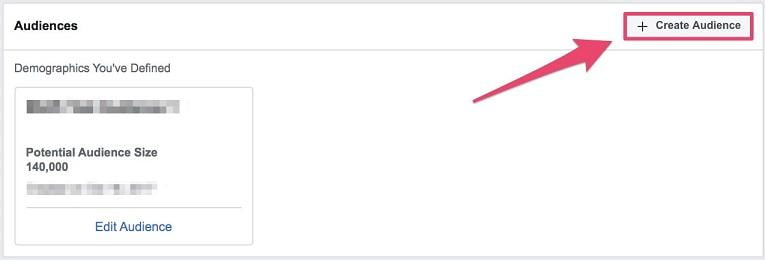
Upon accessing the Ad Manager, click on the “Audience” tab in the left-hand navigation menu. This displays all your previously created custom audiences. To create a new audience, click the “Create Audience” button located in the top-right corner.
A pop-up box will appear, allowing you to define your targeting parameters based on the insights gathered from Facebook Insights. Add gender, age, location, and interest data to create your custom audience. When specifying location data, you can define a radius around your chosen location, ensuring your ads reach individuals within a specific geographical area. Create multiple audiences and assign them to custom ad groups to refine your overall target audience.
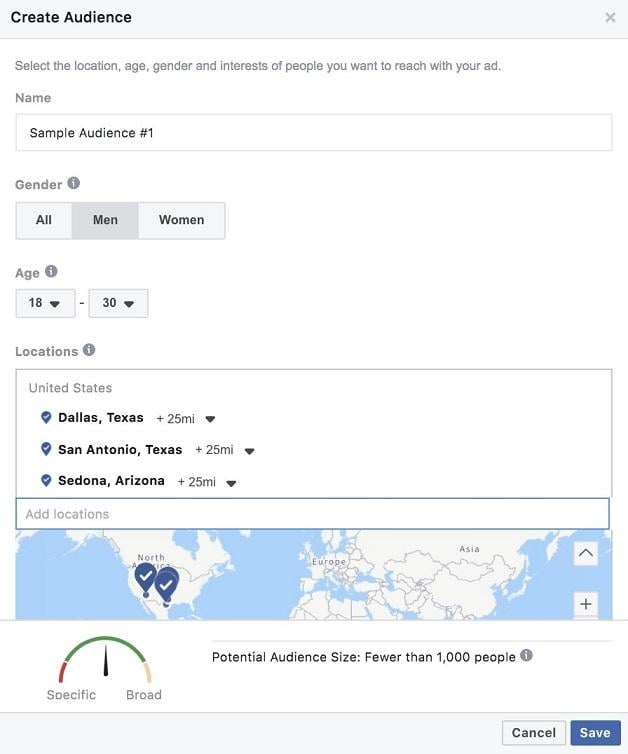
This level of granularity allows you to adjust targeting based on factors like occupation and income, enabling you to tailor your product pricing for new markets. With your custom audiences defined, you’re ready to launch your campaign! As with any marketing initiative, continuous evaluation and optimization are crucial for success. Your initial targeting assumptions might require adjustments based on actual campaign performance. Therefore, consistently analyzing both the ad performance data in Facebook Ad Manager and your organic post performance in Facebook Insights is paramount.
Mastering Facebook Insights for Advertisers
Facebook remains an invaluable marketing channel, boasting billions of daily active users. Marketers have long leveraged its ad platform for its low cost-per-click and high return on investment. Data-driven decisions are crucial for successful campaigns. Without accurate data, marketers risk wasting budget without generating meaningful results. Thankfully, Facebook Insights equips marketers and ad strategists with the necessary data, including fan demographics, geographic information, online habits, and post-type data. This empowers marketers to execute data-driven ad campaigns, effectively acquiring new customers and driving business growth.