While not every person browsing online is ready to buy right away, understanding their shopping stage is key to successful ad campaigns. By tailoring bids to match a shopper’s intent, businesses can maximize their return on investment. This article outlines a strategy to optimize Google Shopping campaigns for greater sales and profitability.

The customer journey, from product discovery to purchase, involves various stages of increasing purchase intent:
- Awareness: Product discovery, low purchase likelihood
- Interest: Gathering product information, moderate purchase likelihood
- Intent: Decision to buy, high purchase likelihood
- Consideration: Finding a seller, very high purchase likelihood
- Purchase: Transaction completed
Bidding strategies should reflect this, with higher bids allocated to shoppers closer to making a purchase.
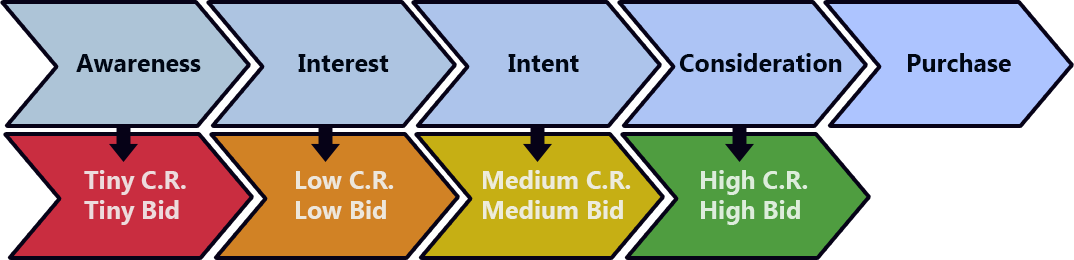
Aligning bids with purchase likelihood ensures efficient ad spending, capturing customers at every stage. Even awareness-stage shoppers contribute to potential future sales.
Shopping platforms like Google Shopping display products based on searched keywords, making it crucial to discern user intent from search terms.
Broadly, search terms can be categorized by intent:
- Very Low Intent: Generic terms like “grills,” “bicycles,” “cookies.”
- Low Intent: Slightly specific categories like “gas grills,” “mountain bikes,” “chocolate cookies.”
- Medium Intent: Specific categories like “stainless gas grill,” “21-speed mountain bike,” “double chocolate cookies.”
- High Intent: Specific product types like “stainless gas grill with six burners,” “21-speed mountain bike with full suspension,” “organic double chocolate cookies,” or branded searches like “Weber gas grills.”
- Very High Intent: Exact product names like “Weber Genesis S-335,” “Trek Marlin 6 2023,” “Annie’s Double Chocolate Chip Cookies,” or product codes.
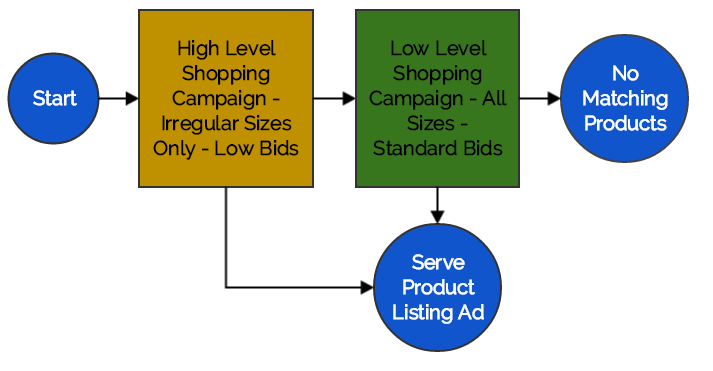
Leveraging campaign priority settings on platforms like Google Ads and Bing Ads is crucial. When multiple campaigns contain the same products, the campaign with higher priority takes precedence, even with a lower bid.
This priority system is often used for scenarios like:
- Clearance Sales: Create a high-priority campaign for discounted items to boost visibility.
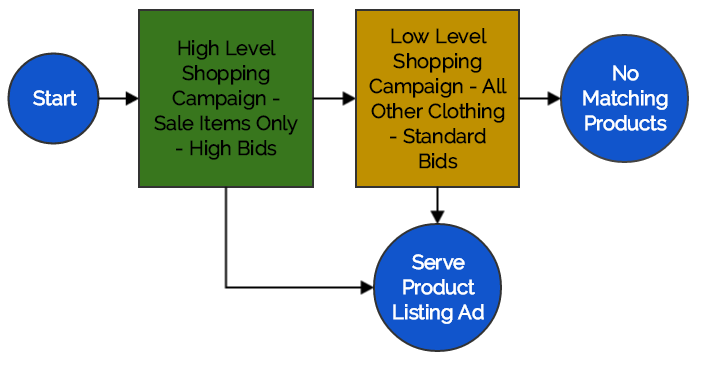
- Seasonal Promotions: A high-priority campaign for Halloween decorations, activated only during the relevant period.
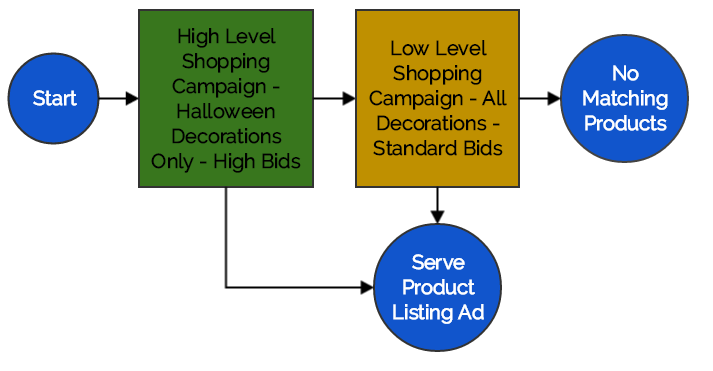
- Low-Stock Items: Instead of removing them, place low-stock products in a high-priority campaign with lower bids, ensuring they are still advertised but at a reduced cost.
Negative keyword lists prevent product ads from appearing for irrelevant searches. Advertisers commonly use them to exclude:
- Used Products: If selling only new items, use negatives like “used,” “second-hand,” “eBay,” “Craigslist.”
- Support Queries: Exclude terms like “instructions,” “guide,” “how-to,” “manual.”
- Irrelevant Searches: Filter out terms like “images,” “spelling,” “location.”
Combining campaign priority with negative keywords creates a powerful filtering system.
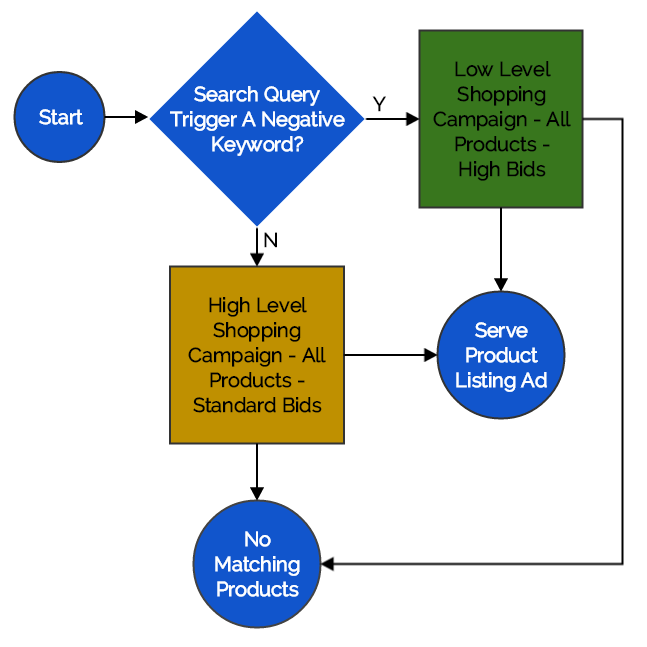
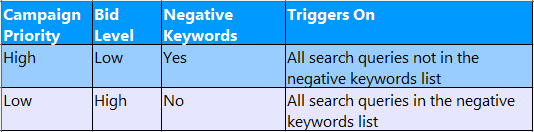
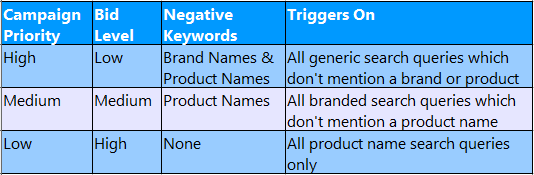
A three-tiered campaign structure, using the three priority levels, effectively separates brand and product-specific searches:
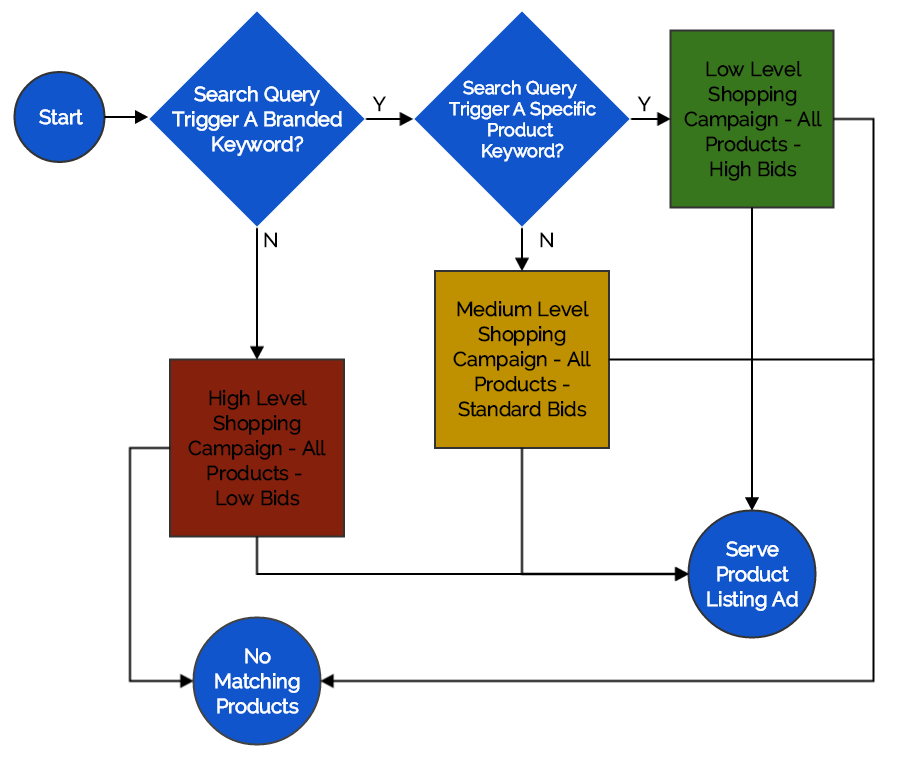
Here’s how it works:
- High-Priority Campaign: Targets generic, low-intent searches, excluding brand, product, and ID terms, using low bids.
- Medium-Priority Campaign: Targets branded searches with medium intent, excluding specific product and ID terms, using standard bids.
- Low-Priority Campaign: Targets highly specific, high-intent searches for exact product names and IDs, using high bids.
This approach ensures bids align with user intent, maximizing ROI. Instead of a single bid for all searches, resources are focused on high-converting terms.
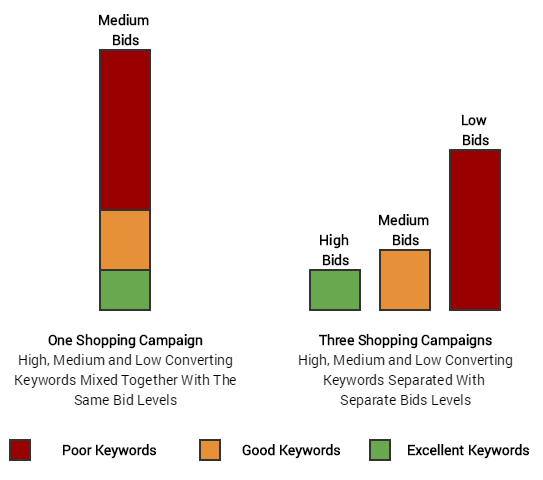
This multi-campaign strategy significantly enhances profitability by minimizing wasted ad spend on low-intent searches and securing better ad positions for high-intent searches. Sales increase without sacrificing profit margins, offering a competitive edge for e-commerce businesses.