Your ancient 2012 phone has finally given up the ghost. Free from the shackles of a two-year contract and brand loyalty, and untempted by the allure of expensive new gadgets, you browse the internet for a replacement. You brace yourself for the financial hit, but a delightful surprise awaits: perfectly functional smartphones are now practically a steal, practically the cost of a casual lunch for four.
How is this possible? A decent phone used to cost as much as a mid-range laptop, but now a plethora of $150 to $250 Android devices make your old phone resemble an abacus duct-taped to a car battery.
Welcome to the era of commoditized smartphones. Let me break down this phenomenon and its potential impact on the software and hardware industries.
Smartphone Economics 101
If you’re deeply entrenched in the Apple ecosystem or consider yourself an Android aficionado, the ongoing price war in the lower segments of the market might have escaped your notice. Users of flagship phones rarely, and understandably so, venture into the realm of entry-level and mainstream devices. The price tag on premium phones, whether an iPhone or a top-tier Android, has remained relatively stable over the years.
However, fierce competition in other market segments has ignited a price war, leading to a near-catastrophic decline. Last year alone, more than a billion smartphones from countless brands were shipped. With numerous vendors vying for a share of the market, retail prices, along with profit margins, have been squeezed. While this margin squeeze has significantly impacted some manufacturers, potentially driving some out of business entirely, it’s the consumer who ultimately benefits.
Lower margins translate to greater value for consumers, right?
Indeed, they do. However, this compels phone manufacturers to move a higher volume of devices to maintain profitability or simply break even. This presents a challenge in a maturing market like ours, where smartphone penetration in most developed nations is already high. On the bright side, the commoditization of Android could be instrumental in bringing high-speed mobile broadband to the rest of the world.
Discussions about the smartphone market usually revolve around the hardware specifications, the operating system, and the market share or shipment figures of various brands and platforms. These metrics provide valuable insights into the growing popularity of platforms, the types of hardware being introduced, the lifespan of older devices, and more.
However, these numbers don’t tell the whole story. To understand what sets inexpensive phones apart, we need to consider a few other factors:
- Bill Of Materials (BOM)
- Average Selling Price (ASP)
- Margin
From a technical standpoint, the difference between an iPhone 5C and an iPhone 6S, or between a flagship Samsung Android phone and a commoditized “white box” smartphone, might seem negligible. However, shift your perspective from that of a tech enthusiast to that of an accountant, and the difference becomes glaringly apparent.
Consider the launch of new flagship phones by Apple and Samsung. Their BOM will be around $200 (it might surprise many that some flagship Android devices are more expensive to produce than iPhones). While the ASP will range from $400 to $700, simply subtracting the BOM from the ASP doesn’t reveal the actual profit margin. The BOM doesn’t account for marketing costs, research and development, intellectual property, and other expenses. Therefore, selling $200 worth of hardware for $600 might yield lower profits than a competitor selling $250 worth of hardware for $500. Apple consistently boasts the highest margins in the industry, leaving its Android counterparts trailing behind.
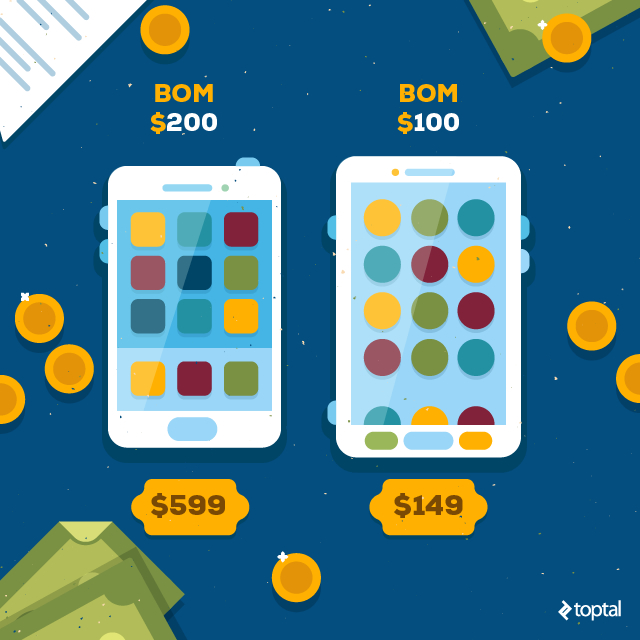
What distinguishes commoditized devices? It’s not about the hardware or the software; it’s about the economics.
Engineered and manufactured with cost-effectiveness in mind, these devices offer consumers $120 worth of hardware for $150 or less, instead of the $200 worth of hardware for $500 seen in higher-end models. While this might not be a game-changer in developed economies, it holds significant weight for the remaining six billion people inhabiting our planet.
For them, this price difference is substantial, and that’s what truly matters.
Commoditized Android Smartphones Don’t Have To Suck
You might be skeptical about the performance of these budget-friendly phones compared to your iPhone or Galaxy, and rightfully so. However, they don’t have to be on par. Their pricing puts them in a different category, but they often provide better value. Consumers can opt for a phone priced at a fraction of a flagship Android device, sacrificing only about 10 percent of the features exclusive to high-end models. This sounds, and generally is, a good deal.
Having tested a multitude of devices over the years, both professionally and personally, I’ve recently had the opportunity to try out several of these budget phones. One that stood out was an aluminum smartphone boasting 4G/LTE connectivity, a 5.5-inch 1080p display, an octa-core processor, 2GB of RAM, 16GB of storage, a fingerprint scanner, a respectable 13-megapixel camera, and a massive 4000mAh battery. The most remarkable feature? The price: $179. And this isn’t some obscure, no-name device; it’s from Xiaomi, China’s leading smartphone manufacturer. The phone is aesthetically pleasing, well-built, and runs on MIUI, one of the most visually appealing Android skins.
It’s a budget phone, but could I see myself using it regularly? Absolutely. It might not outperform an iPhone 6S or a Nexus P6, but considering its price, it doesn’t need to. It’s good enough, and then some.
Back in 2009, when I purchased my first iPhone, choices were limited. Android, still in its early stages, felt clunky, and Android phones failed to impress. However, I hadn’t forgotten my past frustrations with iTunes and Apple’s restrictive policies, which had led me to abandon my iPod a few years prior. As soon as a suitable Android alternative emerged, I switched. Although Apple has revamped iTunes since then, I have no plans to return. This isn’t a reflection of the quality of Apple’s hardware or software, which is undeniably excellent. It’s a personal choice, a matter of principle: I resist being locked into proprietary ecosystems, whether from Apple, Sony, Whirlpool, or any other company.
What does this have to do with Apple or Whirlpool?
Having spent a significant part of my career writing for various tech publications, I’ve never quite grasped the hype surrounding smartphones. Here’s why: In almost every other industry, mainstream products are the core revenue generators. In the smartphone world, the focus is entirely on flagship devices. It’s a complete inversion. How many people rush to buy the most advanced and largest Sony TV, or the priciest and most powerful MacBook or ThinkPad? Not many. Yet, these same consumers readily purchase expensive flagship phones. I see this as a market anomaly, typical of emerging, high-growth sectors, but not of mature ones. This anomaly has been fueled by carriers subsidizing smartphone purchases or offering convenient 24-month payment plans bundled with their voice and data services. Without these incentives, fewer consumers would opt to spend $700 to $1,000 on a new phone every year or two, especially when perfectly capable alternatives are available at a fraction of the cost.
Smartphone manufacturers face a challenge: their products are maturing, making it increasingly difficult to market them to their usual customer base. While global smartphone sales continue to rise, the figures reveal some concerning trends. Analysts have recently reduced their iPhone shipment projections for the year, trimming millions of units from their initial estimates. Samsung has weathered a few difficult quarters. Industry stalwart HTC has hemorrhaged market share, and even rapidly growing Chinese companies like Xiaomi are revising their forecasts downward.
Mature products come with inherent challenges. You don’t replace your microwave every two years, and chances are, your new phone won’t necessitate an upgrade for another two to four years. This reality, coupled with relatively low ASPs and cutthroat competition, is making 4G devices accessible to a global demographic that was previously priced out of the market.
Good News For Consumers And Developers?
Let the industry giants and their investors grapple with margins, shipments, and profits. What does this shift mean for the average consumer, mobile app developers, and designers?
Do we really need $500 phones to bring 3G or 4G connectivity to developing nations? Not necessarily. The median per capita income in developed countries tends to be relatively high, ranging from approximately $7,000 to $14,000 in most EU countries. North America averages around $15,000, while developed Asian economies, such as South Korea and Japan, fall between $10,000 and $12,000.
Russia reports an income of $4,129, and some Central and Eastern European countries report even lower figures. China’s average median per capita income stands at $1,786, according to Gallup data. In India, it’s a mere $616, and even lower in parts of Asia like Indonesia, Bangladesh, and Pakistan. Malaysia fares better, with a median income of $2,267. Brazil is close behind at $2,247 per capita, and most of South America falls within the $1,000 to $3,000 range. Nigeria’s median per capita income is only $493, and the situation is similarly dire in much of Africa.
Despite their diversity, almost all of these countries have populations exceeding 100 million, and the majority of people in developing nations cannot afford expensive products and services. However, all of these countries have 4G networks, either fully operational or in pilot stages.
Major brands often neglect this market segment, despite its evident potential, preferring to concentrate on high-margin demographics.
Here’s where things get interesting: While 4G phones were once prohibitively expensive, the ability to access high-speed TDD and FDD networks is no longer a unique selling point. Even budget phones are now equipped with this technology. As carriers continue to deploy newer network standards, prices will plummet, bringing fast 4G data within reach of millions who currently can’t afford it. In some markets, such as China, consumers have already bypassed 3G and jumped directly from 2G to 4G. While the speed difference between 3G and 4G is significant, 3G is generally sufficient for most users. However, the contrast between 2G and 4G is staggering.
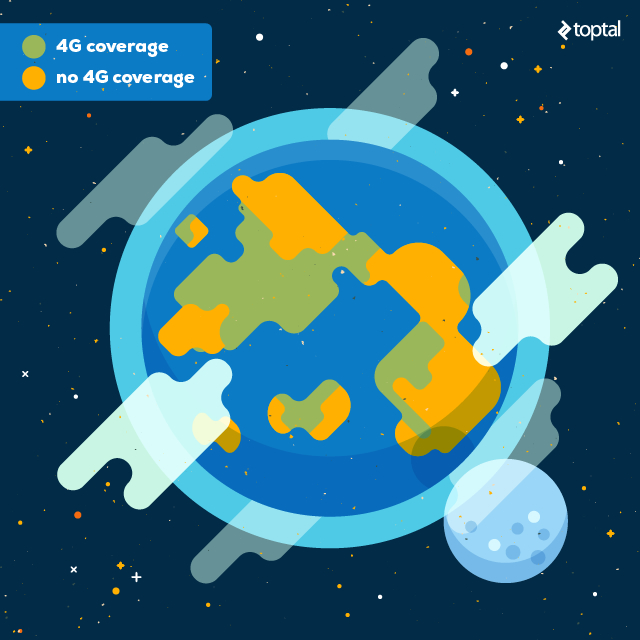
A smartphone confined to 2G is barely “smart,” its functionality severely hampered without a WiFi connection. 3G enables a near-full smartphone experience, and 4G, at least theoretically, surpasses the speed of many landline internet providers. The bottom line: Many in developing countries haven’t had the opportunity to fully utilize smartphones. The devices were too expensive, and mobile data was both slow and costly. This is changing. Rapidly.
By the end of this decade, these same users, who currently struggle to find decent 3G coverage, will likely be enjoying faster and more reliable 4G networks. They will use their smartphones and other connected devices in ways that are commonplace in developed nations.
This sounds promising. By the end of the decade, we’ll have hundreds of millions of new smartphone users with capable devices and reliable data connectivity.
This presents a massive, untapped market, but there’s a caveat.
Not All Users Are Created Equal
Remember Facebook’s meteoric rise? Every few months, a new milestone was announced: 300 million users, half a billion, 700 million, and so on. This was a couple of years before Facebook’s controversial IPO, and the impressive numbers drew considerable attention. Analysts quickly realized that user growth wouldn’t necessarily translate to long-term revenue growth.
Why? Having surpassed half a billion users, Facebook had saturated developed markets. Beyond 700 to 800 million users, most growth originated from developing countries, a trend that continues today. More users typically mean more revenue, but the “how much” depends on the users’ geographical location and disposable income. For services relying on advertising for monetization, a million users in Europe or the US will generate significantly more revenue than a million users in China or India. This disparity also affects premium or freemium business models, as fewer users in developing countries are willing or able to pay for services when free alternatives are available.
Consider that the same infrastructure is required to support all users, regardless of location. Development costs, server expenses, and support costs remain constant. While serving each user incurs the same expense, different user demographics generate vastly different revenue streams.
In essence, rethinking monetization strategies for this evolving landscape is crucial, a key takeaway for Android developers and publishers.
On the technical side, the news is largely positive for designers and developers. They won’t need to tailor their products to less powerful, budget-oriented devices. Even phones priced between $100 and $200 now boast impressive hardware: modern 64-bit ARMv8 processors, ample RAM and storage, high-resolution 1080p displays, and more. An app or web service that performs flawlessly on a flagship phone will likely perform just as well on a budget device, and that’s a significant advantage.
The only potential obstacle is the limited sensor suite found on many budget devices. This is one area where manufacturers can cut corners without noticeably impacting the user experience. For instance, apps relying on gyro or e-compass input might not function correctly on certain devices. However, this seems like a solvable issue, something we could address in our common Android mistakes section.
While hardware limitations shouldn’t pose a significant problem, it necessitates a more creative approach to monetization. The silver lining? Affordable phones and increased 4G penetration will empower millions to maximize their resources and benefit from the latest services and technologies.