Using custom event tracking is a great method to measure all the important activities on your website that standard conversion tracking might miss.
Typically, tracking form submissions as conversions is straightforward. You just take the URL of your “Thank You” page and create a goal in Google Analytics or Google Ads that recognizes it as a significant user action.
However, sometimes the action you want to track happens on a single page without any URL change, which can make tracking conversions more difficult.
¯_(ツ)_/¯
This is where custom event tracking proves useful. It lets you measure actions like form submissions within a lightbox or products added to a shopping cart by integrating code around those actions. This way, conversions are recorded without needing users to land on a new page.
It’s a flexible solution and sometimes crucial for account success.
This article will guide you through the process of setting up custom event tracking for your Google Ads account, covering everything from creating and importing Google Analytics goals to generating custom event code and implementing it on your website.
Want to know where your Google Ads budget is being wasted? Get a free account audit with our Google Ads Performance Grader today!
Custom Event Tracking: Definition and Importance
Event tracking records specific user interactions on your website. You might want to optimize some of these actions in Google Ads depending on your business goals. Trackable events include:
- Button clicks (the most frequent type, and our focus today)
- Downloads
- Log-ins
- Adding items to a shopping cart
- Social sharing
While not as simple as setting up a Goal with a destination URL like most lead generation conversions, setting up a custom event to track conversions is easier than you think.
If you utilize lightboxes or other dynamic on-page pop-ups to host your forms, you’ve probably wondered how to track form submissions that don’t lead to a “Thank You” page. Here’s an example of such a form:
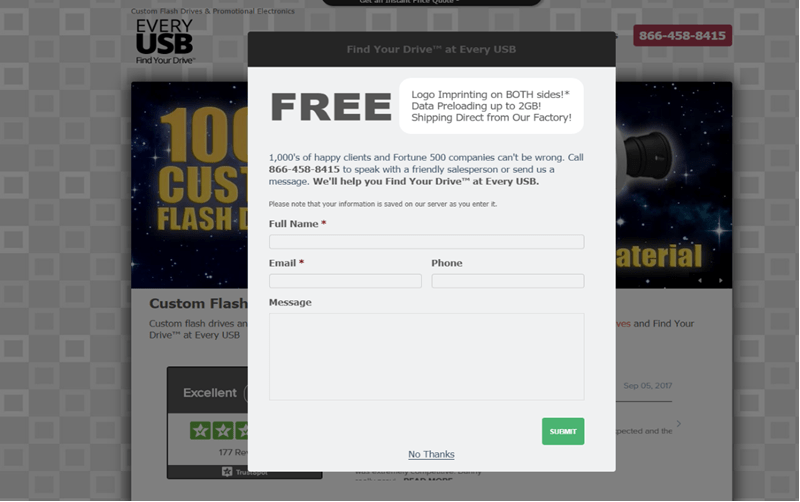
Screenshot courtesy of EveryUSB
Some might argue that tracking form submissions through goals is unnecessary since they can track leads in their CRM.
While pulling this data into your CRM for lead collection is important, being able to track these leads as conversions in your Analytics and Google Ads accounts is equally if not more crucial. This allows you to make informed decisions based on data in your Google Ads account.
Don’t skip implementing custom events.
If you’re generating value (like new leads or purchases) without “Thank You” pages, custom events are your only means of capturing vital performance data, which ultimately reflects your business’s success. Once you establish a custom event goal in Analytics and implement its code on your site (more on that shortly), you can track this information in Google Ads. This clarifies which areas of your account are already performing well and which require attention. This is pretty important considering you’re investing money in advertising.
With that said…
Creating and Implementing Your Custom Event Tracking Code
While several options exist for creating custom event tracking templates, Raven Tools is my personal favorite (and it’s free!). To begin, navigate to their free GA Event Tracking Code page.
Don’t be intimidated by the custom form fields; you could input almost anything, and it would technically work. However, I suggest using text that clearly identifies the specific goal you’re creating to avoid confusion later if you build multiple events.
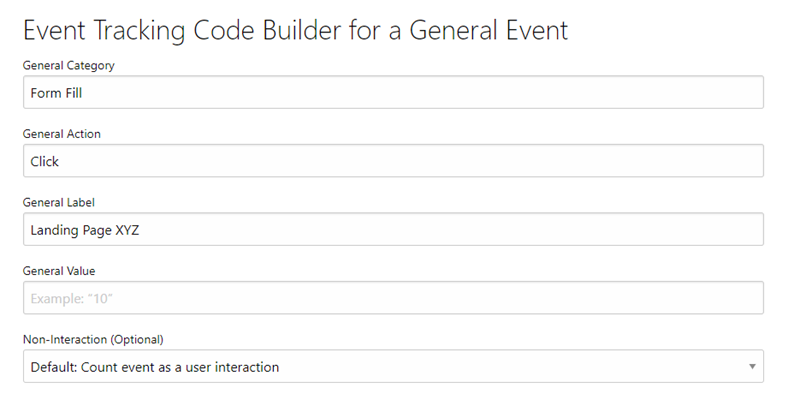
You only need to fill out the first two fields (“General Category” and “General Action”) to proceed.
In my example (above), I used “Form Fill” as the General Category because, well, I’m tracking a form submission as the conversion. Feel free to use any term that helps you identify the goal. In the past, I’ve used “Submit,” “Lead Capture,” “Form Submission,” and so on.
For the “General Action” field, I went with “Click” because that’s the action triggering the conversion.
While optional, the third section, “General Label,” is useful if you have multiple landing pages and want to track individual goals in Google Analytics for each. It’s also helpful if you offer multiple services/products and want to segment goals accordingly. I simply wrote “Landing Page XYZ” in my example. Use something that helps you identify the specific landing page where the goal is taking place.

I rarely use the “General Value” field, but it can be helpful in certain situations like Ecommerce. For this example, we’ll leave it blank since each form submission (event action) holds the same value.
The final field is a dropdown menu offering the option to count the click as an interaction or a “non-interaction.” I always count event clicks as interactions because, well, what’s the point otherwise?
Once you’ve completed the required fields (at least the first two), a code snippet will generate below the text fields, similar to this:

As you can see, your inputted fields are dynamically added to the code snippet meant for your website.
After generating this code, send it to your developer or whoever manages changes to your website’s backend. If you handle code implementation yourself, keep this tab open.
This code needs to be embedded within the actual submit button of the form you’re tracking (see the red box below).
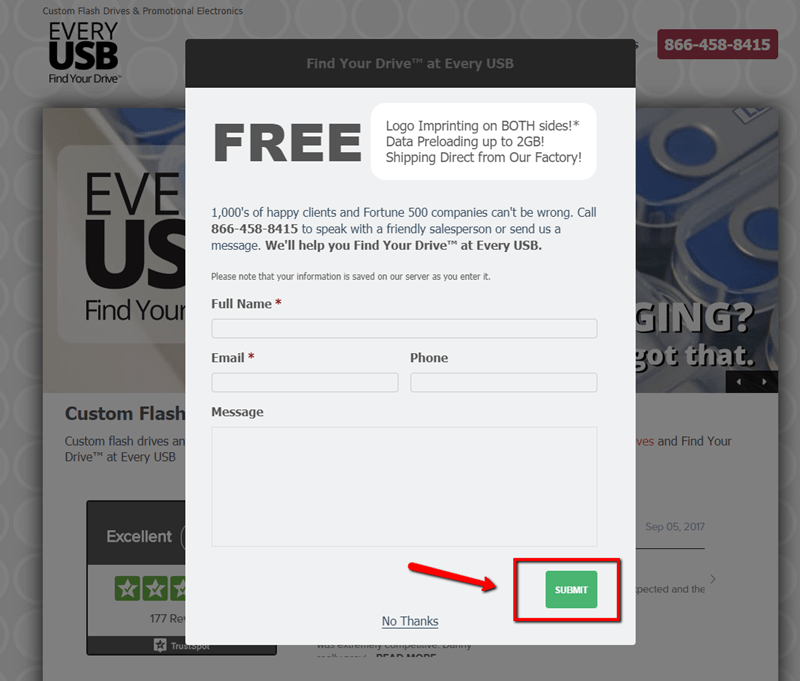
Once implemented, this will enable you to track every click on that submit button as a conversion in Google Ads. Well, as soon as you turn that new, actionable button into a goal in Google Analytics, that is.
Related: Learn how to create and track events in Google Analytics 4.
Creating a Custom Event in Google Analytics
The hard part is done! You generated the code and handed it off to your developer (or kept it for yourself). It’s smooth sailing from here.
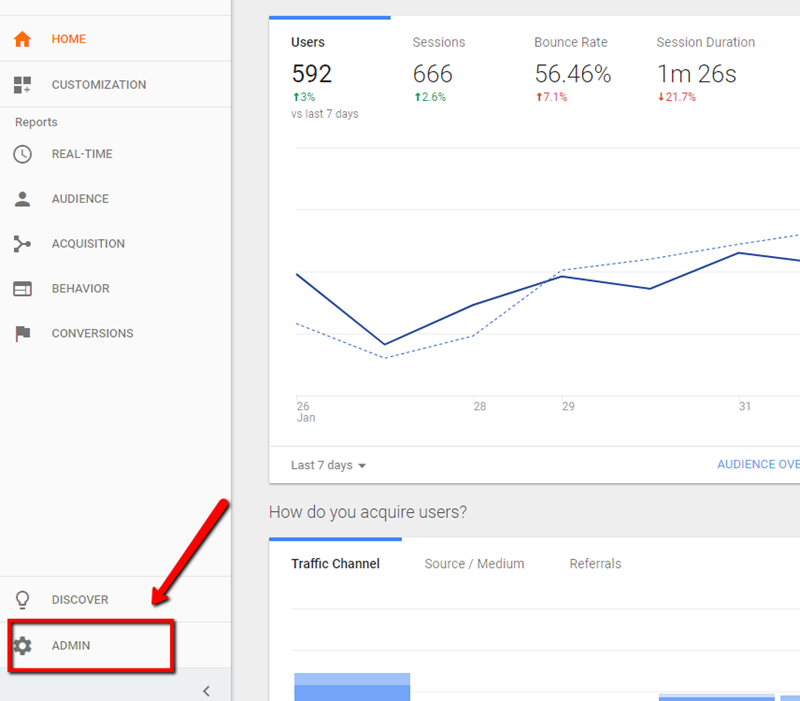
Go to your Analytics account and click on the “Admin” tab in the bottom left corner.
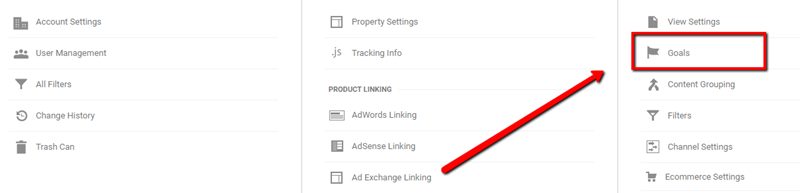
Go to the far right side of the page and locate a flag icon labeled “Goals.”
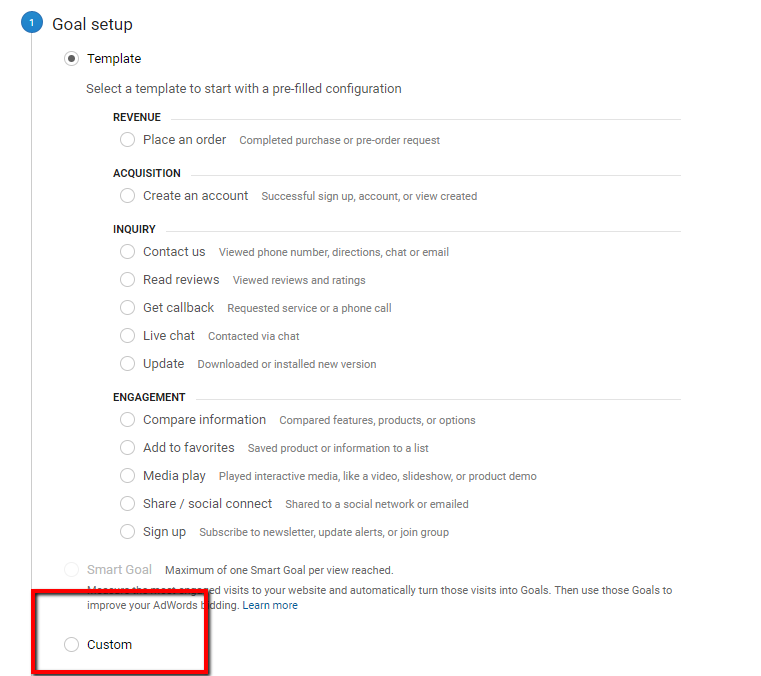
Click on “+ New Goal.” Ignore the pre-set templates and scroll down to select the “Custom” option, then click “Continue.”
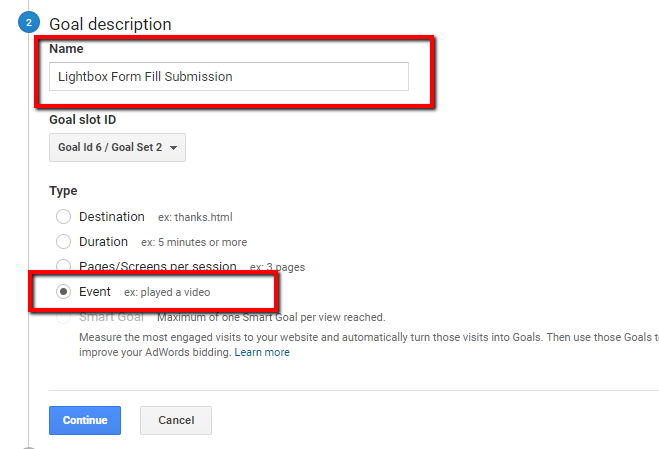
Name your goal and choose the “Event” option.
Next, we’ll refer back to the Raven Tools window I told you to keep open. (If you closed it, no worries, just ensure you recall the exact values you inputted into the form).
Copy the fields you initially filled out in the Raven Tools builder and paste them into the corresponding fields of your Google Analytics Goal, like this:
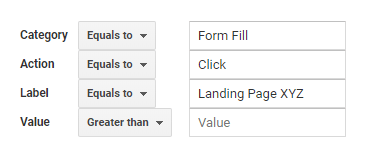
Ensure the text entered in Google Analytics perfectly matches the text added to your CTA button. This is crucial, as it’s the only way the event will trigger properly.
Importing Your Custom Google Analytics Goals into Google Ads
First, confirm that your Analytics and Google Ads accounts are linked.
Next, open your Google Ads account, click “Tools,” and then “Conversions” from the dropdown menu.
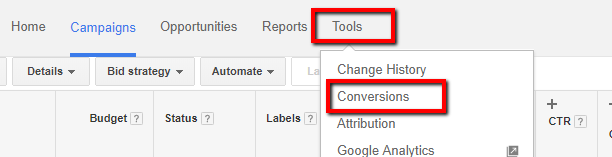
You’ll be taken to a page displaying all your current conversion actions. Click “Google Analytics” on the left-hand side to continue.
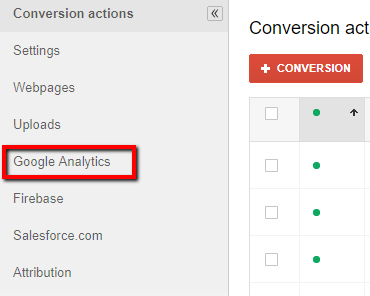
You should see your newly created goals, along with any other goals in your Analytics account that haven’t been imported. Select the ones you want to track in your Google Ads account and click “Import”.
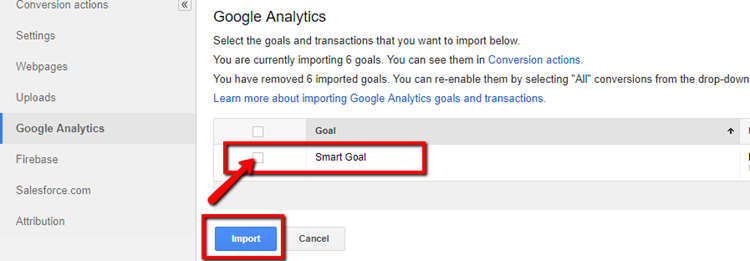
Congratulations! You’ve successfully imported your custom event conversion goal from Analytics into Google Ads! Go to your website and run a test conversion to see if it triggers in both Google Analytics and Google Ads (note that syncing can take up to 24 hours, so be patient).
Final Thoughts
With regular URL-based conversions and custom events, you should now be able to track most of the valuable actions on your website.
Having more data in your Google Ads account makes optimization and reducing wasted spend easier. Custom event tracking might seem daunting, but it’s a relatively simple way to empower yourself with more ammunition for account optimization. And who couldn’t use that?
Let’s recap. Today you’ve:
- Generated tracking code for a custom event
- Implemented it on your conversion event’s button (or delegated the task)
- Created a corresponding conversion goal in Google Analytics
- Imported it into Google Ads to begin tracking leads
You’re now equipped to start optimizing for more, even more complex conversion actions. Good luck!