Google and Facebook have recently revealed significant updates to their advertising platforms that all businesses and digital marketing agencies should know about. Google is phasing out accelerated ad delivery in the coming weeks, while Facebook will soon allow users to prevent businesses from using their off-Facebook data for retargeting. Let’s take a closer look at each of these developments.
Google to discontinue accelerated delivery next month
Starting September 17, 2019, no longer have the option; instead, standard delivery will be the only option. Google will automatically transition existing campaigns to standard delivery on October 1. However, display and video campaigns will still have access to accelerated delivery.
When you use accelerated delivery, Google enters your ads into every eligible auction until your daily budget is depleted. Conversely, standard delivery spreads your budget throughout the day (or your chosen ad schedule), which means your ads won’t participate in every possible auction.
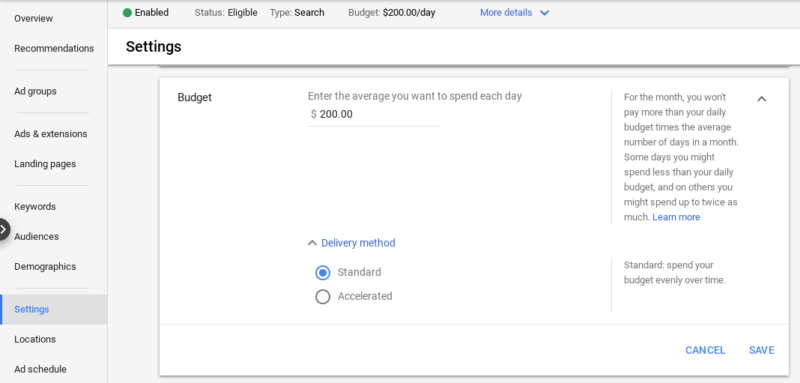
Google explained this decision with the following statement:
“[Accelerated delivery] is ineffective for campaigns not limited by budget. For campaigns with budget constraints, this method can increase CPCs due to heightened competition early in the day or unintentionally exhaust most of your budget in earlier time zones.”
Auction prices change throughout the day based on demand; higher demand means higher costs per click. Since accelerated delivery enters you into all eligible auctions until your budget is gone, it limits your ability to benefit from lower-cost opportunities later in the day, which is something budget-conscious businesses should prioritize.
Regarding time zones, Google emphasizes that your ad schedule is set to your time zone, not the time zones of your target audience. For instance, if your Google Ads account is in Nairobi and your ads start running at 9 a.m., your audience in New York City will see them at 2 a.m.
These are valid points from Google; accelerated delivery can indeed result in inefficient budget allocation for those who lack the resources to closely manage their accounts. Nonetheless, it has its advantages. For example, accelerated delivery is useful for limited-time sales to quickly generate a large number of impressions and clicks, getting you ahead of competitors.
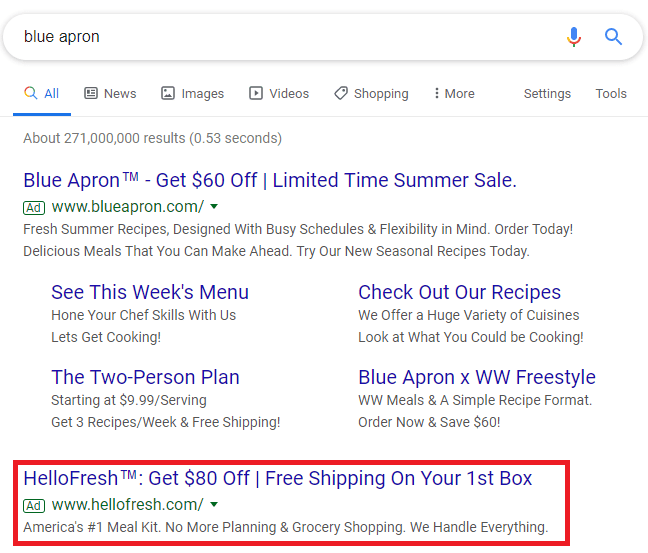
Moreover, if your Quality Score for a specific keyword is low, accelerated delivery can help you reach your target audience despite that.
What does this mean for you?
Many account managers see the removal of accelerated delivery as another sign that Google wants advertisers to relinquish control and embrace automation. Recent changes to phrase match and modified broad match keywords, for instance, will force advertisers to rely on Google’s ability to accurately interpret user intent. This isn’t a welcome change for everyone.
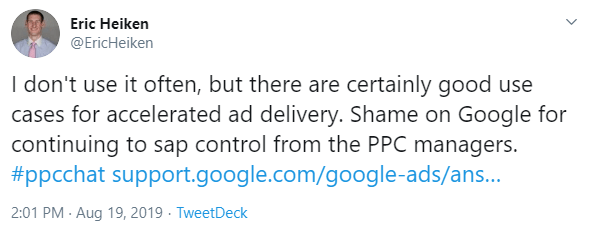
Via Twitter user @EricHeiken. However, if you work with tight budgets, you likely weren’t using this option anyway, as it can quickly deplete your funds. (We generally advise our small and midsize clients against it.)
Nevertheless, we want to ensure that those who currently use accelerated delivery are ready for its discontinuation. Alex Reardon, an account manager from our internal agency team, suggests using positive bid adjustments earlier in the day to account for the delivery time changes. Additionally, if you’ve been utilizing accelerated delivery to boost the visibility of a campaign with low daily search volume, consider allocating more budget to those keywords.
Update Sept. 11, 2019
Google has postponed from September 17, 2019 to October 7, 2019, to give you more time to adapt to the removal of accelerated delivery. Ensure you update your campaigns accordingly!
Update January 30, 2020
From April 2020, Standard delivery will be the only ad delivery method for new Display, Video, App, and Hotel campaigns. Accelerated delivery will be discontinued. Beginning May 2020, all existing Display, Video, App, and Hotel campaigns using Accelerated delivery will automatically switch to Standard delivery.
Facebook to empower users to restrict third-party data usage
In line with a promise by CEO Mark Zuckerberg at last year’s F8 Conference, Facebook has announced of the Off-Facebook Activity Tool. This tool allows users to view the data that third-party apps and websites (including yours) share with Facebook for targeted advertising. Users can then choose to disconnect this information from their accounts, preventing you from retargeting them and restricting the use of their personal information for behavioral targeting in the future.
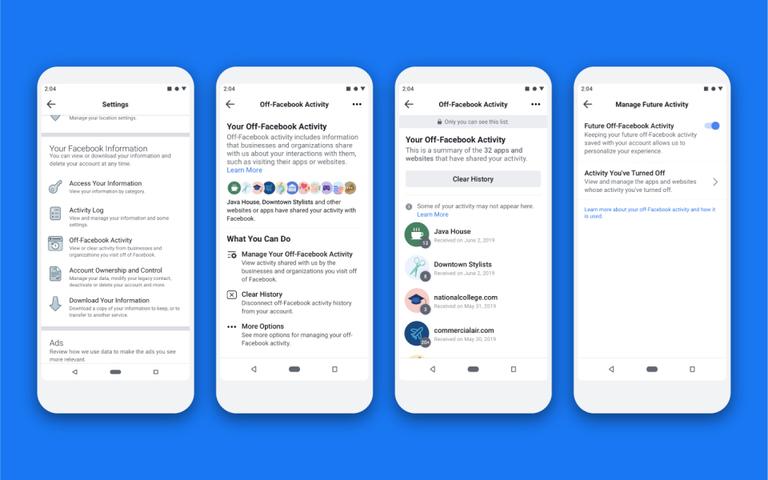
Via Facebook. In essence, your potential customers can opt out of remarketing based on their non-Facebook activity (e.g., visiting your website, downloading your app). However, you can still retarget users based on their Facebook activity; for example, you can target those who have watched your videos.
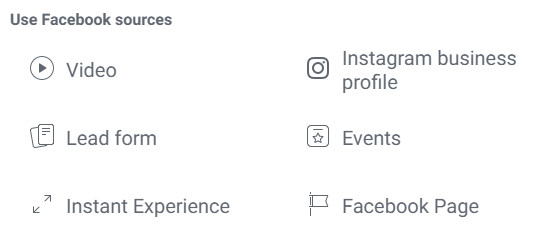
You can leverage Facebook-collected data for custom and lookalike audiences. The Off-Facebook Activity tool will be launched in Ireland, Spain, and South Korea before becoming available globally later this year. We’ll keep you informed about further developments.
What does this mean for you?
Towards the end of the announcement blog post, Chief Privacy Officer Erin Egan and Director of Product Management David Baser acknowledged that this move “could have some impact” on Facebook’s revenue going forward. This is because limited targeting options might lead some businesses to abandon Facebook advertising altogether.
While this is understandable—we at nexus-security have always recognized the effectiveness of behavioral remarketing—we encourage you to continue using Facebook Ads despite this change. Even if many users opt for this tool (which is not guaranteed), you can still reach your audience based on demographics, interests, and their on-Facebook activity like form submissions and video views. For further guidance, our in-house expert Kristina Simonson recently shared 11 innovative Facebook ad targeting strategies.
Regardless of the impact of this tool on ad targeting, Facebook’s initiative towards greater transparency regarding user data is undeniably positive.