A crucial aspect of SEO is the title tag. A compelling, relevant, and clickable title can significantly impact rankings, click-through rates, and overall traffic. I believe the title tag is so essential for SEO success that I recommend thoroughly testing different tags to identify what works best. Once you’ve found a winning formula, implement it consistently across your website. Advantages of using an SEO title tag formula:
- Maintains consistent SERP listings throughout the site
- Simplifies content creation for large websites and multiple authors
- Strengthens brand identity Remember, Google’s current character limit for title tags is 70. Utilize each character effectively, ensuring your title tag is concise and impactful, similar to a catchy ad headline. Save the elaborate descriptions and creativity for on-page titles, not title tags. Related: Google’s Page Title Update Dropped Our Traffic by 37%!
Prioritizing Keywords: Start by Placing Them First in Your Title Tags!
Placing your primary keyword at the beginning of your title tag leads to better rankings. This strategy has consistently proven effective in my tests. While this should be widely known, many websites still prioritize their company name over keywords in their title tags.
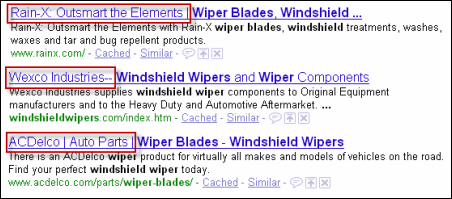
Besides improving keyword rankings, placing your primary keyword first makes sense because that’s what users are searching for. Putting it upfront creates a visual cue, instantly connecting with the searcher and encouraging clicks, unlike burying it behind the company name or a tagline. What about the homepage? Some SEO professionals believe the homepage is an exception, advocating for the company name first to “brand the site.” However, I have a different perspective. Due to the web’s natural linking structure, homepages typically receive the most backlinks and have the highest PageRank. Consequently, your homepage’s title tag holds immense SEO value, making it the ideal place for your most competitive keywords. For most businesses, placing your brand name first on the homepage is a missed opportunity. If branding is essential, utilize the meta description instead.
Incorporating Action Words in Your Title Tag Formula
After placing your target keywords, add action words (verbs) that encourage users to take a specific action. Title tags with compelling verbs consistently outperform those without in my tests. Here are some examples of action words categorized by searcher intent:
- Informational: learn, discover, find, read, see
- Transactional: try, get, buy, download For a deeper understanding of searcher intent and its impact on SEO and keyword strategy, refer to my previous post on keyword mapping, especially the section on grouping keywords by intent. Importantly, ensure that the action you promise in your title tag is present and easily accessible on the page. Don’t disappoint users by promoting something like a free download that’s either missing or buried deep within the page. Failing to deliver on promises leads to higher bounce rates and user frustration, so be mindful when crafting title tags.
Enhancing Title Tags with Keyword Variations and Secondary Keywords
Maximize your HTML title tag’s potential by incorporating variations of your primary SEO keywords. This increases your chances of ranking for multiple search queries related to your primary keywords. For instance, if my business specializes in bird watching products, and I’ve created a “Bird Watchers Guide,” my title tag formula would involve:
- Front-loading the primary keywords
- Adding an action word
- Including a keyword variation or secondary keyword
- Ending with my brand Therefore, my title tag might look like this:

This strategy allows the page to rank for the secondary keyword “bird watching,” long-tail keyword variations like “learn about bird watching,” primary keywords like “bird watchers guide” and even “bird watchers.” It’s a powerful approach to maximize your SEO title tags and target a broader range of search queries. Avoid duplicating primary keywords in the title tag. This appears spammy, negatively impacting your site’s credibility and offering no SEO benefit. However, websites like pagerankupdate.org and pagerankupdate.net seem to disagree.

Despite their approach, my tests consistently show that duplicate keywords in the title tag have no positive impact on rankings.
Recommended Title Tag Formulas for Different Page Types
Based on the discussed steps, here are some of my preferred title tag formulas categorized by page type. These examples can be applied to various websites and documents.

The Importance of Testing and Refining Your SEO Title Tags
This is my perspective on title tags and their formulas. As with many aspects of SEO, there’s room for debate, so don’t hesitate to experiment and test different approaches. I track changes in ranking and conversions to test HTML title tags. Google Webmaster Tools is also useful for monitoring click-through rate changes (CTR is undoubtedly a ranking factor). Under “top search queries,” you can find the click-through rates for your top 100 queries and use those as a benchmark. Ultimately, the title tag is too crucial to be treated as a dumping ground for keywords or clever taglines. Instead, develop and test various title tag formulas to determine what works best for your site. Once you’ve found a winning formula, implement it consistently across your website.