I used to believe that SEO case studies boasting titles like this were simply marketing ploys. It seemed impossible that organic traffic could be boosted by 600%, especially for someone already successful like a multiple-time New York Times best-selling author with existing traffic.

A few years ago, this skepticism resonated deeply with me. Back then, I was desperately trying every SEO trick in the book, hoping to find the magic formula for success. My efforts included:
- Sending out hundreds of link outreach emails every week.
- Crafting detailed and insightful content, often exceeding 2,500 words.
- Optimizing website loading speed.
- Resolving every technical issue I could uncover.
- Meticulously adding internal links to each post. The disheartening truth? Most of my efforts yielded minimal results. Undeterred, I persisted and eventually discovered a few strategies and tactics that gained some real traction. I decided to focus my efforts entirely on these promising approaches. And what followed? As expected, those few key strategies brought about remarkable results. I’m eager to share the four primary areas I concentrated on, which ultimately led to a breakthrough and significant results for my biggest client. These SEO strategies can work for you too.
A single SEO case study
Before we delve in, an important disclaimer: This case study shouldn’t be interpreted as the only path to SEO success. Each campaign and niche has its own unique characteristics, and strategies that work wonders for one might fall short for another. However, this case study highlights several principles applicable to almost any SEO campaign you undertake.
The initial situation
When I began working with this client, their website attracted around 20,000 monthly visitors from search engines - a respectable number.

They ranked for a handful of competitive keywords with monthly search volumes ranging from 1,000 to 5,000, and their SEO efforts consistently brought in hundreds of email subscribers each month. Yet, there was untapped potential for significantly more. The client possessed a treasure trove of exceptional content and the ability to produce top-notch material on virtually any topic within their niche, thanks to years of expertise and proven results. This indicated immense potential to rank for almost any relevant keyword over time. However, there was a significant obstacle: Their content lacked optimization, and their backlink profile needed substantial improvement.
4 techniques that fueled explosive traffic growth
1. Conducting a thorough content audit
My first step involved identifying the highest-performing content on their blog in terms of traffic, utilizing Google Analytics and Google Search Console. Out of hundreds of blog posts, only ten consistently generated traffic. The solution? I unpublished roughly 90% of the content on the blog. What happened to all that content? I categorized each post into two groups.

1. Revamp, optimize, and republish: This category was reserved for content with untapped potential. Posts earned a spot in this bucket if they met the following criteria:
- Presented strong keyword opportunities (high search volume coupled with low organic competition) but weren’t ranking well (or at all).
- Offered unique insights and practical steps for readers that could be expanded upon. Only five posts made the cut. I tasked the author with enriching these posts by adding substantial content and new sections focusing on long-tail keywords. Upon completion, I updated the publish date in WordPress and promoted these revamped posts as new while retaining their original URLs. 2. Relegate to unpublished drafts and redirect: This category housed content with little to no SEO potential. Most posts in this group either addressed highly specific topics with minimal search volume or covered content already present in our retained assets. For posts lacking SEO viability, I unpublished them and implemented 301 redirects, directing traffic to either a related content asset or the homepage. These unpublished drafts remained in WordPress, providing a reservoir of content for future posts. If a post’s content closely resembled one of our core assets, we integrated the content into the asset and implemented a 301 redirect from the old post to the updated asset. By the end of this content audit, only around 30 blog posts remained, including the revamped ones. Remarkably, within a few months, the blog generated MORE traffic than ever before, simply because every remaining post was exceptionally valuable and SEO-focused.
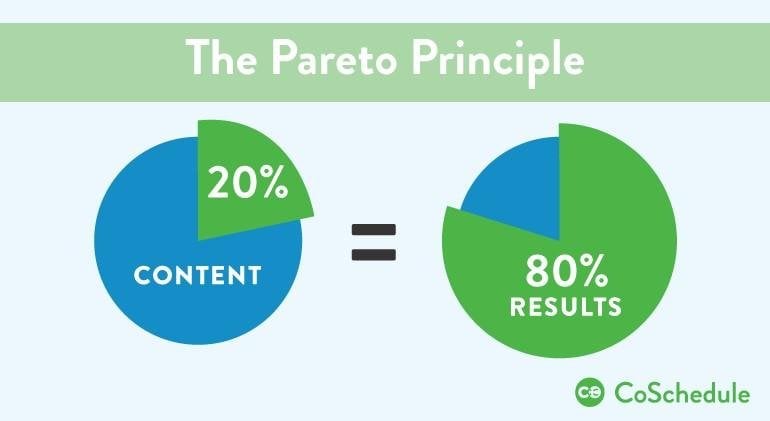
Image Source Naturally, the content audit alone wasn’t solely responsible for the 600% traffic surge. A robust backlink profile was also essential.
2. Consistent link building outreach
It’s no secret that acquiring high-quality backlinks is crucial for ranking well in organic search results. While I understood this, actually getting those links initially proved challenging. Despite sending out hundreds of outreach emails weekly, my conversion rate remained abysmal at 1%… until I revamped my outreach strategy. Initially, I diligently followed expert advice gleaned from various blog posts, even using their pre-written templates. When that failed, I explored new approaches. I even experimented with offering free access to courses and membership sites from my author, regardless of whether someone added my link or not. Through trial and error, I discovered a crucial insight: Offering exceptional value, coupled with outreach to individuals who have previously linked to or created similar content, leads to remarkably high conversion rates.

3. Regularly producing fresh, SEO-driven content
Alongside my link building efforts, I collaborated with the author to develop new, SEO-driven content. By SEO-driven, I mean content strategically crafted around the most promising keyword opportunities within their niche. Many content creators make the mistake of writing content first and then retroactively trying to “optimize” it for keywords. This approach is counterproductive if your goal is high ranking. Instead of identifying keywords your site can realistically rank for, you’re essentially shooting in the dark with keywords of varying competitiveness. While you might stumble upon a low-competition keyword that aligns with your pre-written content, more often than not, this approach leads to ranking difficulties across the board. Therefore, before creating ANY new content, I conducted comprehensive keyword research to pinpoint the best opportunities within the author’s niche. This involved compiling a Google Sheet with over 5,000 keywords. I then sorted this sheet by competition level and selected medium-to-high traffic keywords with low competition (relative to the site’s ranking potential for those keywords) as the foundation for our content. Did you notice I used the term keywords instead of keyword? Another critical aspect of crafting traffic-driving SEO content is targeting a cluster of related keywords rather than focusing on just one. Thanks to the power of the Hummingbird algorithm update in 2013, a single piece of content can now rank for thousands of keywords. Over two years, we produced 25 pieces of content using this strategy. Within a few months of publishing each piece, they all started ranking for hundreds, even thousands, of different keywords. One impressive article even ranked for 12,000 keywords…

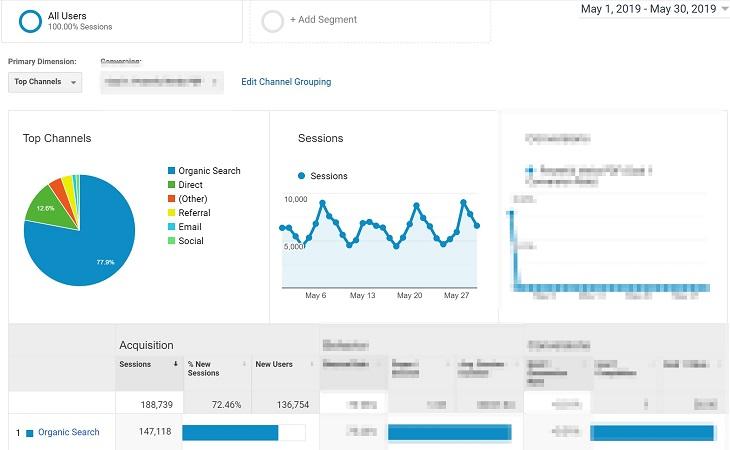
Today, with only 72 blog posts (compared to over 100 previously), the website attracts more than 140,000 monthly visitors from search engines:
When it comes to content, remember this: The frequency and volume of content you produce are secondary. What truly matters is the value and optimization of your content and ensuring consistent publication, whether monthly or even bimonthly.
4. Implementing a strategic internal linking structure
It’s fascinating how something as seemingly simple as adding internal links to other pages on your site can significantly impact your SEO. It takes mere seconds, but it really does help (especially on a large scale).

Image Source When I began working with this author, internal links were sparsely scattered throughout the site without a clear strategy. That changed quickly. Following the initial content audit, I combed through the entire website, strategically adding new internal links and optimizing the anchor text of existing ones. My strategy was straightforward: incorporate around ten internal links into each blog post, using anchor text that included one of the following:
- The target keyword of other relevant posts
- Variations of the target keyword
- Secondary long-tail keywords Simple, right? To streamline this potentially tedious process, I found two efficient methods for adding internal links (because staring at a screen for hours on end can be mind-numbing, especially when going through 50+ posts): 1. Chronologically review each post in your CMS, adding internal links as you go. This method works best when you have a spreadsheet handy containing links to all your blog posts for easy reference. Simply scan each post for suitable anchor text opportunities and add internal links as needed. If no natural opportunities arise, don’t hesitate to tweak the content slightly. 2. Leverage the search function within your WordPress admin to locate specific phrases and add internal links to relevant posts. This method allows you to search for target keywords, long-tail keywords, and LSI keywords within your WordPress dashboard, effectively identifying posts containing those phrases.
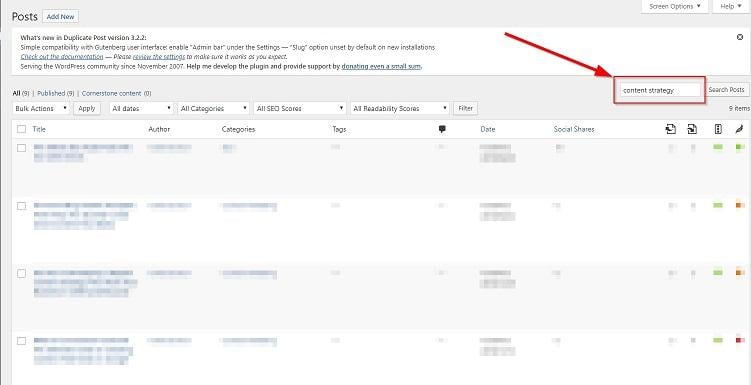
From there, simply go through those posts and add internal links, repeating the process for every post on your blog.
Strategic SEO, not just tactics, drives traffic
You’ve likely encountered most of the advice presented in this case study before—just like I had. I, too, was implementing these strategies alongside countless others, but without witnessing any significant results. Here’s why:
- My outreach templates were generic, overused, and lacked value.
- The content I produced wasn’t unique, compelling, or actionable.
- My focus was misplaced on content frequency rather than its value and SEO optimization.
- Keyword research was an afterthought, conducted after receiving the article from the author instead of guiding the content creation process. My downfall wasn’t the use of incorrect tactics; it was the misapplication of the right tactics. My efforts lacked a crucial element: a focus on helping the author leverage their unique insights to create truly exceptional and differentiated content. I failed to offer compelling value to site owners in my link building outreach and neglected to target individuals who had previously linked to similar resources or written about similar topics. These pivotal changes sparked a breakthrough in my SEO approach, benefiting not only this author but all my clients. You, too, can achieve similar results by embracing these strategies.