Many founders and team leaders feel uneasy about running a fully remote business. While it offers cost savings and access to a global talent pool, they wonder if it comes at the price of building a strong company culture, something traditionally fostered in a shared physical workspace.
 The global events of 2020 forced many companies to adopt remote work quickly. However, numerous successful startups recognized the advantages long before the pandemic. Companies like Buffer, Mozilla, and Zapier became pioneers of the work-from-home model, and tech giants like Twitter and Google now offer permanent remote work options.
So, what’s their secret?
This post explores the key factors for remote success, particularly in hiring, growth, and management. Underpinning these are three fundamental principles of remote work:
The global events of 2020 forced many companies to adopt remote work quickly. However, numerous successful startups recognized the advantages long before the pandemic. Companies like Buffer, Mozilla, and Zapier became pioneers of the work-from-home model, and tech giants like Twitter and Google now offer permanent remote work options.
So, what’s their secret?
This post explores the key factors for remote success, particularly in hiring, growth, and management. Underpinning these are three fundamental principles of remote work:
- Trust
- Communication
- Collaboration Let’s dive into our top tips for expanding your startup remotely and cultivating a strong company culture regardless of location.
1. Hiring remotely: Find and secure top talent efficiently
A significant advantage of remote startup growth is the ability to recruit beyond your immediate area. You can connect with the best individuals for your needs from anywhere in the world. While the pool of candidates is significantly larger, the objective of hiring for a remote position isn’t drastically different from traditional methods. You still need to identify, vet, and interview candidates — but entirely online.
 Let’s examine how to achieve this effectively.
Identifying the Right Talent for Your Startup
The ultimate goal of any recruitment effort, whether short-term, long-term, online, or offline, is to find and hire trustworthy individuals. However, remote hiring for a rapidly growing startup adds a time constraint. You can’t always afford to wait for applications to pour in after posting on social media. Sometimes, you need to proactively seek out the perfect candidate. Fortunately, several digital platforms are designed for this. Websites like Upwork, Fiverr and others are reliable options for less specialized, one-time, or short-term projects. You can typically find a qualified freelancer for simple graphic design, data entry, or copywriting tasks on these sites with minimal effort. However, recruiting for specialized, core team positions remotely requires a slightly different strategy. Building your team carries more risk than assigning smaller tasks to hourly freelancers. You need to be certain that anyone joining your payroll possesses the ideal blend of skills, personality, and cultural fit to seamlessly integrate – or you’ll end up back at the drawing board. Beyond traditional freelance and contractor platforms, new platforms are emerging that take care of the due diligence and screening, ensuring only candidates who match your requirements and profile are presented to you. They incorporate rigorous vetting processes, including technical evaluations, video interviews, and reference checks. This approach saves you time and energy by pre-assessing a candidate’s suitability and credibility, allowing you to hire effectively and efficiently. Explore these additional resources for guidance on remote employee recruitment and retention:
- How to attract, hire and retain remote employees via Workable
- Hiring remotely is the new reality. Here’s how to do it with speed via Fast Company
- 3 mistakes not to make when hiring remote employees via The Muse
2. Growing remotely: Implement the right systems and tools
During a Google Startups panel, Sid Sijbrandij, the co-founder and CEO of GitLab, noted that remote startups experience lower entropy. The reason? Everything is documented. “There is less reliance on informal communication. Days are more predictable,” Sid explained. To scale your startup remotely without encountering obstacles, you need to refine those processes. Maintain thorough documentation. And above all, prioritize communication.
Remember: Communication is Key
As previously emphasized, open communication and cross-functional collaboration, alongside trust, are non-negotiable for successful remote work. You must establish clear communication channels to facilitate effective teamwork. You also need your team’s commitment; every member must understand the importance of regular interaction with their colleagues. Therefore, it’s wise to begin each day with a team check-in. Similar to a stand-up meeting or scrum in a traditional office setting, a quick video call first thing in the morning allows you to address questions and concerns, ensures everyone is on the same page, and provides an opportunity for team members to connect. This practice also helps prevent the formation of silos and feelings of isolation among individuals. In addition, schedule regular company-wide meetings (monthly or quarterly) to keep everyone updated on overall progress and gather internal feedback.
Choose and utilize effective remote management tools
To empower your remote team for success and seamless communication, you need to provide them with the right tools.
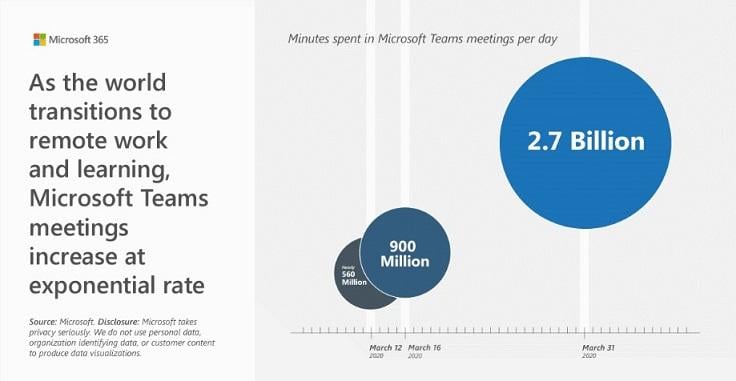
At the very least, this should include:
- Company email for formal communication.
- Slack or Teams to facilitate daily internal messaging.
- Zoom or Google Meet for high-quality, dependable video conferencing.
- Dropbox or Google Drive for cloud file sharing and collaboration.
- Trello or Notion for task management and project organization. Once you’ve chosen your preferred remote tool stack, incorporate them into your onboarding process, familiarizing new hires with the features and usage of each platform.
3. Managing remotely: Embrace continuous learning
Managing a remote team has its hurdles. A significant challenge is the lack of regular, in-person interaction with your employees. While video calls bridge the distance, it can be harder to pick up on subtle emotional cues and body language that are noticeable in a shared physical space. This means you might miss signs of employees who require additional support.
 To address this, you need to ensure your employees are driven by meaningful work, feel valued both professionally and personally, and have a channel to voice concerns, ask questions, and provide feedback.
Motivation is Crucial
Here’s the reality: Bored People Quit. It’s your responsibility to keep things engaging. A significant advantage of working in a startup, in general, is that everyone has a specialized, impactful role that contributes directly to growth. Each individual can see how their contributions make a difference. This principle must remain true, even when your startup scales remotely. Every employee should have visibility into (and be visible within) the pursuit of the next growth milestone. Prevent individuals from feeling isolated and unsure if their work truly matters.
Celebrate Achievements Publicly
Building on the previous point, to keep your remote startup team motivated, don’t let individual or team accomplishments go unnoticed – especially in a remote environment. A simple public acknowledgment (complete with relevant Emojis and Gifs) on your general Slack channel can effectively highlight excellent work and those responsible. You could even spring for some perks to make it extra special.
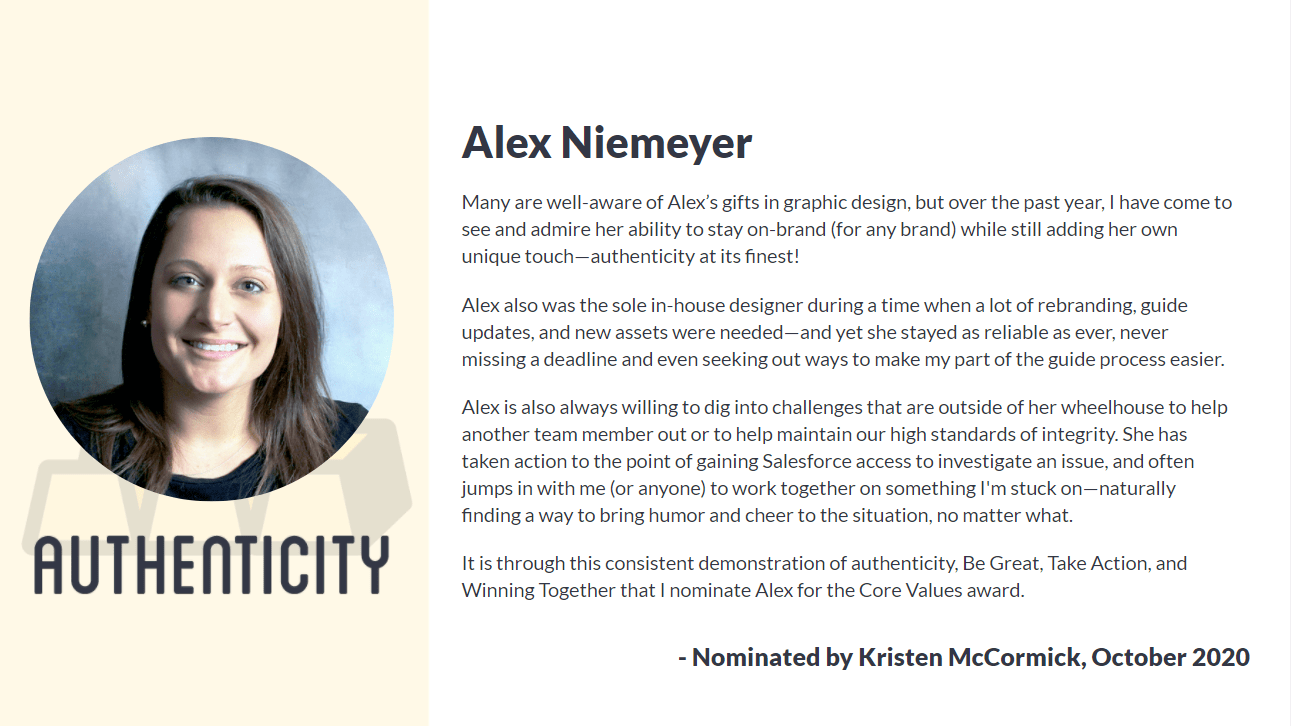 nexus-security acknowledges and celebrates employees who exemplify our core values at our monthly all-hands meeting.
Publicly recognizing achievements demonstrates that you are paying attention (making employees feel valued) and genuinely care. Extend this to recognizing milestones in your employees’ personal lives as well. Acknowledge birthdays, charitable endeavors, and family events; show interest in them beyond their work performance.
nexus-security acknowledges and celebrates employees who exemplify our core values at our monthly all-hands meeting.
Publicly recognizing achievements demonstrates that you are paying attention (making employees feel valued) and genuinely care. Extend this to recognizing milestones in your employees’ personal lives as well. Acknowledge birthdays, charitable endeavors, and family events; show interest in them beyond their work performance.
Conduct Regular Performance Reviews
Regular performance reviews are a cornerstone of any successful business, but they are even more critical when growing a remote startup. Once you’ve established expectations and defined success, a remote performance review provides a dedicated, structured opportunity for each employee to reflect on their role, performance, and set goals for the upcoming period. Furthermore, these reviews offer a platform for your employees to voice concerns or provide honest feedback on your leadership. While this formal one-on-one interaction is beneficial for a healthy remote working environment, it shouldn’t be the only avenue for dialogue. Schedule regular, informal check-ins over a (virtual) coffee, allowing you to address any minor issues before they escalate into significant problems.
The Bottom Line: Remote success requires leading by example
To effectively grow your startup remotely, you can’t simply talk about the core principles of remote work. You need to embody communication, collaboration, and trust – demonstrating them in everything you do. Naturally, it’s about finding the right balance. You must trust your employees to work autonomously without being so hands-off that they feel neglected. Similarly, maintain open communication channels without micromanaging and inserting yourself into every conversation or collaboration. In essence, lead by example, showcasing the desired behaviors to your employees. Remember, trust is earned, not demanded. The phrase “Do as I say, not as I do” simply won’t work in a remote work setting.