We are currently navigating a period of significant change and uncertainty. With social distancing guidelines tightening to curb the spread of COVID-19, traditional retail businesses are facing reduced consumer demand and even complete closures. At the same time, consumers are increasingly turning to online shopping for essential goods.

Via Inc. If you’re a small business owner accustomed to in-store sales, you might be wondering how to reach customers who can no longer visit your physical location. The answer lies in having a fully functional ecommerce website, and quickly! This makes it a perfect time to explore the process of establishing an online store. We’ll begin by discussing building one from the ground up. Following that, for those who already have a website, we’ll provide advice on incorporating basic ecommerce features into your current site. Let’s get started so you can resume selling!
Creating an Ecommerce Website from Scratch
First, let’s assume: (1) You know your product line and (2) You’ve decided on a name for your online business. If not, take a look at our guide on finding and focusing on a specific market niche and Shopify’s guide to naming your online store.
Step #1: Domain Name Availability Check
The next crucial step is confirming that the domain name you have in mind is available. Tools like Instant Domain Search make this a process that takes mere seconds. If your desired domain is available – fantastic! If not, browse the suggested alternatives and choose the most suitable option. Naturally, you’ll want to steer clear of domains too close to existing ones to avoid losing traffic (and revenue) in the long run.
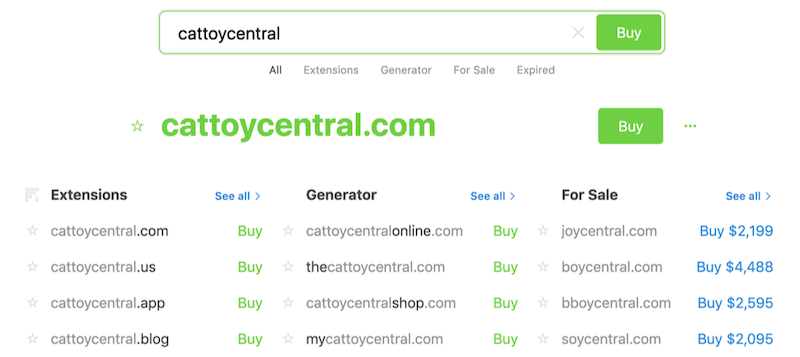
If your niche is cat toys, this one’s up for grabs. Important: While tempting, hold off on purchasing the domain immediately! If you choose to build your online store using platforms like Shopify, Squarespace or WordPress, you’ll have the opportunity to buy the domain directly through them, which simplifies the process considerably. Why is checking domain availability the very first step? Because it could save you a lot of wasted time and effort. Imagine investing time in product naming, website copywriting, and store setup only to discover that your chosen domain name isn’t available for purchase – not an ideal situation.
Step #2: Researching Product Demand through Search Volume
Before investing any resources, it’s crucial to confirm sufficient demand for your products to ensure your ecommerce venture can be profitable. Regardless of product quality or marketing effectiveness, low online search volume for your offerings makes success unlikely. That’s why the second step in creating your online store is using nexus-security’s Free Keyword Tool. This tool reveals how frequently potential customers search for your products on Google and Bing.
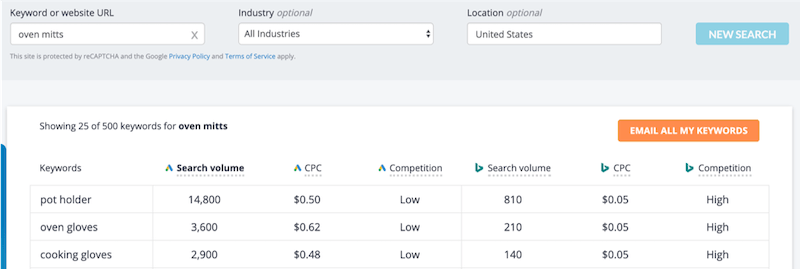
nexus-security’s Free Keyword Tool in action. This leads us to a critical question: what constitutes adequate search volume (i.e., demand)? Answering this requires a bit of calculation. Let’s assume you plan to sell handcrafted baseball gloves, projecting a $20 profit per unit sold. If your first-year profit goal is $10,000, you would need to sell 500 gloves. Initially, your aim is to achieve half of those sales (250 units) through organic search engine results. Assuming you can secure a first-page ranking (more on this challenging feat later) you can anticipate a click-through rate of at least 3%. For simplicity, let’s estimate a 5% conversion rate from organic impressions to clicks, and a further 2% of those clicks converting into sales. To sell 250 gloves, you’d need 12,500 clicks per year (or 1,042 monthly clicks). Achieving this requires generating 250,000 yearly impressions (or 20,834 monthly impressions). Essentially, to justify building your online store, you need enough combined search volume on Google and Bing to generate around 21,000 organic impressions each month.

These five keywords alone generate more than 40,000 monthly searches in the US on Google. If this seems daunting, there’s good news: organic search is just one avenue to attract customers to your online store. Even if this channel only yields $3,000 in profit, you can still reach (or even surpass) your $10,000 goal through paid search and paid social media strategies. Important: Even without relying on organic search, sufficient search volume for your products remains crucial. Success with paid search also depends on solid search volume. Additionally, search volume serves as a reliable overall demand indicator, even if your primary sales strategy revolves around social media. This brings us to step three…
Step #3: Formulating a Growth Strategy
You’ve secured your domain, confirmed sufficient search volume, and now – before diving into product photography and crafting your “About Us” page – the final step before actually building your ecommerce website is to outline your online marketing plan. Let’s delve into the strategies at your disposal.
Organic Search Marketing (SEO)
The objective of organic search marketing, or search engine optimization (SEO), is straightforward: when potential customers search for products you offer on Google or Bing, your website should appear on the first page of results. Experience tells us that websites buried beyond the first page rarely get visited.
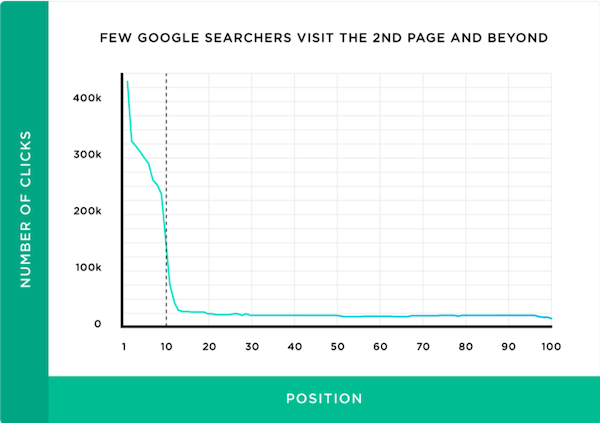
Via Backlinko. I recommend checking out nexus-security’s guide to SEO for beginners. In essence, you’ll need to identify high-volume, low-competition keywords relevant to your business and strategically incorporate them into your website copy (always ensuring you address user intent). Equally important are maintaining a logical site structure, acquiring backlinks from reputable sources, and ensuring fast page loading speeds. Here are some SEO advantages:
- It’s cost-effective (sort of). Unlike platforms like Google Ads and Facebook Ads that require payment for traffic, SEO is inherently free. However, keep in mind that it demands time for results to materialize. Also, tools that can enhance your SEO efforts, like Moz, often come with a cost.
- It attracts high-potential customers. SEO falls under the umbrella of inbound marketing. You won’t need to actively seek out customers; they’ll find you. Because these individuals demonstrate purchasing intent, they’re considered high-quality leads.
- It generates significant traffic. As I’ll soon emphasize, I’m a strong advocate for paid search ads. However, it’s undeniable that organic search results garner a substantial number of the vast majority of clicks.
Paid Search Advertising
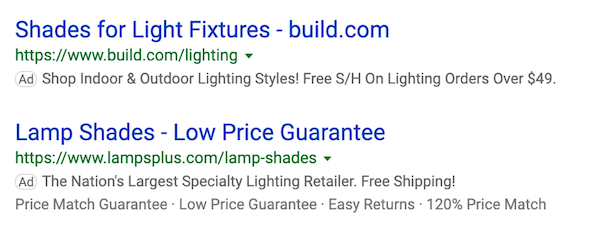
Executed effectively, organic search marketing can put your ecommerce website in front of promising prospects and drive significant traffic. The caveat is this is a gradual and demanding process. While investing in SEO is highly encouraged, if you require immediate results, exploring additional channels is essential. Enter paid search advertising – often called PPC, or pay-per-click – which allows you to swiftly get your message in front of those high-quality prospects. As with SEO, you’ll need to pinpoint high-volume, low-competition keywords relevant to your offerings. However, instead of embedding these keywords in your web copy for high organic search ranking, you’ll target them in your ad copy (and corresponding landing pages) to rank highly in paid search results, which appear both above and below organic results. For further information, I recommend our articles on PPC basics and our definitive guide to ecommerce PPC. Meanwhile, here are some key advantages of PPC:
- It delivers swift outcomes. Once you’ve established your Google Ads and Microsoft Advertising accounts and received ad approval, driving traffic to your online store and generating revenue can begin immediately.
- It attracts promising prospects. Like SEO, PPC is an inbound marketing strategy. The most motivated buyers will seek you out.
- It offers easy scalability. After gathering initial data and identifying profitable keywords, you can readily adjust and reallocate your budget for enhanced results.
Paid Social Media Advertising
Both organic and paid search share a potential drawback: search volume can decline. This is the flip side of inbound marketing. While leveraging buying intent is powerful, consistent high demand isn’t guaranteed. This is where paid social media advertising provides valuable insurance. Paid social involves purchasing ads on platforms like Facebook and Instagram. Because these platforms possess extensive user data, they empower advertisers to target potential customers with exceptional precision. Depending on your objectives, you can choose to pay per impression, per click, or even per video view. As an ecommerce advertiser, you can even engage in social shopping, enabling social media users to browse and buy your products without leaving the platform. If maximizing conversion rates is your aim, this is a game-changer!

A shoppable Facebook post. (I added the red squares.) Be sure to explore the nexus-security guides for Facebook advertising, Instagram advertising, and getting started with social shopping. But first, consider these three compelling advantages of paid social media:
- It broadens your potential customer base. While inbound marketing is highly effective, it can leave you susceptible to fluctuations. To avoid being caught off guard by shifts in demand, utilize paid social media to attract a larger pool of potential customers to your ecommerce funnel.
- It’s budget-friendly. Put simply: clicks and conversions cost less on social media compared to search engines.
- It allows for precise targeting. In fairness, Google Ads and Microsoft Advertising have significantly enhanced their audience targeting capabilities. Nevertheless, when it comes to matching the right ad with the right person, Facebook and Instagram still reign supreme.
Step #4: Building Your Online Store
You’ve secured the perfect domain, confirmed solid search volume, and are confident in your multi-platform marketing approach. The final step toward building your ecommerce website is… … well, actually building it. Admittedly, not the most groundbreaking revelation. But, believe it or not, you’ve already navigated the trickiest parts. Keyword research and understanding the intricacies of different marketing channels – that’s the hard part. From this point on, building your online store becomes, dare I say, fun. With the groundwork laid, piecing together your ecommerce website can be enjoyable. So, let’s break down what’s next.
Selecting an Ecommerce Platform
A simple Google search for “ecommerce website builder” will inundate you with ads and organic results from various software providers and marketing agencies. Among them, you’ll likely recognize familiar names like Shopify, BigCommerce, Squarespace, Wix, and WordPress. If our focus were solely on websites designed for traffic and lead generation, WordPress, the industry leader for a reason, would be the ideal recommendation. However, our objective is building an online store, so selecting the optimal solution for ecommerce businesses is paramount. And that solution, in my opinion, is Shopify.
Countless in-depth reviews rave about Shopify’s merits, so I won’t elaborate extensively today. Suffice it to say, if you’re seeking an intuitive, budget-friendly, and dependable platform that empowers you to sell not only through your website but also on platforms like Facebook and Pinterest, go with Shopify.
Purchasing Your Domain
Remember that perfect domain name you picked out earlier? It’s time to make it yours. Whether you opt for Shopify, WordPress, Squarespace, or another solution, you can usually buy your domain directly through them. The annual cost will likely fall somewhere around $20 to $30.
Choosing a Theme
After selecting your platform and acquiring your domain, the next task is choosing a theme for your ecommerce website. The key is aligning your theme selection with both your industry and your desired brand identity. If you’re in the fashion realm and aiming for a modern, edgy brand, a sleek theme would be fitting. Conversely, if you’re in the home and garden sector and aiming for a welcoming vibe, consider a theme with bright, warm colors.
Compiling Your Product Photos and Descriptions
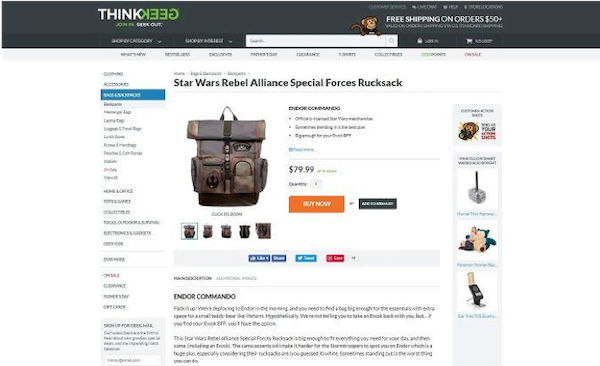
Product photos can be incredibly impactful. As potential customers browse your online store and examine product images, they begin to envision themselves as your customer. Someone browsing women’s apparel can imagine themselves wearing a particular dress. Someone looking at home decor can picture your vase displayed on their mantelpiece. These seemingly insignificant moments can be incredibly persuasive when converting a new customer. Check out these 14 product photography tips for professional-looking results!

Stunning. Product descriptions are equally critical. They not only help potential customers grasp the value proposition of your products but also play a crucial role in improving your SEO. A well-crafted product description is a prime opportunity to target those secondary and tertiary keywords you couldn’t quite fit into your product title. For instance, imagine you’re selling organic laundry detergent online. One of your product titles might be something like “Bill’s Organic Laundry Detergent, Lavender, 64 OZ.” While this covers your brand, scent, and size, consider the related keywords you can still target: all-natural, chemical-free, eco-friendly, and so on. Make the most of your product descriptions!
Setting Up the Facebook Pixel
Before making a single sale, I highly recommend installing the Facebook Pixel – a small code snippet that tracks the actions taken by your website visitors. The data collected by your Pixel enables you to significantly enhance your Facebook and Instagram advertising campaigns. Let’s revisit the baseball equipment store example. Suppose you ran a successful Facebook ad campaign for a particular bat. Using the Facebook Pixel, you can group together all the (anonymous) users who clicked your ad and purchased the bat. Then, you can retarget this audience of previous buyers with an ad for a glove! Essentially, the Facebook Pixel provides invaluable insights, allowing you to maximize your return on investment from paid social media advertising.
Ensuring Payment Processing Capabilities
With your ideal theme chosen, captivating product photos and descriptions ready, and the Facebook Pixel installed, there’s only one hurdle left before your online store takes flight: confirming your ability to process payments. If you’ve built your store on Shopify, enabling payment processing is as simple as activating Shopify Payments; no need for external integrations. However, with solutions like Squarespace or WordPress, you’ll need to connect your site to payment gateways like PayPal, Stripe, or both. Now that you’re equipped to sell, it’s time to unveil your brand new ecommerce website to the world!
Incorporating Ecommerce Features into an Existing Website
If you already have a website, you might encounter suggestions to create a separate, dedicated ecommerce site using platforms like Shopify or WordPress. This is not advisable. Firstly, it means paying for two separate websites. While not a considerable expense, it’s still an additional cost. Secondly, building a new website, even with user-friendly platforms, requires time. Why spend days on an avoidable task? Thirdly, and most importantly, redirecting customers from your main website to a separate ecommerce site creates a disjointed user experience. While your most loyal customers might tolerate it, many online shoppers won’t. Building a dedicated ecommerce site not only wastes time and effort but can also lead to lost revenue.
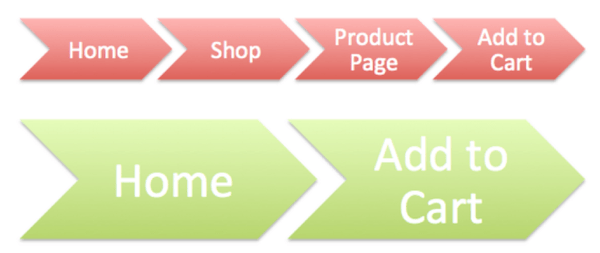
The smoother the buying process, the better. The optimal solution is integrating basic ecommerce functionalities into your existing website. Let’s explore the different ways to achieve this.
Explore Your Current Provider’s Offerings
If your website is hosted on platforms like Squarespace, WordPress, or Wix, you have options. For instance, Squarespace Commerce offers a suite of features that enable you to list products, manage orders, and process credit card transactions. Creating product pages is simple, and you have flexibility regarding shipping options. Plus, you can easily boost sales with Squarespace’s built-in marketing tools, such as discount banners and abandoned cart recovery. If your website uses WordPress, you’re in luck: WooCommerce, a highly popular WordPress plugin, streamlines the process of adding ecommerce capabilities. Simply navigate to “Plugins” in your WordPress dashboard’s left-side menu and click “Add New.” Search for WooCommerce, install it, and follow the Onboarding Wizard’s guidance. Once onboard, you can start customizing various features.
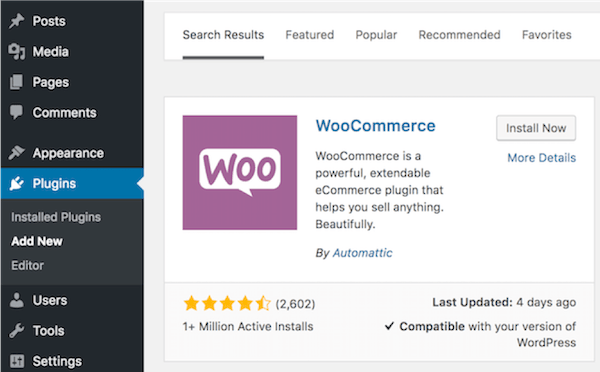
Via GoDaddy. Another noteworthy website solution is Wix. Similar to Squarespace, Wix makes it easy for subscribers to transition to ecommerce-friendly plans. If you’re not already on a Business Premium subscription, you’ll need to upgrade (which comes with a price increase). Once upgraded, simply click “Add” in your left-side menu and select “Store.” A new “My Stores” button will appear in your left-side menu, allowing you to begin building and managing your Wix store!
Utilize Third-Party Ecommerce Tools
If modifying your website subscription isn’t ideal, or if your website’s structure limits significant changes, you can opt for third-party tools to incorporate basic ecommerce functionalities. Let’s examine some options.
Shopify Buy Button
Designed for bloggers, artists, and those with side businesses, the Shopify buy button empowers you to sell through your website without fully committing to a complete ecommerce overhaul. You can effortlessly embed buy buttons on your homepage, sidebar, or even within your content, regardless of your website platform. This is a fantastic choice for secure and speedy product selling while maintaining a seamless user experience.
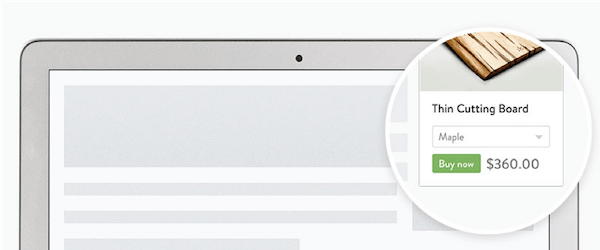
Shoprocket
For a mere $7 per month, Shoprocket enables selling across both your website and Facebook page. Seamlessly integrating with your existing website, Shoprocket provides a centralized hub for crafting offers, processing orders, defining shipping preferences, and more. A major advantage is the ability to upgrade as your business expands, granting you access to advanced features such as Google Analytics integration and live chat support.
Snipcart
Snipcart, which allows you to sell products, digital downloads, and subscriptions with just two lines of code, is another option for incorporating ecommerce into your existing setup. For 2% of each sale, you gain access to a user-friendly platform for managing orders, tracking abandoned carts, integrating with email marketing platforms, and more. If you seek an easy-to-implement and adaptable solution, Snipcart is worth exploring.
Start Building Your Online Store Now!
Whether you’re a budding entrepreneur or a seasoned retailer seeking a stronger online presence, there’s no better time than now to establish or enhance your ecommerce website. Regardless of the platform you choose or the marketing channels you explore, countless effective strategies exist to reach your target audience. Keep in mind that with the continuous rise of online retailers, competition for this audience will only escalate. That’s why taking the first step – whatever that may entail for you – as soon as possible is crucial. Happy selling!