eBay is experiencing a difficult situation following Google’s implementation of Panda 4.0 and the Payday Loan 2.0 update. These changes have led to a significant decrease in eBay’s organic traffic and search engine rankings. To make matters worse, a database hack forced eBay to require all users to update their passwords. Matt Cutts, as he frequently does, initiated the SEO frenzy with this tweet:
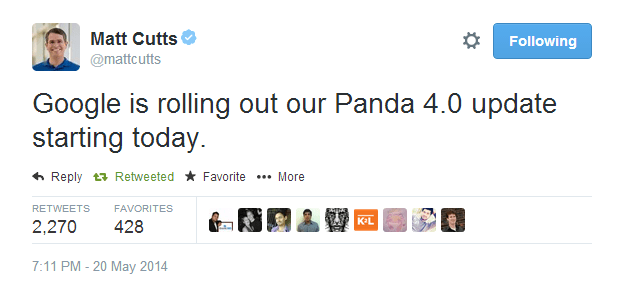
Panda, initially launched in 2011, is a crucial element of the organic search ranking algorithm. Its purpose is to eliminate low-quality websites or those with minimal content, often called “thin content.” When first released, Panda impacted about 12% of all search queries. By March 2013, Google had refreshed Panda 25 times, making it a persistent source of frustration for SEO specialists. What makes this update particularly concerning for webmasters is that Google had ceased announcing Panda updates and refreshes. During SMX West in March of the previous year, Cutts stated that Panda would transition into a rolling, monthly update. However, his announcement of Panda 4.0 suggests a significant alteration to the algorithm, exceeding a simple data refresh. Just an hour after announcing Panda 4.0, Cutts confirmed via tweet what SEO experts had speculated about throughout the weekend: Google had also begun rolling out an update to its Payday Loan algorithm, bringing it to version 2.0.

Launched in June 2013, Payday is separate from Panda and Penguin, targeting exceptionally spammy search terms. In the video announcing the initial update, Cutts mentioned payday loans and pornography-related searches were highlighted as areas they intended to improve.
Did eBay Switch from AdWords to SEO?
Last year, eBay released a paper detailing a “large-scale field experiment” they conducted. This study purportedly provided definitive proof that “brand-keyword ads have no short-term benefits, and that returns from all other keywords are a fraction of conventional estimates.” Essentially, they claimed AdWords was ineffective for companies as large as eBay, and paid search offered minimal value in acquiring new customers. For more details on their findings and methodology, refer to this summary at Harvard Business Review. As I previously highlighted, eBay’s inability to effectively utilize paid search stemmed not from AdWords itself, but rather from their poorly executed campaigns and improper use of AdWords features, such as Dynamic Keyword Insertion:


eBay’s inattentive AdWords management not only projected an unprofessional image to users but also wasted a significant amount of the brand’s budget. Their failure to implement even the most fundamental paid search best practices, like utilizing negative keywords to avoid appearing in irrelevant searches, rendered their research entirely unreliable. The underlying message of this report was that eBay intended to abandon AdWords as a marketing channel and concentrate on organic search engine optimization. So, how did that strategy turn out?
eBay Impacted by Panda 4.0
Harvard Business Review predicted that major online retailers like Amazon and Walgreens would follow eBay’s lead and abandon AdWords. After all, prime SERP placement through SEO is free, isn’t it? The issue is that in the world of SEO, past success does not guarantee future results, a lesson eBay is currently learning the hard way. It seems their “strategy” relied on “doorway pages” and thin content, the very type of search spam Google has been actively removing from search results. Dr. Pete at Moz conducted an initial analysis of eBay’s organic rankings following confirmation of the two Google updates:
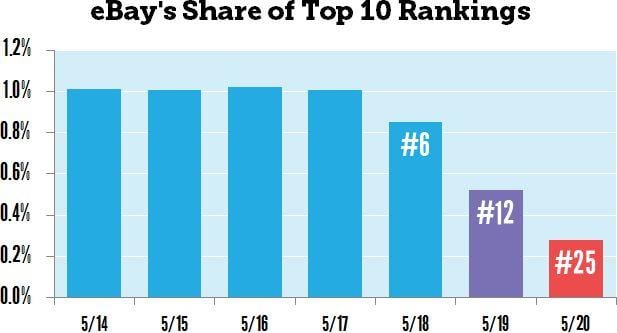
The main eBay subdomain has completely dropped out of the ‘Big 10,’ with Moz’s list of the ten domains now dominating the top 10. This represents a substantial decline considering the available historical data. Data from Moz indicates that eBay has lost approximately 75% of its page one rankings for tracked keywords. They typically monitor around 10,000 “head terms” – keywords with higher search volume. My own research reveals that eBay is no longer ranking competitively for 80% of their non-branded “long tail keyword searches” (millions of more specific keyword searches):
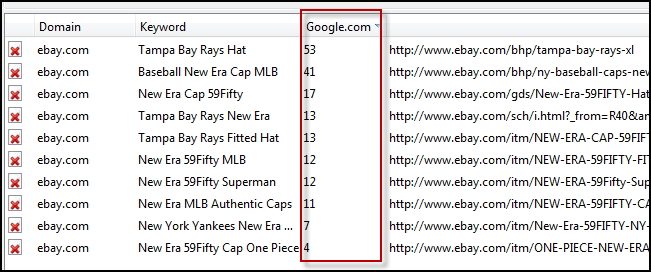
This figure, based on a random sample of non-branded, long tail keywords previously targeted by eBay, shows that 80% are no longer on the first page of search results, despite relatively low competition for these highly specific searches.
Thin Content and Doorway Pages: Reasons for eBay’s Decline
When searching for specific products, organic search results often lead to doorway pages on eBay. These pages contain minimal content, like this one:
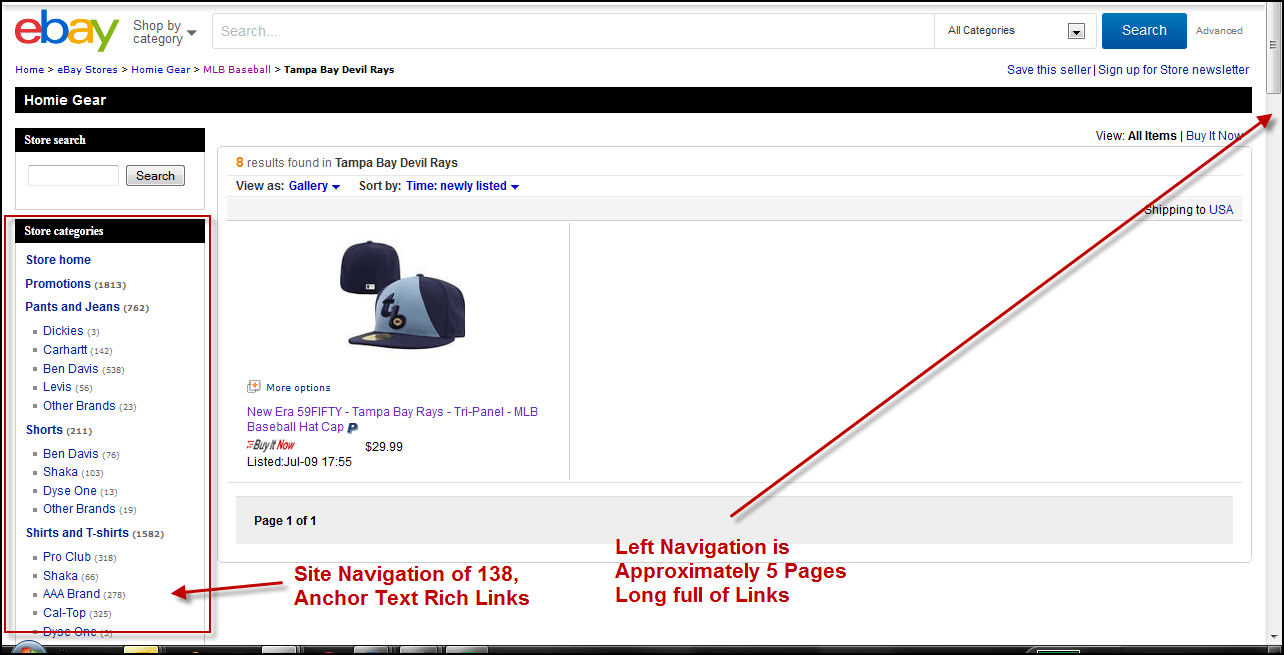
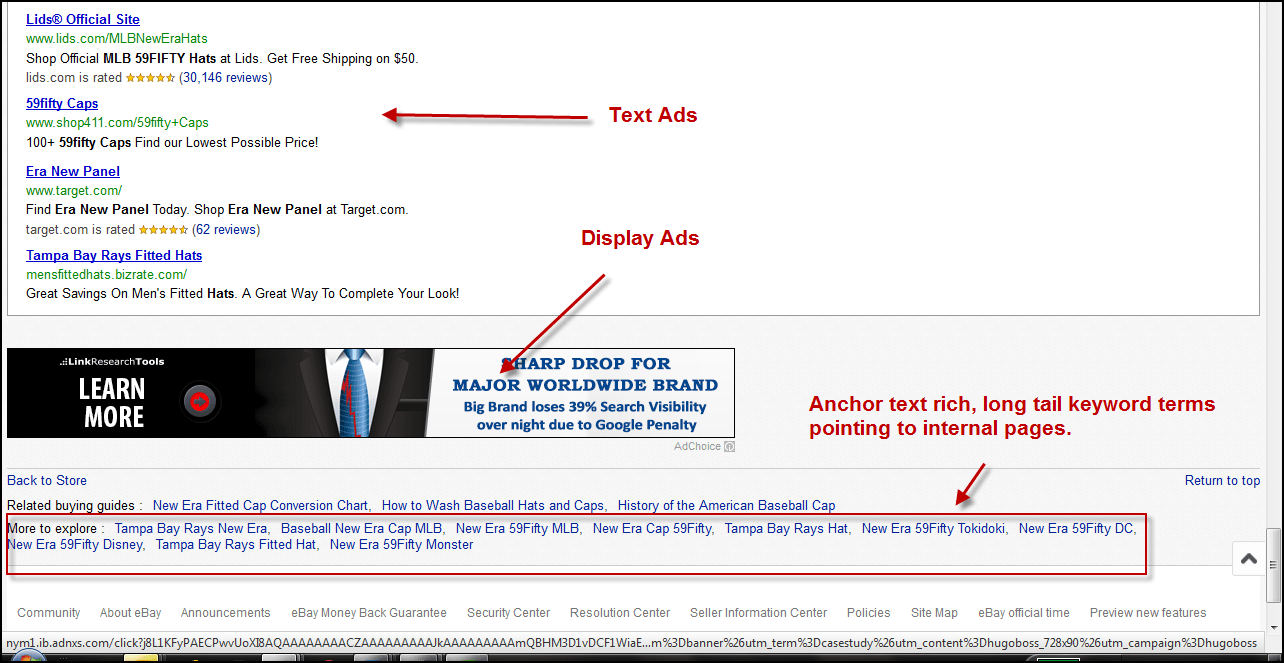
The actual product listing pages consistently include three main elements:
- eBay’s own internal search results
- Advertisements – text ads, display ads, and PLAs
- Internal links to other product results pages eBay also employs aggressive internal linking with super-long-tail keywords in their footers:
While users can refine their searches within eBay, navigating through search result pages, internal links, and ads to find specific products, they encounter minimal valuable content along the way. It’s surprising that Google allowed these practices to persist for so long, especially now that they offer product listing ads, providing a superior user experience for product searches:
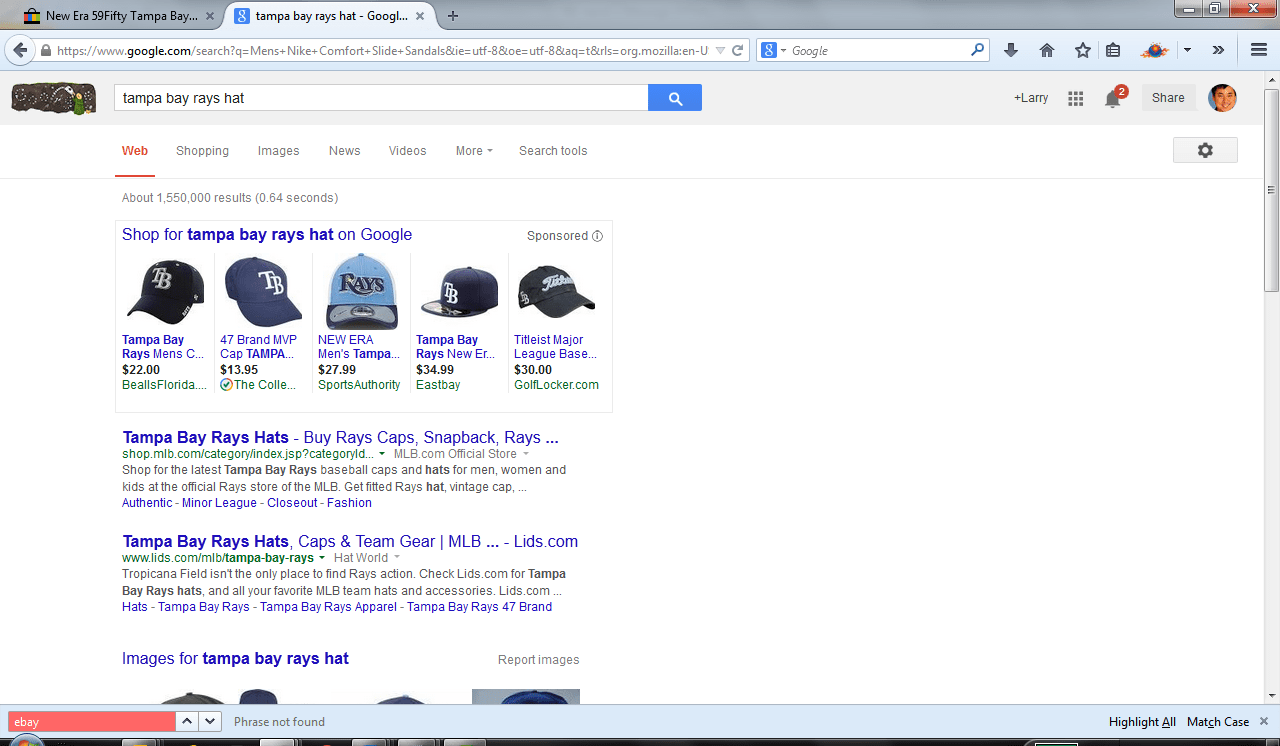
By removing eBay’s product listing pages from top organic rankings, Google effectively forces them to utilize product ads to remain visible to users searching for specific product information. While it’s tempting to attribute this solely to profit-driven motives, this change also benefits users. eBay’s “strategy” of flooding search results with millions of doorway pages and internal site search pages constituted spam by any definition. For commercial queries, Google Shopping ads offer a more relevant and beneficial experience for consumers.