If you own a small business, you probably already have a general idea of your target market. But in today’s cutthroat business world, a vague idea won’t cut it. Without a deep understanding of your target market, you risk falling behind competitors and missing out on golden opportunities to boost sales.

Don’t go after your customers with a hunting bow. This post will delve into target markets, covering what they are, how to identify them, examples of target markets, and how to refine them through segmentation. Buckle up, we’ve got a lot to cover.
What Exactly is a Target Market?
In simple terms, a target market is a particular group of people you’ve chosen to focus on with your products or services. This group can be broad or highly specific. Seems straightforward, right? But things get trickier if your product or service has widespread appeal or if your customer base is diverse. If you’re trying to sell to “everyone,” defining your target market becomes a challenge.
Target Market vs. Demographic: Understanding the Difference
While often used interchangeably, “target market” and “demographic” have distinct meanings. Target markets tend to be broader than demographics. This is because many businesses offer products or services that attract a wide range of customers. Factors like buying cycles, product shelf life, and other non-demographic elements can influence target markets. When creating marketing models and strategies, marketers often prioritize the long-term profit potential of a target market, requiring a broader perspective.

Fun fact: Did you know Spam can last for FIVE YEARS past its sell-by date if stored properly? Demographics, on the other hand, are subgroups within a target market that share specific characteristics, similar to your target audience. For instance, many TV advertisers aim for the desirable but unpredictable 18-35 age demographic. This doesn’t mean people older than 35 are excluded from their target market—they simply belong to a different demographic. Think of target markets as a collection of demographics potentially interested in your offerings.
Identifying Your Target Market: A Step-by-Step Guide
Now that we’ve clarified what a target market is (and isn’t), let’s explore how to identify one for your business.
Start with Your Existing Customers
Begin by closely examining your current customer base. Even if they seem diverse, there’s a high chance they share at least one or two common traits. If not, perhaps a shared interest connects them.

Identifying these commonalities helps refine your existing customer base into a defined target market. When researching target markets, start broad but gradually become more specific. For instance, you might initially identify homeowners as a potential demographic, then narrow it down to homeowners with older children, a certain income level, and working in a particular industry. This detailed understanding allows for tailored messaging that resonates with these individuals, even if your customer base is broader.
 Looking to stand out in your market?
Free download >> The 30 Best Ways to Promote Your Business (With or Without Money!)
Navigating Demographic ‘Gray’ Areas
A common mistake businesses make is failing to recognize that not everyone fits neatly into demographic categories.
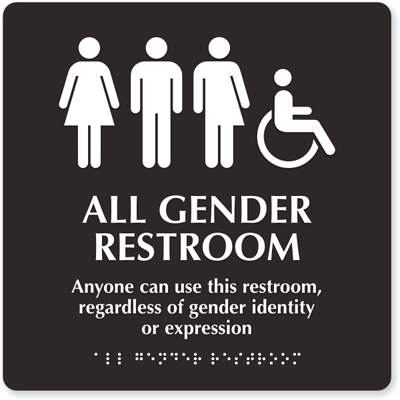
For example, while gender can be a starting point for customer research, it’s not always binary. Transgender individuals, for instance, might not fit easily into narrow demographic categories. Prioritize inclusivity when analyzing potentially sensitive demographics, especially in your messaging’s imagery and language, to avoid alienating community members and potential customers.
Target Markets in Action: Real-World Examples
Let’s examine how some brands apply these principles to their marketing campaigns. In each of these target market examples, we have to rely on informed speculation. However, by closely analyzing their messaging and conducting research, we can deduce significant insights about their target markets.
Case Study: Scotts Miracle-Gro
Miracle-Gro is a household name in lawn care.
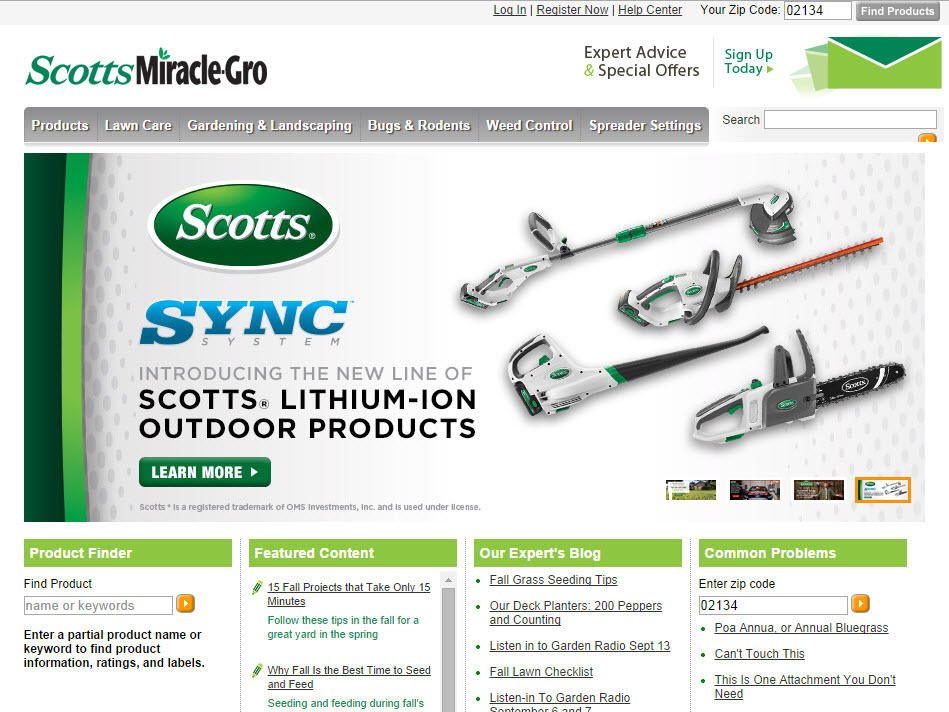
Their homepage reveals valuable information about Scotts’ target market for this product. Notice the prominent display of their new Sync System power tools. You’ll also see a banner announcing Ortho, a lawn care and pest control brand, as a sponsor of NASCAR driver Greg Biffle. Additionally, there’s a slide directing visitors to “Scotts Garage,” a hub for lawn care advice, videos, articles, and more.
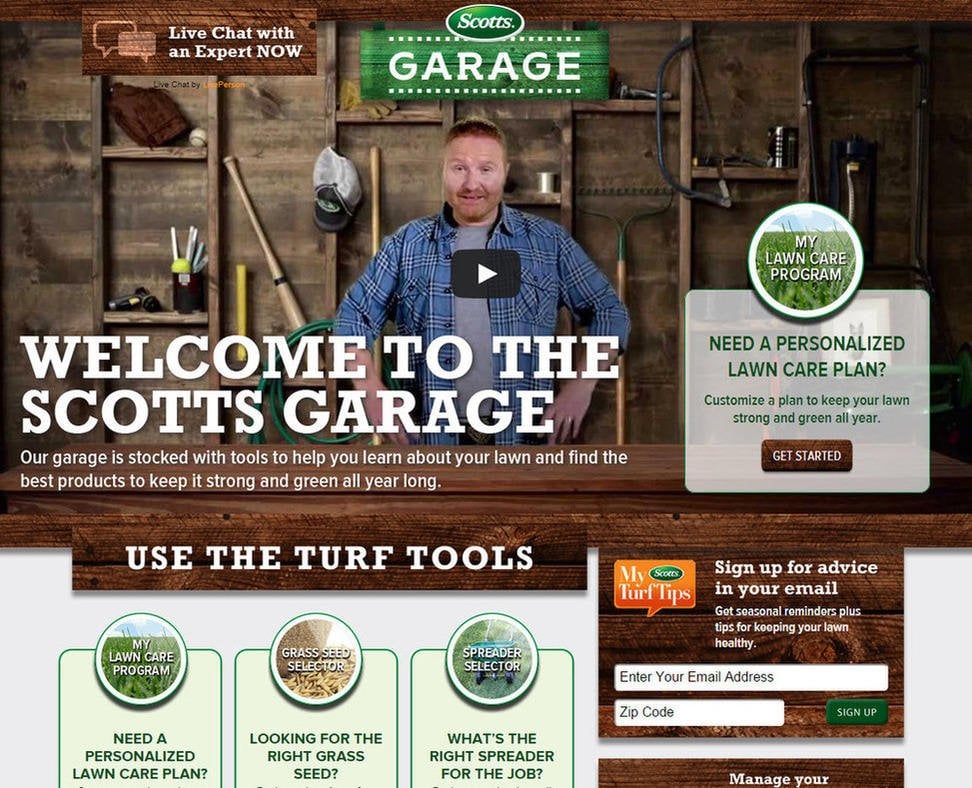
What does this tell us about Scotts’ target market? The messaging, visuals, and content strongly suggest a predominantly male audience. The focus on homeowners is evident, as renters are less likely to be responsible for lawn care. The NASCAR sponsorship hints at a target market interested in sports and willing to invest in power tools for lawn maintenance. But we can delve deeper using publicly available data. According to Bankrate.com, the average U.S. mortgage is around $235,000. Assuming a 30-year mortgage on a home of this value, the monthly repayment (excluding interest) would be roughly $1,121, or $13,463 annually. With a 4.5% interest rate, qualifying for this mortgage would require an annual income of at least $51,000. RELATED: 85 Profitable Small Business Ideas to Explore
Scotts Miracle-Gro Target Market Profile
Through research and calculations, we can deduce that Scotts’ target market likely consists of individuals who:
- Are male
- Own their homes
- Earn $50,000 or more per year
- Enjoy sports While some guesswork is involved, these insights are far more valuable than simply “people who want to maintain their lawns.”
Case Study: Lush Cosmetics
Lush Cosmetics stands out for its environmentally friendly and cruelty-free products. Their product line is extensive, and their quality is undeniable (my wife is a huge fan!).
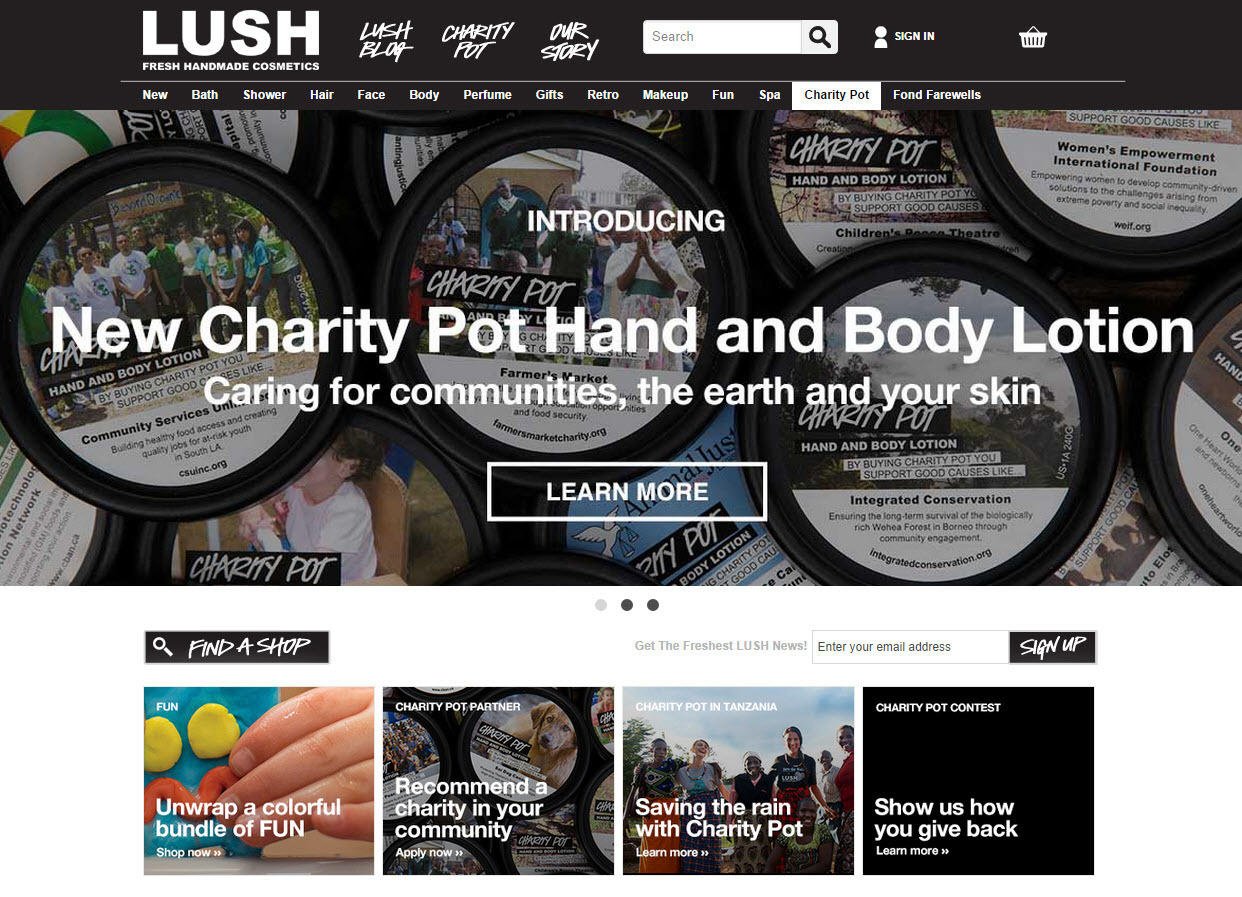
While it might play into stereotypes, women tend to spend more on cosmetics than men (though the the male grooming industry is worth an estimated $6 billion annually). A closer look at Lush’s homepage reveals some telling signs. Notice the significant space dedicated to their charitable initiatives, highlighting social and environmental responsibility as a core brand value. They even feature a new product line centered around giving back to communities and conservation efforts.
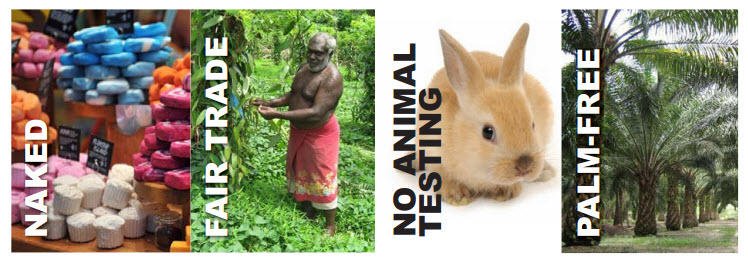
Their products themselves are revealing. A significant portion (81%) are vegan, made without animal byproducts, and all are vegetarian-friendly. Lush products are handcrafted, not mass-produced, with ethically sourced ingredients often obtained through fair trade practices that support local economies. Let’s put on our detective hats again. We know women are more likely to purchase cosmetics. Lush’s commitment to ethical manufacturing suggests a target market that includes vegetarians and vegans. The focus on social responsibility aligns with the increasing tendency of individuals under 30 are significantly more likely to support such brands.
Lush Cosmetics Target Market Profile
Based on this analysis, we can reasonably assume that Lush’s target market primarily consists of:
- Women
- Individuals aged 30 or younger
- Vegetarians and vegans
- Those who prioritize socially responsible businesses While this might not encompass all Lush customers, these characteristics likely resonate with a significant portion of their target market.
Fine-Tuning Your Approach: Market Segmentation
If a target market doesn’t cover all potential customers, what can you do? Segment and refine your target market further. Market segmentation helps you grasp how your offerings appeal to individuals across various demographics within your target market. There are four main categories of market segmentation:
- Geographic
- Demographic
- Psychographic
- Behavioral Let’s explore each category in more detail.
Geographic Segmentation
This involves targeting people based on their location. It can be as broad as a continent or as specific as a particular bus stop. Geographic segmentation typically involves criteria such as:
- Continent
- Country
- Country region
- City
- Cities/towns with specific population densities
- Climate
- Areas with specific population thresholds
- Localized areas (neighborhoods, specific retail stores)
Demographic Segmentation
We’ve touched upon demographics throughout this post, but it’s a crucial aspect of market segmentation. Since we already understand what a demographic is, let’s review common demographic factors:
- Age
- Gender
- Family size
- Household income
- Occupation
- Education level
- Religion
- Race
- Nationality
Psychographic Segmentation
This category groups people based on their personality, interests, and other intangible factors. It’s a powerful way to market the same product to seemingly different demographics and plays a key role for brands like Lush. Psychographic segmentation focuses on:
- Personality
- Attitude
- Personal values
- Lifestyle
- Social class
- AIOs (Activities, Interests, Opinions)
Behavioral Segmentation
This refers to how people behave, specifically what potential customers expect from a product or service and how their experiences shape their behavior. Behavioral segmentation considers factors such as:
- Benefits sought
- Buyer readiness
- Brand/product loyalty
- User status
- Occasions
Hitting Your Target Market Bullseye
You probably thought I’d spare you the overused target metaphor, didn’t you? While I understand the potential for eye-rolls, I hope this information has been valuable. Just because your product or service has broad appeal doesn’t mean you can’t delve deeper into understanding your audience and refining your marketing strategies for greater impact.