Navigating the abundance of online resources for small businesses during the COVID-19 pandemic can be challenging. This guide, structured around seven common COVID-19 objectives, aims to simplify things:
- Ensuring safety
- Communicating with customers
- Updating your listings
- Adjusting your marketing and ad campaigns
- Managing finances
- Working remotely, and
- Making sense of it all This is not an exhaustive list or a prioritized plan, as every business is unique. Instead, it provides solid starting points and sound advice from reliable sources to help you prioritize your needs. Post-peak update: We’ve analyzed data from successful digital agencies in 2020, and you can find key takeaways applicable to your business.
1. Ensuring safety
Although the initial preparation phase might be over, continuous protective measures remain crucial for operational businesses and those preparing to reopen.
- Protecting yourself: Prioritizing your health is paramount to protecting your employees, customers, and business. Consult the CDC’s guide on Protecting Yourself from the Coronavirus
- Disinfecting your workplace: The CDC’s guide on Cleaning and Disinfecting Your Facility provides detailed instructions for various surfaces and situations.
- Protecting Employees and Customers: The CDC’s Interim Guidance for Businesses, along with OSHA’s Guide on Preparing Workplaces for COVID-19, offer specific steps to ensure their safety.
- Communicating with Employees: Workable provides useful templates for effective communication.
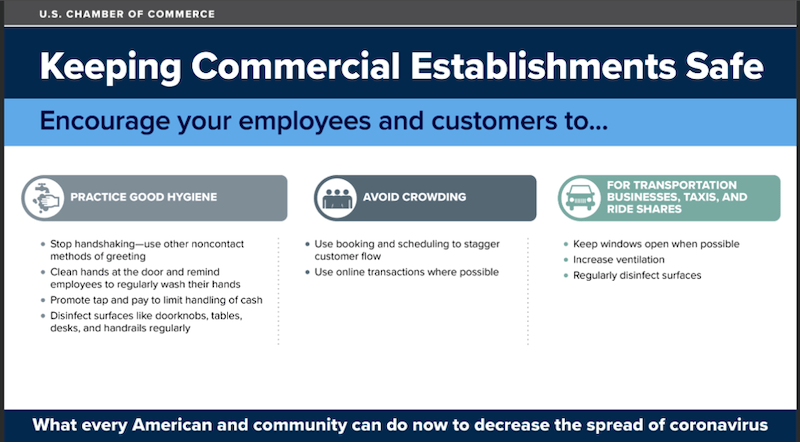
The Chamber of Commerce is a trusted resource to ensure your business meets COVID-19 safety standards.
2. Communicating with customers
Keeping your customers informed about your operational status, safety protocols, contact information, and update sources is vital. Utilize all your communication channels, including:
- Email: Send tailored emails to existing customers and your broader audience (e.g., newsletter subscribers) to address specific concerns proactively.
- Voicemail greeting: Update it with the current date, essential information, and online channels where updates are available.
- Social media profiles: Pin a post outlining your COVID-19 response or linking to it on your website.
- Signage at your location: Display clear signage if you have a physical store.
- Homepage: Modify your website to reflect your proactive approach. This could range from a simple sticky notification to a dedicated COVID-19 page or a complete redesign, depending on your business.
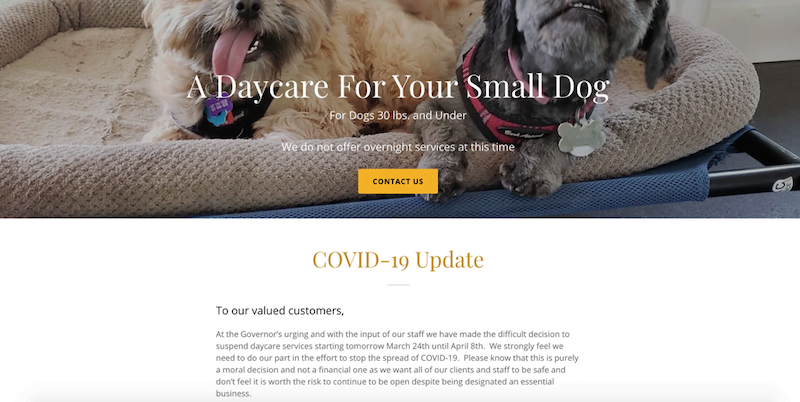
Update your homepage to demonstrate your proactive response to COVID-19. Here are some resources to assist you with crafting effective communications:
Coronavirus Response Toolkit: Access free resources from the US Chamber of Commerce.
COVID-19 Communication Templates: Utilize free templates from AlertMedia.
Explore industry-specific templates available online. A quick Google search might yield valuable resources. For instance:
This free small business guide provides insights into navigating the evolving online advertising landscape during COVID-19.
3. Updating your Google My Business listing
While updating all online listings might not be necessary, prioritizing Google My Business is crucial as consumers rely heavily on it for real-time information. To edit your listing, access google.com/business using your business account, not your personal Gmail (especially if you’re using a home computer). Here’s what to update:
- Hours: You can now mark your business as temporarily closed.
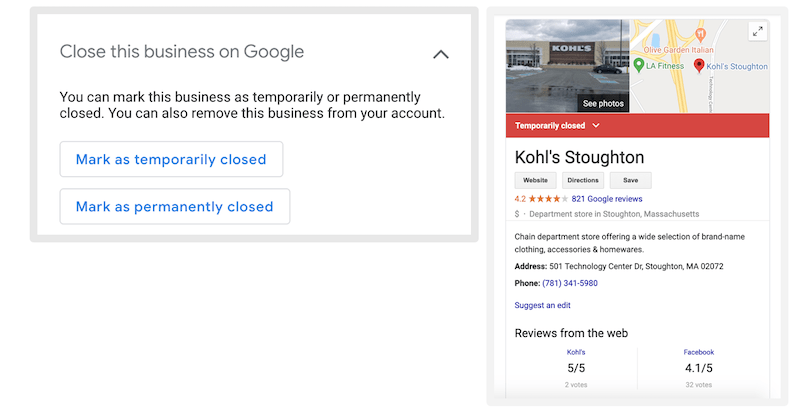
Google My Business now allows setting a “temporarily closed” status.
- From the business: Provide details about available services, such as “contact-free delivery,” or announce your closure.
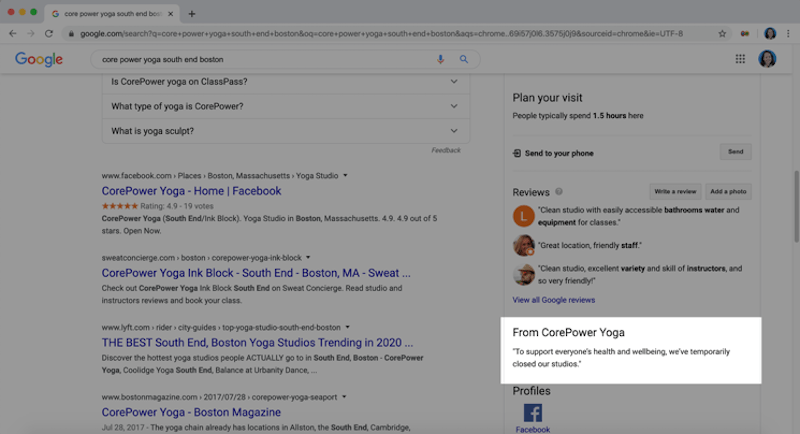
Utilize the “From the business” section on your Google My Business listing to communicate important information.
- Attributes: Ensure all relevant attributes, like delivery, pick-up, or drive-thru, are selected.
- Posts: Use “Events” posts for updates with a specific timeframe, as “What’s New” posts expire after seven days.
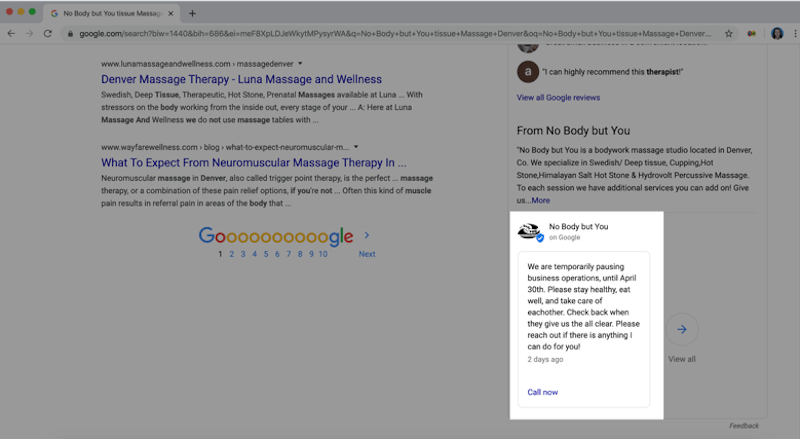
Leverage Google Posts for direct communication with customers on search result pages.
- For comprehensive information on managing Google My Business during COVID-19, refer to their COVID-19 Guidance Page.
4. Adjusting your marketing and messaging
The pandemic has significantly altered consumer needs and business objectives. Adapting your marketing strategies and messaging is crucial to remain relevant and avoid appearing insensitive. This involves brainstorming new ideas and reviewing existing campaigns. For a comprehensive guide and key takeaways, refer to the resources below:
- Our detailed Guide to Marketing and Copywriting During COVID-19 covers essential actions like:
- Replacing irrelevant CTAs (e.g., “join now” if you’re closed) with suitable alternatives (e.g., “sign up for virtual classes”).
- Promoting your COVID-safe offerings (e.g., contact-free delivery, at-home kits, virtual sessions).
- Reviewing your materials for potentially insensitive language (“killer content” or “go viral”).
- Checking scheduled content and automated emails (anniversary, birthday, or holiday offers). For businesses running ads, we have a post on Facebook and Instagram ad strategies during the pandemic. If you’re not, note that Google is offering ad credits to small and medium-sized businesses. Learn more here.
5. Taking financial measures
Various options, including new ones specific to the pandemic, like the CARES Act Paycheck Protection Program, are available to help small businesses manage cash flow and alleviate financial burdens. These resources can help you identify suitable options for your business:
- Coronavirus Emergency Loan Guide and Checklist by the US Chamber of Commerce
- COVID-19 Small Business Loan Resources by the US Small Business Administration
- State-Specific Directory of Coronavirus Funds by Candid
- Multi-State Programs List by US Chamber Foundation
- Facebook’s Small Business Grant Program
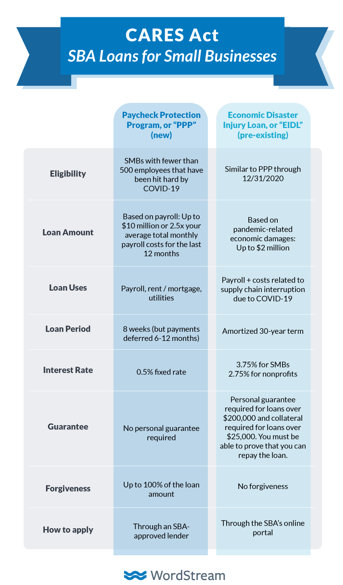
Gain a thorough understanding of the financial assistance available to you through our CARES Act blog post_._ Additionally, SCORE (Service Corps of Retired Executives) offers free remote one-on-one mentoring, workshops, webinars, and assistance with loan applications. view their coronavirus resource page to find out more.
6. Working remotely
Transitioning to a remote work setup, even if it allows your business to operate, requires significant adjustments. Remote work has its own requirements and considerations. Here are resources to help you maintain productivity, morale, and connectivity during the pandemic.
- Productivity: If your business utilizes Google’s free apps (Docs, Sheets, Slides, etc.), their Tips to Work With Remote Teams can be beneficial.
- Management: Harvard Business Review offers a Guide to Managing Your Newly Remote Workers that addresses both practical and interpersonal aspects. Also, consider these best practices for managing remote teams in 2020, which provides valuable insights and approaches for effective management, pandemic or not.
- Collaboration: Explore this list of 27 free collaboration and file sharing tools to enhance team collaboration.
- Best practices: Regardless of the pandemic, some key aspects of remote team management remain crucial.
7. Understanding the impact
While numerous resources describe the impact of the COVID-19 outbreak, nexus-security has conducted its own data collection and analysis from a small business standpoint. You can find insights in our dedicated COVID-19 Goal Talk Podcast episode and review our findings in the following posts:
- [How COVID-19 Is Shaping Google Search Trends & Patterns [Data]]
- [4 Major Trends Caused by COVID-19 and How to Respond [Data]]
- How the Coronavirus (COVID-19) Pandemic Is Affecting Small Businesses & Marketers
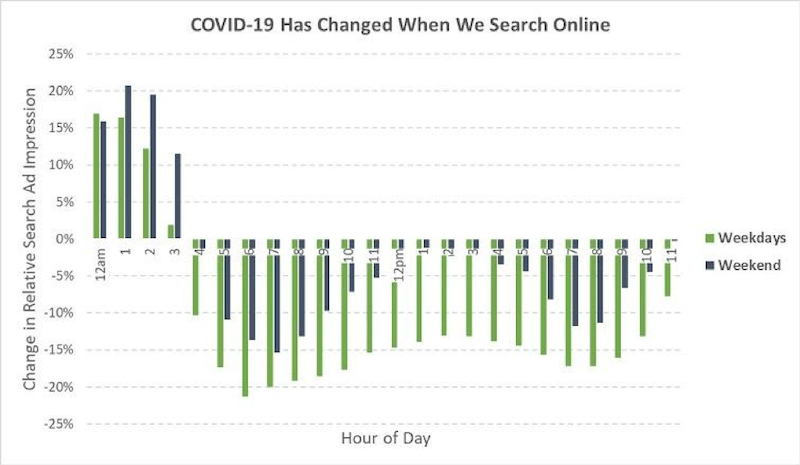
Data-driven insights into COVID-19’s impact on marketing can inform your strategic pivots. The coronavirus pandemic necessitates numerous actions, but resources are available to assist you with what you can control. Focus on doing your best, take things one step at a time, and remember that we’re all in this together.
More resources for SMBs and online advertising during COVID-19
- How the Coronavirus (COVID-19) Pandemic is Affecting Small Businesses & Marketers
- 6 Strategies for Facebook and Instagram Advertising During the COVID-19 Pandemic
- The CARES Act Paycheck Protection Program: What You Need to Know
- Marketing During COVID-19: 4 Essential Copywriting Guidelines
- [How COVID-19 has Impacted Google Ads Results for 21 Industries [Data]]
- [4 Major Trends Caused by COVID-19 and How to Respond [Data]]
- Updated Google Ads Benchmarks for Your Industry During COVID-19 [Data]
- How COVID-19 Is Shaping Google Search Trends & Patterns [Data]