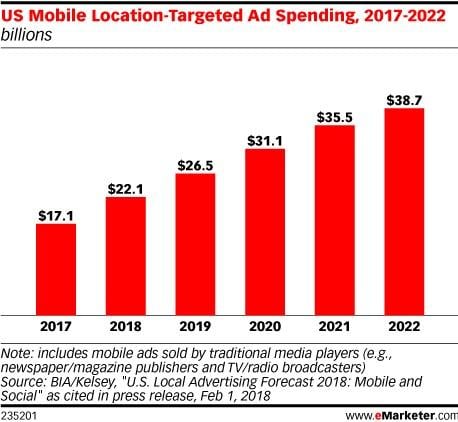
Location-based marketing is a rapidly expanding advertising strategy. Marketers are projected to spend over $26 billion on geotargeted campaigns in 2019, according to BIA Advisory Services.
While this specialized approach is highly effective for many industries, it’s not suitable for all. Here’s a breakdown of what makes location-based marketing successful and some potential pitfalls to avoid.
Location-based Marketing: Where It Excels
It may seem self-evident, but it’s worth emphasizing that brands with physical locations are best positioned to leverage location-based marketing. These businesses benefit the most from geotargeting because companies specializing in location-based marketing and analytics can establish virtual boundaries (geofences) around their physical locations to identify and analyze visiting audiences. Instead of relying on social media interactions like likes and follows, marketers can create audiences based on real-world visits for their geotargeted campaigns. This method helps marketers reach the right audience at the optimal time with relevant messaging. So, who can leverage geotargeted campaigns effectively? The answer encompasses a wide array of businesses, including all types of retail stores, restaurants, grocery stores, and many more. Here are a few illustrative examples:
Auto Dealerships
Auto dealerships reap substantial benefits from geotargeted campaigns, especially those employing geo-conquesting techniques to target customers visiting competing dealerships. The large physical presence of dealerships, combined with the high-value nature of vehicles and the typical car buying process, compels marketers to strategically reach potential customers during the crucial final stages of their dealership visits.
Temporary and Seasonal Businesses
Companies and brands with seasonal or time-limited operations, such as pop-up tax preparation services or holiday-themed stores, can also achieve impactful results with geotargeted campaigns when they meet specific criteria.

Marketers representing these brands can leverage data on audiences observed at their locations in previous years. By targeting ads to this same group, they can effectively encourage repeat visits in the following year. Professional and collegiate sports teams utilize location-based targeting to reach spectators who frequent their games, aiming to boost future ticket sales. Trade shows spanning multiple days at large venues and attracting thousands of participants present a valuable opportunity to engage business-to-business audiences through location-based targeting.
Tourism Promotion
Travel and tourism boards have demonstrated considerable success using geotargeted campaigns. For instance, a marketer promoting tourism in Charleston, SC, might aim to persuade visitors in Savannah, GA, to consider Charleston as their next summer destination.
Ecommerce and Consumer Packaged Goods Companies
While seemingly counterintuitive, marketers at ecommerce and consumer packaged goods (CPG) companies can utilize location-based marketing effectively in specific scenarios. Ecommerce brands, whether or not they operate physical stores, can target audiences visiting the brick-and-mortar locations of their competitors. Similarly, CPG companies with products stocked in select stores can leverage geotargeting strategies. For example, a company selling a premium hair care product exclusively through salons could use location-based marketing to target customers visiting those specific salons.
Location-based Marketing: Potential Drawbacks
Experienced marketers understand that every targeting approach has its limitations, and location-based marketing is no exception. These limitations can pertain to both the quality and quantity of available data, as well as regulatory and compliance constraints.
Challenges with Location Scalability
The most prevalent obstacle in developing a successful location-driven campaign is encountering limitations in location scalability for creating a substantial audience. This challenge can stem from several factors, such as focusing on a single location with insufficient foot traffic for meaningful analysis, events that are too short-lived to capture a suitable audience, or smaller markets inherently limited in available data.

Geotargeting wouldn’t be effective for locations like this with minimal foot traffic. Marketers sometimes face difficulties with location-based audiences when businesses are densely concentrated in close proximity, such as within shopping malls or multi-use buildings. Accurately identifying and segmenting an audience for a store situated on the ground floor of an apartment complex or visitors to an office on the 12th floor of a skyscraper can be challenging. Distinguishing between shoppers and individuals residing or working on floors above or below the target location might prove difficult for location-based marketing and analytics companies.
Challenges with Widely Available Products or Services
Recall the previous example of the high-end hair care product. Location-based marketing would be effective if the product were sold exclusively in certain salons. However, if the product were readily accessible through various channels, this strategy wouldn’t be as impactful. Products with widespread availability, such as chewing gum, soft drinks, or pet food, don’t benefit significantly from location-derived insights. Marketers for these products would be better served by employing alternative targeting methods, such as demographics and purchase history, to reach their desired audience effectively.
Challenges with Businesses Handling Sensitive Data
Promoting businesses dealing with sensitive information, like healthcare providers, through location-based campaigns presents unique challenges due to data privacy concerns. Privacy compliance organizations, such as the Network Advertising Initiative, the Digital Advertising Alliance, and TrustArc, have specific membership requirements that dictate acceptable business practices and protocols for obtaining opt-in permissions from consumers. These organizations play a crucial role in the absence of comprehensive federal legislation designed to safeguard consumer data.

Location-based marketing companies typically prohibit marketers from building audiences around sensitive locations, especially those related to healthcare, to ensure adherence to these codes of conduct and prevent discriminatory practices. The same principles restrict the tracking or targeting of individuals. Marketers are generally not interested in targeting single individuals; their focus lies in reaching large audience groups exhibiting similar behaviors or characteristics.
Success Stories: Location-based Marketing in Action
Let’s explore a few real-world examples to see how these dos and don’ts translate into successful geotargeted campaigns.
Geotargeting for Black Friday Sales
A local mall approached KDRV, a television station in Medford, Oregon, with a request to develop a last-minute TV campaign aimed at boosting in-store foot traffic on Black Friday. Time constraints made producing a traditional TV commercial infeasible. However, KDRV’s sales team proposed a digital campaign as a viable alternative, emphasizing its faster turnaround time. Initially, the client expressed reservations about the effectiveness of a digital campaign.
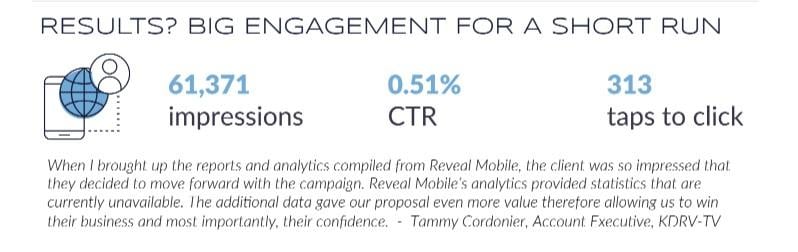
The sales team at KDRV effectively addressed the client’s concerns by presenting foot traffic reports. These reports provided visual insights into the client’s own audience as well as those of their competitors. By showcasing this data, the sales team successfully demonstrated that a digital campaign could effectively reach the target audience and deliver impactful results.

Impressed by the compelling data presented in the reports, the mall agreed to proceed with a digital campaign. Working collaboratively, they created a location-based audience comprising existing mall patrons and individuals who had visited competing locations to drive increased foot traffic for a Black Friday promotion. The campaign, delivered across various mobile applications, successfully achieved its budgetary, delivery, and engagement objectives. The remarkable success of this approach led the mall to integrate it as an ongoing element of their marketing strategy, extending beyond a single campaign.
Finding Elvis Fans Through Location Data
Gupta Media partnered with Sony Music on a unique project that cleverly employed location-based marketing. The objective was to raise awareness, drive sales, and increase streams for a new Elvis album. While numerous avenues exist to identify Elvis fans, Gupta Media opted for a creative approach to expand their reach by utilizing a location-based audience.
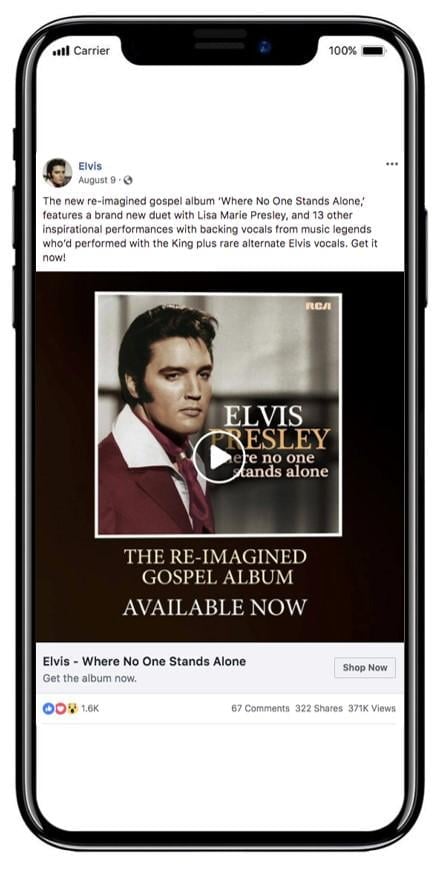
When seeking to build a location-based audience of Elvis enthusiasts, what better place to start than Graceland itself? The agency constructed an audience segment consisting of visitors to Graceland over an extended period. This segment was then imported into Facebook as a custom audience, enabling targeted advertising on both Facebook’s website and mobile application. The campaign achieved remarkable reach, engaging over 55% of the desired audience within the first week. While the highly targeted nature of the audience resulted in a 35% higher cost per thousand impressions (CPM) compared to broader targeting methods, it remained 20% lower than the cost associated with targeting their email list. The value derived from reaching a highly relevant audience and the campaign’s outstanding results ultimately justified the slightly elevated cost.
The Future Landscape of Location-based Marketing
The trajectory of location-based marketing is poised to be shaped by three key factors: regulation, the emergence of new data sources, and attribution modeling. Marketers and data providers across all sectors will need to adapt and evolve in response to new federal and state legislation. This shift began in 2020 with the implementation of the California Consumer Privacy Act.. Similar regulations are already in effect within the European Union, and the advertising industry anticipates that more US states will follow California’s lead, potentially leading to federal legislation as well. The ultimate goal is to establish a standardized framework embraced by both consumers and businesses, promoting transparency and control over data practices throughout the entire data ecosystem.

Image Source The advent of 5G technology is poised to unlock vast quantities of highly precise location data, complemented by the deployment of billions of new sensors as part of the Internet of Things (IoT). 5G towers necessitate closer proximity than existing cell phone towers, enabling mobile carriers to pinpoint locations with greater accuracy through triangulation. Additionally, 5G’s faster upload and download speeds will accelerate the adoption of internet-connected sensors across a spectrum of products and industries. As these billions of sensors come online, they will generate not only location data but also other valuable insights into product usage patterns, consumption habits, and lifecycles. The ways in which marketers, researchers, and regulatory bodies interpret, analyze, and utilize this increasingly granular data remain to be fully explored. Furthermore, advertisers are increasingly demanding accountability for their advertising expenditures, seeking concrete evidence that their investments translate into tangible outcomes like increased foot traffic and sales. Currently, demonstrating a direct correlation between digital campaigns (or most other advertising formats) and specific in-store sales remains a significant challenge. The lack of interconnectivity between various data silos makes it difficult to piece together meaningful and statistically significant results. For instance, an ad viewed on television cannot communicate with a user’s phone or laptop to register that the same ad has been seen, and point-of-sale systems or online checkout processes cannot relay information back to these previous touchpoints to confirm a sale. Given these challenges in connecting online advertising to offline sales, marketers are increasingly adopting a macro-level approach to attribution when utilizing location data. They are evaluating the influence of their campaigns on foot traffic at both their own and their competitors’ locations as an additional data point to gauge the overall effectiveness of their advertising spending. In conclusion, these ongoing transformations present new opportunities for growth and innovation. The efficacy of location-based marketing ensures continued investment from marketers. Understanding the nuances of what works and what doesn’t is paramount to the success of any marketing endeavor.