Setting up a new search network campaign in Google Ads (formerly AdWords) involves deciding whether or not to utilize search partners. Many advertisers include them without fully grasping their nature or potential impact on ROI.
Understanding Google Search Partners
Google defines search partners as websites partnering with Google to display ads, earning a portion of ad revenue. These partners, ranging from online directories and smaller search engines like Ask and until recently, AOL to Google-owned platforms like Maps, Gmail, and YouTube, utilize Google for site search functions, meaning your ads could appear there. Running a Google Shopping campaign campaign extends product ad visibility to these partner sites. The lack of a comprehensive search partner list and vague descriptions on Google’s support site creates ambiguity for paid search marketers. This uncertainty, coupled with limited control over ad placement, raises concerns about incorporating search partners into search or shopping campaigns.
Locating Google Search Partner Data
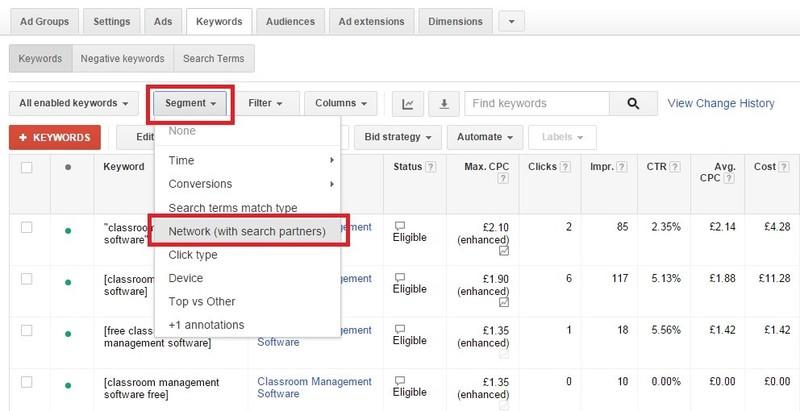
Regular performance review is crucial when using search partners to mitigate negative impacts. AdWords enables performance comparison between Google search and partner site ads through the Segment tool. Select Network (with search partners) at both Ad Group and Campaign levels for this breakdown:
The example below demonstrates this split at the campaign level, revealing significantly lower CTR, click conversion rates, and higher cost per converted click on search partner sites:
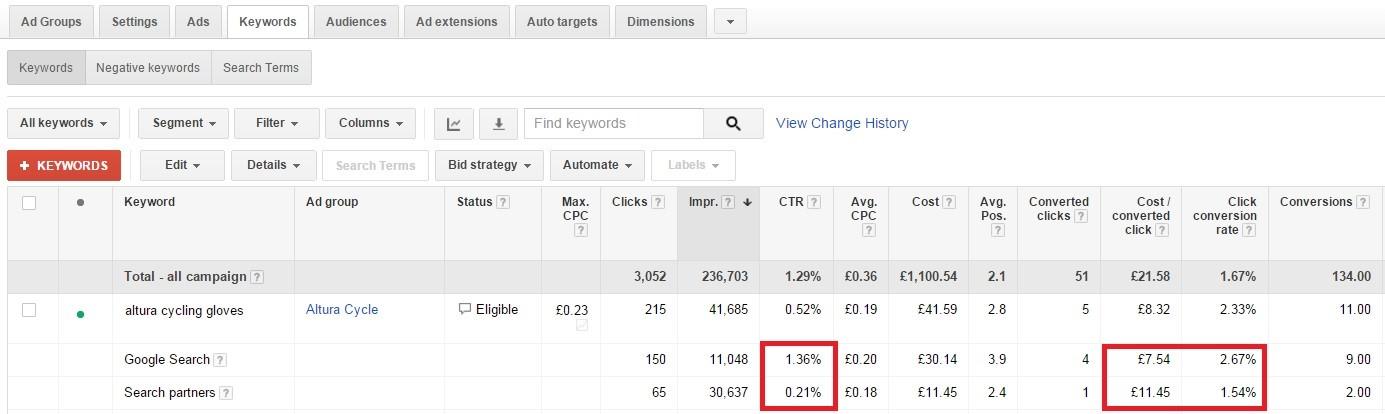
Analyzing search partner data is particularly valuable for campaigns with poor conversion rates. Ads appearing on partner sites with low conversion rates can distort overall campaign performance. Besides converted clicks, monitoring CTRs on partner sites is crucial. Google claims these CTRs won’t impact keyword Quality Score, meaning average CPC remains unaffected. However, low CTRs from partner site ads can still skew campaign performance data. Download your Google Ads data as a .CSV file from the Keywords tab at the Campaign level to gain a comprehensive view of keyword performance across Google search and partner sites:

This allows for data manipulation in Excel, providing clearer insights into keyword performance across platforms.
Managing Search Partners
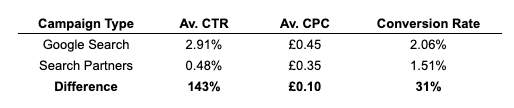
An analysis of client Google Ads campaign data over the past year initially presented a concerning picture of Google’s search partners. The key findings highlighted a significant disparity in performance. While Google search ads yielded higher average CTR and click conversion rates, their average cost per click was 10p higher. This discrepancy isn’t entirely unexpected, considering Google’s incentive to promote the search partner network:
Examining campaign keyword data in Excel exposes further limitations. AdWords lacks bid adjustment options for search partner placements and the ability to create partner-only campaigns. This poses a risk when excluding search partners from active campaigns, potentially sacrificing profitable clicks and conversions from well-performing keywords on those sites. A workaround involves pausing underperforming keywords and integrating them into a new search network-only campaign excluding Google search partners. This strategy retains well-performing keywords on partner sites while isolating those generating poor click conversion rates and high costs per conversion. The table below illustrates keyword performance from a search network campaign across Google search and partner sites:
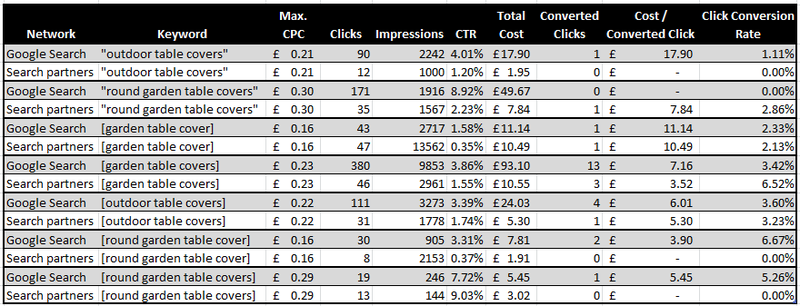
Certain keywords, notably [garden table covers] and “round garden table covers”, exhibited better performance on partner sites with higher click conversion rates and lower costs per converted click. Ideally, keywords performing well on both platforms should be retained. Conversely, keywords like [round garden table cover] displayed significantly lower click-through rates and zero conversions on partner sites. Pausing such underperforming keywords in the existing campaign and transferring them to a partner-excluded search network-only campaign is recommended. This strategy presents a valuable opportunity for budget optimization. Analyzing keyword performance on search partner sites and migrating underperforming ones to a partner-excluded campaign allows for reinvesting those savings into more profitable keywords on Google search.
Excluding Google Search Partners
Google Ads defaults to including Search Partners in new search network campaigns. Un-tick the relevant option during setup to exclude them:
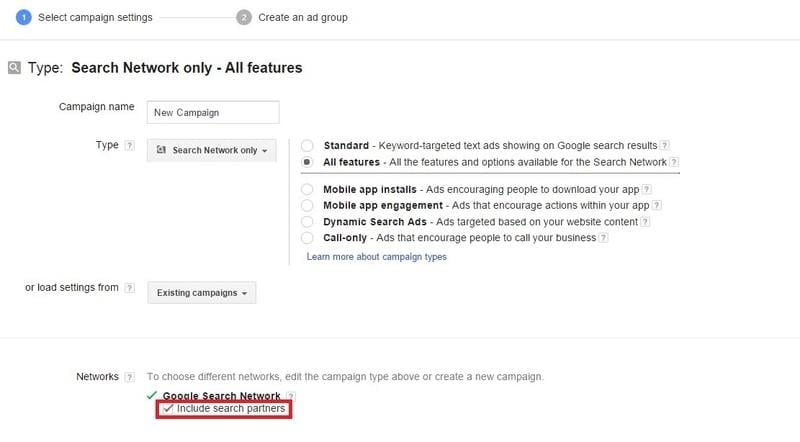
Excluding partners from existing campaigns is possible through Campaign Settings, but caution is advised. Keyword-level analysis is crucial before making this change to avoid losing valuable clicks and conversions from partner sites.
Conclusion
Effectively leveraging search partners for Google Ads campaigns requires understanding their nuances. Lower average CPCs and potentially high click conversion rates (depending on the advertised product or service) are advantages. However, continuous monitoring of keyword performance on partner sites is essential to prevent unprofitable clicks from depleting the budget. Greater transparency from Google regarding ad placement within the search partner network is desirable. Granting users access to ad placement data, similar to the Placements tool for display network campaigns, would be beneficial. The ability to create search partner-only campaigns would further empower marketers to isolate and capitalize on well-performing keywords, enhancing efficiency. Improved search partner implementation within Google Ads would foster greater confidence and understanding among paid search marketers, leading to more targeted and effective campaigns. How are Google Search Partners performing for your Google Ads search or shopping feed campaigns?