Google quietly launched a new version control platform on its massive cloud infrastructure. This might remind you of the now-retired Google Code. The key distinction is that Google’s new Cloud Source Repositories is a Git platform, making it more adaptable and practical than its predecessor.
Google Code debuted in 2006, a couple of years before GitHub and Bitbucket emerged and quickly surpassed it in popularity. Google eventually pulled the plug on Google Code in March 2015, attributing it to a decline in user interest.

Although this marked the end for Google Code, which had lost favor long before its official retirement, Google remains committed to the developer community. In fact, Google Cloud Source Repositories shows significant promise, even in its early stage. I don’t anticipate a mass exodus from GitHub to Google anytime soon, but Google has a knack for attracting users to its services, even those that appear less appealing initially. Google’s strategy is consistent: continuous improvement, refinement, innovation, and incentives for new users. This approach usually succeeds, though I’m sure many of you are recalling a Google Plus joke or two right now. Nevertheless, I’m confident that Google is fully committed to this project.
Google Possesses the Resources to Succeed
Having mentioned two less-successful Google projects – Google Plus and Google Code – you might wonder why anyone should be enthusiastic about this new cloud repository, especially since it’s still in beta.
Firstly, Google has a proven history of transforming beta products into valuable, popular, and highly reliable services. Leveraging its extensive human and financial capital, Google should have no difficulty developing Cloud Source Repositories into a more robust offering, assuming there’s adequate interest.
Another advantage is Google’s unparalleled cloud infrastructure. The company is renowned for its unwavering stability, and thanks to economies of scale, it can typically provide more value at a lower cost than smaller rivals.
It’s also crucial to understand that the new Cloud Source Repositories service isn’t a direct substitute for Google Code. While both target developers, Google Code was intended for collaborative open-source endeavors, hosting not only code but also other materials like documentation and wikis. Conversely, Cloud Source Repositories is essentially a traditional Git service. It lacks unnecessary features, but it does include a few functionalities that should encourage adoption.
Cloud Source Repositories vs. GitHub vs. Bitbucket
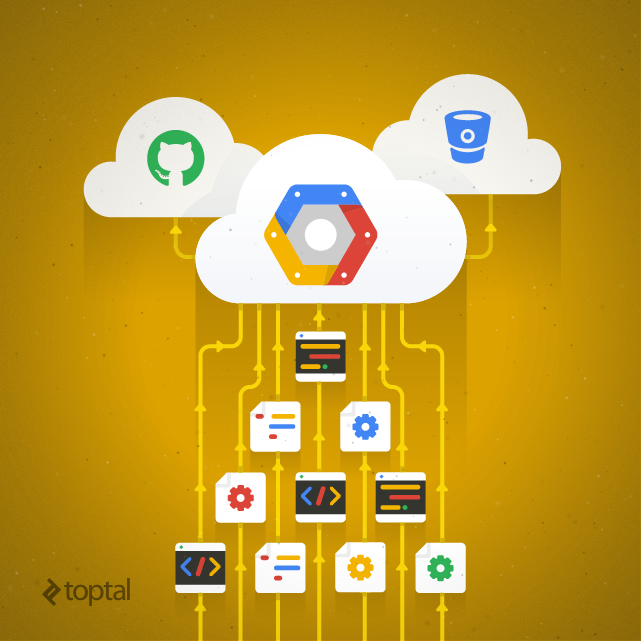
Google’s new cloud code platform doesn’t appear to be directly challenging GitHub. Instead, Cloud Source Repositories (CSR) will enable users to link to repositories hosted on GitHub or Bitbucket. Importantly, everything is automatically synchronized to the Google Cloud Source Repository.
Each Google Cloud Platform project includes a Cloud Source Repository, accessible to and usable by multiple users. Permissions are inherited from the Cloud project, simplifying user management to just adding members and configuring their access levels.
A key benefit is the ability to connect a Google CSR to a Git repository hosted on GitHub or Bitbucket. This enables synchronization of all changes across both platforms, as you can configure Google CSR to automatically mirror from GitHub and Bitbucket.
Recall how Google excels at seamlessly integrating its services into users’ workflows? The integration with Google Cloud Platform and automated mirroring, supporting two leading Git repositories, certainly seems like an attractive proposition for many users. Given that this is still a beta, Google could further enhance its appeal by incorporating additional integrations with other Google services. Cloud Source Repositories already feels like an organic extension of the Google ecosystem, but tighter integration could make it even more compelling.
So, how does it stack up against GitHub and Bitbucket?

It’s premature to draw definitive conclusions, considering its beta status and the lack of pricing details. However, it’s worth noting that GitHub and Bitbucket are evenly matched feature-wise, despite some distinctions. For instance, advanced users might favor one over the other due to varying billing structures. GitHub is often perceived as superior for its additional features and support for open-source projects, largely because it hosts numerous prominent open-source endeavors. Conversely, Bitbucket might be more suitable for small and freelance developers due to its more generous free tier (e.g., unlimited private repositories with multiple collaborators). Ultimately, it boils down to personal preference; both services are excellent.
What about Cloud Source Repositories? It’s still early to render a verdict. GitHub and Bitbucket have been around for years, while Google CSR just entered public beta a few weeks ago. The beta is entirely free, offering 500MB of storage for your valuable source code. However, this doesn’t reveal the complete picture. We have yet to see Google’s long-term strategy.
While it’s too soon to get carried away, I remain cautiously optimistic for these reasons:
- Potential for seamless integration with other Google services.
- Anticipation of competitive pricing.
- Google’s proclivity for offering generous free tiers.
- Simplified migration due to GitHub and Bitbucket mirroring.
Regrettably, we can only speculate at this juncture.
Using Cloud Source Repository as a Remote
You can incorporate a Google CSR as a remote to your local Git repository, using it like any other Git remote.
Simply install the Google Cloud SDK and Git, then add your repository as a remote – a straightforward process involving only a few steps. Since it’s well documented by Google, we won’t delve into it extensively.
Once set up, you can utilize the Cloud Source Repository like a standard Git repository, employing familiar commands such as push, pull, clone, and log. For example, to push to a Cloud Source Repository, use $ git push google master. You can also examine the commit history using $ git log google/master.
After pushing files to the Cloud Source Repository, you can view, browse, edit, and commit them directly from the Google Developer Console. File differences at specific commits can be accessed from the file contents view using the “Diff Against” selector. The “Commit History” button displays the file contents at a specific commit. While viewing a file, you can edit and commit changes directly.
A Different Landscape, Git It?
As mentioned, Google Code never achieved widespread popularity and was overshadowed by Git-based alternatives.
Before labeling Google Code a complete failure, consider this: it predates GitHub and Bitbucket. It was superseded by superior solutions, which doesn’t automatically equate to failure. Would anyone argue that early revision control systems like RCS and CVS were failures simply because they were replaced by better options?

Currently, Git is the dominant source code management system, with recent studies indicating that nearly half of professional developers rely on Git or GitHub for version control. However, this doesn’t mean Git is the undisputed industry standard. Subversion and Microsoft’s Team Foundation Server retain significant user bases. Mercurial also enjoys a dedicated following, alongside other less prevalent solutions.
Will Google’s adoption of Git accelerate its path to becoming a universal standard? Will Cloud Source Repositories dominate GitHub and Bitbucket? It’s too early to say, but the potential is undeniable. In poker terms, Google has a strong hand, but that doesn’t guarantee victory.
A Long Road Ahead
This platform is not in the business of reviewing or endorsing software. If you’re interested, we encourage you to experiment with Google RCS independently. It might be worthwhile, especially if you believe it has the potential to gain traction. It’s free to explore, apart from a few hours of experimentation, and you can use it alongside GitHub and Bitbucket. If it takes off, you’ll have a head start.
However, there are caveats. This is still a beta, meaning it lacks a Service-Level Agreement (SLA), might undergo backward-incompatible changes, and has no depreciation policy. Theoretically, Google could discontinue CSR tomorrow, although that seems unlikely at this stage. This is primarily legal clarification.
However, other factors warrant attention. Being a public beta, only one package is available – with 500MB of storage. The beta is free, but future pricing and storage tiers remain undisclosed. The official release date is uncertain.
Personally, I’m not concerned about competitiveness. Given Google’s infrastructure, we can anticipate significant offerings. A few years ago, I briefly reviewed Google Drive shortly after its launch. I wasn’t overly impressed; the service was decent, but the mobile app fell short. Moreover, I was already committed to Dropbox. Fast forward to today, and I use Google Drive extensively, alongside Gmail, Gmail for Business, Google Docs, and even Google Plus. The key is that I often adopted these services simply because they were readily available and seamlessly integrated with other Google products.
Cloud Source Repositories evokes a similar sentiment, so I expect many users to gravitate towards this new offering. Furthermore, you can use CSR with existing GitHub and Bitbucket projects. Imagine using Dropbox as part of Google Drive, or Google Plus as a gateway to Facebook. Such integration would undoubtedly enhance the appeal of both services.
Excellent Code’s Destination: Heaven or the Cloud?
Google Cloud Platform has existed for a few years, yet the search giant hasn’t caught up to Amazon Web Services (AWS) and Microsoft Azure. AWS dominates the cloud market with an estimated 85% market share and is believed to have five times the computing power of over a dozen competitors combined.
However, this doesn’t render Google’s cloud services uncompetitive. Google possesses the technology, brand recognition, and financial and technical resources to be a major player in cloud computing. One advantage is that Google Cloud Platform utilizes the same infrastructure as Google’s consumer products like Google Search, Google Docs, and YouTube.
Although Google might seem like a small contender compared to Amazon, it has a robust infrastructure and could leverage it to undercut and outperform competitors, specifically GitHub and Bitbucket. As mentioned earlier, numerous unknowns remain, but if Google executes its strategy effectively, it could have a winning product.
Regardless, if you have spare time, the Cloud Source Repositories beta is worth exploring, particularly if you’re already invested in Google’s apps and services. If you’ve experimented with it, feel free to share your insights in the comments section.