Email marketing sometimes gets an undeservedly negative reputation. It’s not quite as outdated as direct mail (which surprisingly remains a multi-billion dollar industry), but it’s getting close.
Many marketers are drawn to social media advertising, believing it to be more trendy and effective than email marketing. Social media undeniably receives significantly more attention than email marketing. However,** the idea that email marketing is no longer effective is simply untrue** (take a look at these email marketing statistics that demonstrate its effectiveness). Any experienced marketer will confirm that email remains a fundamental element of their campaigns.
Still not convinced? Let’s explore these three examples from some of the world’s leading email management companies to understand why email marketing is so powerful.
1. Email Newsletters Can Be Excellent
Let’s be honest, most email newsletters aren’t very good. Many companies view them as just another way to push sales, even though many newsletter subscribers aren’t actively looking to buy something. This can lead to low subscription rates, high unsubscribe rates, and “newsletters” that are more focused on sales tactics than actual news.
However, as Southern lifestyle magazine Garden & Gun demonstrated in a case study for email management service Emma, email newsletters can be exceptional when done right.
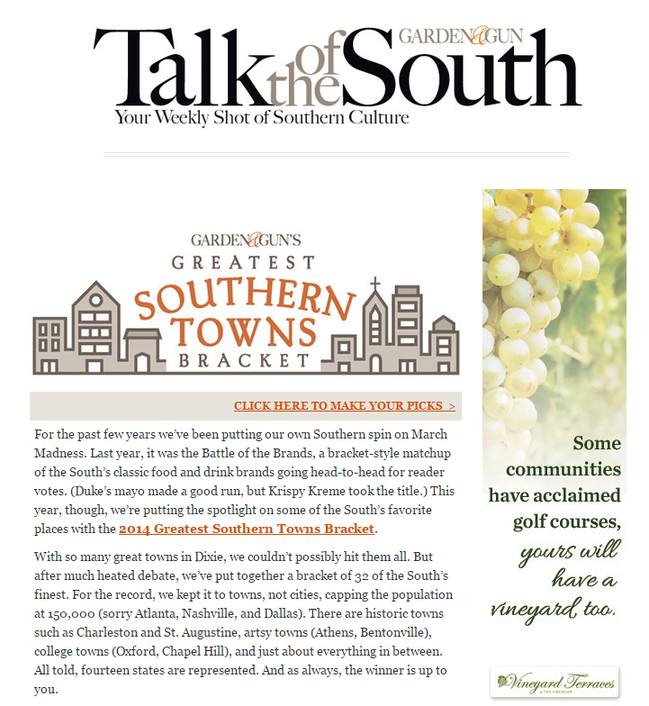
Garden & Gun is a leading Southern lifestyle magazine. With a wide-ranging readership and a similarly diverse editorial focus, Garden & Gun covers everything from Southern heritage and culture to fine dining and agricultural trends.
The magazine and its website have cultivated a devoted audience thanks to their high-quality journalism, a standard that Kim Alexander, Garden & Gun’s digital media editor, also wanted to maintain in their newsletter, Talk of the South.
“We are primarily a print publication, but we only publish six times a year,” Alexander mentioned in an interview on the Emma blog. “So we use email to stay connected with our readers and drive traffic to our website.”
Garden & Gun has substantially expanded its online audience through Talk of the South. Typically, the subscriber base of an average email newsletter shrinks by 30% annually, but Garden & Gun has actually increased its newsletter readership by 40% since partnering with Emma three years ago, according to the Emma blog.
Talk of the South is also a source of revenue for Garden & Gun. As you can see in the screenshot above, the newsletter features advertising, just like the print and online editions of the magazine. However, the ads are not intrusive and are carefully targeted and relevant to Garden & Gun’s readership. It would be fascinating to see the click-through rate data for these ads, as I suspect it would be significantly higher compared to traditional website banners.
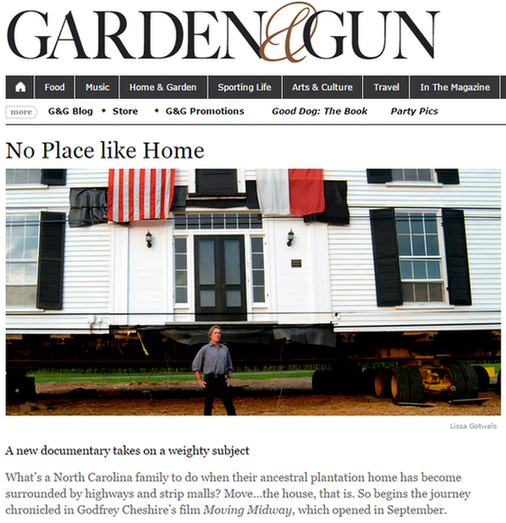
An example of the type of articles featured in Talk of the South
In conclusion, the quality of Talk of the South is excellent. As a Garden & Gun reader myself, it’s one of the few newsletters I eagerly anticipate, and it serves as a prime example of how email newsletters can be beneficial for everyone if they are well-produced and serve an editorial purpose.
Ready to start your own email newsletter? Here are some ideas.
2. Social Media and Email Marketing Are Not Mutually Exclusive
As we’ve seen recently, there’s a tendency to frame everything as an all-or-nothing competition. But it doesn’t have to be that way.
Just because email marketing might not be as trendy as social media doesn’t mean they can’t work together. In fact, combining email marketing with a strong social media strategy can be incredibly effective, as demonstrated by sustainable living blog DIY Natural.
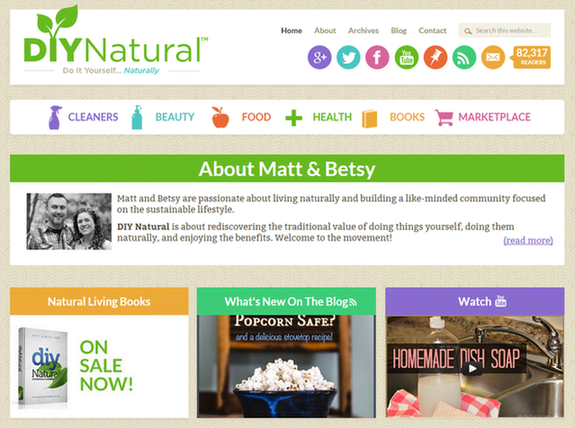
DIY Natural was born from founder Matt Jabs’ passion for self-sufficiency and sustainable living. Even in its early days, DIY Natural was attracting significant traffic – a factor that prompted Jabs to seriously consider how social media could help him grow his audience, and how email marketing could help him generate revenue from his burgeoning blog.
In an interview on the AWeber blog, Jabs explained that combining social media with email marketing allowed him and his wife Betsy to transform their passion project into a full-time business.
“As our traffic and email list grow, our social media presence grows organically and consistently,” Jabs said. “Initially, our Facebook page was growing rapidly. We reached approximately 80,000 likes on Facebook.”
While he might not have initially planned to combine social media with email marketing when he launched the site, adopting both strategies simultaneously early on allowed DIY Natural to grow incredibly fast.
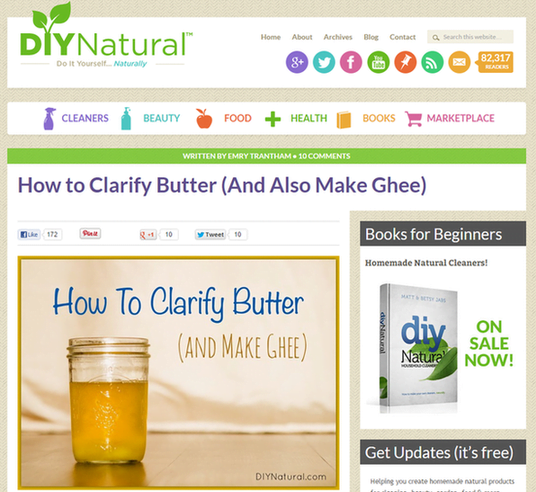
Of course, the site’s commitment to high-quality content played a significant role. In fact, I actually subscribed to the DIY Natural newsletter while researching for this article. My wife and I share similar values about self-sufficiency and sustainability as Matt and Betsy, and we already make our own laundry detergent and other household products (including ghee). As a result, DIY Natural’s content is ideal for us and exactly the type of content I want to see in my inbox every week.
Matt and Betsy’s success demonstrates that you don’t have to sacrifice one for the other when it comes to email marketing and social media.
 Free email templates! >> 30 Free Small Business Email Examples & Templates
3. Email Marketing is IDEAL for Small Businesses
One persistent misconception about email marketing is that you need a whole marketing team to run effective email campaigns.
While a dedicated team can be beneficial, it’s not essential. Email marketing can be a huge boost for small businesses. A prime example is the family-run business Goat Milk Stuff, a company that sells – you guessed it – products made from goat milk.
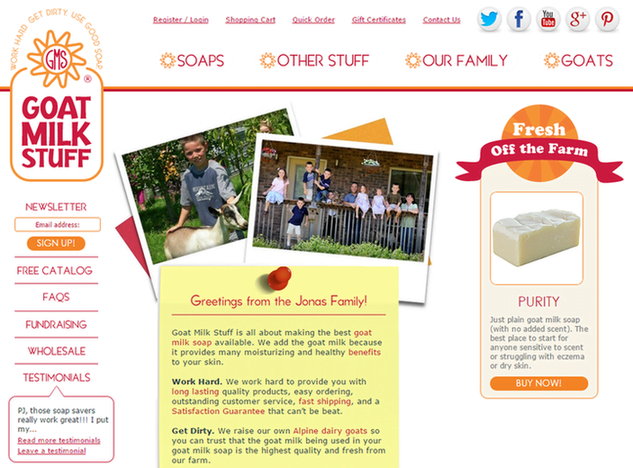
Like many small businesses, Goat Milk Stuff struggled with the desire to expand beyond local craft fairs and trade shows while maintaining its commitment to excellent, personalized customer service.
In a post at the MailChimp blog, Goat Milk Stuff co-founder PJ Jonas shared that while she and her husband Jim (and their eight children, who also participate in running the company) diligently collected emails at trade shows, they wanted to grow without compromising their business’s approachable, family-oriented values. Surprisingly, email marketing allowed them to achieve both.
“We sent out some newsletters where we gave customers a choice of which deal they wanted,” explained PJ. “Either a 20% discount or free shipping. We discovered that some people always choose the discount, and some always choose free shipping—it’s not necessarily about which option saves them more money. So we used that information and now we alternate our offers.”
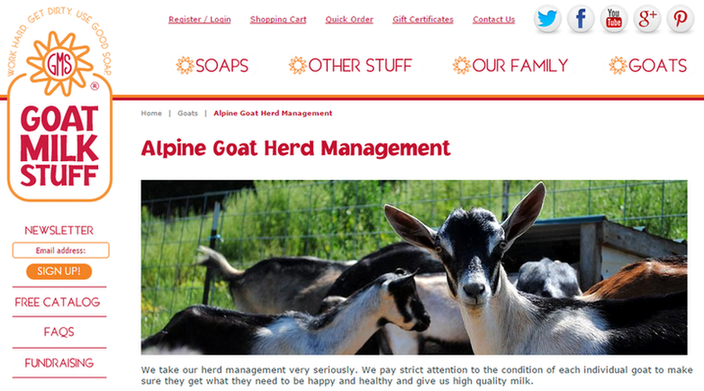
Meet some of the goats that contribute to making Goat Milk Stuff products.
So, despite dedicating most of their time to making their products, caring for their goats, and somehow managing a household with eight children (seriously, kudos to them), Jim and PJ also successfully execute promotional email marketing campaigns that provide real value to their customers while keeping things straightforward – all without a formal marketing department.
How to Launch an Effective Email Campaign
Now that we’ve explored valuable lessons in how effective email marketing campaigns can benefit different businesses, how do you launch your own?
Naturally, every email marketing campaign is different. However, some general guidelines can help you get started.
Bonus Tip #1: A/B Test Your Email Marketing Campaigns
You know what they say about assumptions, right? Don’t set yourself up for failure and jeopardize your campaign – test early and test often.
Many email management tools include built-in A/B testing features, allowing you to test specific aspects of your email marketing campaigns to ensure maximum impact. For instance, MailChimp wrote about the results of several A/B tests from successful campaigns to demonstrate how a rigorous approach to testing can lead to significant improvements.
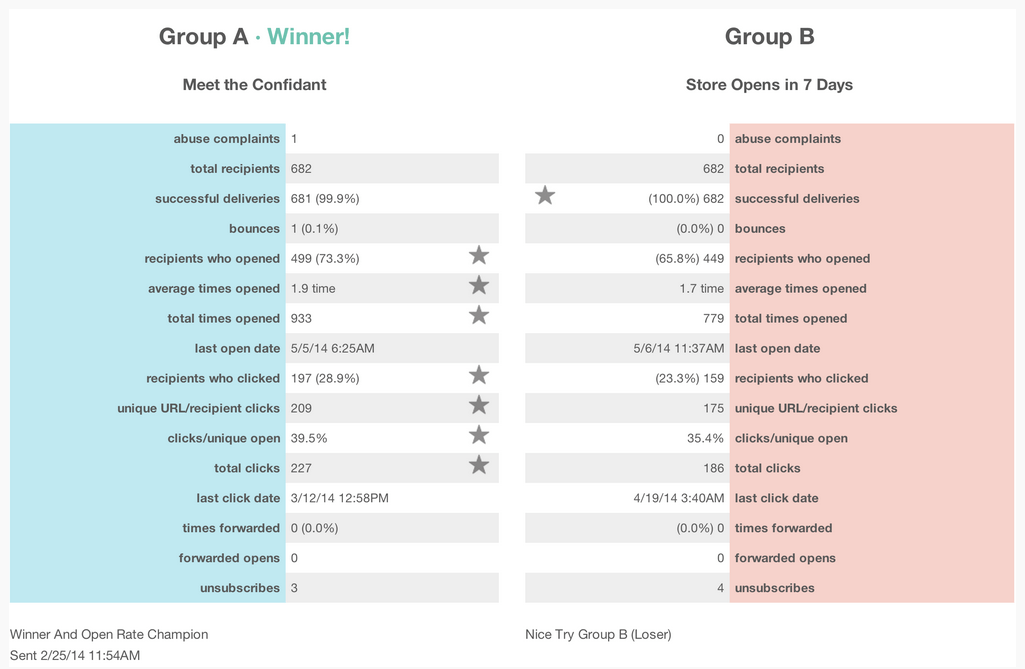
Image via MailChimp
Bonus Tip #2: Keep Subject Lines Concise
Everyone seems to have their own preferred approach when it comes to crafting the “perfect” subject line. However, shorter is generally better – specifically, between six and ten words.
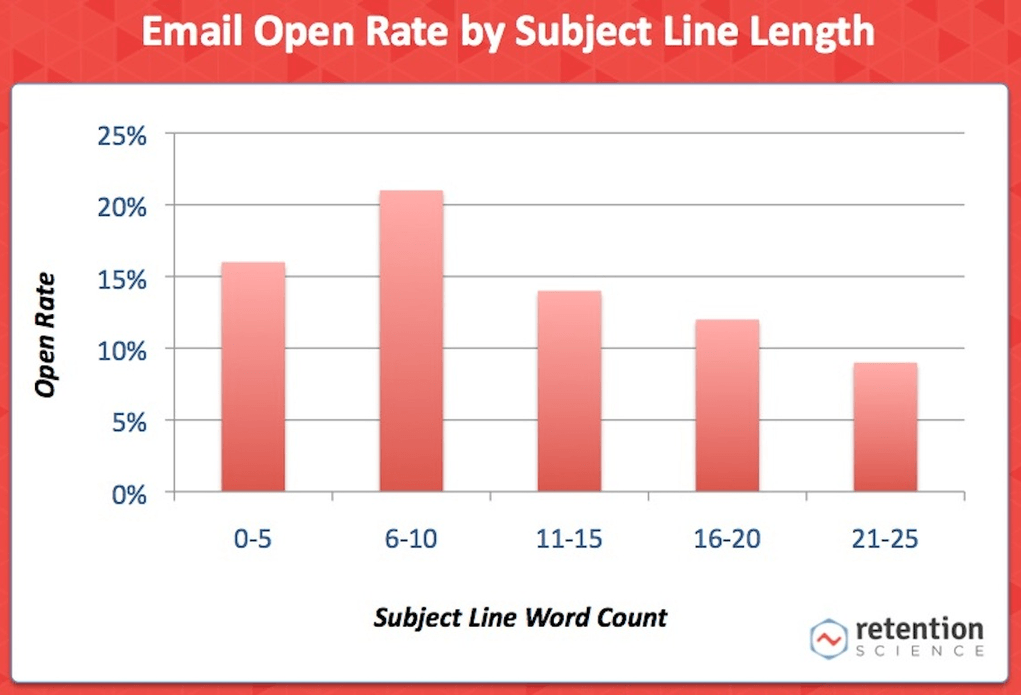
Data from Retention Science indicates that email subject lines between six and 10 words consistently achieve the best open rates. When you compare these open rates to those of subject lines between 21 and 25 words in length, there’s a significant drop-off.
Of course, many factors contribute to the success of an email marketing campaign. To learn more about improving your open rates, check out Retention Science’s full study here.
Bonus Tip #3: Send Emails on Thursday Mornings at 8 a.m.
This is very specific advice, but based on our experience, sending emails on Thursday mornings between 8-9 a.m. is an excellent way to increase your open rates.
Naturally, what works for us might not work for you (see Bonus Tip #1), so experiment with the timing of your email campaigns to find out what times result in higher open rates for your audience.
Email Like a Pro
Email marketing can be – and often is – highly effective. However, like anything worthwhile, it requires time, effort, and sometimes, making mistakes before you find the perfect formula.
This post has hopefully given you some ideas on how to improve your own email marketing campaigns. For additional inspiration, download our 30 Free Small Business Email Examples & Templates—you won’t be disappointed.
As always, if you have any successful strategies that I haven’t mentioned, please share them in the comments!