A lot of website owners overlook internal linking in their websites because they prioritize other aspects of on-page optimization. However, it is worth noting that those seemingly insignificant internal links possess the ability to elevate the keyword ranking positions of your web pages. The mere act of building internal links can significantly influence all facets of your SEO performance. Why is this the case? Internal links are crucial for search engine crawlers to effectively index, comprehend, and consequently, promote your content. This piece will delve into the fundamental aspects of internal linking for SEO, encompassing:
- What internal linking is
- Types of internal links
- Benefits of internal link building
- Internal linking best practices
- Advanced internal linking strategies
What is internal linking?
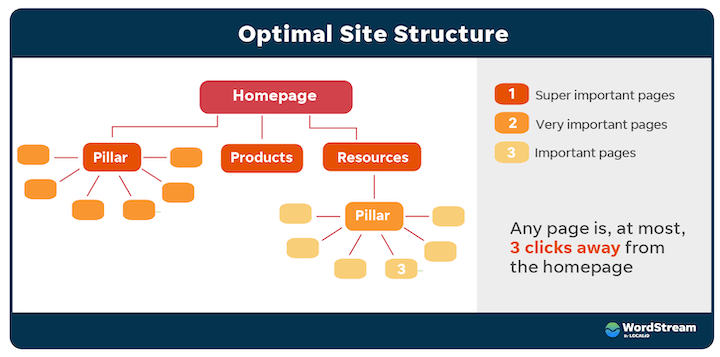
Internal linking refers to the practice of incorporating hyperlinks that direct users to other pages within your website. In contrast to external links (also known as outlinks), which are hyperlinks leading to pages on different websites, internal links serve to retain visitors within your website. It’s essential not to confuse them with “inlinks” (or backlinks), which are links from external domains that point “in” to your website. Internal links form the very structure of your website’s architecture. Visualize your website as a pyramid, with your homepage at the apex; your internal linking profile constitutes the framework of this pyramid. In an optimal setup, any page on your site should be accessible within a maximum of three clicks.
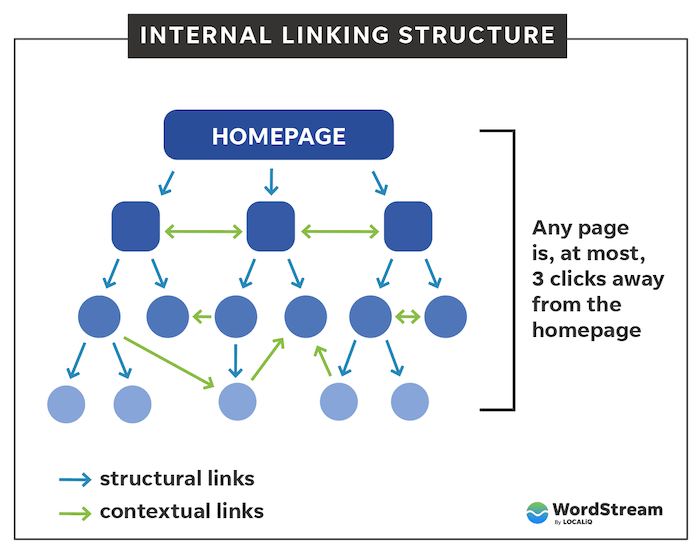 Image inspired by Mangools
Internal linking is fundamental to SEO because it helps search engine crawlers determine the relative importance of pages on your website, distinguishing between the most, moderately, and least important ones.
Internal links are implemented using buttons, clickable images, and anchor text, which is the clickable portion of a hyperlink that leads to the target page. Below is an illustration of how anchor text appears on both the front-end and back-end of a website.
Image inspired by Mangools
Internal linking is fundamental to SEO because it helps search engine crawlers determine the relative importance of pages on your website, distinguishing between the most, moderately, and least important ones.
Internal links are implemented using buttons, clickable images, and anchor text, which is the clickable portion of a hyperlink that leads to the target page. Below is an illustration of how anchor text appears on both the front-end and back-end of a website.
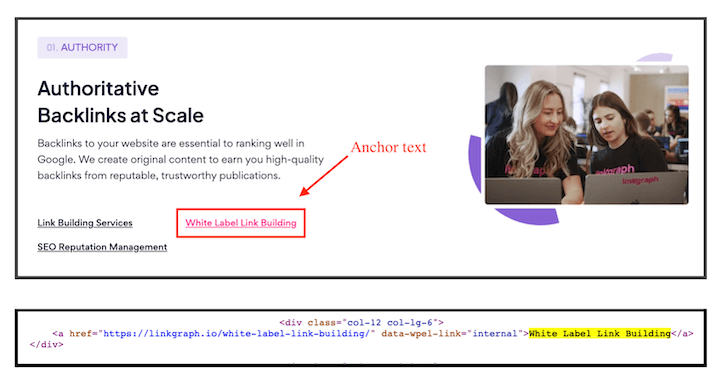 When the anchor text for a page incorporates its targeted keyword, it contributes to improving the SEO value of that specific page.
Types of internal links
Your website likely already features various types of internal links. Grasping their distinctions is crucial because they play a significant role in shaping the journey of your website visitors.
1. Menu/navigation links
The most critical internal links on your website reside within your primary navigation menu. These links, a constant presence within your website header, effectively communicate your website’s hierarchy to users. They are typically structured around product categories, main services, or key topic areas.
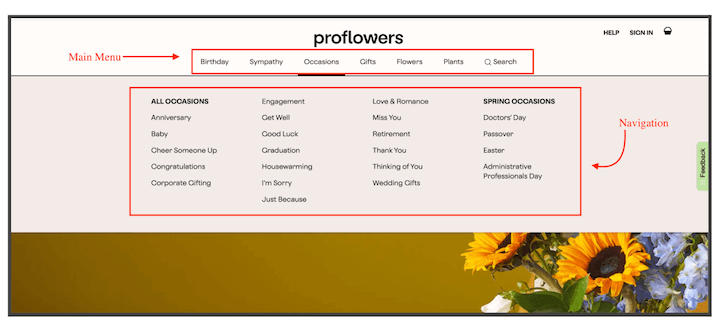 These internal links guide users to the “next most important” pages upon landing on your website. They earn the name “navigation links” because they function much like a map, directing users to their desired destinations within your site.
2. Footer
Similar to navigation links, footer links maintain consistency as users navigate through the different sections of your website. These links should direct users to other significant pages on your website that they might find useful. If a visitor hasn’t located their desired information by the time they reach the bottom of a page, the internal links in the footer act as a guide, offering alternative destinations to explore.
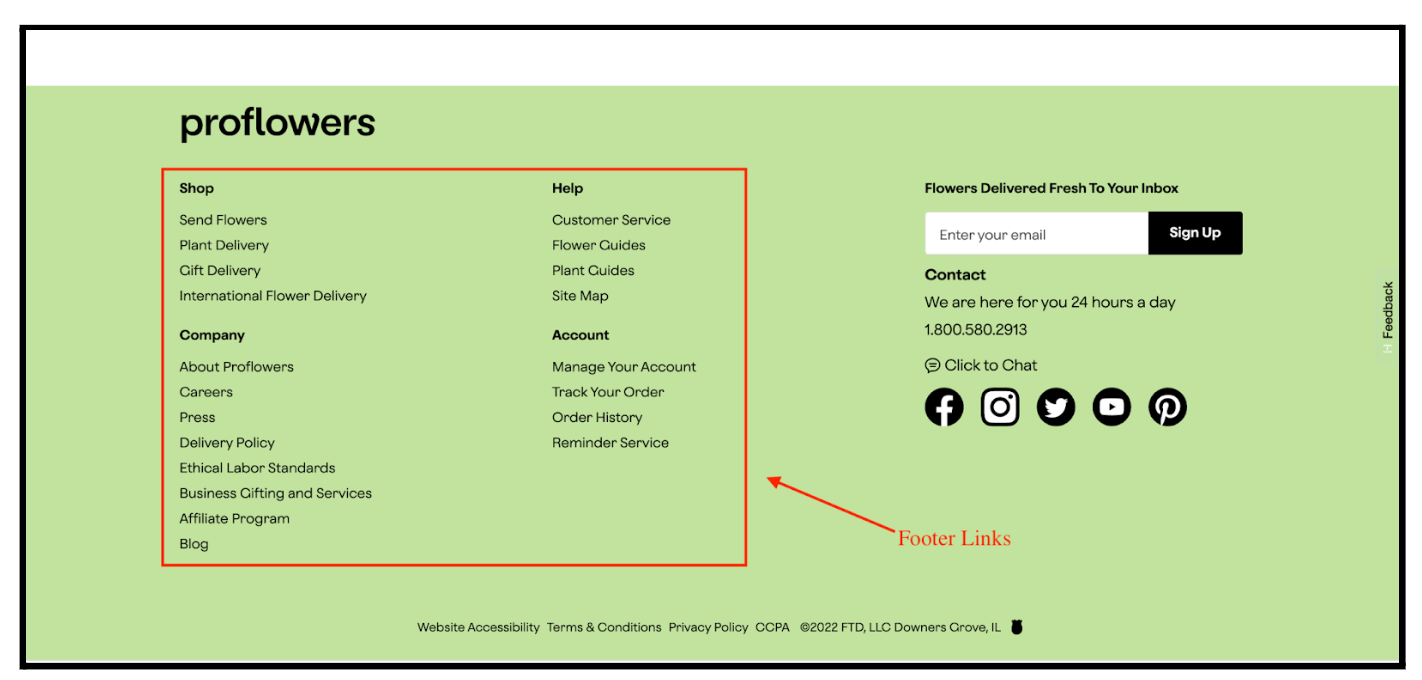 Typically, links to pages such as “Contact Us,” “Help,” “Frequently Asked Questions,” “About,” and other similar resource-oriented pages are commonly found within the footer section of websites.
3. Sidebar
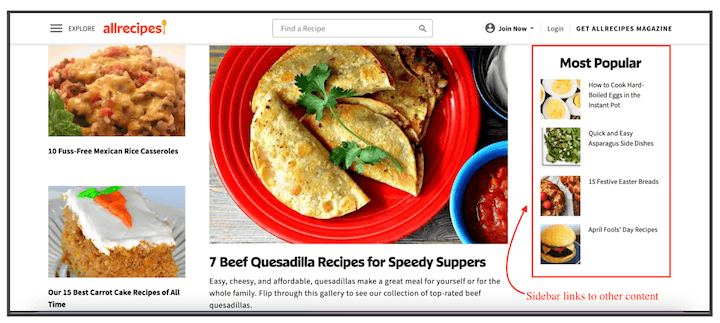
Sidebar links are often contextual links that also contribute to the overall navigation experience. Many websites utilize internal links within their sidebars to steer users toward popular or relevant content. Sidebar links are particularly prevalent on websites rich in content, such as news or recipe sites, where users might be browsing from one page to another without a specific target in mind.
4. In-text
In-text links are those embedded within the main body of content on a webpage. They are frequently employed within blog posts.
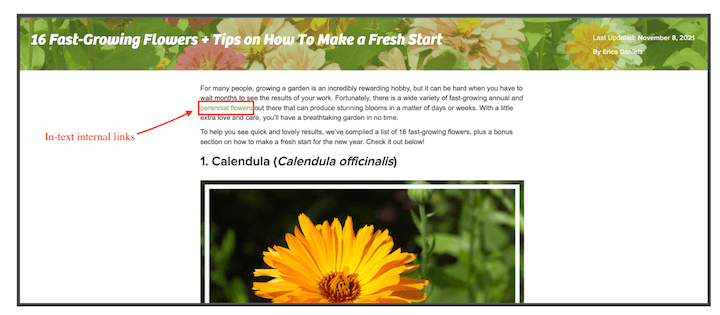 Unlike links that signal importance or navigation, in-text internal links point users to related information that they can access at their convenience.
Why internal link building?
Investing the effort to incorporate internal links throughout your web pages offers a range of advantages. Let’s explore how they enhance your overall SEO strategy.
Improves user experience
First and foremost, well-placed, relevant internal links significantly improve the user experience on your website. This is especially beneficial for first-time visitors who are unfamiliar with the content your website offers. By facilitating seamless navigation and helping users quickly find what they are looking for, you ensure a positive user experience and strengthen their journey through your website.
Keeps users on your website longer
Internal links reduce the likelihood of users leaving your website to seek information elsewhere or returning to a search engine to continue their search. This translates to extended page sessions and a higher number of page views. The increased time spent on your pages also provides more opportunities for conversion, assuming your calls to action and conversion elements are optimized effectively. Moreover, when users arrive at your website from Google search (organic traffic) and spend more time on your pages, it signals to Google that users are finding the information they need, indicating that your content is valuable.
Help readers learn more in blog posts
By linking to other related blog posts within your website, you empower users to delve deeper into your products, services, or areas of expertise. An abundance of internal links leading to in-depth, high-quality blog posts also effectively positions your brand as an industry authority in the eyes of your audience.
SEO benefits of internal linking
Beyond guiding users through your website, internal links also serve as pathways for search engine spiders to crawl and index all of your web pages.
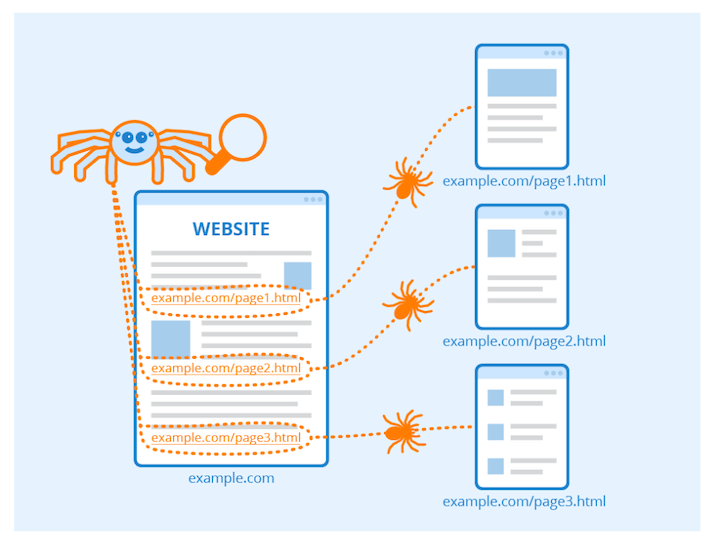 As web crawlers navigate your website, they gather more information about your content, which influences whether they will rank those pages in search engine results pages (SERPs).
Therefore, strategically incorporating internal links can significantly benefit your SEO performance.
As web crawlers navigate your website, they gather more information about your content, which influences whether they will rank those pages in search engine results pages (SERPs).
Therefore, strategically incorporating internal links can significantly benefit your SEO performance.
Easier for Google to crawl and discover new pages
As previously mentioned, an ideal website structure allows users to access any page within three clicks from the homepage. If a page on your website lacks an internal link or a deep link, Google’s crawlers will not be able to discover it. Ensuring that the pages you want to rank are easily accessible to search engine crawlers, leading to their crawling and indexing, is a fundamental step in enhancing your website’s visibility on the SERP.
Signal relevance and context
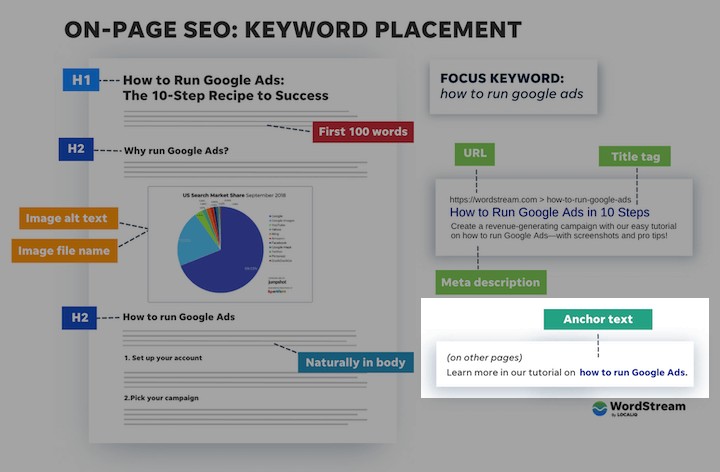
Google also relies on the anchor text used in internal links to understand the context and relevance of different search terms. If the anchor text doesn’t align with the content on the linked page, Google is less likely to trust that page or rank it in the SERPs for relevant keyword phrases. Conversely, using appropriate anchor text helps Google gain a clearer understanding of the linked page’s content. This is precisely why using keywords within anchor text is crucial when building links.
Distribute PageRank
Internal links play a vital role in distributing PageRank throughout your website. PageRank is a Google metric that indicates the popularity of a web page based on the total number of links pointing to it. Each time a page links to another, it transfers a portion of its PageRank, also known as link equity.
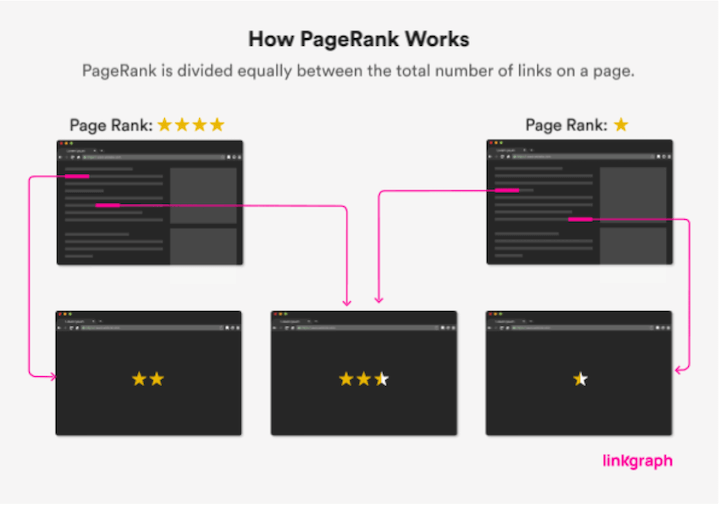 Google incorporates PageRank into its ranking algorithm, and pages with higher PageRank are more likely to secure favorable positions in the SERPs.
Help Google understand your authority on a topic
When Google crawlers encounter a high volume of internal links pointing to relevant content on your website, they perceive your website as an authority in those specific topic areas. For instance, a key content asset about link building might also be linked from pages discussing anchor text, guest posts, backlink profile analysis, or other related subtopics that fall under the umbrella of link building.
Internal linking best practices & tips
Internal linking is an integral aspect of on-page optimization. However, improper implementation can negatively impact your performance in the SERPs. So, how should you approach internal linking to maximize your ranking potential?
1. Use descriptive, keyword-rich anchor text
The effectiveness of internal linking is limited without optimizing the anchor text used within those links. Ideally, your anchor text should provide a concise and accurate description of the content on the target page. If you aim to rank your linked page for specific keywords, ensure you incorporate exact-match, partial-match, or contextual anchor text keywords to communicate stronger relevance to Google. Is your website optimized for SEO? Get an instant audit with the free LOCALiQ Website Grader.
2. Strategic use of dofollow/nofollow
To effectively pass PageRank, your internal links need to be dofollow. The dofollow attribute is a robots search directive that instructs Google crawlers to follow the links on a page instead of disregarding them. While there might be instances where you’d use the nofollow tag attribute, such as for pages that don’t need to rank (e.g., “Thank You” or confirmation pages), it’s important to remember that if you’re internally linking to a page to boost its rankings, that link holds no value without the dofollow robots tag.
3. Link to old posts in your new blog posts
As a general rule, avoid publishing new blog posts without including internal links to other relevant content on your website. If you’re uncertain about where to link within your website, consider leveraging software tools like SearchAtlas to identify the internal links suggestions it recommends.
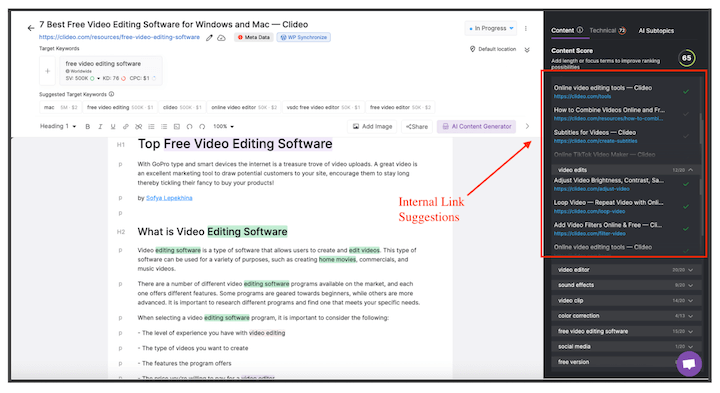 However, refrain from forcing internal links when there’s no natural connection between the pages. Doing so can harm your SEO efforts.
If you lack relevant content on your website, prioritize its creation and add it to your SEO content calendar. The process of internal linking for SEO becomes progressively easier as you expand the library of high-quality, evergreen content on your website.
However, refrain from forcing internal links when there’s no natural connection between the pages. Doing so can harm your SEO efforts.
If you lack relevant content on your website, prioritize its creation and add it to your SEO content calendar. The process of internal linking for SEO becomes progressively easier as you expand the library of high-quality, evergreen content on your website.
4. Link to new posts in old posts
Remember to incorporate internal links within older posts that direct readers toward any newly published blog content. This step is often overlooked, but it’s crucial because Google can’t find a page if no links point to it. This practice is an excellent way to drive traffic from your evergreen content to newer content. Therefore, after publishing a new blog post, establish a routine of identifying older, relevant posts and updating them with internal links to the new content. The deeper your new page resides within your site architecture, the longer it will take for crawlers to discover it. However, as long as internal links are present, crawlers will have a path to index the new content. For new pages with significant importance and ranking potential, consider linking to them from older posts that possess numerous backlinks. This allows those older posts to transfer more link equity to the new content.
5. Monitor and repair broken links
Over time, internal links on your website might break due to various factors, such as adding new content, updating old content, or modifying URL paths. While some content management systems automatically implement redirects when you make such changes, it’s not always guaranteed. Therefore, it’s essential to schedule regular link maintenance as part of your SEO strategy to promptly identify and repair any broken internal links.
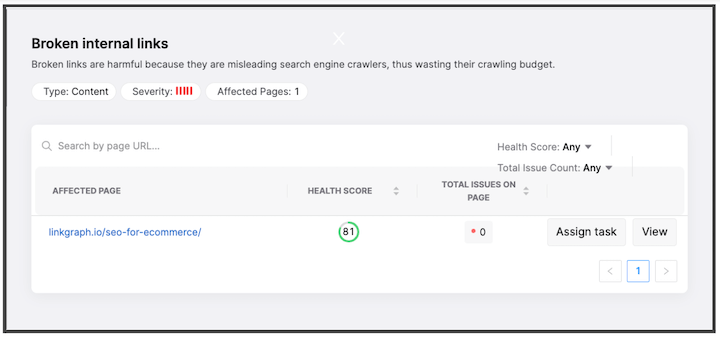 Failing to address broken links can lead users and search engine crawlers to dead pages, which disrupts the user experience and makes your website appear neglected. This can discourage Google from ranking pages from your website.
6. Open in same page
It’s generally recommended to configure your internally linked pages to open in the same tab when clicked. This allows users to easily return to their previous location by simply using the back button. This practice contrasts with how external links should function. External links should ideally open in new tabs to avoid navigating users away from your website.
3 advanced internal linking strategies
If your website already incorporates internal links and you’re looking to maximize their impact, consider these advanced internal linking strategies:
1. Pillar pages & topic clusters
Pillar pages are comprehensive content pieces that provide extensive information about a central topic. These pillar pages incorporate internal links to in-depth articles covering subtopics related to the main theme. While not conceptually advanced, creating pillar pages for your website demands significant time and resources. However, having multiple topic clusters strengthens your internal linking profile and establishes your topical authority in the eyes of Google’s crawlers.
2. PageRank sculpting
PageRank sculpting involves strategically distributing your website’s PageRank through internal links and the nofollow attribute. A common mistake website owners make is directing link equity to pages that don’t need to rank. Given the difficulty in acquiring PageRank, wasting it on pages that don’t contribute to conversions or provide value is not ideal. While users can no longer view a page’s PageRank, Google continues to consider it as a measure of a webpage’s authority and value. A significant portion of your site’s PageRank is typically concentrated on your homepage, highlighting the critical importance of navigation and footer links. For a deeper dive into this strategy, refer to this PageRank sculpting guide.
3. Crawl budget optimization
Google allocates a specific crawl budget to each website. Large websites with thousands of landing pages can easily exhaust this budget, potentially resulting in thousands of pages remaining unindexed by Google. While more advanced, crawl budget optimization is a technique SEOs employ to ensure that Google’s crawlers prioritize indexing their most valuable and high-converting pages. This typically involves using a combination of internal links, sitemaps, and robots tags. Although crawl budget optimization might not be a concern for smaller websites, larger websites should consider be aware of their crawl budget and strategize accordingly.
Don’t ignore internal linking
In conclusion, if you aim to increase traffic to your website and enhance the user experience, don’t treat internal linking as an afterthought. With a little effort and planning, your internal links can lead to more indexed pages in Google and improve your ranking positions. Moreover, these efforts ultimately benefit the most crucial stakeholders—your users—by enabling them to discover more of your content and convert at a higher rate. If you’re eager for more insights, explore these SEO examples.