Can you believe what we can learn about marketing from an experiment conducted a century ago where a scientist rang a bell while feeding his dogs? Or from a Volkswagen experiment that convinced people to use a piano staircase instead of an escalator?

These experiments all tap into our fundamental human nature, motivating us to act in unexpected ways. What’s fascinating is that these very principles can be applied to your marketing strategy for greater impact. Let’s explore five marketing lessons derived from these classic psychology experiments.
Lesson #1: Social Proof is Your Friend
Back in 1951, the renowned psychologist Solomon Asch created an experiment to understand how group pressure influences our decisions. He recruited 50 male students from Swarthmore College for a vision test.
However, there was a twist. Each participant was placed in a room with seven actors who had pre-decided their responses. Unaware of this, the participant assumed everyone was a genuine participant.
They were shown a target line and three other lines (A, B, and C) for comparison. Everyone had to verbally identify the line matching the target line.

The actors were strategically positioned to answer first, with the real participant answering last.
Asch discovered that the actors’ responses heavily influenced the participant’s answers. Out of 18 trials, the actors were instructed to give incorrect answers in 12 “critical trials.” Surprisingly, 75% of participants conformed to the wrong answer at least once during these critical trials.
Post-experiment, participants confessed to conforming due to group pressure – they didn’t want to stand out or face ridicule. Some even believed the group’s answer must be correct. RELATED: 7 Easy Marketing Psychology Tactics to Influence Customers
Applying This to Your Marketing Strategy
We’ve all heard terms like “groupthink,” “herd mentality,” and the “bandwagon effect.” These all point to a common human behavior: we tend to align our decisions with the majority, whether it’s our peer group or those we perceive as similar to us.
To effectively influence your audience, showcase social proof that highlights a majority favoring your offer.
Here are some ways to do this:
1. Highlight Your Brand’s Key Metrics
Showcase your traffic, subscriber count, or actual user data.
AdEspresso conducted a series of Facebook ads to test the effectiveness of displaying key figures as social proof. They created three ad variations for two offers:
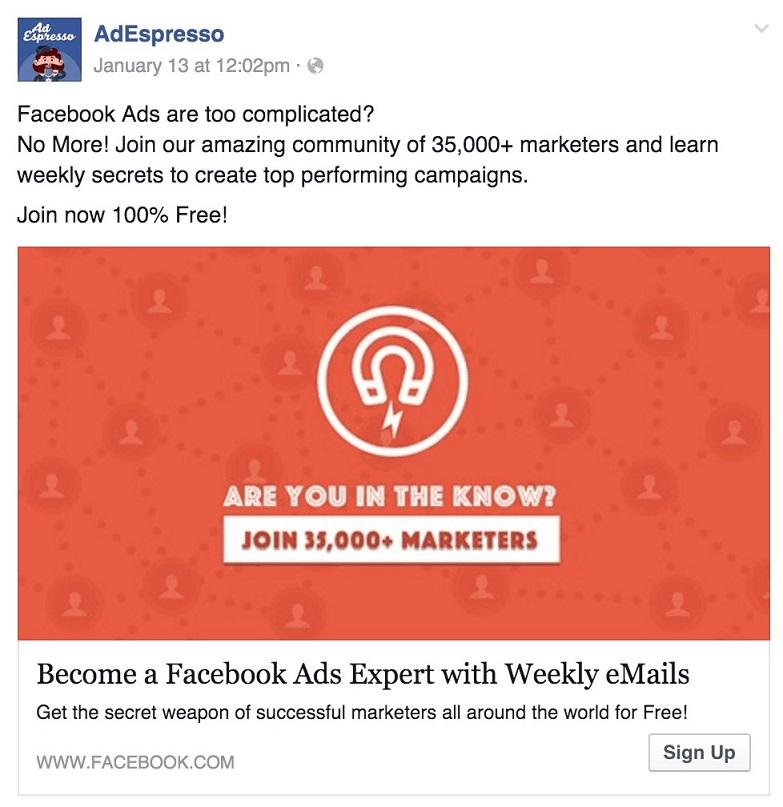
- One ad displayed the precise number of subscribers (e.g., 17,348) who had already taken the offer.
- Another ad showcased a rounded number of subscribers (e.g., 35,000).
- The third ad had no social proof.
They invested an average of $100 in each ad and analyzed the results.
The screenshot below illustrates their findings:
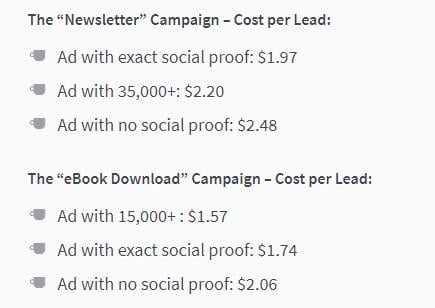
AdEspresso discovered that ads incorporating social proof consistently outperformed those without it. While they couldn’t definitively conclude whether exact or rounded numbers were more effective, highlighting any number proved beneficial.
2. Showcase Real-Time User Activity on Your Site
Increase visitor confidence by displaying real-time interactions with your brand on your website. This could be a footer popup notification (like the one shown below) that appears whenever someone makes a purchase, subscribes to your newsletter, or takes any desired action.

Lesson #2: The Power of Defaults
a 2003 study examined organ donation rates across countries, comparing those with an “opt-out” policy to those with an “opt-in” policy. The goal was to understand how default options influence decisions.
Countries with an opt-out policy automatically register citizens as organ donors, allowing them to opt out if desired. Conversely, opt-in countries require citizens to actively choose organ donation. The study revealed that automatic enrollment significantly increased organ donation rates. Countries with opt-out policies witnessed an 80% higher donation rate compared to opt-in countries.
This behavior is attributed to the “default effect,” a cognitive bias where individuals tend to stick with the pre-selected option.
How to Utilize This in Your Marketing
Understanding the default effect can be a game-changer for your marketing strategy. Here’s how to start:
1. Don’t Underestimate Default Options
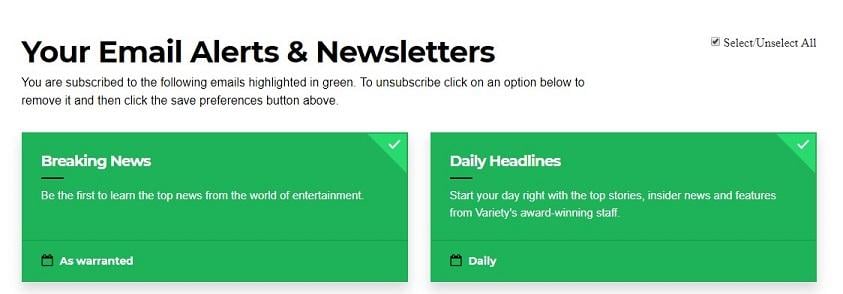
Pre-checked boxes, pre-filled forms, or pre-selected packages are often accepted by most people without modification.
2. Consider a Free Trial
Offering a free trial, a form of default choice, works wonders for subscription models. Users can experience your product risk-free for a limited time (e.g., 7 or 30 days). They then decide to cancel before the trial ends or do nothing and get billed automatically.
Lesson #3: Anchor Your Pricing Strategically
a 1974 study involved researchers Amos Tversky and Daniel Kahneman asking participants to estimate the percentage of African nations in the United Nations. But first, they had participants spin a wheel with numbers from 0 to 100.
While participants believed the wheel was random, it was rigged to display either 10 or 65.
The study found that those shown 10 estimated a lower number of African nations in the UN compared to those shown 65.
Interestingly, participants were unaware that the displayed number influenced their estimations.
Practical Applications in Marketing
Strategically using anchoring on your sales page before presenting actual prices can significantly impact how much customers are willing to pay.
Consider these tactics:
1. Introduce an Anchor Price Before Revealing Actual Pricing
For instance, when selling a fitness product, you could mention how people spend over $1,000 on fitness coaches or discuss the typical price range for such services. Subconsciously, readers will anchor your product to this price.
When they discover your product costs $199, it will appear as a steal, increasing their likelihood of purchasing. This comparison of managed web hosts effectively implements this in its introduction:
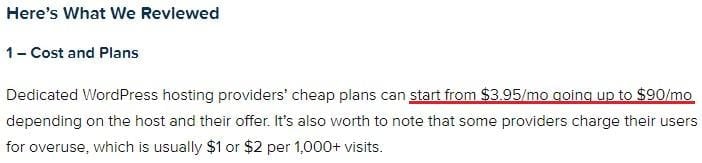
The phrase “plans can start from $3.95/mo going up to $90/mo” acts as an anchor for comparison with the prices displayed on the page.
2. Utilize Discounts to Create a Sense of Bargain
People naturally compare discounted prices to the original price, making them more inclined to buy.
Amazon provides a prime example:

The screenshot reveals a “List Price” of $41.99 and an “actual price” of $19.54. Customers automatically anchor the actual price to the listed price, perceiving a great deal and prompting a purchase.
Lesson #4: Infuse Fun into Mundane Tasks
a 2009 experiment saw Volkswagen conducting experiments to prove the effectiveness of the Fun Theory in motivating desired actions. The theory suggests that when presented with options, people gravitate towards the most enjoyable one.
Volkswagen’s experiment involved encouraging people to use a piano staircase instead of an escalator, creating a bottle bank arcade game for enjoyable recycling, and introducing the world’s largest garbage bin.
The results were astounding. The fun interventions were significantly more popular than their conventional counterparts. The entertaining garbage bin collected 41kg more garbage daily than a regular bin – more than double the usual amount.
Applying This to Your Marketing
Injecting fun into ordinary tasks increases engagement and boosts ROI. There’s a reason gamification is gaining traction in marketing.
1. Incentivize Action Through Fun
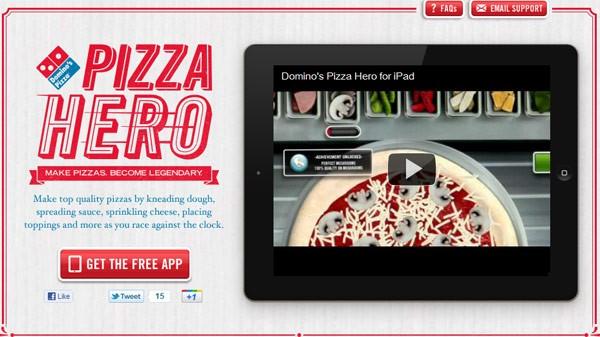
Domino’s Pizza achieved this by boosting sales revenue by 30% through their Pizza Hero app, which allowed customers to create their own pizzas digitally.
2. Leverage Gamification for Enhanced Brand Interaction
Gamification incorporates game-like elements like scoring and competition to drive action. Rank your community members based on participation and activity, making it clear that engagement influences their ranking. You can also encourage inviting friends to follow your brand.
Lesson #5: Cultivate Positive Brand Associations
Russian physiologist Ivan Pavlov’s experiments starting during the 1890s revolutionized our understanding of classical conditioning. While studying dogs’ salivation, he observed that dogs began salivating in anticipation of food upon smelling it.
While this was a natural reflex, Pavlov noticed they also salivated when unrelated events that consistently preceded feeding occurred (like hearing his assistant’s footsteps or a door opening).
He theorized that the dogs had associated these cues with feeding and tested this by introducing other neutral stimuli during feeding (a buzzer, a metronome, a bell). Soon, the dogs associated these stimuli with food and began salivating upon experiencing them, even without food present.
How to Apply This to Your Marketing
You can leverage these learned responses to create positive associations with your brand, boosting sales and ROI.
1. Don’t Just Sell a Product, Sell an Experience
Nike, for example, sells footwear, but it represents much more to consumers. Through strategic marketing campaigns featuring successful athletes and inspiring individuals wearing their products, Nike has positioned itself as the go-to brand for achieving greatness.
This Nike commercial from the 2008 Olympics perfectly encapsulates their brand association with greatness:
2. Align Your Brand with Desired Ideas
Coca-Cola exemplifies this brilliantly. Their marketing consistently marketing campaigns associates Coke with sports, quenching thirst, and combating heat. This conditions people to crave Coke when engaged in physical activities or feeling hot and thirsty.
Beyond Mere Tricks
These are not just marketing hacks; they’re fundamental principles governing the human mind. When effectively implemented, they yield remarkable results.
So, what are you waiting for? Start building your marketing strategy around these timeless principles and watch your brand soar!