“[Infiesto](URL_PLACEHOLDER_0)” is a popular Spanish thriller on Netflix that, while enjoyable, could have benefitted from a longer runtime or a series format to fully explore its intriguing premise.
Set and filmed primarily in Asturias, Spain, the movie utilizes the region’s stark beauty, including the village of L’Infiestu/Infiesto, a ruined church in Galiza, and the Hospital San Rafael in A Coruña. The film opens with an aerial shot of “[Mieres](URL_PLACEHOLDER_1)” followed by a girl traversing a bridge connecting the train station to the town.
[
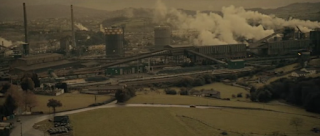
The film showcases the region’s striking industrial landscapes: imposing factories, decaying farms, and abandoned coal mines—reminders of past prosperity. The atmosphere is bleak and heavy, mirroring the damp, rainy weather. This natural darkness makes Asturias an ideal setting for the film.
[
[
[
Surprisingly, the film also features my hometown, Xixón, with scenes shot near my own apartment! The movie concludes with an aerial view of the city’s southern neighborhoods.
[
The film’s main drawback is its brevity. The captivating setting and storyline deserved more time to develop, perhaps as a series. Hopefully, it will inspire other filmmakers to utilize Asturias’s unique landscapes. Acclaimed Asturian director “[Sergio G Sánchez](URL_PLACEHOLDER_12)” did just that in his recent film, “[The Girl in the Mirror](URL_PLACEHOLDER_13).” While the teenage dark fantasy genre isn’t my favorite, the film’s portrayal of Asturias, from winding mountain roads to the coast, is breathtaking.
While I appreciate realistic LGBTQ+ representation in media, “URL_PLACEHOLDER_13,” like many contemporary films, seems to overrepresent it. This distorts reality. I’m all for artistic license to promote positive values. However, I don’t believe sexual orientation should be portrayed as inherently positive or negative, so there’s no need to over- or under-represent it.