The increasing focus on gender issues was something I knew I couldn’t avoid. I had a prepared response ready for when the topic inevitably arose, allowing me to quickly steer the conversation elsewhere. However, to my surprise, this time I found myself saying, “I think I’d like to write about my experiences as a woman in software.”
What!? My inner voice exclaimed, why? Please bear with me, I can assure you this won’t be an attempt to shame men.
I have a unique perspective to offer, and I want to share it.
I consider myself fortunate. For the most part, I haven’t faced any significant disadvantages or advantages as a woman in software. I believe this perspective is often overlooked in discussions, where the reality is that it’s just like any other life experience: a mix of positives, negatives, and everything in between.
My parents fostered my interest in computers and technology from a young age. What I saw as playtime was actually developing my skills: Around age 12, I was modifying pixel art (think colorful fantasy ponies) and creating scripts for an old 2D game called Furcadia. Its scripting language, ‘Dragonspeak’, allowed for simple trigger/response scripts (e.g., playing a sound when a player stepped on an object or teleporting them to specific coordinates).
Soon after, I was building a new computer with my dad – an old, bulky black Compaq – just so I could play this amazing game called Morrowind. I even dabbled in mods and map creation for it.
So, naturally, I gravitated towards this field. It was my passion. This also explains why I was oblivious to the gender imbalance in STEM (Science, Technology, Engineering, and Math) until I finally declared my major, prompting my dad to say, “Well, you’ll have an advantage being a girl in computer science.”
This came as a shock. Was it true? Did my gender alone give me an advantage? I started paying closer attention.
From Freshman To Bachelor, To First Full-time Job
Our degree program began with around 120 students. In that initial freshman class, I recall only five women, myself included. The starting ratio: One out of 24 students, female, or 4.67 percent. Sure, we were a minority, but my only real complaint was something you’d find anywhere with such a ratio of hormonal young men; I had to endure numerous pick-up lines, some subtle and others painfully awkward. (“I know you’ll eventually see that I’m the better choice for a boyfriend. My IRC friend agrees.” Believe it or not, this happened.)
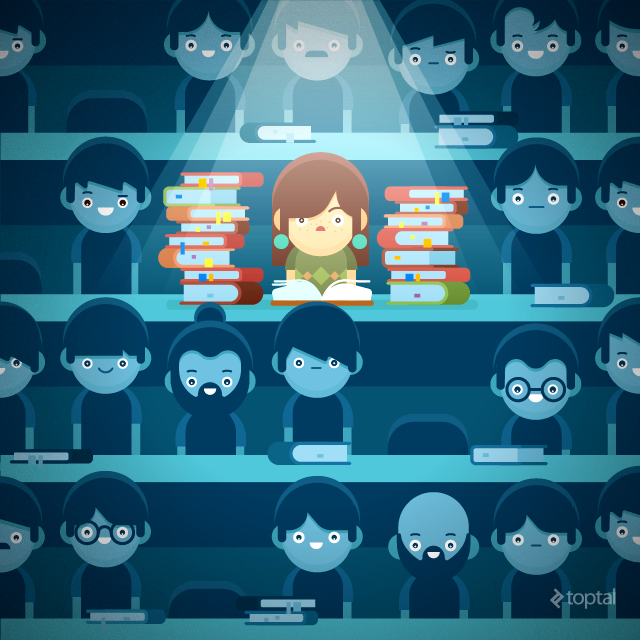
By graduation, only eight students remained to receive their Bachelor of Innovation in Game Design and Development. I was the only woman. Unsurprisingly, we formed a close-knit group; we shared a mutual respect for persevering, and my gender wasn’t a significant factor.
If anything, the lack of conflict allowed me to develop a somewhat naive sense of pride in my unique position. My excellent teachers treated everyone equally, and having a female role model in one of them, Dana Wortman, a successful computer scientist, was definitely encouraging. There were also two female teaching staff in the engineering department, out of about ten, which, naturally, I saw as further proof that I was challenging the norm – always an ego boost. Long live the women-in-tech revolution!
My career path seemed certain.
This confidence in a supposed gender-driven edge carried over to my first full-time job. On a flight home from Washington, D.C., I was telling the person next to me about leaving my previous job due to witnessing unethical practices in client interactions. As we were taxiing, the man in front of us turned around and handed me his business card. “You’re a programmer? Here’s my card. Send me your résumé.”
It was the CEO of BombBomb, Connor McCluskey. Knowing him now, I’m sure he would have done the same for any programmer advocating for ethical practices, regardless of gender. However, at the time, I felt like being female played a part.
I enjoyed my time at BombBomb. Our game dev team was small (just five people!) and we had a great dynamic. We were all young, shared a healthy dose of nerdiness, and bonded over video games. I brushed off any discomfort I felt within the team or the company as me being “too sensitive.”
Looking back, this was a clear sign to anyone paying attention. But at the time, those insecurities were just “something to get over.” Don’t misunderstand, they were wonderful people. I can only recall a few instances where I felt uncomfortable due to something potentially inappropriate for the workplace. Like the time I was explaining database “sharding” to our amused customer service team, who misheard it as “sharting.” Gross.
Impostor Syndrome: Little Sister Or Nagger?
As the initial excitement of the new job faded, my fragile sense of gender-based confidence took a paranoid turn. Instead of being surrounded by supportive teachers and peers who treated me equally, I found myself among people who were surprised, even intrigued, to see a woman on the development side. It made me self-conscious. When my input or criticisms were dismissed, I began to wonder if it was due to my junior status or my gender. Had I unintentionally adopted a little sister persona? Maybe they settled for a less qualified candidate just because I was female?
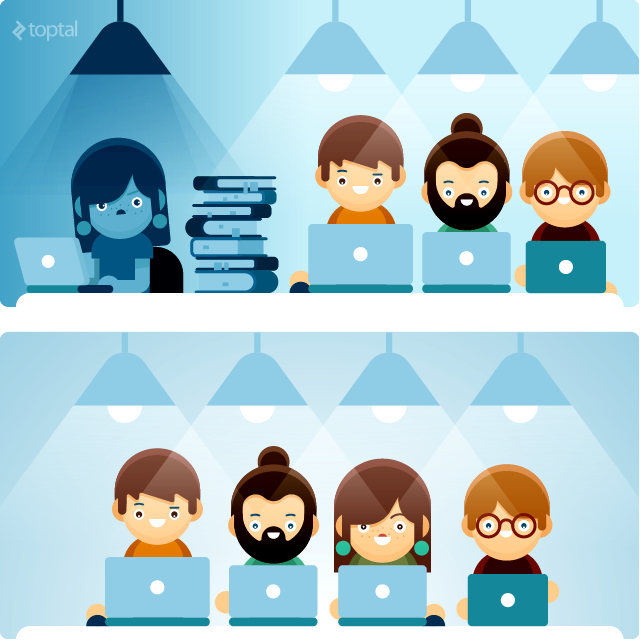
I was experiencing a mild case of “impostor syndrome,” a term I only learned after watching Sabrina Farmer’s presentation at the 2012 USENIX WiAC summit. I can’t remember who shared the video with me. Initially, I was skeptical; the presentation was titled ‘Overcoming My Biggest Roadblock, Myself’, and I’ve always been uncomfortable with openly expressing emotions.
Even now, I’m unsure how I feel about her presentation. Her vulnerability makes me uneasy, and I can’t relate to the motherhood aspect. However, I can’t deny the impact of seeing someone so accomplished speak openly about her struggles, normalizing the experience.
Her presentation sparked my interest in the topic of women in male-dominated fields. I delved into the reasons why women were underrepresented in STEM careers. Some argued that women were more susceptible to guilt, less likely to interrupt or firmly defend their positions, and that their adherence to social norms made them easy targets for being overlooked or silenced. There were claims that we’re more easily embarrassed by crude humor and more sensitive to our work environment – so, “yes, please” to a pretty tissue box and a potted plant – but, wait, actually no, we don’t want the attention and judgment that might come with it. (I had a plant and an owl mug. Never sacrifice small joys out of fear. Many of my coworkers actually liked my owl mug.)
Many of these assertions resonated with me, though thankfully, to a lesser extent than some of the horror stories I came across.
Guilt was definitely something I struggled with. Any issue, even if brought up casually, became my responsibility to resolve, or else I would disappoint the world and/or my coworkers.
Both outcomes were equally undesirable. While this attitude made me the go-to person for anyone outside the department (and who doesn’t love being popular?), I quickly realized I needed to set boundaries to avoid burnout. I had to learn to decline requests for help without feeling like I was letting someone down. Apparently, saying “No” when necessary is something women are less inclined to do than men.
Learning to say “No” became intertwined with finding my voice and asserting myself.
Questioning Decisions And Speaking Out
Speaking up, for me, meant learning to ask why instead of passively accepting coding decisions. I’ve always been outspoken about my beliefs, but I needed to figure out how to express myself when something wasn’t clear. Sometimes, the resulting discussions led to even better solutions. Even when proven wrong, understanding the why equipped me to be right the next time. No one can fault me for that, right?
As for taking a stand, I persistently advocated for automated testing despite lukewarm management support because my opinion is valid and I refuse to be crippled by Impostor Syndrome. However, despite these efforts, I still hesitated to stand my ground in social situations.
One day, a coworker patted me on the back. I was mortified (oh my goodness, why would you do that?). I have a strong aversion to being touched. I knew he didn’t mean anything by it (we remain friends to this day), but it left me feeling extremely uncomfortable. Instead of addressing it, I avoided him for a week. I didn’t want to make a big deal out of it. Saying, “I’m not comfortable around you,” even if it’s conditional like “…when you do X,” felt too confrontational. I didn’t want to offend or insult him.
This is not a situation men typically encounter, but it’s not uncommon for women in everyday life, tech industry included. Just the other day, a waiter held my hands and told me to promise to return. I was incredibly uncomfortable and unsure of his intentions. To avoid a scene, I simply smiled and mumbled a non-committal response. I was just glad it wasn’t my credit card information he was handling. I wish I had said something, but I still wouldn’t know how to phrase it politely enough to avoid finding something unsavory in my food. I probably won’t be returning to that restaurant, which is unfair to the owners.
So yes, I’m still working on asserting myself, and sometimes the little things accumulate to the point where I blur the line between taking a stand and being overly assertive. This was a frequent struggle early on at BombBomb, but my colleagues were patient during my period of self-discovery. My boss, in a casual review, suggested that I “maybe ease up a bit sometimes,” or something to that effect. My mentor, Charles, jokingly threatened to make bird noises during scrum meetings if I argued a point too forcefully. (He did it once; it was hilarious.)
I was fortunate that my Woman-In-The-Workplace growing pains played out among decent individuals. Over time, I found a comfortable balance professionally: somewhere between paranoia and letting things slide, feeling inadequate and knowing I was being paid for my expertise. However, several months after leaving BombBomb for freelance work, my mild case of Impostor Syndrome intensified.
Back In The Job Market
Was I being interviewed simply because I was female? Was I being hired for the same reason? Why did gender always come up in conversations with potential clients or companies? Was I merely a diversity quota to be filled, regardless of my skills?
Suddenly, I was plagued with doubts about my qualifications, my work, even my degree! Had I been given a free pass just for being a woman? It must have looked fantastic for the first graduating class of my program to include one of those rare women in STEM.
Ah, impostor syndrome. That insidious feeling of inadequacy despite ample evidence to the contrary. Other symptoms include:
- A sense of not belonging. (Why am I the only woman here? Did I miss a memo?)
- The feeling that your successes are undeserved. (How much of my being here is due to my gender?)
- A nagging fear, fueled by the previous symptoms, that your skills are a sham. (I have no idea what I’m doing, and I desperately hope no one finds out.)
While impostor syndrome is often associated with women in tech, it’s not exclusive to them. At least two of my male classmates experienced it when the three of us were invited to speak at our alma mater’s Engineering Department 50th anniversary celebration. We were asked to share our experiences and discuss how our degrees had helped or hindered us.
As a contractor with no current contracts, I felt incredibly self-conscious. One panelist was thriving in high-speed data storage, and the other was moving to San Francisco to work for a game studio.
My embarrassment deepened when a professor asked me how they could encourage women to stay in STEM. I stumbled through an explanation about how I believed something, be it biological differences, societal expectations, or both, made women typically more averse to failure or criticism and less likely to speak up. When I mentioned impostor syndrome and how “awareness” was key to retaining women, I felt extremely unqualified. I sensed a wave of skepticism from the audience, as if they were thinking, “this is utter nonsense,” and in that moment, I agreed. What was I even talking about? Thankfully, no one voiced their disagreement during the panel; I might have died on the spot.
Imagine my surprise when, after the panel, the soon-to-be San Francisco guy mentioned experiencing impostor syndrome. The “storage” guy agreed. Both were familiar with the concept from other sources. Our consensus was that none of us felt deserving of being on that panel. We felt like frauds, albeit good ones.
About a week later, I bumped into Dana Wortman, who casually mentioned that everything I had talked about was covered in her women’s studies class. So, even if my rambling about women’s experiences in the workplace sounded like gibberish, it was gibberish that multiple, credible sources seemed to agree with to varying degrees.

“Impostor Syndrome” can affect anyone who has ever felt like an outsider, like the San Francisco and storage guys: “fresh” college graduates among experienced, seasoned programmers. A black man on a team of white coworkers. A gay man surrounded by colleagues with pictures of their wives and children on their desks. We are all susceptible because we are all human, and humans tend to fixate on differences, any differences, regardless of their relevance.
Impostor Syndrome is real, and it can only be defeated with self-assurance and a strong support system. The issues of impostor syndrome, social expectations, etc., are real enough to enough people that they demand attention.
They are real enough to be contributing to the gender imbalance in tech and science.
It Wasn’t Always Like This…
I don’t understand how we arrived at this point. The ratio was much more balanced in the early days of these fields.
After all, it was a woman who, as the storage guy put it, ‘basically invented everything’. I’m serious. US Navy Rear Admiral Grace Hopper (nicknamed ‘Amazing Grace’ for being an all-around amazing person) invented the first compiler for a computer programming language, working with the Harvard Mark I in 1944. Let that sink in. A woman invented the first compiler. It doesn’t get more fundamental than that. Oh, and she was also known as “Grandma COBOL.” Does that ring a bell?
Margaret Hamilton is a prominent figure representing women in early tech. She programmed at NASA, and her work on the Apollo Guidance Computer Software was instrumental in saving the Apollo 11 mission in 1969 (the one where we landed on the moon). Margaret also coined the term software engineer, so the next time you hear someone gripe about “developers calling themselves engineers,” direct them to Neil Armstrong and Buzz Aldrin.
And let’s not forget the women who played a crucial role in breaking high-level codes at Bletchley Park during World War II. They may not have earned fancy nicknames or been featured in high-profile articles, but these women contributed to winning the Second World War!
So how did we get here, desperately seeking ways to attract and retain women in tech? How do we fix this? I believe the answer lies in awareness, from everyone involved.
Communication, awareness, and acknowledging intent are crucial for accurately representing reality.
While this applies universally, it holds particular significance in this industry. The culture in many countries encourages hyper-vigilance in women and girls. We are constantly reminded to be careful, stick to public places, travel with someone, and even carry pepper spray or panic buttons. The message is clear: “Men are dangerous. Assume they are suspicious until proven otherwise. Treat them with caution.”
Working in a male-dominated field amplifies this vulnerability, making us even more self-conscious, self-critical, and guarded. Recognizing this, women can learn to manage these instincts. Similarly, male colleagues, being aware of this dynamic, can choose their words and actions more thoughtfully.
This solution, admittedly, is optimistic. There will always be exceptions, those who disagree, anecdotes, and uncontrollable factors like women choosing family over career advancement. However, awareness is within reach for every single person reading this. You, yes you, can contribute to a more positive and inclusive environment in tech and science simply by being aware.