Imagine this: It’s September 2016, and Rob Bucci from STAT Search Analytics is on stage at MozCon. Little did the attendees know, they were about to witness the unofficial kickoff of the mad dash for featured snippets. The excitement was palpable – Bucci’s presentation became the talk of the conference, with discussions continuing long after it ended. Savvy SEO professionals have always understood the massive potential of featured snippets. However, Bucci’s compelling presentation, particularly his use of in-depth study on snippets, served as a wake-up call for many, including myself. Since then, I’ve been completely absorbed by the concept of featured snippets. My quest has been to identify the most effective tools for securing more of them, and I’m thrilled to share that I’ve found a winner: a free service called AnswerThePublic. Thanks to this tool, I’ve already achieved tangible results, including earning featured snippets like this one for the search query, “What is a business dashboard?”
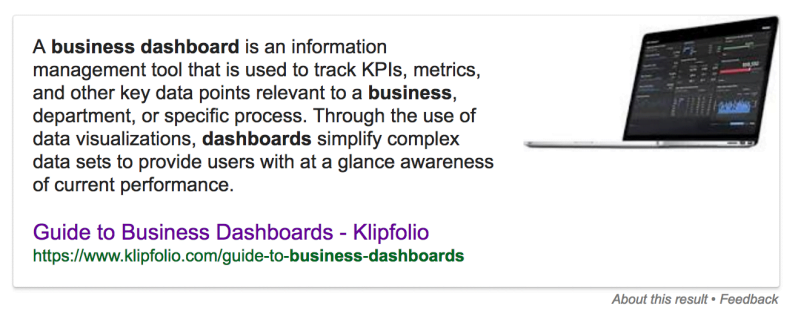
In this article, I’ll guide you through my process of obtaining featured snippets using AnswerThePublic.
The New Long Tail: Questions Are King
Beyond its candid and engaging style, Larry Kim’s nine crazy predictions for SEO in 2017 served as a potent reminder that achieving organic search visibility hinges on delivering genuine value to users. After all, that’s the fundamental purpose of search. Learning through queries is an intuitive process, while typing truncated phrases into Google feels somewhat unnatural. Imagine approaching a friend and flatly stating, “Chicken Recipes” – it’s just not how we communicate. Instead, similar to the increasing popularity of voice searches, you’d probably ask a question like, “What’s a good chicken recipe?” Google’s RankBrain is adapting to this shift, recognizing that people are using search engines to pose natural, conversational questions like: “What’s a good chicken recipe that uses lemon and basil and is cooked on the BBQ?” The key takeaway? Optimize for those questions!
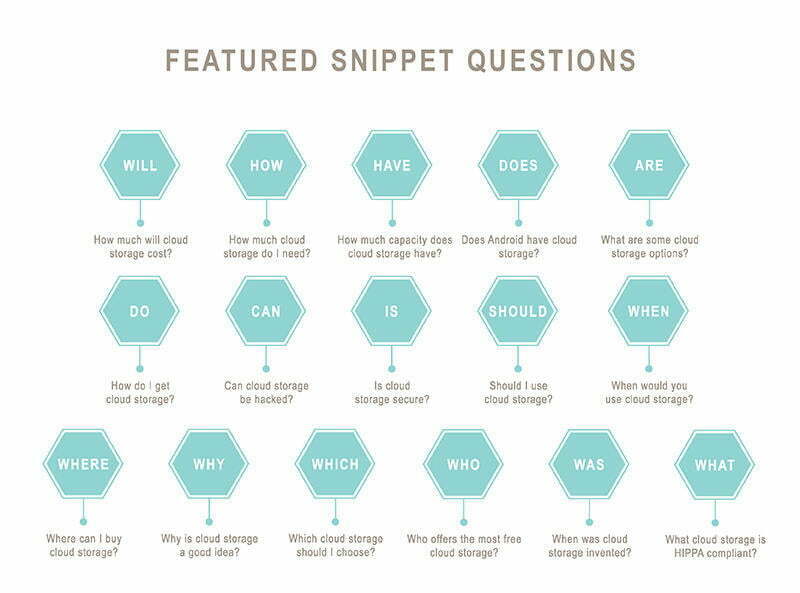
Image via Moz Questions present a new long-tail opportunity for SEOs, and as it turns out, they also have a higher probability of trigger featured snippets.
AnswerThePublic and Keyword Research
Effective SEO starts with solid keyword research. So, it’s understandable why many SEOs are disheartened by Google’s apparent determination to obscuring keyword data. What’s the solution? For me, it’s about shifting focus from keyword volume data and prioritizing the ability to provide valuable answers to user questions. Instead of aiming for top rankings, we should strive to build relationships through search. This is precisely why AnswerThePublic is such a valuable tool. Its functionality is elegantly simple: It analyzes auto-suggest results from Google and Bing, automating the process of gathering these suggestions (Read in full here). The outcome? A concise, insightful one-page report. This shift is significant because SEO is moving away from precise keyword targeting and towards comprehensive topic ownership. Add to this the rise of RankBrain, voice search, and featured snippets, and you have a compelling case for prioritizing answers to questions over exact keyword matches.
Using AnswerThePublic for Effective Keyword Research
AnswerThePublic has become an integral part of my keyword research process. It’s my starting point for understanding user intent behind a specific topic, consistently offering valuable insights. I utilize AnswerThePublic to accomplish these three tasks:
- Uncovering the questions being asked about a given term/topic
- Examining topically related terms
- Building a comprehensive term dictionary
1. What questions are users asking?
Featured snippets are more likely to appear for search queries that begin with an interrogative word, according to STAT’s snippet research. These inquiries provide Google with the best opportunity to answer the user’s question directly on the search results page. When you input a term into AnswerThePublic, it presents information categorized as Questions, Prepositions, and Alphabet. Last year, I assisted our Development Manager with keyword research for a blog post on “Hackathons.” Here’s what the tool generated for that search:
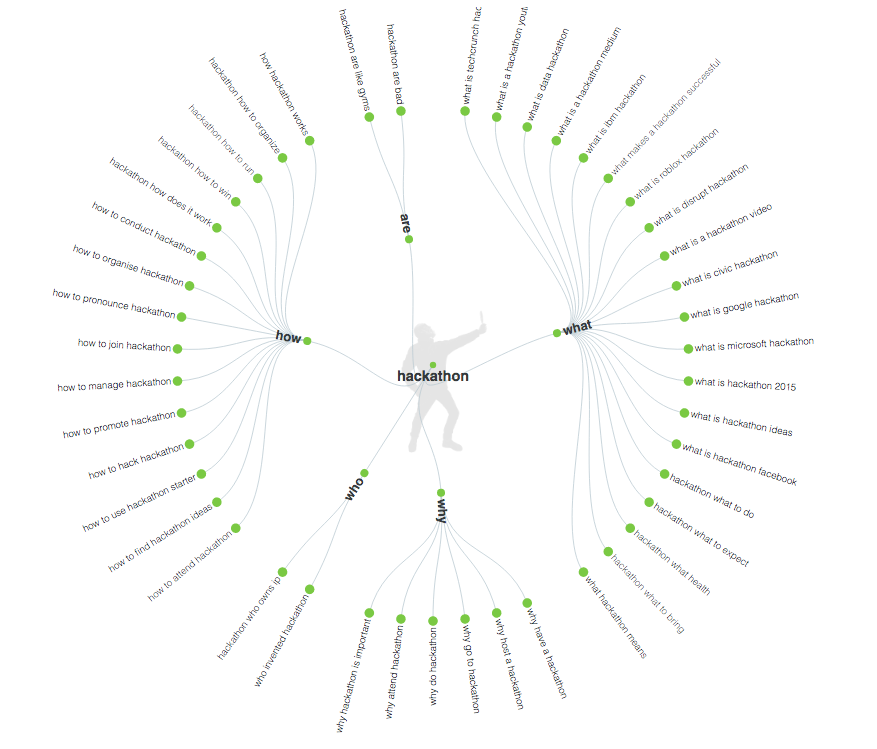
Tip: If deciphering the circular layout of questions feels cumbersome, click the “Data” tab to view the information in a user-friendly table format. This wheel of questions is a goldmine for identifying potential featured snippet opportunities. Clicking on a question takes you directly to the Google search results, allowing you to analyze the current rankings and see if a snippet exists for that term. Instead of trying to tackle everything, we narrowed our focus to the “how” question, aiming to provide an excellent answer to “how to run a hackathon.”
2. Exploring Topically Related Terms
Take a look at the seed for hackathon section – you’ll find it’s primarily populated with terms related to hosting hackathons, corporate hackathons, and strategies for winning them. While this might initially seem overwhelming, your objective as an SEO isn’t to address every single term; it’s to provide concise and accurate answers to specific user questions. This extensive list of terms becomes helpful for narrowing down your topic through strategic exclusion. We intentionally avoided certain terms in our research because we wanted our content to resonate with a particular audience and avoid getting lost in the sea of information about mainstream hackathons. AnswerThePublic proved invaluable in pinpointing terms related to running hackathons. Combining this insight with audience profiling allowed me to identify several questions that would add value to the article:
- What is a hackathon?
- How do you organize a hackathon? Based on this research, we determined that a step-by-step guide would be the most valuable format.
3. Creating a Term Dictionary
I view SEO as a form of writing with constraints; it’s the art of crafting content that aligns with what people are searching for. If you’re trying to rank for “Chicken Recipes,” it wouldn’t make sense to write about “fowl dish instructions” even if it satisfies your creative urges. AnswerThePublic reveals the exact language people use when searching. Sometimes, this requires minor adjustments, like opting for the phrase “run a hackathon” instead of “launch a hackathon.” Other times, it might lead to more significant shifts, like focusing on “hackathon” versus “hackday.” The Preposition section provides essential information for understanding the core of the topic. Prepositions indicate movement or relationships within sentences, making this section particularly useful for deciphering the connection between your topic and user intent. For example, consider the results in the “to” section for “hackathon.”
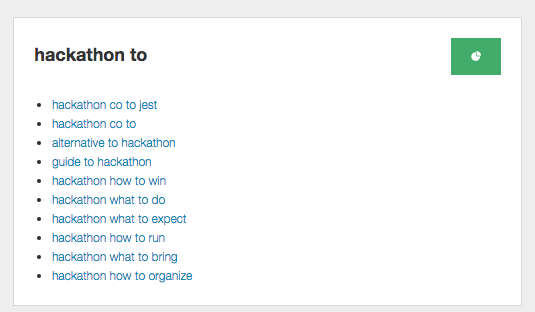
Think of your term dictionary as a roadmap highlighting the types of terms users expect to encounter when searching for a particular topic. It’s not about shoehorning these terms into your content but rather using them as a guide when shaping your content to be genuinely useful.
Answer The Public: Your Starting Point for Snippet Domination
Featured snippets are often triggered by questions at a much higher rate than other terms. AnswerThePublic is an exceptional tool for analyzing the specific questions users are asking. However, it’s crucial to remember that relying solely on the literal AnswerThePublic results isn’t enough. You need to interpret the data and leverage your SEO intuition. The results speak for themselves. By incorporating AnswerThePublic into our keyword research and making a few on-page SEO and content tweaks, we successfully secured featured snippets for our hackathon article and witnessed a significant surge in traffic. Regardless of your team’s size, I believe this tool can help you achieve similar results.
