A lot of traffic to my blog originates from Google Image Search. In fact, “jeff bridges” and “young jeff bridges” are two of my top 10 organic keyword referrers. This is all thanks to a blog post I wrote, where I ponder the timeless question, who’s the ultimate in “cocky-hot,” a young Jeff Bridges or James Spader circa Pretty in Pink? (The jury is still out on that one.)

You might be thinking, “Traffic is traffic, who cares?” And you’d be right to an extent, especially if your blog has no real objectives. However, imagine for a moment that my blog is a business with goals to achieve. In that case, this traffic presents a few issues:
- Lack of Relevance: People searching Google Images for pictures of Jeff Bridges are unlikely interested in my blog, whether it’s about Jeff Bridges or not. They probably just want to see photos of him or use them elsewhere. My blog isn’t even remotely related to Jeff Bridges, movies, acting, or celebrities.
- High Bounce Rate/Low Retention: Visitors who come for Jeff Bridges pictures and realize I don’t offer an endless supply aren’t likely to bookmark my site or become regular readers.
While some people use image search to steal content like cute cat photos, others genuinely seek information or products best represented visually. If you run a business site/blog, you should constantly consider how your content can cultivate a returning audience. It’s fantastic if people convert immediately upon finding your site! Give yourself a pat on the back. But content marketing often aims to build relationships, guiding prospects through the sales funnel toward becoming customers. Therefore, you want most visitors, even newcomers from Google searches, to be relevant to your business. With this in mind, here are three strategies to optimize images in your content marketing and get the most out of Google Image Search traffic.
See Google Image Search as Low-Hanging Fruit
Several months ago, we put effort into optimizing our site for Google Image Search rankings. The results were noticeable, with a significant upward trend in traffic from image searches:
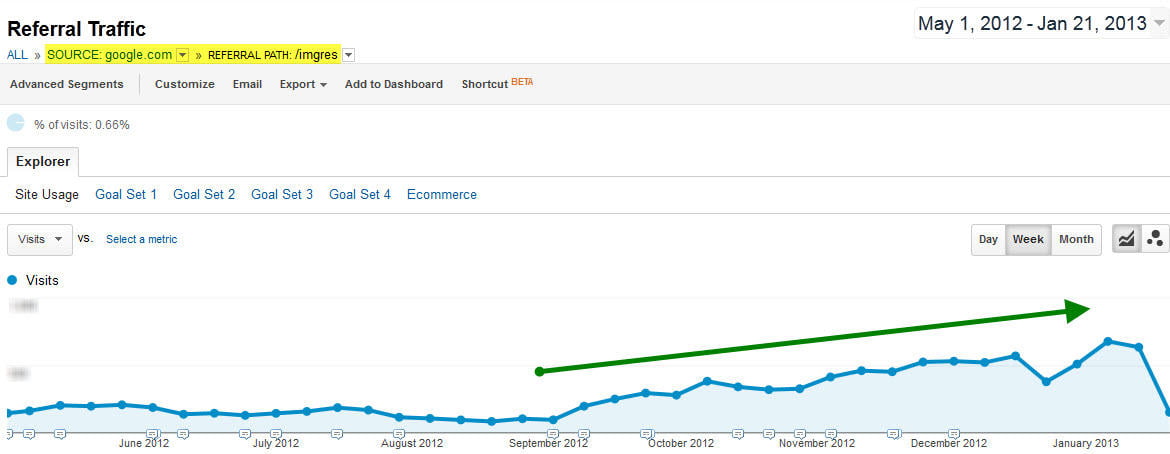
Furthermore, the bounce rate for this traffic is relatively low, even lower than our site average. (You can view your Google Image Search stats in Analytics by going to Traffic Sources -> Sources -> Referrals, clicking google.com, and then /imgres.) Often, driving traffic through image or video search is easier than traditional web search. This is partly due to less competition and partly because competitors are less likely to be properly optimized. Consider image search as an easy win. With the right approach, you can start driving traffic from image search fairly quickly. The key is ensuring that traffic is both relevant and valuable. Let’s delve into that in the next section.
Craft Visuals that Resonate with Potential Customers
When creating content to rank for your target keywords, it’s always best to start with the keywords themselves, rather than writing freely and forcing keywords in later. Similarly, when optimizing for image search, begin with keywords as your foundation. While many keywords naturally lend themselves to visual content, images can enhance almost any content type. “How-to” keywords are particularly well-suited for image-heavy content because illustrating a process is often more effective than just explaining it. (This explains why some DIY furniture comes with instructions that are all diagrams, no text.) How-to keywords are also fantastic for attracting highly relevant long-tail traffic. When you provide the perfect answer to a question, you boost your chances of converting that visitor into a customer later. Here are some examples of how different businesses can create visual content around how-to keywords:
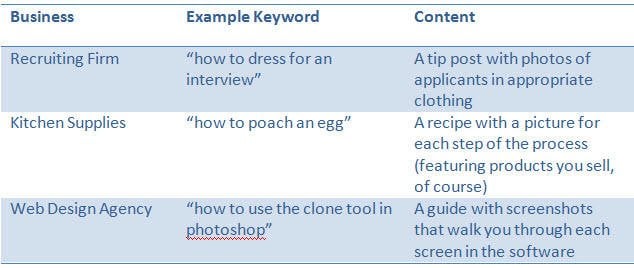
In all of these cases, you’re pursuing traffic that is highly relevant to your business and using images to attract and retain that traffic. The idea is that even with informational keywords like these, which might not lead directly to sales, you’re increasing brand awareness and establishing yourself as an authority in your field. This can only be beneficial in the long run. (Pro Tip: Seek opportunities to capture lead information. For example, encourage blog visitors to join your email list so you can nurture them with targeted offers. Alternatively, set up a remarketing campaign in AdWords so these visitors continue seeing your display ads for the next month or so. If they were seeking information in your field, they might need further help—in the form of products or services—soon.) So how do you ensure your images appear in Google results for your target keywords? Let’s get to that!
Leverage Image File Names and Alt Text
Many sites neglect to optimize their images properly, either due to laziness or lack of knowledge. This presents an opportunity for you to outshine them. Our internal tests show that optimized images can even improve rankings in regular web search. Since Google can’t “see” images yet (we’re still waiting on those flying cars!), you need to rely on the surrounding text to tell Google what the picture is “about.” To optimize your images for Google image search, focus on these two key elements:
- Image File Name: When saving images, use descriptive file names optimized for your target keywords. For instance, in the “how to dress for a job interview” example above, you might save a picture as “mens-suit-for-job-interview.jpg.” Notice how this is readable, descriptive text compared to a meaningless string of numbers like “IMG0009.jpg.”
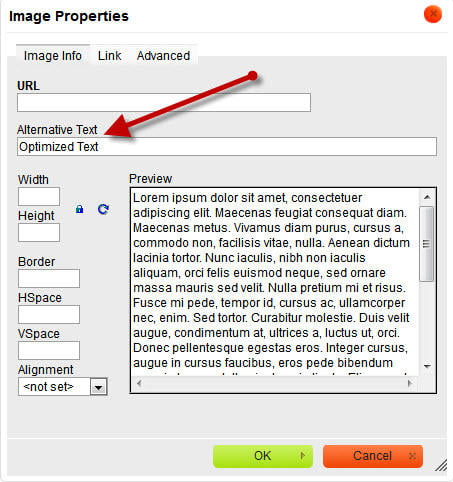
- Alt Attribute: When coding an image into your site, use the alt attribute to provide a textual description. If someone’s browser can’t display the image, they’ll see the alt text instead. Google also crawls alt text to understand the image content. This is a prime spot for one of your keywords. Ideally, the keyword should accurately describe the image! Your HTML might look like this: <img src=”mens-suit-for-job-interview.jpg ” alt=”job interview appropriate suit”>. You can also add alt text via your content management system—here’s how the field looks in Drupal:
Secondary factors that could influence your rankings include the text near the image on the page (caption, surrounding text) and anchor text in links pointing to the image or the page containing it. Remember to apply your keyword research here. While your file names and alt attributes should accurately describe the images, your choices should also align with your SEO objectives. Targeting “email marketing guide” with cute cat photos won’t maximize relevance. Also, remember that ads/banners are images too. If you use display creatives on your web pages, optimize those as well. Finally, ensure your images aren’t unattractive, distorted, slow to load, or otherwise cumbersome. Here are Google’s recommendations for making images user-friendly:
- High-Quality Photos: Users find appealing, high-quality photos more engaging than blurry, unclear images. Additionally, other webmasters are more inclined to link to a good-quality image, potentially increasing traffic to your website. Sharp, clear images also appear better as thumbnails in search results, making them more clickable.
- Standalone Landing Pages: Even if an image appears on multiple pages of your site, consider creating a dedicated landing page for it. This allows you to consolidate all related information. If you opt for this, provide unique information on each page, such as descriptive titles and captions. You could even enable comments, discussions, or ratings for each picture.
- Image Placement: Not everyone scrolls to the bottom of a page. Position your images higher up for immediate visibility.
- Structured Directories: Organize your directories so that similar images are grouped. For example, you could have separate folders for thumbnails and full-size images. Alternatively, categorize images into different directories (e.g., separate folders for Hawaii, Ghana, and Ireland under your Travel directory). If your site contains adult content, store these images in separate directories.
- Specify Image Dimensions: Include width and height attributes for all images. This allows web browsers to begin rendering the page before images fully download, as they know the dimensions to wrap other elements around. Specifying dimensions speeds up page loading and enhances user experience.
For more information about image optimization, refer to Optimizing Web Graphics on the site Let’s Make the Web Faster. By implementing these tips, you should see an increase in Google Image Search traffic—and it will be high-quality traffic you can actually convert.