For those running a small marketing agency, creating a client proposal is a skill that can be honed and even replicated. While mastering agency sales requires experience, learning how to present your value proposition in a proposal can be standardized and adapted to each client.

A structured proposal allows you to communicate your value effectively, eliminating the need to start from scratch every time. This post provides a step-by-step guide to help you organize your thoughts and craft winning proposals.
Understanding Business Proposals
A business proposal is a comprehensive document that outlines the entirety of a project for a prospective client. It allows them to make informed decisions by:
- Clearly defining the process, timeline, and cost for clear expectations.
- Connecting project components to the client’s objectives.
- Demonstrating the value and justifying the cost of your services.
- Showcasing your thoroughness and personalized approach. Proposals provide a roadmap for you and transparency for your client.
Gathering Essential Information
Before drafting a proposal, an introductory call is crucial to understand the prospect’s needs and paid advertising goals. Gather all necessary information to provide accurate estimations, contextualize the project scope, and address challenges, goals, and desired outcomes. Information to collect during the initial call:
Defining the Overall Goal
While seemingly obvious, many seek paid marketing without clear objectives. Asking this question in multiple ways helps uncover the prospect’s true desires and ensures alignment on expectations. This clarifies goals and benchmarks, even helping you identify potentially difficult clients.
Determining the Potential Budget
Knowing the client’s budget is crucial for agencies, as ad spend often dictates their ability to pay for your services. Understand their budget limitations, potential for scaling, and how it aligns with your pricing model, whether fixed or flexible. This also helps gauge their long-term potential.
Considering the Industry and Offer
The prospect’s industry significantly impacts your channel selection and the difficulty of reaching their target audience. A large budget is irrelevant if the niche is difficult to target through paid channels. The complexity of their offer, including its conversion path and potential friction points, also requires consideration.
Evaluating Marketing Operations Support
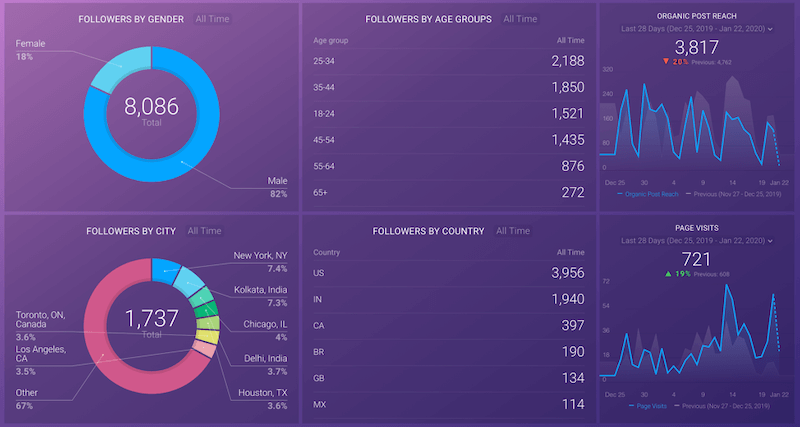
It’s important to assess their marketing sophistication, including web development, automation, lead scoring, and team size. An efficient lead nurturing and management system is essential for scalability and overall “health.” This encompasses aspects like design and landing page support, and access to analytics, which are crucial for your success.
Assessing Sales Support
Understanding the prospect’s sales process for B2B clients is vital. This includes their sales cycle, funnel, and the presence of business development or sales teams. A strong sales team can be invaluable to your success.
Crafting a Winning Business Proposal
With all necessary information, you’re ready to draft your proposal. Here are six steps to create a persuasive document:
Step #1: Establishing Main Objectives
Start by outlining the primary objectives both parties aim to achieve. Include three overarching goals with short and long-term timelines. For example:
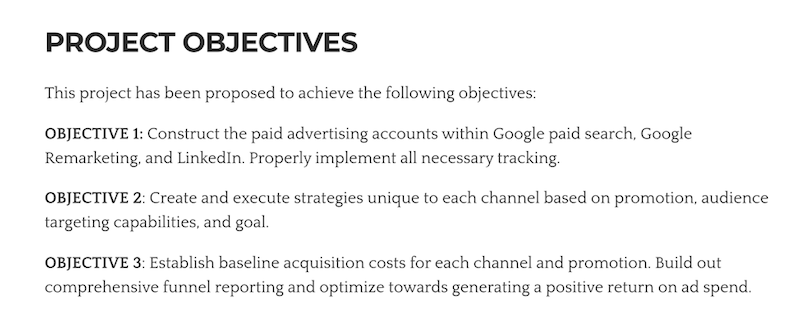
This section acts as a summary of your strategy, outlining how you’ll achieve the client’s goals. Including short and long-term objectives emphasizes the ongoing nature of success.
Step #2: Outlining Project Scope and Key Tasks
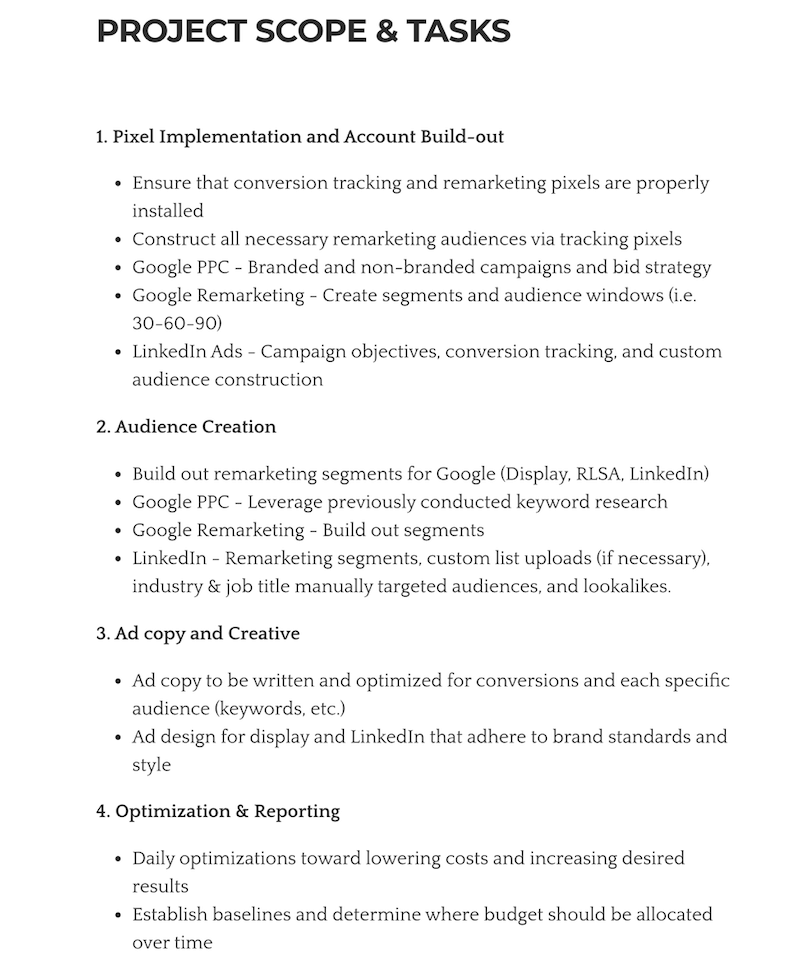
Here, break down your strategy into specific tasks. Address initial steps like account/channel access, setup, conversion tracking, and remarketing audience creation. Then detail subsequent actions like targeting and promotional strategies, baseline costs, budget allocation, and reporting frequency. Include links to supporting documents like keyword research for transparency. Clearly outline performance reporting and meeting cadence. This section typically follows this structure:
Step #3: Listing Client Requirements
Dedicate a section to outlining client responsibilities, ensuring a smooth workflow. Clearly state what you need access to, preventing future roadblocks. Transparency in this area minimizes potential issues.
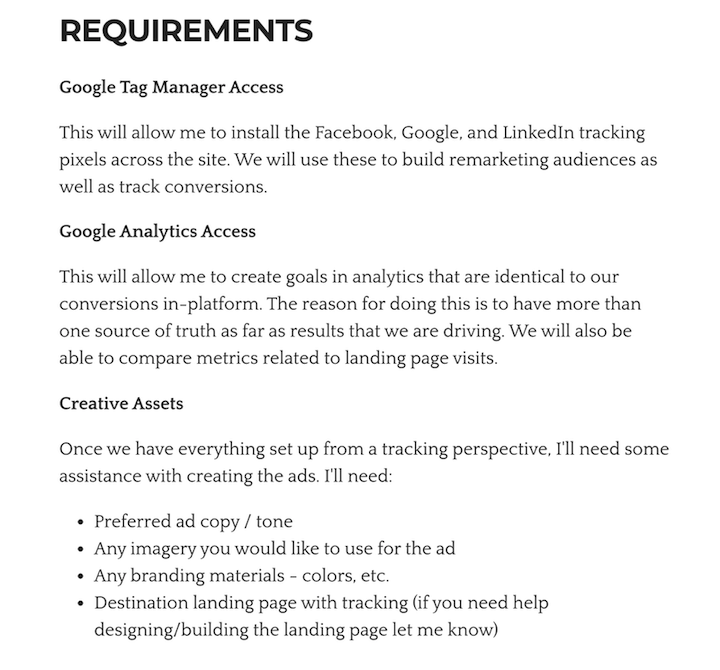
Generally, include these essential requirements:
- Ad account access
- Google Analytics access
- Google Tag Manager access These provide the necessary tools for setting up conversion tracking, implementing pixels, and accessing additional data layers for comprehensive reporting.
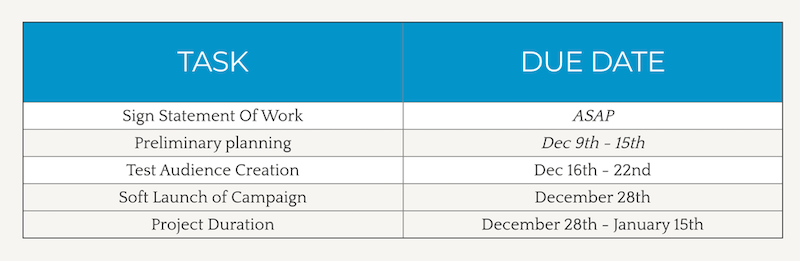
Step #4: Defining the Project Timeline
Include a section outlining the project timeline, especially if a sense of urgency exists. This clarifies what needs to be done on both sides for a successful launch.
Step #5: Discussing Pricing
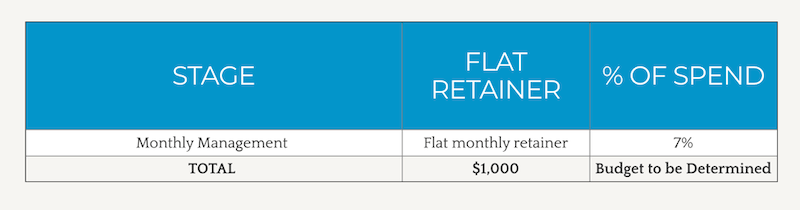
Dedicate a section to your pricing structure. Explain your rate, invoicing process, and provide a detailed breakdown of services and costs. Transparency builds trust and justifies your value. Presenting pricing towards the end emphasizes the value you offer. This section is often structured as a table:
Step #6: Following Up
After sending the proposal, schedule a follow-up call or meeting to address questions and walk through the document. This allows prospects to digest the information beforehand and come prepared with queries.
While some advocate for immediate decisions, allowing time for reflection benefits both parties. It demonstrates respect for their decision-making process and fosters trust, ultimately leading to a more successful engagement.
Final Tips for Exceptional Proposals
Separating Account Audits
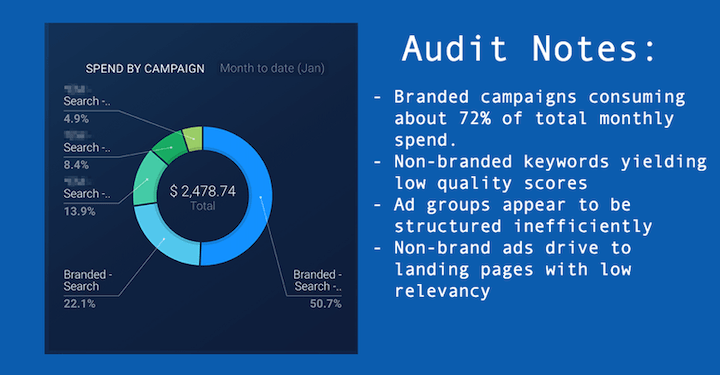
If you conducted an account audit, keep it separate from the proposal to avoid information overload. Provide a concise document with findings, takeaways, and solutions, incorporating key action points into the proposal.
Keeping Contracts Separate
Maintain a clear distinction between the proposal and the contract. The proposal serves as an extension of your sales process, outlining the scope of work and strategy. The contract, containing legal details like compensation and non-competition clauses, comes after the proposal is accepted.
Conclusion: Writing Winning Proposals
By following these steps and tips, you’re equipped to create compelling business proposals that convert leads into paying clients. Remember to: Gather information before writing: Understand the prospect’s objectives, challenges, budget, industry, and resources. Then:
- Set main objectives: Summarize the overarching strategy and goals.
- Outline project scope: Detail key tasks and specific actions.
- List requirements: Clearly state what you need from the client.
- Define the timeline: Set clear expectations and ensure timely execution.
- Discuss pricing: Provide transparency in your pricing structure.
- Follow up: Address questions and guide the prospect towards a decision.