While it’s not exactly rocket science, creating effective Facebook audiences can feel overwhelming due to the sheer volume of targeting choices.

The secret to getting a return on your Facebook advertising investment is making sure your budget is used wisely, so only the most relevant and qualified audiences are seeing your ads. But with all the options, how do you actually pinpoint the right audiences on Facebook, no matter what your business or industry looks like? This guide will break down how Facebook targeting actually works, how to fine-tune your ad sets for better performance, and the power of Facebook Audience Insights for understanding your potential customers better.
Understanding Audience Targeting on Facebook
Let’s be real – most people scrolling through Facebook aren’t exactly thinking, “Time to make a purchase!” This is a big difference from something like Google Ads. On Google, if someone searches “buy fine point Sharpie pens,” they’re usually on a mission for those specific writing tools. Facebook, on the other hand, offers a ton of data to create super-specific audiences, but that direct purchase intent isn’t always present. In fact, keyword targeting isn’t even an option on Facebook. You have to define your audience upfront.
Now, don’t misinterpret this to mean Facebook advertising isn’t effective – the opposite is true. It’s a huge opportunity for both business-to-consumer (B2C) and business-to-business (B2B) advertisers. Facebook lets you get your product or service in front of people who are likely interested. From that first impression, you can nurture them with dynamic, engaging content all the way to a sale. It’s incredibly powerful for building brand recognition and keeping your sales funnel full. Of course, to make this work well, you need to deeply understand who you’re targeting and, even more importantly, how you’re targeting them. It’s all about finding the right balance between broad and specific audiences, turning your Facebook advertising into its own mini marketing funnel. Let’s dive into what “broad” and “specific” audiences really mean.
Targeting Broad Audiences with Facebook Ads: Ideal for New Campaigns, Brand Awareness, and Data Collection
You technically could use Facebook ads to target every single one of their two billion (and growing) users with a single offer, but that would be the opposite of smart. When I talk about “targeting broad audiences,” I’m talking about using Facebook’s core audience options to get your brand in front of fresh prospects. Here’s an example of a top-of-funnel content offer targeting a broad audience:
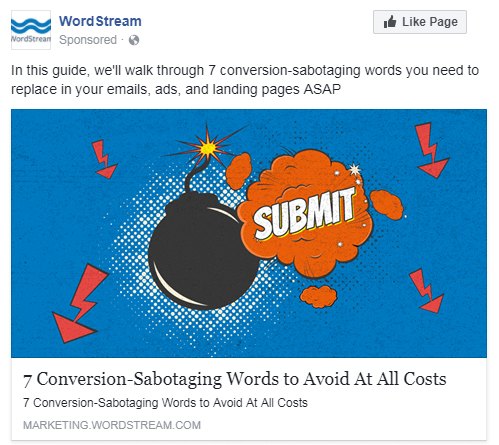
By targeting this ad broadly to people on Facebook who have even a slight interest in digital marketing, we can gather insights about what they need and start building more refined audiences. How does this magic happen? It’s all about trusting the algorithm. Broad targeting means giving Facebook a fair bit of control. It requires trusting one of the most data-rich companies globally to use algorithms to figure out who might be a good fit for your product or service. It can feel risky casting such a wide net, but this approach can uncover potential customers you never would have found otherwise. Plus, the data you get from broad audience targeting helps you build those more focused audiences later on. Start with broad targeting, then dig into Audience Insights – see this killer post from Moz for more on using this tool to create detailed customer profiles – and your ad reports. This combined approach gives you a clearer picture of the Facebook users who respond well to your ads. Using their shared demographics and interests, you can then pair new, optimized core audiences with targeted ad creative to boost conversions.
Broad Facebook Audience Targeting in Action
Imagine you sell top-notch winter hats in the United States. They’re hand-crafted from the finest alpaca wool, sporting a cool leather patch with your trendy logo. They sell for $59 – a total steal for the artisanal craftsmanship in every stitch.

You’re ready to elevate your luxury winter wear brand. It’s time to build brand awareness, and Facebook advertising is the perfect way to do it. Now, it wouldn’t be very strategic to target your ads to every single person in the United States…
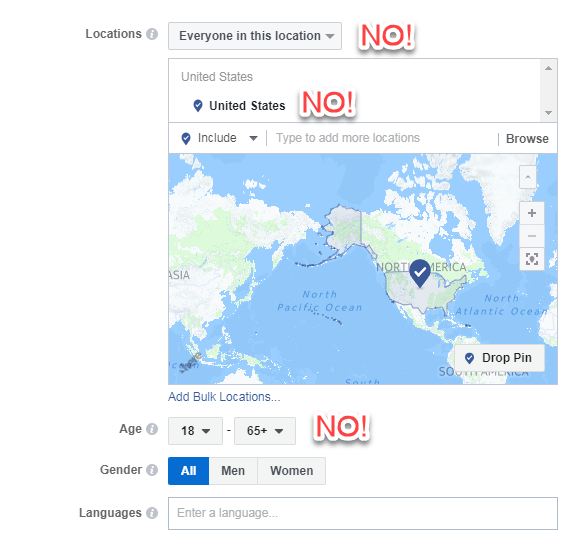
Sure, your ad might pop up in the newsfeed of a grandmother in Iowa looking for the perfect Christmas gift for her grandson, but chances are, your creative won’t resonate with every single American. This lack of focus is like airing a Budweiser commercial about football during an episode of The Bachelorette. But what if you launch a branding campaign in specific locations, targeting a defined age range…
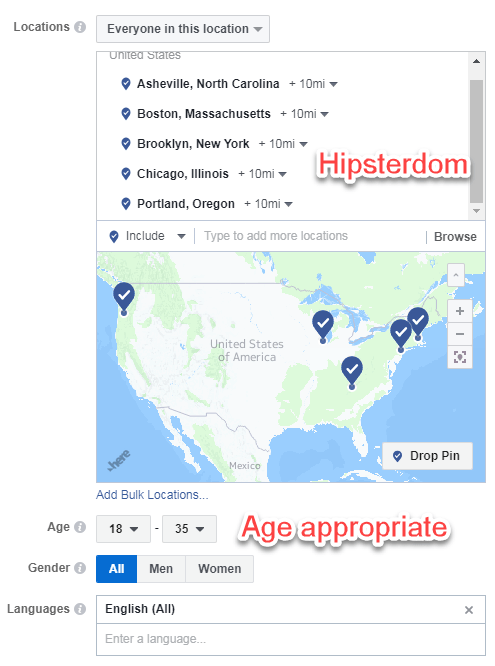
…now that’s a winning formula to boost brand awareness among the right people. Now, a couple of important points. You’re not going to stick with only this broad targeting forever. It’s about gathering information to create more targeted audiences that you’ll eventually reach with super-relevant ad creative. Think of this wide but informed net as the Facebook version of display advertising or a well-placed billboard. Combine this information-gathering and brand-building approach with more sales-focused targeting further down your marketing funnel. The result? A consistent flow of potential customers for your business. While it shouldn’t eat up your entire advertising budget, dedicating a small portion to reaching broad audiences like this lets your business benefit from Facebook’s smart advertising algorithms.
Who Should Use Broad Targeting on Facebook?
In a nutshell: everyone! Unless your budget is extremely limited, broad audience targeting helps new potential customers discover your brand – people who might never have found you otherwise. The catch is that your ad and offer need to make sense for this broad audience’s lack of immediate buying intent. The goal here isn’t to make a sale today. It’s about getting your brand seen and filling your sales funnel. Then, you can create those core and custom audiences we talked about, guiding Facebook users toward a purchase as you learn more about what they like, want, and need.
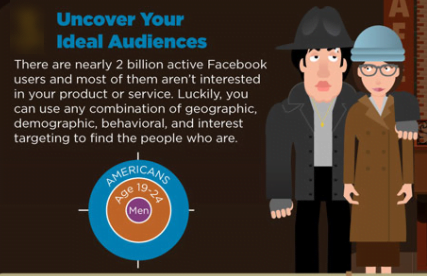
While you’ll likely see higher engagement rates with broad targeting (simply because you’re reaching more people), the majority of your Facebook ad budget should go towards targeted audiences that you can directly link to business results. Speaking of which…
Targeting Specific Audiences with Facebook Ads: Best for Driving Cost-Effective Conversions
Targeting specifically means exactly that: being laser-focused. You give Facebook a strict set of criteria. They show your ads to a smaller, hand-picked group of users who are more likely to convert. They make a purchase, and you reap the rewards. Here are a few ways to define these more targeted audiences:
- Create a list of job titles that are common among your ideal customers, combine it with an interest in things like vegan pizza and The Clash, then layer on specific locations.
- Utilize custom audiences built from actions taken on your website, such as webinar registrations or content downloads.
- Create a 1% lookalike audience using your highest-spending customers as the seed audience. These tactics (and countless other specific targeting combinations) can significantly shorten the path between a potential customer thinking “Hey, that’s interesting” to actually pulling out their credit card. Facebook itself says that specific audience targeting “may lead to a potential audience that’s smaller, but hopefully also to one that’s more interested in what you’re advertising than a larger and broader audience would’ve been.”
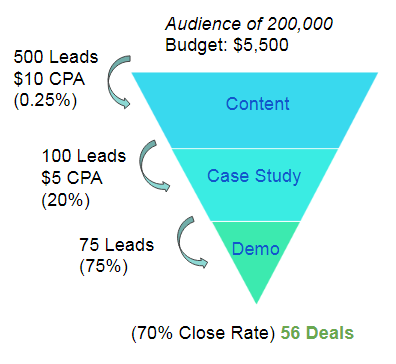
By significantly narrowing down the number of people in each audience, you can tailor your ad creative to a specific group’s characteristics and past actions, increasing your odds of success. However, you also limit your reach to a smaller portion of Facebook users. This is why it’s crucial to pair both broad and specific audiences, using the broader approach to feed potential customers into your more targeted campaigns.
Specific Facebook Audience Targeting in Action
As you’ve learned, there are endless ways to define your audience on Facebook. “Specific” doesn’t necessarily mean you have to use custom or lookalike audiences. It’s more about creating a clearly defined group of Facebook users. Essentially, if you can take this:
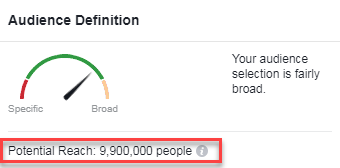
And turn it into this:
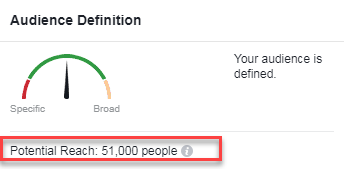
You’re on the right track to “specific” audience targeting. The three primary ways to achieve this are through layered targeting, custom audiences, and lookalike audiences.
Layered Targeting
Facebook lets you stack various targeting options to create new, highly focused core audiences. The benefit? You can adapt your ad creative to resonate with the overlapping characteristics of smaller audiences, highlighting how your product or service meets their unique needs.
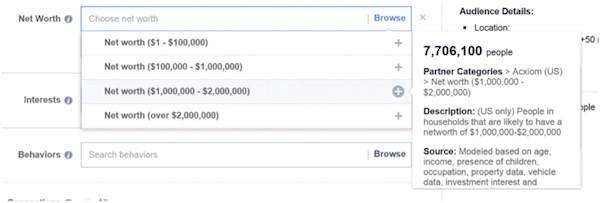
For instance, if you’re selling homeowners insurance, you’ll naturally target people who recently purchased homes. But you can get even more specific. Use layered targeting to create variations of this “new homeowner” audience based on factors like home type (apartment, condo, single-family, multi-family), estimated home value, and household size.
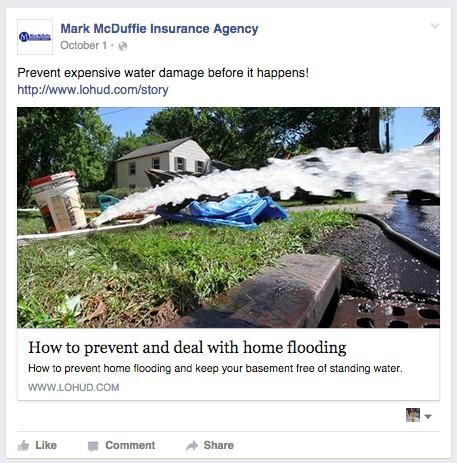
An ad like this, for example, would work wonders for someone who just bought a bungalow but would be a total miss for someone living in an apartment. By segmenting recent homebuyers using layered targeting, you can show completely different ads to a young couple buying a one-bedroom apartment in Brooklyn compared to a large family in the Midwest or a recent divorcee with an oceanfront condo. This persona-driven creative helps overcome Facebook’s lack of direct purchase intent, boosting conversions in the middle of your sales funnel.
Custom Audiences
While Facebook’s core targeting features seem endless, sometimes the best audiences are built on more than just demographics and interests. Actions speak louder than words. Custom audiences let you target Facebook users based on:
- Customer lists: Upload your own list of email addresses.
- Website traffic: Requires the Facebook Pixel to be installed on your site.
- App activity: Let’s just pretend this one doesn’t exist for now.
- Engagement: This includes specific actions taken on your Facebook or Instagram content. Out of these, customer lists and website traffic are the most valuable sources for custom audiences. (Keep in mind that custom audiences are usually the smallest audiences you can create on Facebook, which makes it harder for Facebook to show your ads effectively unless you’re achieving high engagement – reflected in your Facebook ads’ relevance scores.)
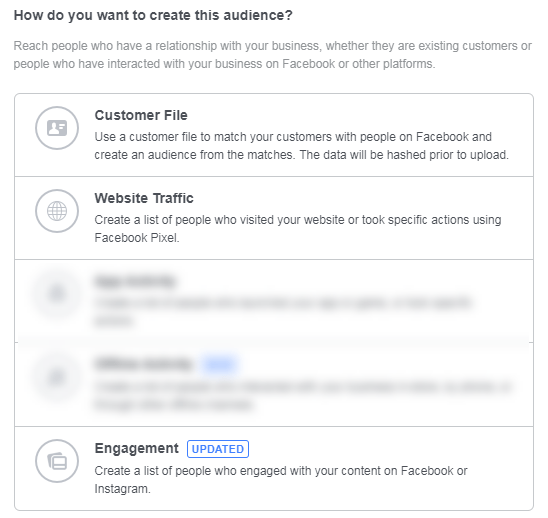
The “customer” part of “customer list” audiences is flexible. You could upload any email list and target Facebook users whose emails match. Use these audiences to upsell current customers, offer a product demo to people who downloaded a specific piece of content – the possibilities are vast. The same goes for custom audiences built from website traffic; figure out which pages people visit most using tools like Google Analytics, make sure the Facebook Pixel is on those pages, create an audience, and then show them ads related to the content they viewed. It’s like fishing with dynamite.
Lookalike Audiences
Lookalike audiences are the icing on the cake of Facebook advertising – and I mean that literally. While custom audiences can be limited (you need to upload a list or use on-site/in-app actions), lookalikes are groups of users whose traits mirror a source audience you choose. You can even adjust how closely they match (1% is nearly identical, while 10% is more like a distant relative).
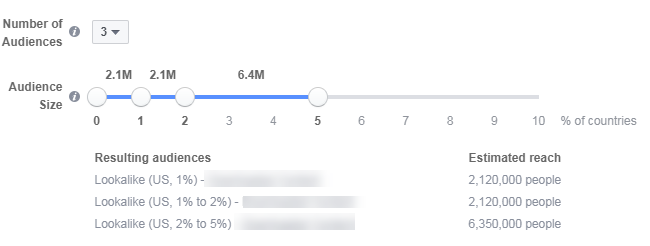
The “source audience” for your lookalikes can be any existing Facebook audience you’ve already created. But to make the most of them, stick with converters (tracked through the Facebook Pixel) or customer email addresses. There’s no point in creating a lookalike of people who basically told you to go away after seeing one of your broader ads.
Who Should Use Specific Audience Targeting on Facebook?
Again, the answer is pretty much everyone. Lookalike audiences are one of the most effective ways to see a fast return on your Facebook ad investment. Layered audiences help you leverage Facebook’s built-in intelligence without breaking the bank. And custom audiences are ideal for integrating mid-funnel and bottom-funnel audiences into your overall Facebook advertising strategy.
Now that you understand the difference between broad and specific Facebook audience targeting, here are three tips to maximize your results with both.
Tip #1: Reach (and Act Upon) Statistical Significance Quickly
Statistical significance is the point where you’ve gathered enough data to make informed choices about your ad performance. It’s crucial for both broad and specific audiences, but for different reasons. With broad audiences, you need to determine statistical significance and make adjustments fast to avoid wasting ad spend on huge groups of people who aren’t really that interested. This is where Audience Insights can be a game-changer.
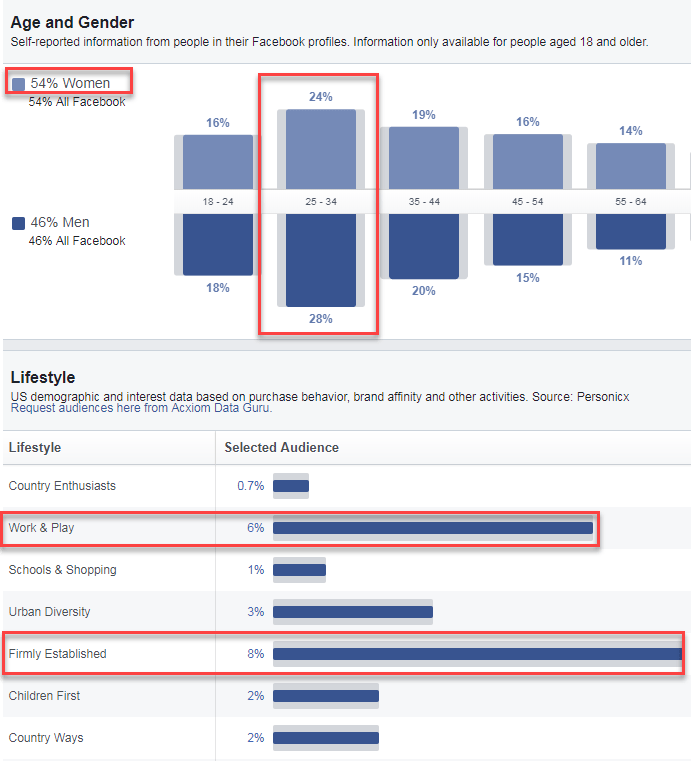
For your more specific audiences – the ones primed for conversions – constantly tweaking your targeting and ad creative based on performance ensures that those smaller, high-value audiences don’t get fatigued by your ads. This is the most effective way to tell if an audience is working and to kick off that ongoing process of improving your Facebook conversion rates. It’s tempting to divide your campaigns into tons of tiny ad sets based on this data, but According to Facebook, resist the urge: “You want to segment your campaign into many small ad sets to see which one performs best and then use that as a model for future ad sets. However, with that many ad sets, you’re unlikely to get a statistically significant number of results for any one of them anyway.” Go too broad, and you’ll blend into the background noise. Go too narrow, and statistical significance becomes elusive. Instead, let the engagement data from your broad and specific audiences guide your ad creative. If something just isn’t working, use those Audience Insights to fine-tune your targeting and re-engage potential customers.
Tip #2: Build Lookalike Audiences on HIGH-VALUE Sources
As I mentioned earlier, sources like post comments, Facebook Page engagement, or a random list of emails you found scribbled on a napkin aren’t going to cut it for your Facebook lookalike audiences. You have no way of knowing if their characteristics align with the valuable customers you want to attract. But there’s another issue. Lookalike audiences are generally smaller than those broad core audiences we talked about earlier.
This means they can make it harder for Facebook to show your ads to the best potential customers within that lookalike audience. It’s not a huge problem if you’re confident that most of the audience is full of prime prospects, but why make things harder than they need to be? Instead, be picky. Use the most valuable data sources you have to create those lookalikes. Combine the power of the Facebook Pixel with your CRM data to separate the casual clickers from the people who have already shown their commitment by purchasing from you. If you’re a seasoned advertiser with tons of data, take this a step further. Separate your average customers from your best customers (those who spend the most, for example) and create lookalike audiences from both groups. Use the former as a broader audience and the latter as a more specific one. Once they’re populated, you’re off to the races.
Tip #3: Quality Trumps Quantity (Especially with Custom Audiences)
This echoes my previous point, but it’s worth repeating – prioritize quality over sheer numbers, every single time. One of the key ways to measure quality (aside from obvious metrics like conversions and revenue) is through Relevance Scores.
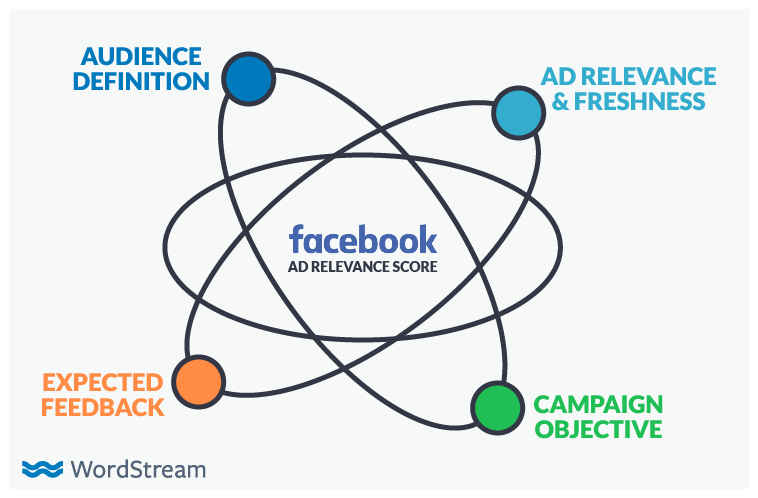
Relevance Score is Facebook’s way of gauging how relevant and engaging your ads are. It plays a big role in determining your cost per click and how often Facebook decides to show your ad. Maintaining a strong Relevance Score with broad targeting can be tough, but it’s not impossible. It takes a deep understanding of your audience and constant testing. When you combine a compelling offer with engaging ad creative, a high-quality audience of 100 people is infinitely more valuable than 10,000 random users.
Final Thoughts
Remember: introduce your brand to a wider range of potential customers using broad audience targeting, then focus on converting them with specific audience targeting. Facebook ads might seem complicated at first, but once you understand how to build audiences and you have a solid targeting strategy, you’ll be well on your way to paid social media success.