We’ve all encountered countless quizzes popping up on our social media feeds:
- “How Well Do You Know Swedish Ice Cream Flavors?”
- “Where Should You Schedule Your Next Overseas Appendectomy?”
- “Which Laotian Political Party Should You Pledge Absolute Allegiance To?” Of course, I’m being a bit silly, as it’s widely known that Laos operates under a single-party system. However, the reality is that we’ve all engaged with these “lighthearted quizzes” and found them enjoyable, which explains why quizzes have become a ubiquitous form of shared content online. And there’s nothing foolish about that.

Using Engaging Quizzes for Marketing Success
This week, while analyzing quiz engagement data, we stumbled upon a noteworthy observation. Qzzr customers had presented a call to action requesting email addresses to over 378,000 individuals. Impressively, more than 38,000 people responded by providing their contact information. That translates to a conversion rate exceeding 10%! And this is a general observation. Strategic marketers who prioritize data-driven approaches significantly surpassed this rate. Let me illustrate this with a real-life scenario. Instead of focusing on a viral sensation from a major brand or publisher like Gawker, we’ll highlight a smaller business. Why? Because interactive content can be beneficial for everyone. Take the example of beauty blog Pampadour launched a quiz in mid-April, leading up to Mother’s Day. They created a quiz asking users about their preferences to determine the ideal beauty product for their moms. 399 people participated, with 357 completing it, and 229 opting to submit their information through the lead form. This translates to a completion rate of just under 90% and an impressive lead conversion rate of 64%. More importantly, behind these percentages lie 229 highly promising leads.

Besides conversion rates, what other advantages might make marketing quizzes worth exploring?
Examining Bounce Rate and Time on Site
I doubt I’m the only one who sees “BR and TOS” and instantly thinks “burritos.” However, those less focused on food will recognize BR as Bounce Rate and TOS as Time on Site—two crucial metrics that indicate user engagement with your website’s pages. Evidence suggests that search engines, like Google, consider these metrics when determining website rankings.
Minimizing Bounce Rate
How frequently do visitors abandon your site after visiting just one page? Do they “Pop” in and immediately “Stop,” unlike the catchy tune beloved potato chip Pringles? Your bounce rate reveals whether visitors find your content valuable. Quizzes provide an interactive experience that users enjoy, as evidenced by the over 80% completion rate of Qzzr quizzes. People clearly enjoy taking them. Even more impressive is that users tend to stay engaged and don’t immediately leave quiz pages.
Extending Time on Site
It’s logical that if visitors only spend a few seconds on a page, search engines interpret this as a sign that they aren’t finding what they’re looking for. Since April, we’ve observed an average completion time of over two minutes per quiz. Considering a good TOS benchmark is 30 seconds, exceeding this by fourfold is truly remarkable. Still not convinced? There’s more to the quiz phenomenon. Think about the valuable data generated when someone engages with a well-crafted quiz.
Leveraging Quizzes for Data Collection & Marketing Automation
Sideshow Collectibles designed a quiz as a way to attract prospective customers and segment them into distinct groups. The quiz achieved this effectively. Out of 37,000 participants, over 22,000 provided their email addresses for further engagement. However, this is only part of the story. The questions incorporated into the quiz provided valuable insights into the participants. Sideshow’s subsequent outreach built upon the initial interaction established by the quiz, enabling them to categorize their contacts into meaningful personas. To date, they have generated Sideshow has attributed over $75,000 in sales from that single engaging quiz. Relevant data empowers you to deliver a personalized content experience, and quizzes provide an effective and enjoyable way to gather this information.
Quizzes vs. Surveys
At this point, you might be thinking, “So, quizzes are basically just surveys, right?” To some extent, you’d be correct. Both involve posing questions and receiving answers. However, that’s where the similarities cease. In essence, surveys often require persuasion to encourage participation. They can be perceived as self-serving requests from the surveyor: “I’m curious about these aspects of you. Please enlighten me.” Without a clear incentive, potential respondents might decline due to time constraints, privacy concerns, or simply a lack of interest. Quizzes, on the other hand, offer a mutually beneficial exchange. Both parties gain something valuable. Quiz creators gain insights into their audience, while participants are motivated to see their results or outcome. This means that individuals are more inclined to finish quizzes compared to surveys, tend to provide more honest answers, and are undoubtedly more likely to share quizzes with their peers than they would surveys.

[[Photo by Thomas Leuthard / CC BY 2.0]
Quizzes as Decision-Making Tools
Some brands have even utilized the data collected from respondents to assist with critical business choices. In a way, quizzes can act as personalized shopping assistants, guiding individuals through their purchasing journey. For example, Zenni Optical implemented a quiz to help customers select the ideal eyeglass frames. This “stupid quiz” has already generated over $1 million in sales (and counting).
3 Essential Tips for Crafting Effective Marketing Quizzes
We’ve compiled a robust list based on our experience with quiz best practices, but here are three key pointers to significantly enhance your approach: Understand Your Audience – Successful quizzes stem from businesses that deeply understand their audience’s desires. Dedicate time to brainstorming the challenges your target personas are seeking to solve. Identify topics that consistently spark discussions on social platforms or in blog comments. These topics are likely to translate well into engaging quiz content. Focus on Positive Self-Image – People share content for various reasons, but it often boils down to portraying themselves positively within their social circles. Your questions should captivate, while your outcomes should uplift. Offer participants the opportunity to achieve a score or result that evokes a sense of pride, and they’ll reciprocate by spreading the word. Craft Engaging Questions – When in doubt, ask yourself if you could envision having to answer the question using a No. 2 pencil while seated in a history class. Remember, this shouldn’t feel like a dreaded exam or a tedious survey. Infuse your quiz with personality to create a truly enjoyable experience. For instance, instead of asking a mundane question like “What’s your favorite color?” and listing a few options, Sideshow posed this engaging question:
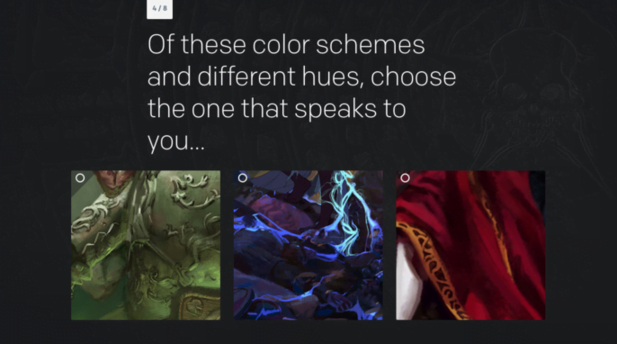
Quite a difference, wouldn’t you say?
Conclusion
The popularity of quizzes and other forms of interactive content is rapidly increasing, and businesses are capitalizing on this trend in significant ways. This shift is likely driven by people’s desire for engaging experiences. They’re no longer content with passively consuming content; they crave active participation and a sense of co-creation.