Hey there, blog readers! It’s time for your weekly dose of online advertising news. This time, we’ve got seven exciting updates for you, from Google’s new approach to nofollow links to Facebook’s in-app checkout experiment. Let’s jump right in.
1. Nofollow links get a makeover from Google
To gather more data and “better understand unnatural linking patterns,” Google has announced that they will now treat the nofollow link attribute (rel=“nofollow”) as a “hint” instead of a strict directive to disregard the linked content. Google also introduced two new link attributes, which they’ll treat as hints as well:
Sponsored (rel=“sponsored”): Use this to mark a link that’s part of an ad, sponsorship deal, or any other paid arrangement.
User-generated content (rel=“ugc”): This one’s for flagging links within user-generated content, like comments on your blog posts.
Introduced in 2005 to fight comment spam, website owners and SEOs have long used the nofollow attribute to signal that certain links don’t imply endorsement of the linked content or publisher. Consequently, Google hasn’t considered links with the nofollow attribute when determining organic search rankings.
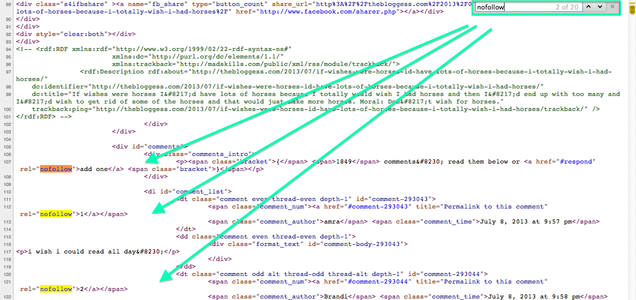
Pro tip: Use the “Inspect” tool in Chrome to spot nofollow links on any webpage. In their announcement blog post, Danny Sullivan and Gary Ilyes explained that Google’s ability to assess individual link characteristics—like anchor text—provides them with valuable insights to understand linking patterns and combat shady link schemes. Essentially, completely ignoring nofollow links limited the information Google could gather. This new model lets you avoid endorsing certain publishers while allowing Google to collect data they deem useful. Don’t worry, you don’t need to change existing nofollow links on your website. You can also use multiple attributes for a single link if needed (e.g., rel=“nofollow ugc”). And relax, Google doesn’t expect this change to significantly impact rankings.
2. Facebook tests waters with in-app checkout
Capitalizing on the growing trend of social shopping—selling products directly on social media instead of just promoting them—Facebook has confirmed that it’s experimenting with in-app checkout for dynamic News Feed ads. While a spokesperson mentioned that the test involves a “limited group” of advertisers, Facebook hasn’t disclosed which advertisers have access or why they were chosen.
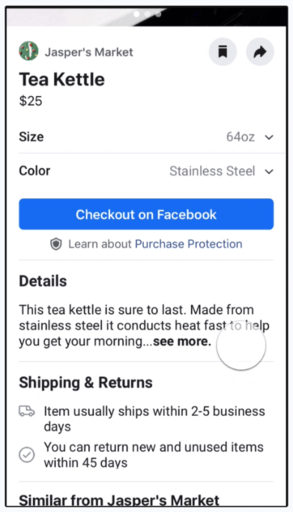
Image courtesy of Facebook. Dynamic ads are designed to make your Facebook remarketing more personalized and effective. When someone sees your dynamic ad, Facebook automatically tailors the displayed products or offers based on their previous activity on your website or app. If a potential customer has shown interest in specific products, Facebook dynamically updates your ad to showcase those items. Dynamic ads were already a powerful tool for converting remarketing prospects due to their personalized nature. Now, with users being able to purchase without leaving Facebook, their effectiveness is likely to increase. While this is just speculation, we believe Facebook will expand in-app checkout to all advertisers sometime next year, judging by their past beta programs. In related news, Facebook is also piloting an expansion of in-app checkout on Instagram—a feature currently limited to a select group of brands. Since its debut earlier this year, Checkout on Instagram has only been available for organic posts. Now, Facebook is allowing participating brands to transform those organic posts into ads.
3. Google cracks down on ads for unverified medical treatments
In a move to safeguard vulnerable users from unscrupulous advertisers, Google has banned ads for “unsubstantiated or experimental medical techniques,” including stem cell therapy, cellular therapy, and gene therapy. Moreover, treatments lacking scientific backing or sufficient clinical trials are no longer eligible for promotion. This is undoubtedly a crucial step in protecting users from potentially harmful products and treatments. However, to ensure that legitimate researchers can still share their work and findings with the public, Google will continue to allow advertising for medical research. As new discoveries emerge, Google will adjust its policies accordingly.
4. Microsoft makes RSA beta accessible to all
Continuing its steady progress towards fully automated search advertising, Microsoft has officially rolled out the responsive search ad beta to all Bing advertisers. You can join the beta by contacting your account representative or by completing this interest form. With RSAs, you entrust Microsoft’s algorithms with crafting your text ads. You provide up to 15 headlines and four descriptions, and Microsoft’s system tests different combinations—over 32,000 variations are possible—to identify the most effective ones. Eventually, users only see the top-performing versions; the rest are set aside.
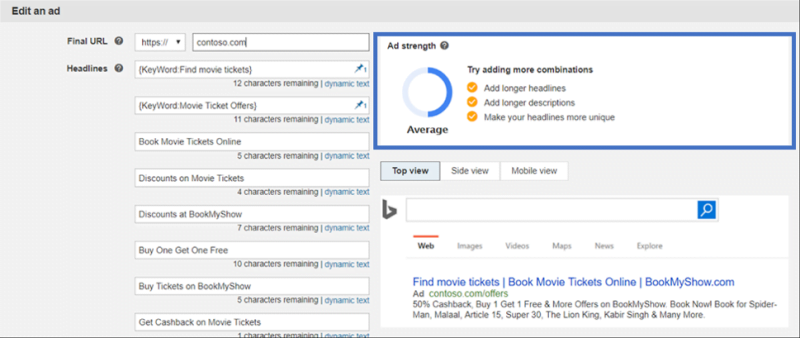
The primary benefit of using RSAs—which Google introduced last year—is the significant time savings. The main drawback, however, is the near-total surrender of control over your text ad creation. While you provide the initial headlines and descriptions, machine learning takes over from there. We recommend experimenting with the RSA beta. You might experience improved performance while freeing up a considerable chunk of your workday. However, ensure you’re running standard text ads alongside RSAs. This direct performance comparison is crucial for determining the most effective approach for your needs.
5. Google Express to merge with Shopping
In an email to customers last week, Google plans to retire the Google Express brand and integrate it into the revamped Google Shopping experience in the upcoming weeks. This follows the initial announcement made at Google Marketing Live. Retiring Google Express signals a shift in Google’s strategy to compete with Amazon’s dominance in ecommerce.
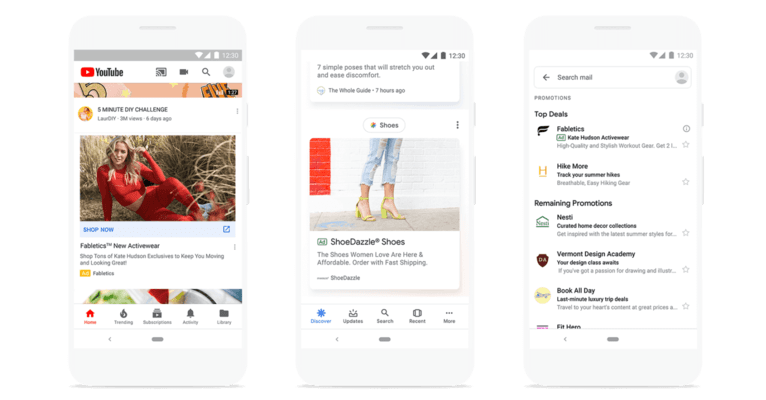
Google aims to create a seamless shopping experience across YouTube, Discover, Gmail, and more. For the uninitiated, Google Express was Google’s attempt to establish a central online marketplace featuring products from major retailers like Target, Walmart, Best Buy, and others. It was essentially Amazon without the private-label products. As you may have noticed, Google Express never truly gained traction. Even among those aware of its existence—a relatively small group—it failed to present a compelling alternative to Amazon. Moreover, the major retailers on Google Express were simultaneously enhancing their own online marketplaces. As Google intensifies its efforts to attract both ecommerce advertisers and online shoppers, they’re incorporating Google Express into the new Shopping experience. Whether someone wants to buy from the search engine results page, Google Images, YouTube, or Google Discover, they’ll have access to the universal shopping cart, streamlined checkout, and free shipping options that were once the key selling points of Google Express.
6. Microsoft unveils betas for two new audience solutions
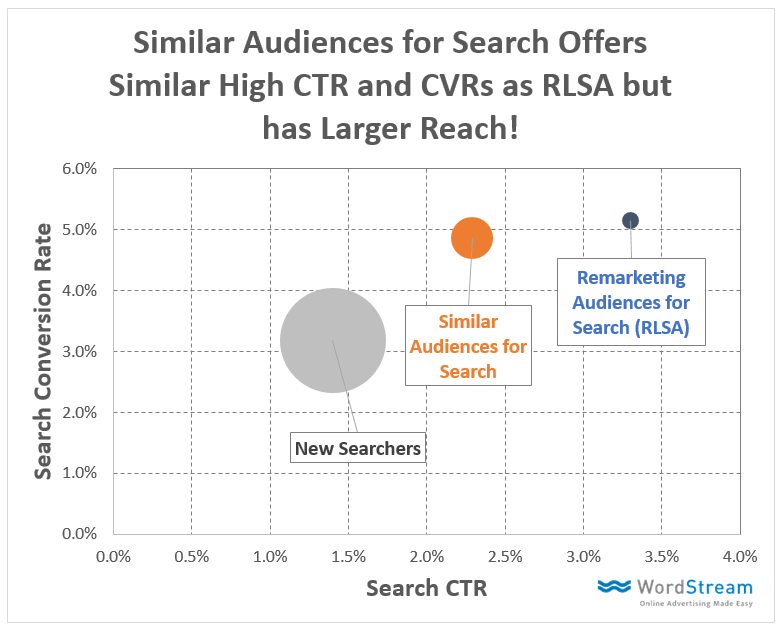
Striving for feature parity with Google Ads, Microsoft Advertising has announced open betas for two new audience targeting solutions: product audiences and similar audiences. A product audience is essentially a remarketing list for a specific product in your catalog. If a prospect visits your site and expresses interest in a particular product, they’re added to the audience. When they revisit Bing searching for that product, you’re ready with the perfect Shopping ad. This beta is now available to ecommerce advertisers in the US, Canada, Britain, India, France, Germany, and Australia. A similar audience is the paid search counterpart to lookalike audiences on Facebook and Instagram. It allows you to reach new prospects who share characteristics with your current customers. Available in Google Ads since 2017, similar audiences are known to deliver above-average conversion rates. This beta is currently open to search advertisers in the US.
7. Google simplifies video skimming for users
To help Search users find information faster, Google has announced that it will now directly link to key moments within YouTube videos on the search results page. If a content creator includes timestamps in their video description, Google will use them to highlight important segments and guide users to specific points. Here’s what this new feature looks like:
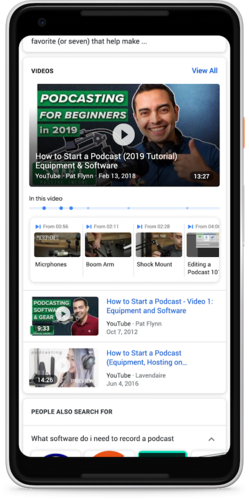
Image courtesy of Google. If YouTube videos are part of your content marketing strategy (we highly recommend it), start adding precise timestamp information to your video descriptions. As users become accustomed to this feature, some might start ignoring videos that lack skimming capabilities. Incorporate timestamps today to avoid losing valuable traffic coming directly from search results.