When Google implements a change, it’s often met with fear and outrage, and the latest match type adjustments were no different. The internet collectively expressed valid frustration as established account frameworks and procedures, refined over time, were disrupted by the introduction of “close variants.” The impact was particularly significant on single keyword ad groups, or SKAGs, which rely heavily on precise control over keyword structure to achieve flawless alignment between keywords, ads, and landing pages. While there’s no one-size-fits-all approach to managing an account and every paid media strategy has its merits, Google’s evolving engagement rules necessitate the evolution of certain tactics. It’s time to bid farewell to SKAGs as we know them and welcome single theme ad groups, or STAGs.
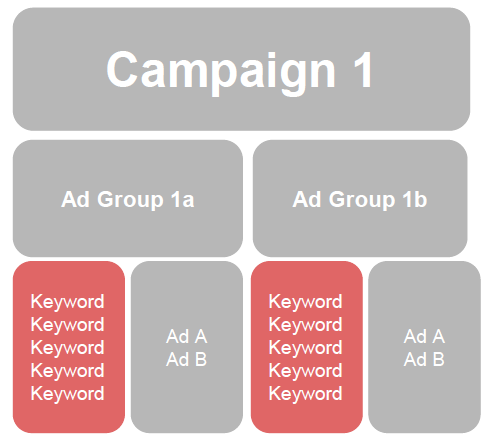
A fresh campaign framework, yet the same focused approach. Before we part ways with SKAGs, it’s crucial to understand their past effectiveness for some advertisers and how to transition that value into this new era of “intent.”
Decoding SKAGs: Their Mechanics and Effectiveness
Single keyword ad groups are self-explanatory: each ad group focuses on a single keyword, sometimes across multiple match types. SKAG account structures typically adhere to one of these patterns:
- One ad group per campaign, employing either micro-budgets or shared budgets.
- All ad groups consolidated into a single campaign with a substantial budget.
- A fluctuating number of ad groups (sometimes well-balanced, sometimes not) within each campaign, with budgets strategically allocated based on the products or services represented. In the past, keywords like “trainer” and “training” would each have a dedicated ad group, and negative keywords would be used to steer traffic. This method empowered advertisers to tailor ad copy that precisely mirrored the language used in the ad group and on the landing page. Theoretically, this should enhance quality scores, lower cost-per-click, and provide tighter budget control. However, these structures often resulted in budget concentration within a select few ad groups or keywords, neglecting other vital aspects of the business.
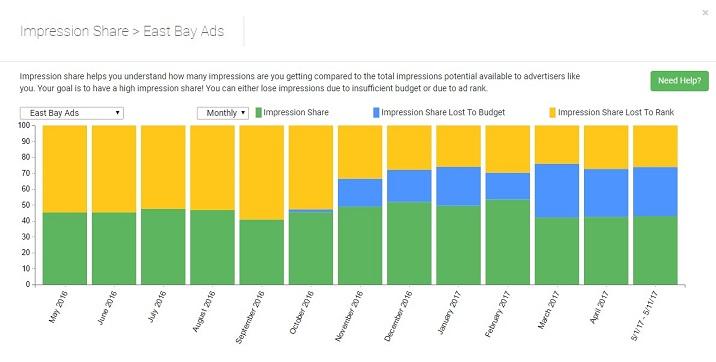
Impression share diminished due to ranking and budget limitations. The inherent design of SKAGs necessitates placing all ad groups within a single campaign or using micro-budgets. Advertisers opting for micro-budgets become vulnerable to impression share loss. Conversely, grouping all ad groups into one campaign (or exceeding the recommended ad group ratio of five to seven) often leads to budget misallocation.
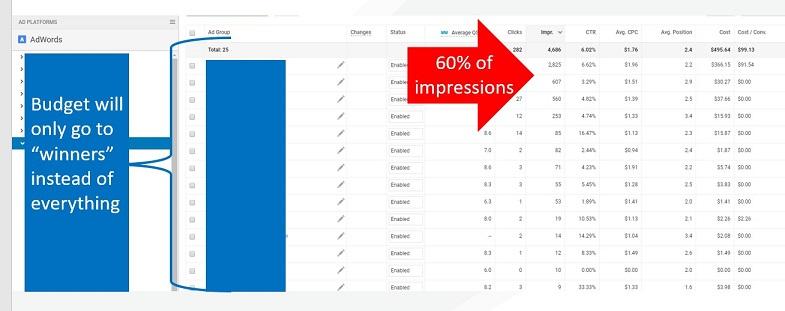
It’s important to acknowledge that dynamic keyword insertion (DKI) often found a natural fit within SKAG accounts due to their emphasis on keyword-to-ad-to-landing page relevance.
The Gradual Decline of SKAGs
The initial wave of close variants saw misspellings, abbreviations, and keyword variations with different suffixes (like “ing,” “er,” “ed”) losing traffic attribution. Google’s inherent bias towards keywords and ads with substantial data made it difficult for less popular search terms to gain traction, while high-volume variants dominated budgets, even if they weren’t as profitable.
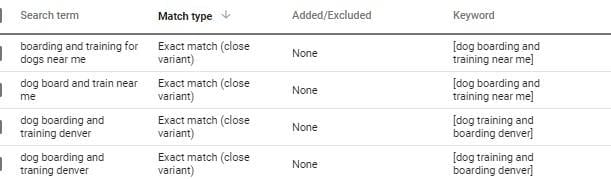
Then, exact match underwent a transformation—word order became irrelevant, and implied words gained acceptance:
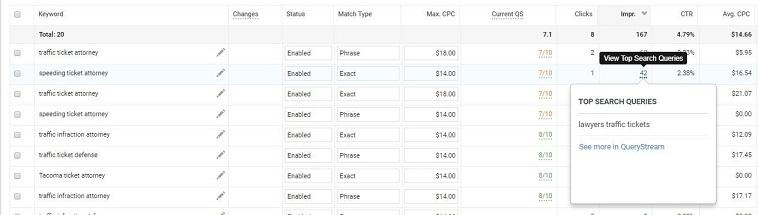
“Lawyer” started matching to “attorney”; “mowing lawn” to “cutting grass,” causing widespread concern.
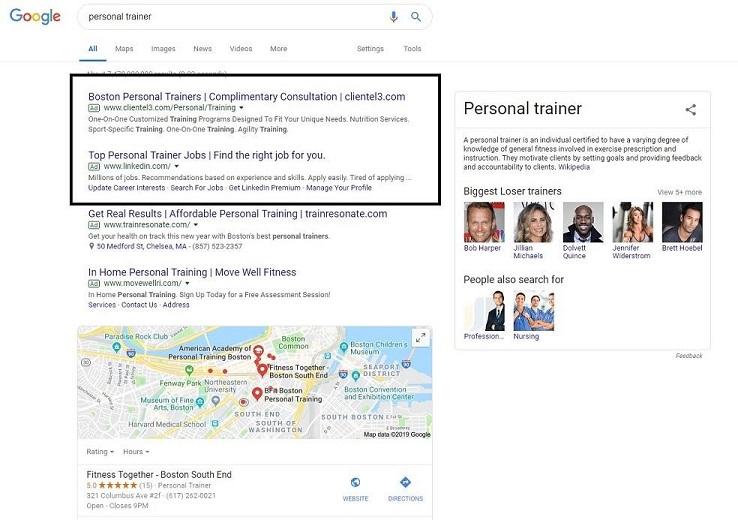
Search engine results page (SERP) for the query “trainer”.
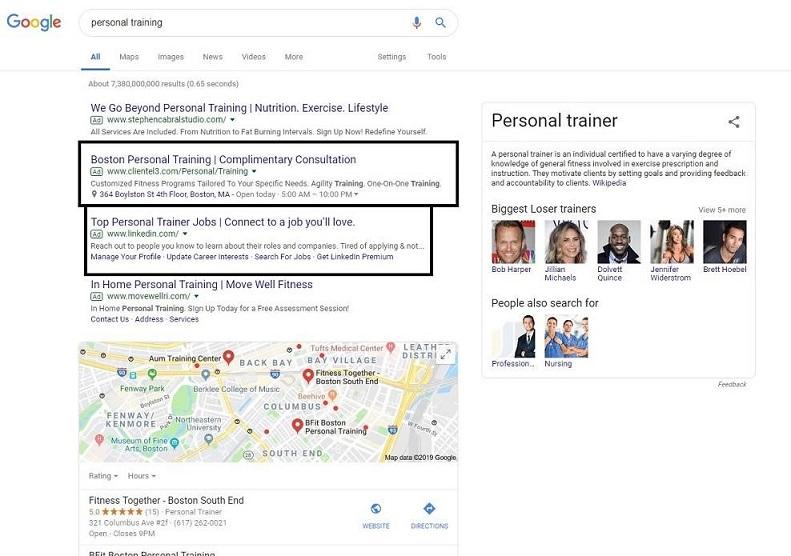
SERP for the query “training”. Advertisers historically bid aggressively on exact match due to its perceived protection against irrelevant matching. Now, “exact” might as well be “broad.” Phrase match offered a glimmer of hope for SKAG accounts. Until recently, phrase match maintained keyword order and prevented implied words from replacing intended ones. Despite their past merits, there are three compelling reasons why SKAGs no longer hold their own against alternative PPC strategies:
- Campaign-level Negative Keyword Limitations: A search campaign can “only” have 10,000 negatives. Since close variants don’t apply to negative keywords but do to active keywords, achieving comprehensive protection for an ad group or campaign against all potential wasteful traffic becomes an impossible feat.
- Budgetary Constraints: When a keyword’s auction price (top of page or average CPC) surpasses 10% of the campaign’s daily budget, it hinders value extraction from that campaign. Excessively fragmented campaigns lack sufficient funding for their keywords, while massive campaigns often grapple with budget allocation issues. This means that critical business areas are starved of resources while high-volume keywords consume the majority of the budget.
- Time Commitment: Healthy ad groups typically contain three ads each. Creating three distinct and engaging ads for numerous SKAGs poses a considerable challenge, even for the most skilled copywriters. There is one SKAG use case I wholeheartedly endorse and hope persists: a single long-tail broad keyword with every other keyword added as an exact match negative. This tactic allows for valuable data collection on potential customer search queries and their associated auction prices.

STAGs to the rescue!
STAGs: A Modern Approach
Single theme ad groups prioritize themes over syntax, ensuring three to five semantically related keyword concepts per ad group. STAG account structures generally adopt one of the following formats:
- Campaigns Organized by Service/Product Category: Ad groups are governed by audience targeting and messaging.
- Campaigns Structured by Location/Market: Ad groups represent specific products or services.
- Campaigns Categorized by Profit Potential: Ad groups correspond to products/services aligned with profitability. The advantage of STAGs lies in their ability to align budgets with profit, shifting the focus from PPC intricacies. No more allocating budget to every conceivable keyword variation—now you can prioritize and direct funds where they’ll yield the highest return. While this structure might sacrifice perfect keyword-to-ad-to-landing page alignment, it compensates by emphasizing crucial metrics like return on ad spend (ROAS), impression share, and conversion rate. One effective way to leverage close variants as an “advantage” rather than a hindrance is to bid on common misspellings. For instance, “oxygen concentrator” typically commands a CPC of $7-$8. However, bidding on its misspelling can secure average CPCs of $4-$5. At scale, this can translate to at least one additional click per day, boosting the likelihood of lead generation through conversions. Furthermore, audience targeting has largely mitigated the need for perfect keyword matching by enabling pre-qualification of traffic before investment. Integrating in-market and custom affinity audiences into search campaigns ensures budget allocation towards the most promising prospects, safeguarding against irrelevant intent. For example, the keyword “moving services” can apply to both a local mover assisting a renter and a large-scale office relocation. Audiences allow you to exclude irrelevant traffic that doesn’t align with your business goals, preventing inflated costs and inaccurate cost-effectiveness assessments.
Transitioning from SKAG to STAG
Ready to embrace this new approach? Let’s delve into restructuring your account to reflect this shift. Restructures inherently carry a risk of disrupting lead flow and causing short-term performance fluctuations. However, these can be minimized. Adhering to these three rules will streamline your transition from SKAG to STAG.
Rule #1: Prioritize Converting Keywords
Restructures often trigger learning periods and performance volatility, primarily due to the pausing of converting keywords. While restructuring involves creating numerous new elements for long-term gain, safeguarding short-term key performance indicators (KPIs) is crucial. As a general rule, maintain the existing structure for keywords, ad groups, or campaigns demonstrating conversions. For instance, in the example below, we’d focus on migrating “rigging,” “rigger,” and “rig” keyword concepts into the “NJ Rigging” ad group.
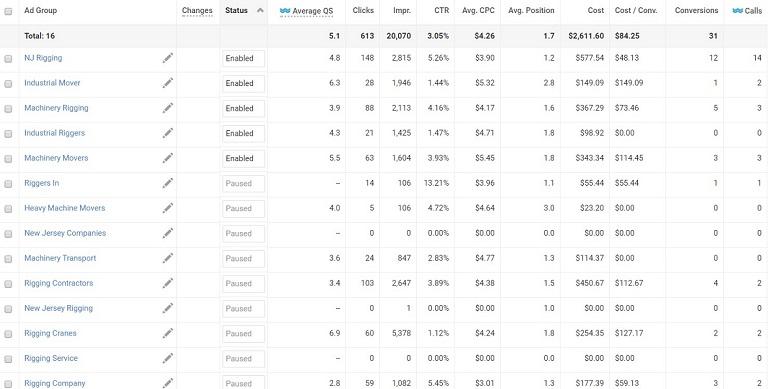
This approach maintains some stability during the restructuring process, preventing a complete overhaul. When dealing with multiple keywords or ad groups exhibiting strong conversion data, prioritize based on auction price.
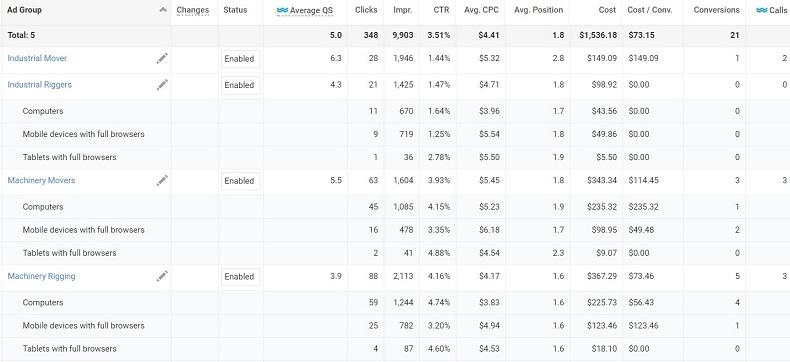
As illustrated above, the average CPC for “rigging” concepts is lower than that of “mover” concepts. Therefore, prioritize migrating those first as potential errors will be less costly.
Rule #2: Implement Strategic Keyword Pruning
Parting ways with keywords can be tough, but sometimes it’s necessary for the overall health of your account. If a keyword is merely a variation of another, consider pausing it. Additionally, certain keyword concepts might not be budget-friendly. Use this opportunity to assess which keywords are truly indispensable and which can be covered by others or highlighted through extensions.
Rule #3: Pause, Don’t Edit
A common PPC pitfall is directly editing ads or keywords instead of duplicating and modifying the copies. Edits permanently erase the original entity, forcing you to endure a ramp-up period for a new entity without the safety net of reverting to the original. Allow your new structure adequate time to demonstrate its effectiveness, and initiate the restructuring process when you can accommodate some level of fluctuation.
Embracing the STAG Era
While abandoning established workflows can be daunting, the data paints a positive picture: we can shift away from granular mechanics and embrace strategic pragmatism. Account management will center around its core purpose: data-driven lead generation, guided by profit centers and priority markets. Campaigns will be meticulously crafted to address specific business needs, not to outmaneuver PPC algorithms. Embrace STAGs to fully capitalize on this positive shift.