Servers are crucial for modern businesses as they manage internal and external data. While this service requires investment, a strategic approach to your server infrastructure can lead to long-term cost savings without affecting performance. Here are five methods to maximize your server room’s ROI.
Prioritize Cooling: Efficient cooling is vital for managing server room energy costs. Servers generate significant heat, demanding more than just internal fans. Several factors, both inside and outside the cabinet, can impact cooling efficiency.
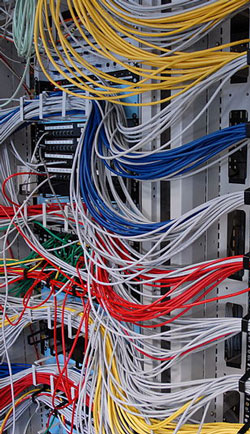
Surprisingly, poor cable management frequently causes overheating, downtime, reduced component lifespan, and increased labor expenses. Organized cabling from the start ensures proper airflow, improves visibility, reduces strain, and simplifies equipment swaps. This often-overlooked aspect can significantly impact your setup.
Avoid placing high-power, heat-generating servers in specific cabinets while filling others with passive components. This imbalance can create hot spots, straining your cooling system and leading to higher energy consumption and shortened component lifespans.
Server cabinets seem to attract dust, which can clog fans, obstruct airflow, and cause overheating. Regular server room cleaning is crucial for preventing these issues and saving money. Additionally, sealing your server room doors helps minimize dust and enhance cooling efficiency.
Always accurately calculate cooling needs during server installation and recalculate them when adding equipment to account for increased energy consumption and heat generation.
Optimize Power Distribution: Since running devices generate heat, powering them down when not in use offers significant savings. This can be challenging remotely. For businesses without 24/7 operational needs, Power Distribution Units (PDUs) allow scheduled shutdowns of specific machines. Advanced models offer outlet-level programmability and seamless software integration for comprehensive power management. Efficient managed PDUs typically offer payback within a few years.
Solar power is gaining popularity as a cost-effective option. While installation is expensive, solar systems can pay for themselves within a few years. Their photovoltaic batteries often come with 25-year warranties, enhancing investment security. However, solar energy availability relies on weather conditions, making location a significant factor.
Choose Affordable, Reliable Equipment: The critical nature of servers often leads IT professionals to prioritize top brands. While this usually guarantees performance, it doesn’t mean that similar results can’t be achieved affordably. Before assuming higher price equals better performance, consult professional equipment reviews on platforms like serverwatch.com and spiceworks.com. You might find a budget-friendly Dell server that matches the performance of a pricier Cisco.
While planning for growth is wise, a small business doesn’t need an expansive room filled with top-tier servers. Purchase only what’s necessary for your current operation, adding a buffer for potential increases.
Future-Proof Your Technology: Information technology standards are constantly evolving. When selecting equipment, cooling, and cabling, consider future trends. Staying informed about industry advancements can significantly impact your profitability. Building a server room with future-ready standards is often cost-effective in the long run, unlike frequent equipment replacements.
Virtualize Servers for Enhanced Efficiency: Server virtualization optimizes resource utilization. Instead of adding servers, partition existing resources and abstract their physical location. For instance, a dual-core processor server can function as two separate servers, reducing hardware costs by half.

Paul Stennett is a Product Specialist at CableOrganizer.com, an industry-leading online retailer of telecom/datacom/networking, electrical, and cable and wire management products. He may be reached online at www.CableOrganizer.com.
Note: Photo of server rack wiring courtesy of Guillaume Paumier on Wikipedia Commons.
