The year 2018 has already taken our warmth and the Georgia Bulldogs, and now it’s coming for review extensions in Google Ads.
That’s right, as of this month, third-party reviews will no longer grace your Google ads. By February, these extensions and all their data will vanish completely from the interface. Despite this change, Google’s review extensions support page (now alarmingly marked with a red box) continues to boast about the benefits of social proof in ad copy. However, there’s a small grace period: if you’ve been using review extensions, you have a few weeks to export your historical performance data before Google purges it from your account.
Quote: “There’s nothing better than getting a good review, and customers like to see them too when searching for products and services online.”
This statement rings true, Google, so why the removal?
In Memory of Review Extensions
For those unfamiliar, review extensions allowed advertisers to showcase positive feedback, accolades, or rankings. Their visibility, like all ad extensions, depended on their availability, your ad rank, and Google’s algorithms.
Review extensions came in two forms: a direct quote…
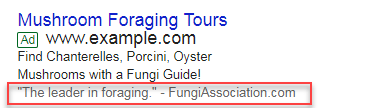
…or a paraphrased review:
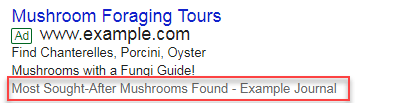
Getting them approved was challenging, but once live, they offered unparalleled social proof among ad extensions. This translated to greater SERP dominance, with Google reporting that review extensions boosted CTR by up to 10%.
Review extensions, you will be missed.
Implications for Your Google Ads Account
While no direct replacement for review extensions exists within Google Ads (formerly Google AdWords), there are still ways to enhance your search ads and increase your visibility on search results pages. While these methods don’t provide verifiable social proof, they effectively address the void left by review extensions.
Enhancing Your Ads in a Post-Review Extension World
Sitelink Extensions
Sitelink extensions are clickable links displayed below an ad’s description, usually with their own headlines (see below) and optional short descriptions.
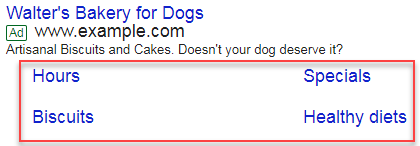
You likely already use sitelinks to guide potential customers to relevant pages on your website, such as whitepaper downloads or contact forms. Consider creating a dedicated testimonials or proof page and linking to it via a sitelink. This unique approach on the SERP (as few advertisers use sitelinks for testimonials) lets you showcase social proof and build remarketing audiences based on page visitors.
Callout Extensions
Callout extensions are often underutilized, with many defaulting to generic phrases like “free shipping.” However, you can use them to convey more impactful messages about your business.
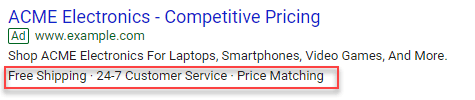
Instead of generic account-level callout extensions, get specific. Identify what makes your business stand out and, at the campaign or even ad group level, craft compelling messages within the character limit. For example, if you sell shoes, ditch the overused “Free shipping” and highlight what makes your footwear unique.
Structured Snippets
While visually similar to callout extensions, structured snippets serve a different purpose. They allow advertisers to categorize specific aspects of their offerings, such as brands sold, coverage areas, or other relevant categories.
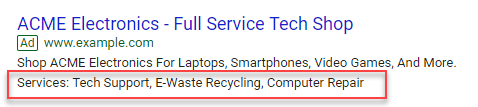
Instead of generic account-level implementation, tailor your snippets to specific campaigns or ad groups. Keep them concise for mobile users and experiment with different snippet headers (e.g., “models” vs. “styles”).
Integrating Social Proof in Ad Copy
Subtly incorporating social proof into your ad copy can effectively attract clicks. While Google prohibits exaggerated claims (e.g., “BEST WIDGET EVER”), you can still paraphrase positive reviews within your ad text.
Although the removal of review extensions might sting, Google Ads offers sufficient alternatives to prevent long-term performance decline. Remember to download your review extension data before it disappears—it might prove valuable for optimizing Bing Ads, where review extensions are still going strong.