Let’s cut to the chase. You’re here for a reason, right? You, or your clients, need to sell products. To achieve that, where do you turn? What platform grants access to your ideal customers and offers the most budget-friendly way to boost product visibility, expand reach, and attract both new and loyal customers? Facebook, without a doubt!
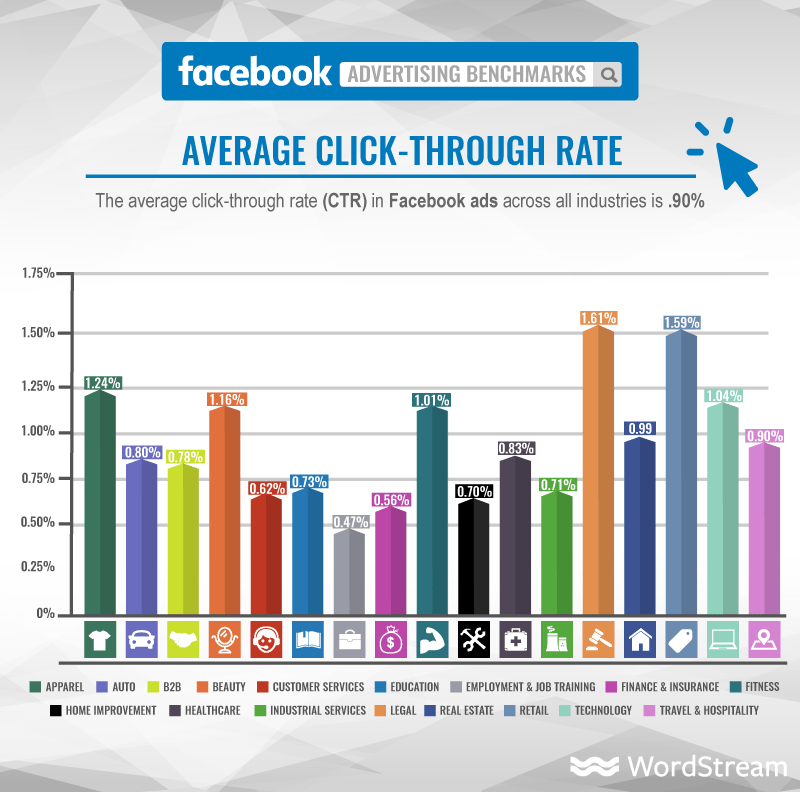
Don’t just take my word for it. According to Facebook reports, by the close of 2018, a staggering 2.32 billion users were active on the platform. If you ever questioned whether your ecommerce audience could be found there, think again – your potential customers are undoubtedly present, regardless of your industry, business scale, budget limitations, or objectives. While Facebook has faced its share of negative press, escalating costs, and targeting modifications in the past year, the tech giant persists as the most affordable online advertising platform, and its sophisticated targeting capabilities remain unmatched. If you’re eager to leverage Facebook Ads for ecommerce, enhance your marketing endeavors, and drive sales, continue reading. This guide will explain:
- Identifying your target demographics on Facebook
- Selecting appropriate Facebook campaign goals
- Optimizing your accounts for Facebook ecommerce achievement
Preparing for Facebook ecommerce success
Before diving into Facebook ecommerce sales generation, let’s step back and establish a strong foundation for your account. Begin by creating a dedicated advertising account for your business within Facebook Business Manager. This serves as the central hub for your business resources, encompassing your business Page, Ads Manager account, and your Catalog (more details on this later). Next, irrespective of whether you’re prepared to launch advertising campaigns immediately, set up the Facebook Pixel within Ads Manager and implement it on your ecommerce website. With this pixel installed, you can start tracking user activity for future benefits, such as crafting custom audiences and targeting strategies, as well as monitoring both overall performance and conversions. You can also leverage pixel-derived insights to refine your Facebook ecommerce campaigns.
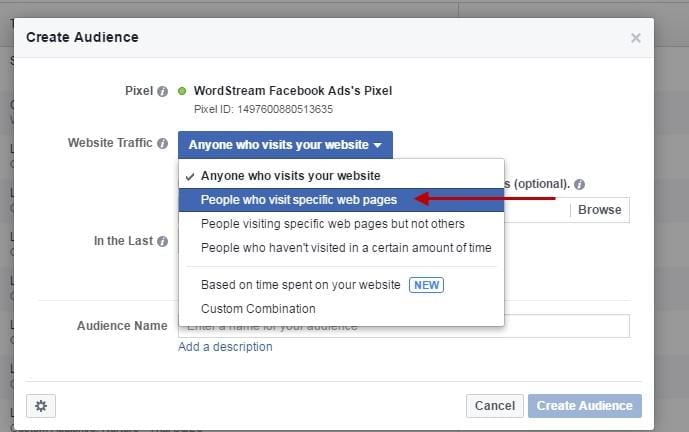
Even if you’re not ready to launch your Facebook ecommerce campaigns just yet, completing these steps is crucial. This proactive approach saves you valuable time in the future and gives you a head start by accumulating data and building audiences for later use.
Funnel-driven Facebook ecommerce campaigns
Facebook currently provides thirteen campaign objectives, as illustrated below. While it might be tempting to opt for conversions as your primary focus for ecommerce campaigns, this might not always be the optimal strategy for maximizing your bottom line and ensuring efficient budget allocation.
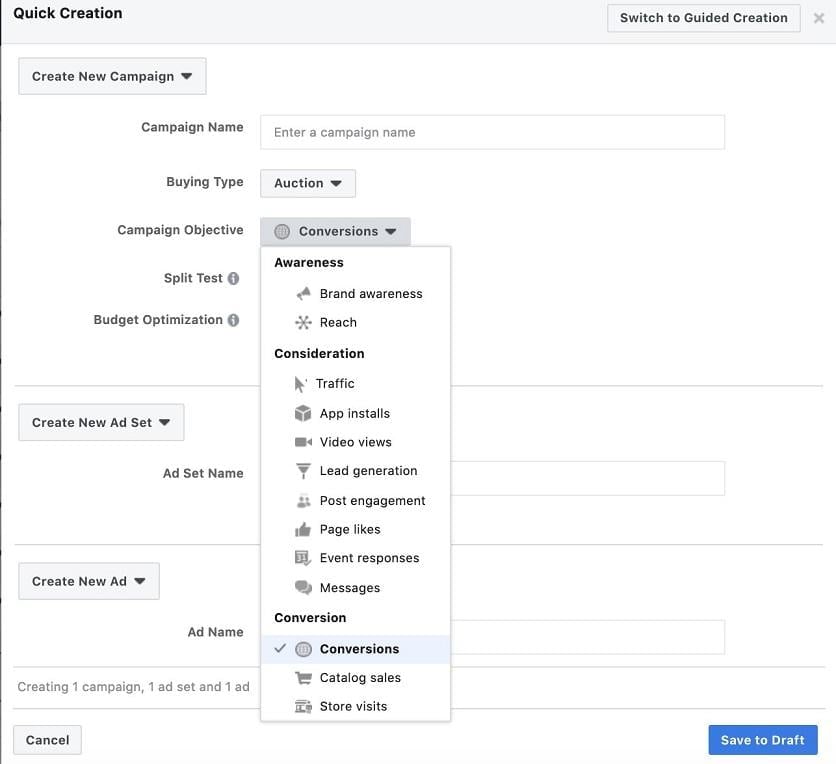
Facebook categorizes campaign objectives into three distinct phases: awareness, consideration, and conversion. Think of these stages as you would a conversion map or a sales funnel.
Facebook ecommerce campaigns: Awareness
Awareness campaigns are an ideal starting point. Experiment with these campaigns by targeting a cold audience that is unfamiliar with your products. These campaigns typically have lower costs since they occupy the top of the funnel. In these initial ads, prioritize introducing yourself and your brand, much like you would when meeting someone for the first time. Refrain from launching into a hard sell immediately, as this can be off-putting. Think of it this way: you wouldn’t attend a networking event and immediately ask someone for money after a brief introduction. It’s unlikely they would oblige.

Facebook ecommerce campaigns: Consideration
As users progress through your Facebook funnel but haven’t converted yet, consider experimenting with a traffic campaign. This is a highly effective method for directing traffic to specific product pages, potentially increasing your sales opportunities. In practice, I often utilize this campaign objective as our initial point of contact for Facebook ecommerce clients, rather than an awareness or reach campaign. This approach allows us to drive users to the website and tag them with the pixel. Even if they don’t convert immediately, we can retarget them later with messaging focused on product features or special promotions. The previous awareness options might not provide the same level of insight and retargeting possibilities. When starting with Facebook ecommerce, it’s recommended to test either or both of these campaign types to determine the most effective approach for your business. With this campaign type, incorporating a call to action such as “Learn More” can be highly effective in driving users to your site since they are still in the discovery phase and eager to gather more information. The mattress company Purple excels at crafting compelling ads, as shown in the example below. This ad showcases their new bed sheets without resorting to aggressive sales tactics. While the ultimate goal is to encourage sheet purchases, the primary objective of this ad is to educate, entertain, differentiate Purple from competitors, and drive click-throughs to their website. Keep this approach in mind when brainstorming ways to transform your products into engaging, informative, helpful, or even entertaining ads that draw new users into your sales funnel.

Facebook ecommerce campaigns: Conversions
Now that your audience is familiar with your brand, it’s time to shift gears and encourage them to return and make a purchase. Launch a conversion-focused campaign targeting warmer audiences. One effective strategy is retargeting a warm audience, such as previous website visitors, page viewers, individuals who abandoned their carts, or newsletter subscribers. Entice them to return to your site and complete their purchase. For conversion campaigns, using a stronger call to action like “Shop Now” can significantly increase your chances of securing a sale, as demonstrated in the Nisolo shoe ad below. If you have any special promotions running, this is an ideal opportunity to incentivize purchases.
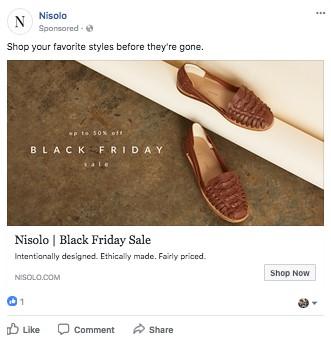
Focusing on warmer audiences for conversion campaigns is crucial. Attempting a hard sell with a cold audience at this stage of the funnel and with this campaign objective can be expensive and often yields disappointing results. Facebook’s algorithm tends to favor advertisers who successfully achieve their chosen campaign goal. For instance, if a conversion campaign struggles to generate conversions, Facebook perceives the campaign and its assets as irrelevant to the audience, resulting in a subpar user experience on their platform. There’s a general understanding that if you can’t achieve around 30 conversions per day, your impression share will dwindle over time, leading to increased costs. Conversely, consistently driving high conversion rates often leads to improved impression share and reduced costs. It’s a symbiotic relationship between Facebook and advertisers.
Maximizing your Facebook ecommerce campaigns
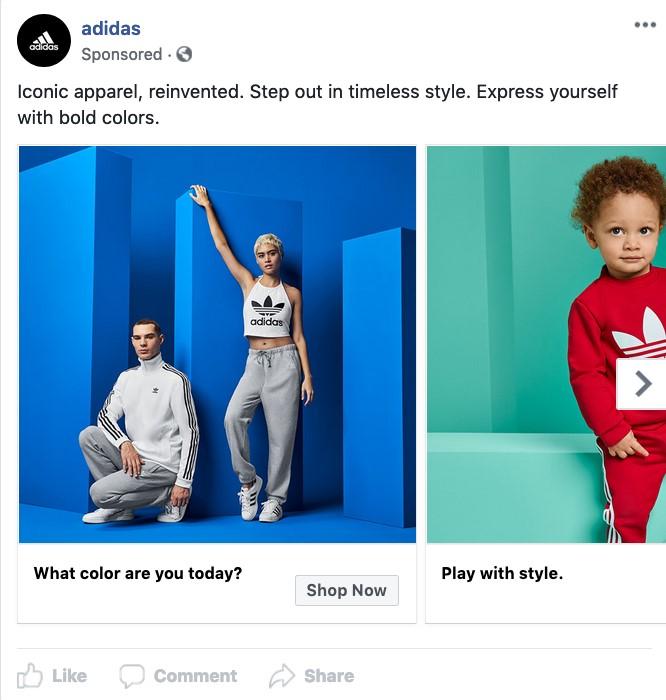
Here’s some good news for Facebook ecommerce businesses: You can promote your products using every ad format available on Facebook. If you aim to highlight a single product, explore single image or video ads. For showcasing multiple products, Carousel and Collection ads are ideal choices, providing users with diverse options and potentially boosting your conversion rates.
Catalog Sales
While single image and Carousel ads can be used across various campaign objectives, Catalog Sales campaigns require Collection ads. Collection ads might sound and appear similar to Carousel ads, but they offer a more personalized, customizable, and automated approach. Carousel ads, as seen previously, scroll horizontally with individual slides. Collection ads, on the other hand, occupy more screen space, creating a catalog-like shopping experience, as illustrated below.
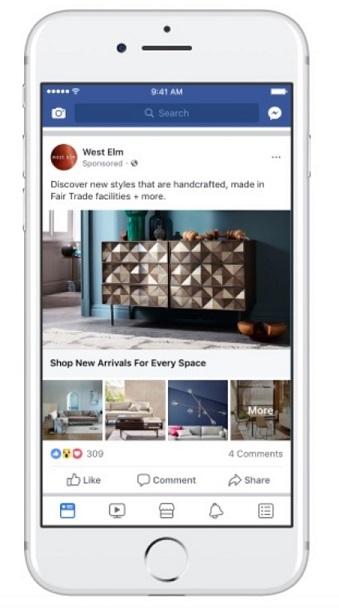
Image via Adweek. To set up a Catalog Sales campaign and start advertising your product inventory, navigate to Catalog Manager. Here, you’ll be prompted to create or upload a product feed, or you can view any existing feeds shared with you. If you’re familiar with paid search, consider this your equivalent of Google Merchant Center and Google Shopping product feeds.
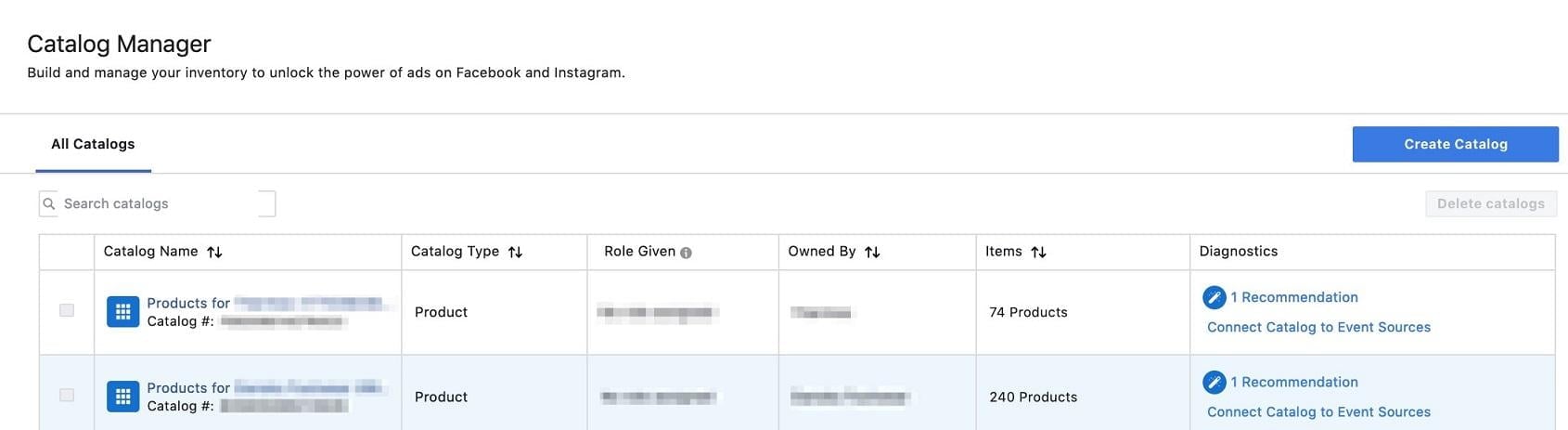
If you utilize ecommerce platforms like Shopify, Magento, or WooCommerce, synchronize them with your Ads Manager account for a more streamlined process. This automation saves valuable time by automatically updating your inventory, eliminating the need for manual management directly within Facebook. Before proceeding, double-check your pixel settings, as you might need to modify custom events if they aren’t already configured for “View Content,” “Add to Cart,” and “Purchase.” To quickly verify this without navigating back to the Pixel tab in Ads Manager, install or refer to the Facebook Pixel Helper Chrome extension. Next, head to Ads Manager to establish your new Catalog Sales campaign and define your target audience. Once you reach the ad level setup, create a new ad template or select an existing one. After configuring the template to your liking, publish your campaign, and observe the results!
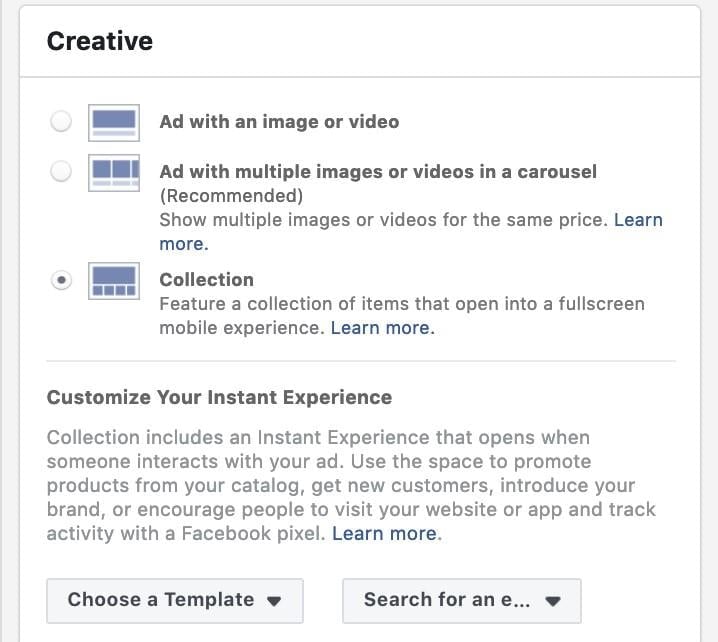
Marketing automation is crucial in today’s landscape, and this is Facebook’s significant contribution to helping you drive sales more effectively. Dynamic Collection ads often yield higher click-through and conversion rates because they reach your target audience at the right time with products they’ve previously expressed interest in.
Video ads
Did you know? Visitors who view product videos are 85% more likely to buy than visitors who do not, according to Internet Retailer. This statistic alone underscores the importance of video ads for achieving Facebook ecommerce success. Video ads leave less room for interpretation and effectively manage customer expectations. They also offer a more immediate and engaging way to connect with your audience. From showcasing your brand narrative or products in awareness campaigns to highlighting new features or customer testimonials in conversion-focused retargeting campaigns, the creative possibilities for leveraging Facebook video ads are limitless.

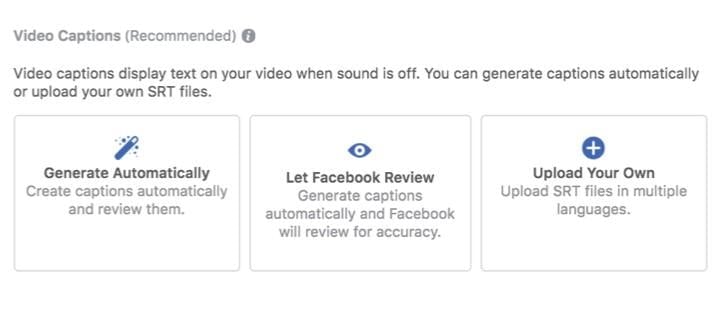
Video ads, compared to their static image counterparts, often deliver higher conversion rates. Currently, you can use video ads in all campaign objectives except for Catalog Sales. If your video includes dialogue, ensure inclusivity by conveying your message textually, visually, and audibly, as 85% of Facebook users watch video without sound, as emphasized by Forbes. Remember to include individuals who might be hearing impaired by adding captions. Adding captions to your videos is simple and can be done within the ad level where you select your creative. You can choose to have Facebook automatically generate captions or upload your own SubRip Text file (SRT file). The automatic captioning feature quickly analyzes your video and generates captions that you can review and edit as needed. Pay close attention to any misspellings of brand names, people’s names, and especially words spoken with accents, as this feature can occasionally misinterpret pronunciation.
Facebook ecommerce: From initial setup to lasting success
As an ecommerce brand, you have the advantage of leveraging Facebook’s diverse features to achieve your business goals. From introducing your brand to driving conversions, Facebook provides a wide array of options to explore and test, catering to advertisers of all experience levels. If you have a smaller inventory, start with single creative or Carousel ads. As your business grows and you gain insights into what resonates with your audience, consider transitioning to Catalog Sales campaigns with dynamic ads. Consistently target your audience with messaging that aligns with their position in the sales funnel, and you’ll be well on your way to generating a healthy return on your Facebook ecommerce advertising investment. Explore additional insights on impactful ecommerce marketing channels here.