A lot has changed with Google’s organic search results over the past year, both in minor and major ways. Following a spring season characterized by fluctuations in search result numbers and the replacement of featured snippets with direct answers, the summer months have been comparatively uneventful. While discussions surrounding significant core algorithm updates, like the one on August 1, have surfaced, there haven’t been any noticeable modifications to the search engine results page (SERP) for a while.
That is, until recently. SEO enthusiasts, get ready to delve into a new search results element that has emerged: Expandable Featured Snippets.
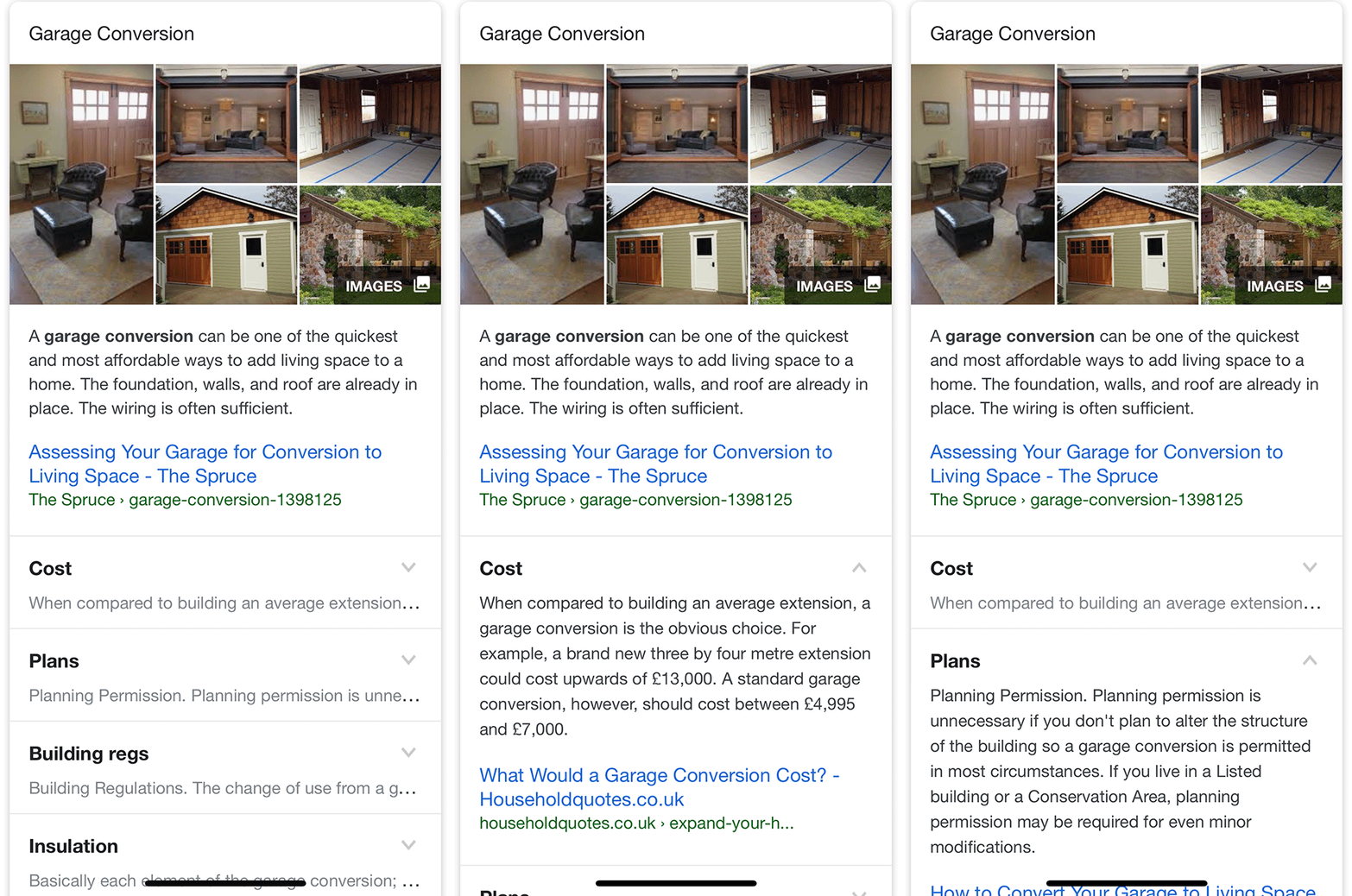
Expanding the Snippet: A Closer Look
Expandable featured snippets, an unofficial but fitting term, represent the latest effort by Google to enhance the SERP, delivering more comprehensive and nuanced results for user queries. This innovation can be viewed as a technical extension of featured snippets specifically designed for multi-intent queries, which Google released in February. These multi-intent featured snippets, as their name suggests, provide multifaceted snippets for search queries that encompass multiple search intents. To illustrate with Google’s own example: “garden needs full sun?” embodies a query with two potential intents…
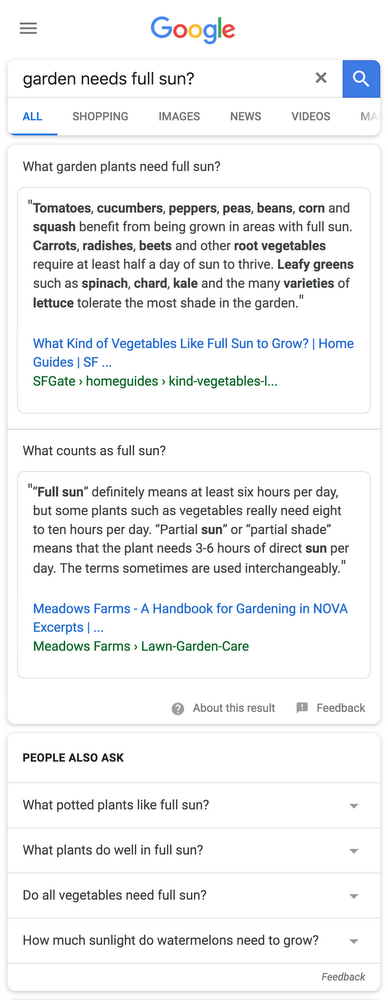
Multi-intent featured snippets furnish results addressing both of these potential intents. As a logical progression, and as Google hinted at in their February blog post, an even more effective featured snippet would not only encompass a wider array of queries but also delve deeper into each one. This is precisely what expandable snippets accomplish. They offer vertical coverage, while multi-faceted snippets provide horizontal coverage:
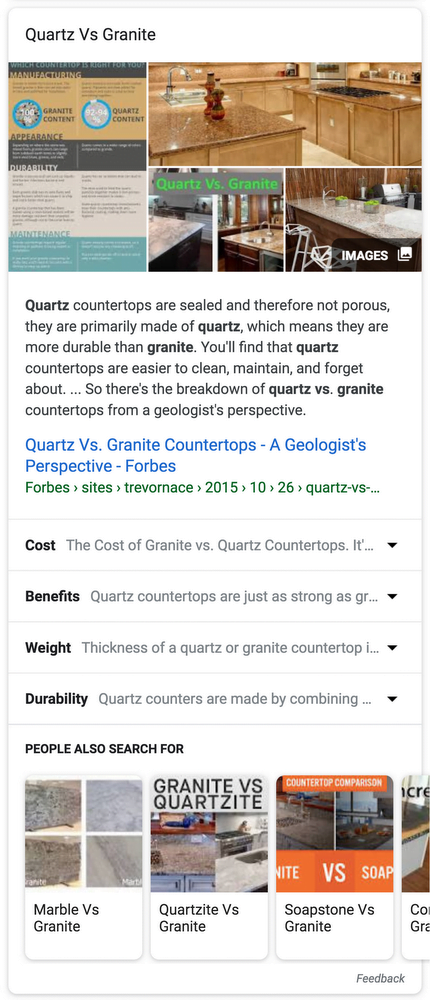
According to Google’s blog post on the subject released on August 16th, the objective behind expandable featured snippets is to deliver valuable insights into particular subtopics—such as cost, advantages, durability, etc.—that are relevant to the initial search query. To elaborate on the previous example, if you’re uncertain about choosing between granite and quartz countertops, Google will not only deduce from your “quartz vs. granite” query that you’re researching countertops, but it will also present a snippet brimming with the kind of detailed information you’d typically find by reading through the content itself. Google automatically generates these expandable panels based on its understanding of the information you’re looking for. The data presented is intended to highlight the most common and useful aspects of that specific topic.
Why Should We Care?
Expandable featured snippets are more than just an extension of multi-intent snippets; they are the latest step in a series of deliberately mapped developments geared towards making featured snippets more accurate and comprehensive. Google has consistently prioritized, and continues to prioritize, making search results more relevant to its users. Throughout 2018, featured snippets have served as the primary vehicle for these efforts. Despite the surge in direct answers during the spring, followed by a decline in featured snippets, long-term trends suggest that featured snippets will remain a significant component of organic search.
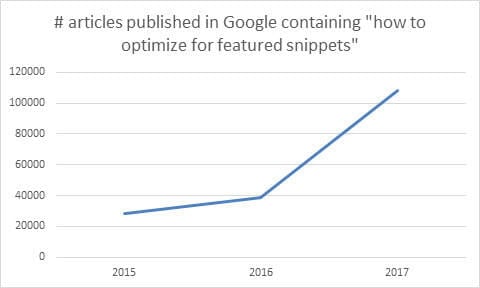
The volume of articles written on topics related to “how to optimize for featured snippets” has seen a 178 percent increase in the past year. This can be partly attributed to the growing prominence and functionality of snippets as a search feature. Another, perhaps more compelling, factor contributing to this trend is the rise of voice search. According to comScore, voice searches will account for 50% of all searches by 2020. Voice assistants heavily rely on featured snippets when providing answers to voice-based queries. Content creators recognize the value of this coveted space in the voice search landscape and are prioritizing snippet optimization now more than ever.
The Evolving Landscape: Beyond “Being First”
The prevailing mantra in SEO has always been, “If you’re not first, you’re last.” Whether you’re an agency or in-house, securing that top ranking has been the ultimate goal in SEO since its inception. However, the expanded capabilities of featured snippets signify a shift in this paradigm. Achieving that coveted “0” ranking is steadily becoming the new benchmark for SEO success. As voice search continues its ascent—still awaiting the full realization of all those predictions—attaining a high ranking will become less critical than securing the absolute highest ranking. (For those unfamiliar with rank tracking software, “0” typically indicates that a page holds a featured snippet). Owning the number one position won’t provide any advantage with voice assistants if a snippet stands between you and the user. Expandable featured snippets are more than just a manifestation of this movement towards more relevant, direct, and instantaneous search results; they are a significant driving force behind it. At Google Dance Singapore, Gary Illyes unveiled three new search features—Customized, rich results for Q&A, FAQ, and how-to content—all pointing towards the widespread prevalence and significance of results positioned at the very top of the SERP.
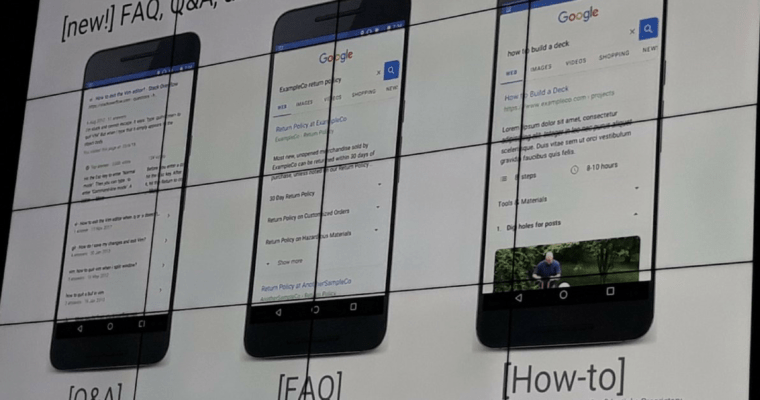
While it remains to be seen whether these new features can be definitively categorized as part of the expanded functionality of featured snippets, one thing is clear: they belong to the same family of features—rich results designed to display pertinent, immediate information in response to common search queries.
A Publisher’s Dilemma: To Worry or Not to Worry About Traffic?
The short answer: It’s complicated. The long answer: There’s a valid concern that the increased emphasis on featured snippets will lead to a decrease in the need for users to actually click through to pages, resulting in reduced traffic. Data supports this concern, showing that featured snippets can indeed lower click-through rates. The same problem arises in the context of voice search: snippets may enhance brand visibility, but how do you monetize if users aren’t visiting your website? One solution is to ensure you’re creating content that caters to both simple and complex queries—those likely to trigger featured snippets and those that aren’t. A straightforward way to determine this is by simply entering the query into the search engine and observing the results. Tools like Ahrefs and SEMrush can be used to estimate traffic for specific rankings on particular keywords. This allows you to assess how a featured snippet for a given query impacts traffic and determine whether pursuing that top spot is worthwhile.
Final Thoughts: The Markup Question
By now, you’re probably wondering, How can I optimize my content to maximize its chances of being featured at the very top of the SERP? The answer is surprisingly simple: don’t change a thing. Continue focusing on creating the highest quality, most informative content possible. Expandable featured snippets are not generated through markup language. While Google recently introduced a new type of structured data for marking up tables and could potentially release additional structured data types for similar purposes, it remains to be seen whether the features unveiled at Google Dance Singapore will necessitate any kind of markup data. For the time being, the solution remains consistent with the advice Google consistently provides concerned SEOs when new search updates roll out: produce high-quality content, steer clear of any dubious practices, and you’ll be well-positioned to rank.