Let’s test your Google Ads knowledge: which network helps you build brand awareness with captivating visuals – search or display?
It’s a trick question! The Display Network is usually seen as the visual advertising hub in Google Ads (excluding Shopping ads for now). However, this year’s Google Marketing Live keynote introduced gallery ads.
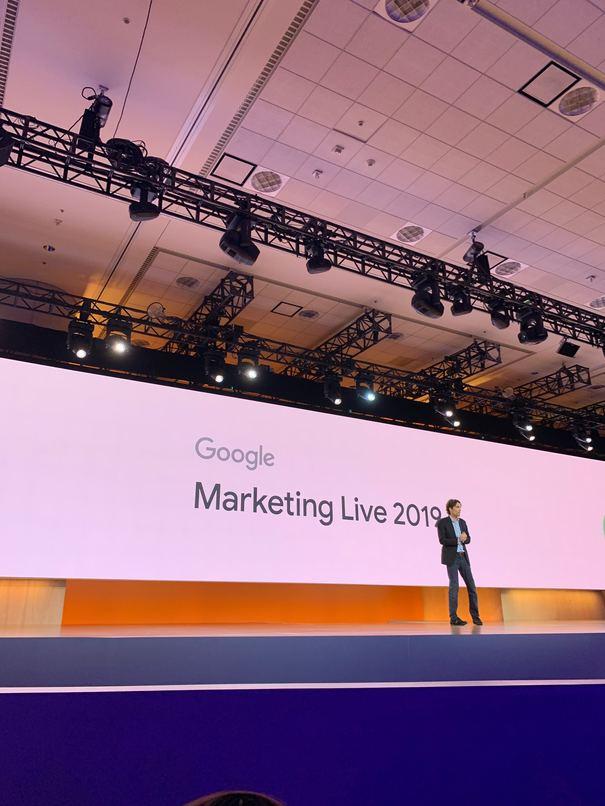
These ads combine search intent with display creativity, aiming to deliver substantial results for your business once fully launched later this year, regardless of whether your goal is sales or lead generation. Let’s explore further. This blog post will cover:
- The definition of gallery ads
- Their intended purpose
- Who can benefit from them
- Why you should be excited about them
What are gallery ads?
Introduced by Google’s Sissie Hsiao, VP of Product Management for Mobile App Advertising, gallery ads are interactive ads displayed at the top of mobile search results. They feature swipeable image carousels, similar to those seen on Facebook and Instagram, below a standard text headline and display URL.

Via Google. Besides the main ad headline, each image has a tagline. As users swipe through the carousel, the headline, linking to your landing page, remains visible. You can add four to eight images, each with a 70-character tagline limit. The best part is you can test different value propositions and CTAs with up to three unique headlines. Early performance tests show that gallery ads generate 25% higher engagement (clicks and swipes) compared to standard text ads.
What is the purpose of gallery ads?
In short: to communicate your business value more effectively. People, especially smartphone users, rely on Google for information. We use it to research products and services when we have needs or problems. Whether you’re a hungry college student searching for the best local breakfast sandwich or a busy business owner looking for advertising management software, Google is likely your go-to resource. As marketers, we invest in search engine results pages (SERPs) to offer solutions to potential customers. Communicating our product or service value is crucial for maximizing ad spending returns. Words effectively convey value, but images enhance their impact.
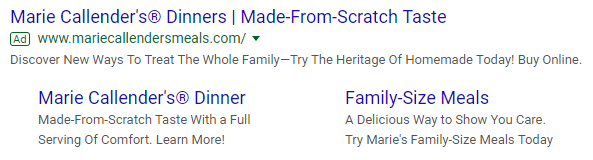
Snooooooze. Imagine the Devour ad without the image, replaced with a description. It wouldn’t necessarily be a bad ad, but it wouldn’t be as effective. Why? Because the visual of cajun-style alfredo with chicken and sausage clearly conveys the message: our products are delicious and will satisfy your hunger. This principle applies throughout the marketing funnel. Seeing the Devour ad early in your customer journey could leave a lasting impression. Witnessing it near the end of your journey, the tempting images might be the deciding factor for a purchase. Now that we understand the purpose of gallery ads, let’s explore their target audience.
Who should use gallery ads?
While my initial thought was that gallery ads were designed for consumer brands, I believe both B2C and B2B companies can benefit from them. Let’s begin with B2C. Restaurants, gyms, hotels, car dealerships, travel agencies, spas – if your offerings lend themselves to visuals, gallery ads are worth exploring. You can create a compelling pitch by showcasing various products, services, experiences, or even features of a specific offering within a single ad. (I’m hesitant to include ecommerce businesses because product-based searches often trigger Shopping ads, which dominate mobile screens.) For instance, imagine working for a travel agency promoting Caribbean resorts. To attract high-funnel mobile traffic, create an ad group with gallery ads and keywords like “tropical vacation,” “Caribbean destinations,” and “Dominican resorts.” How could someone seeking travel inspiration resist a carousel of your best packages? They might be far from converting, but it’s a powerful way to make a memorable first impression.
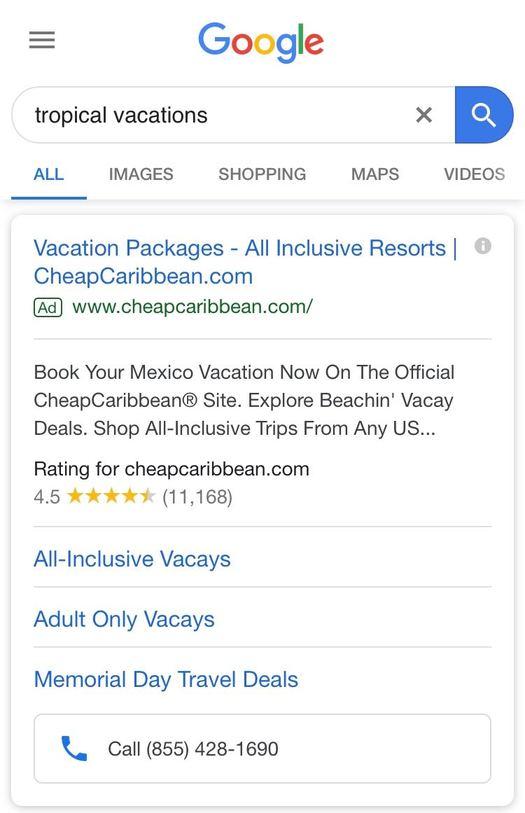
This is a great ad, but imagine it with photos of Punta Cana resorts … Now, let’s move on to B2B – the less obvious beneficiaries. If you sell software or digital marketing services, an image-heavy ad format might not seem beneficial. However, instead of focusing on products or services, consider showcasing processes. Gallery ads provide a fantastic opportunity to illustrate the successes you help your clients achieve. For example, imagine you manage paid search for a SaaS company that helps small businesses create landing pages. While your UI might be sleek and user-friendly, screenshots might not make the most engaging ads. Instead, try illustrated representations of the benefits you offer – improved Quality Scores, higher conversion rates, lower CPA – to effectively communicate your product’s value and position your brand as a helpful resource. Whether you’re B2C or B2B, you might still be unsure about gallery ads. Let’s address that skepticism.
Why should you be excited about gallery ads?
Let’s briefly delve into neuroscience. Consider these six statistics:
- The human brain processes images 60,000 times faster than text.
- People form first impressions within 50 milliseconds …
- … and process images in 13 milliseconds.
- Consumers are more likely to retain content that incorporates visual imagery.
- 55% of millennials say visuals are the most important part of shopping on mobile.
- People remember 80% of what they see vs. 20% of what they read. Simply put, gallery ads are promising because visuals are more impactful and memorable than text. You might struggle to make a lasting impression with a standard text ad; you might not even make any impression at all. However, incorporating visuals increases your chances of capturing attention and establishing brand recognition. Returning to marketing, another reason to be optimistic about gallery ads is the proven success of a similar concept – carousel ads – on Facebook and Instagram. Take Designs by Juju, for instance, a 12-person company selling embroidery designs. Using a Facebook Ads campaign focused on carousel ads, they achieved a 16x ROAS improvement and significantly surpassed their cost per purchase target. Additionally, beach lifestyle brand City Beach used carousel ads to achieve a 52% increase in ROAS and a 50% decrease in CPA.
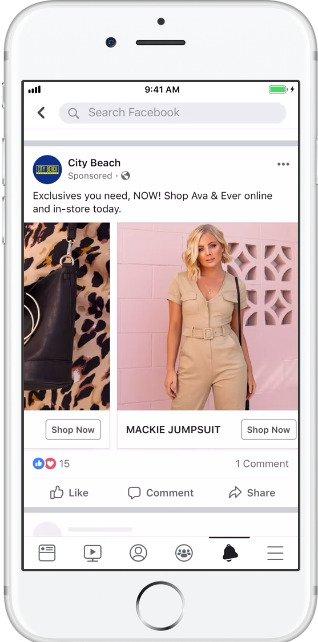
Via Facebook. Clearly, consumers respond well to ads featuring swipeable image galleries. While social media and search engines are used with different mindsets, why wouldn’t the higher commercial intent of search amplify their interest?
Be an early adopter of gallery ads!
In today’s competitive and saturated digital marketing landscape, early adoption of the next big thing is crucial. Start creating gallery ads as soon as they become available to you. As of August 2019, they’re available to select advertisers as a beta! The sooner you start, the greater the advantage you’ll have over competitors. The worst case scenario is that they don’t perform as well as expected. In that case, simply pause and re-evaluate. Early adoption has minimal risk but potentially significant rewards. While late adoption isn’t necessarily risky, it’s unlikely to be rewarding either. Good luck!