While there’s no universal solution for marketing technology, a strong tech stack typically addresses crucial needs like analytics, automation, communication, content, customer relationship management, and SEO. Identifying the most critical marketing tools depends on each business’s specific requirements.
“Before selecting a tech stack, you must have a clear goal and a solid understanding of what you need it to achieve and how it will help you,” advised Polly Kay, senior marketing manager at retailer English Blinds. “Focus on building a scalable tech stack before delving into the specifics of comparing the advantages, disadvantages, and additional features of potential apps.”
Is your tech stack up to par? This comprehensive, crowd-sourced guide showcases essential tools for marketers in 2020, organized alphabetically by marketing function for easy navigation. We’ll cover:
- Analytics
- Behavioral analytics
- Communication
- Content
- Content management system
- Customer data platform
- Customer relationships management
- Email marketing
- Graphic design
- Marketing automation
- Project/task management
- SEO
- Site audits
- Social media marketing
- Workflow automation Let’s begin.
Analytics
Marketers need effective tools to analyze the abundance of data available to them. According to Darren Taylor, principal consultant at digital marketing resource The Big Marketer, the essential analytics tool for marketers in 2020 is Google’s web analytics service, Google Analytics.
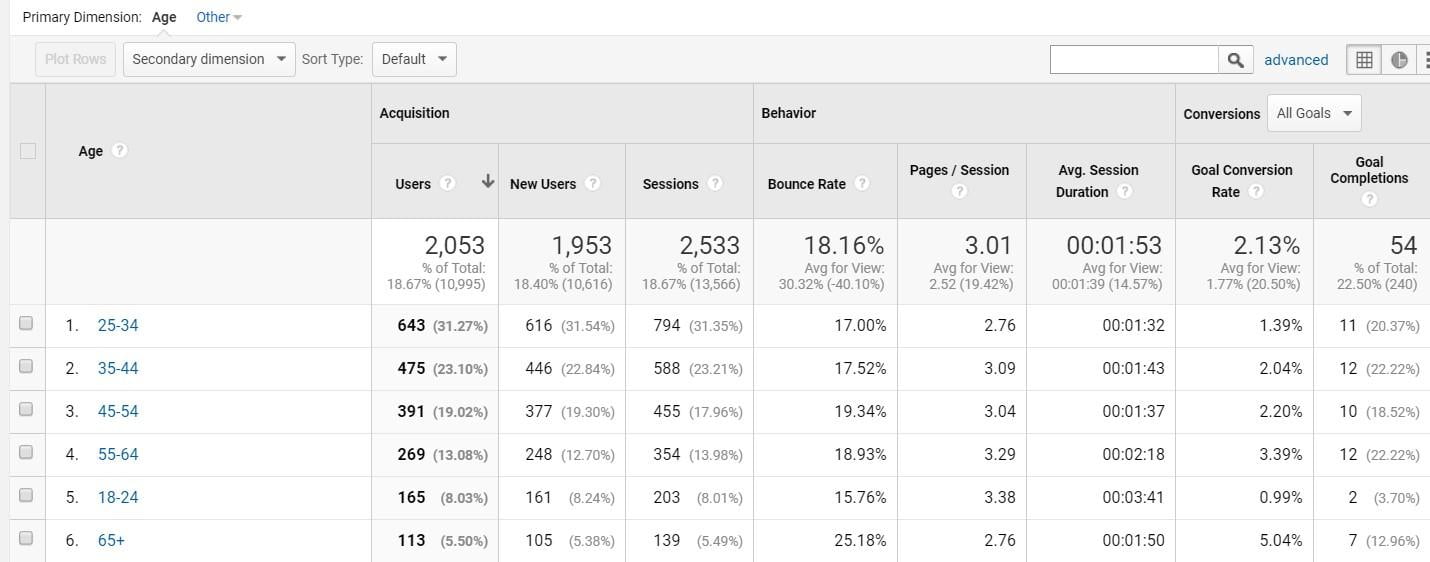
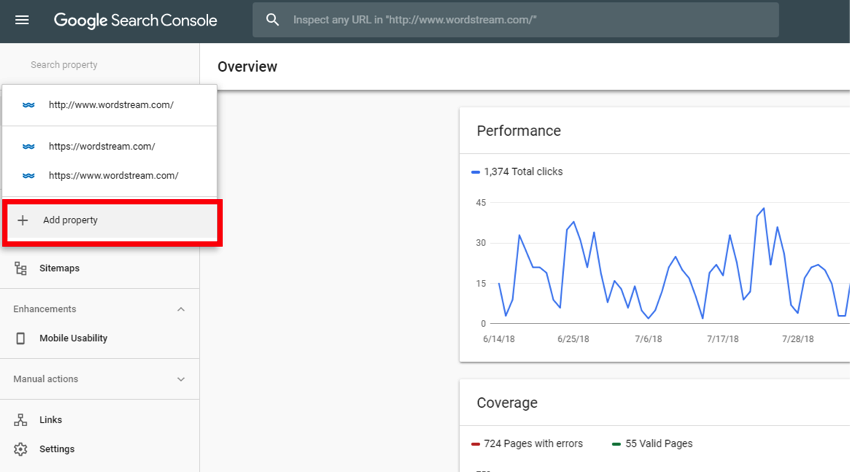
“Analytics plays a crucial role in shaping and adjusting strategies, optimizing conversion rates, and understanding customer behavior,” he explained. “It’s the fundamental tool for determining marketing budget allocation and justifying the use of other tools.” Tommia Hayes, digital communications manager at Community Health Charities, described Google Analytics as a “classic yet invaluable” tool. It provides insightful data for understanding which website content resonates with users and how to improve traffic. This includes identifying content with lower exit rates, longer page visit durations, and popular PDF downloads. “When I joined my current organization, I immediately observed a bounce rate exceeding 80%, resulting in extremely low traffic,” she shared. “By utilizing Google Analytics, I identified areas for improvement and implemented changes. Within two months, the bounce rate decreased by 20%, while traffic increased by over 12%.” Oksana Chyketa, marketer at B2B lead generation platform Albacross, echoed this sentiment, stating that Google Analytics helps Albacross gather qualitative and quantitative website data. This provides insights into buyer personas and optimization opportunities. Another free tool that helps users comprehend and enhance how Google perceives their websites is Google Search Console. Louis Watton, marketing executive at online transport marketplace Shiply, emphasized its usefulness in identifying website issues that might hinder Google visibility and revealing the keywords users employ to find your website.
Furthermore, there’s the reporting tool Google Data Studio, which transforms data into adaptable dashboards and reports. Steven van Vessum, vice president of community at SEO audit tool ContentKing, highlighted its ability to automate reporting and provide real-time access to marketing campaign results. Adam Thompson, director of digital marketing at the publication ReliaSite Insights, recommended adding business analytics service Microsoft Power BI to the list. Similar to Google Data Studio, Power BI consolidates data from various sources to generate interactive dashboards and reports. Thompson praised Power BI as more user-friendly than Google Data Studio and more powerful than Excel. He also noted that it’s free for users who don’t need to share or publish reports. “With a tool like Power BI, you can connect to, process, and analyze data from diverse sources like databases, spreadsheets, and web platforms such as Google Analytics,” Thompson elaborated.
Behavioral analytics
When it comes to customer and website visitor behavior analysis, the analytics tool HotJar emerged as a favorite among marketers. Ciara Hautau, lead digital marketing strategist at technology consultancy Fueled, uses it for heat mapping, user surveys, and funnel tracking on websites.
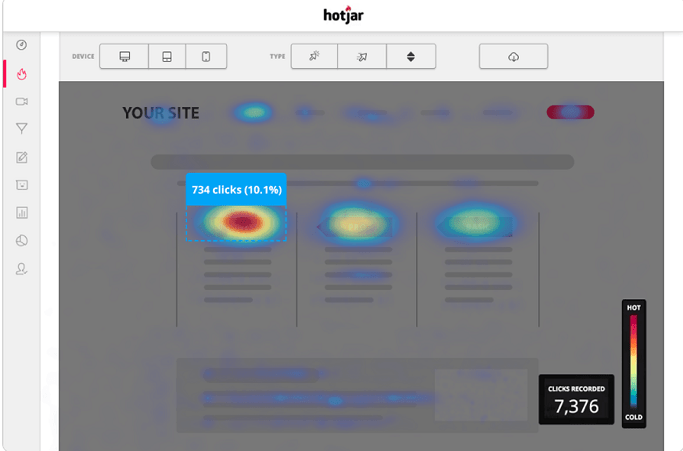
Image source “It provides valuable insights into user exit points, click patterns, and scrolling behavior,” she said. Julia Brolin from inbound marketing agency Leighton Interactive succinctly stated, “If you want to get a detailed understanding of how users interact with your website, this tool is essential.” Beyond heatmaps and scrolling analysis, it also generates screen recordings for in-depth examination. “Our agency utilizes this tool for every client,” she added. “It’s proven indispensable during website audits and aids in gathering information for new website designs and navigation.” Marketers also mentioned other options, including site optimization tools like Crazy Egg, Clicky, Inspectlet, and Smartlook. Sarkis Hakopdjanian, director of strategy and principal for business and marketing consulting agency The Business Clinic, emphasized that data from these tools provide a comprehensive understanding of user behavior, offering “a behind-the-scenes look at how your website users interact with your online presence.”
Communication
For communication, marketers often recommend the widely-used instant messaging platform Slack. “With the increasing prevalence of remote marketing teams and company culture becoming a key differentiator for top employers, a robust communication tool and a task management system are crucial components of a marketing tech stack,” stated Christopher Foust, CMO of marketing agency Motus Creative Group. “I highly recommend Slack and [project management software] Redbooth. Slack keeps my teams connected, organizes conversations, and facilitates easy project file sharing.”
Zalan Taller, digital marketing specialist at SEO tool Morningscore, endorsed Slack for its seamless integrations, while Chyketa highlighted the usefulness of Slack’s built-in Slackbot for creating to-do lists.
Content
Marketers seeking to create and optimize content have an array of options at their disposal. Another free offering from Google is the online word processor Google Docs. Jake Rheude, vice president of marketing at Red Stag Fulfillment, shared that his team uses it for collaborative content creation, such as blog posts. Additionally, Chyketa recommends Google’s file storage service, Google Drive, for efficient content management. “It allows us to manage a vast amount of content effectively,” she explained. “Moreover, every team member can access the content seamlessly.” In terms of content creation itself, marketers can explore options like content intelligence tool Buzzsumo and intelligence and strategy platform MarketMuse. “[MarketMuse] assists in researching, planning, and crafting content that’s highly relevant to a specific niche,” explained Bart Turczynski, editor-in-chief at career website Zety. “These AI-driven strategies not only save time but also help create truly impactful and engaging content.” Andrew Helling, owner of REthority.com, an online resource for real estate professionals and their clients, suggested the writing app Grammarly. Here’s an example of how Grammarly assists users:

“While I consider myself a skilled writer, I’m not immune to mistakes,” he admitted. “Grammarly effectively identifies writing errors and even suggests word choices to align with your article’s objectives. Users can define their writing style, target audience, and content goals, and Grammarly recommends words that resonate with these parameters.” Furthermore, it features a plagiarism checker to ensure content originality. Another option is the plagiarism checker Copyscape, which Helling described as “so affordable that there’s no reason not to utilize it.”
Content management system
The website- and blog-building tool WordPress received numerous recommendations from marketers. Hautau commended WordPress for its user-friendly interface and compatibility with plugins like the optimization tool Yoast. This tool enhances content discoverability by search engines.
Hayes explained that Yoast evaluates the readability of webpages, provides relevant metatags, suggests keywords for tags, and offers internal linking recommendations. “As you write, it alerts you to keyword stuffing or consecutive sentence structures,” Heller added. “For marketers aiming to eliminate guesswork from on-page SEO, Yoast is the ideal plugin.”
Customer data platform
While lesser-known, customer data platforms (CDPs) are software solutions that gather consumer data from various touchpoints to create individual customer profiles. Brooks Manley, digital marketing specialist at marketing agency Engenius, emphasized the importance of CDPs in 2020. He believes they are essential for marketers to extract data, gain customer insights, and predict future actions for optimized marketing. Specifically, he recommends Exponea, citing its capabilities in optimizing omnichannel campaigns, tracking customer interactions, recommending products, and predicting customer needs. Unsurprisingly, Mark Osborne from identity resolution firm Neustar highlighted the significance of identity resolution in today’s customer data landscape. This process enables marketers to reach consumers across multiple devices, connecting real-world identities like home addresses to digital identities such as cookies and IP addresses. “Without identity resolution, all the analytics, ad targeting, and business intelligence derived from tech stacks are prone to inaccuracies due to uncertainties about the audience,” he cautioned. “Identity resolution empowers marketers to understand customers beyond their cookies.” Moreover, with increasing privacy regulations like GDPR and CCPA, alongside Safari and Chrome’s restrictions on cookies, marketers without identity resolution will face significant challenges. “Integrating identity with third-party data transforms anonymous users into detailed profiles for website and call-center customization engines, lead scoring, A/B testing, and more,” Osborne added. “Providing CDPs and DMPs with identity information helps accurately scale marketing efforts from existing customers across various devices to intelligent look-alikes, improving advertising performance.”
Customer relationship management
Digital marketing has long emphasized delivering the right message on the right device at the right time for an optimal customer experience. Achieving this necessitates a robust customer relationship management (CRM) tool. Among the plethora of CRM options available, Reuben Yonatan, CEO of VOIP comparison resource GetVOIP, recommended the inbound marketing, sales, and service software HubSpot. He highlighted its effective tools, such as marketing automation and live chat, which facilitate lead conversion.

“HubSpot aids in managing and updating website content, creating tailored landing pages, scheduling social media posts, and more,” Zelenko elaborated. “It also generates website analytics reports to inform content and SEO strategies.” Anna Burtan, content marketing specialist at custom software development company Netguru, utilizes Hubspot Analytics to monitor organic and paid traffic. She also leverages Hubspot to measure qualified leads generated from marketing initiatives like content creation and events. In addition to HubSpot, Megan Upperman, analytics manager at digital marketing agency Augurian, recommended SalesForce. This CRM offers custom fields, website form technology, and hidden dynamic fields. “The underlying concept is to integrate attribution data into your CRM, providing insights into the effectiveness of channels, campaigns, platforms, etc.,” she explained. “This allows you to monitor lead status updates within your analytics platform, seamlessly integrating the sales process with your marketing data. As a result, you can identify pipeline bottlenecks and areas for improvement to drive revenue growth.”
Email marketing
A wide array of tools are available to simplify email marketing efforts. Among them is the email marketing service Mailchimp, which Taller praised as “an exceptional tool for email marketing.” “We have implemented multiple flows, and managing the entire process is incredibly straightforward,” he added.
Another notable option is the online marketing company Constant Contact. Ecommerce CRM Drip provides another alternative, enabling users to segment and tag mailing lists, launch campaigns, and access analytics for campaign adjustments, according to Sneh Ratna Choudhary, content marketer at proximity marketing firm Beaconstac. Chyketa also recommended the email outreach tool Mailshake. It generates reports that illustrate how effectively users are connecting with their target audience, offering improvement suggestions. The bulk email validator Clearout.io is another valuable tool. Arnie Singer from digital marketing agency Onrush Digital emphasized its role in verifying email address validity and ensuring deliverability. “The last thing you want is to send a cold email to a list and experience a high bounce rate,” he cautioned. “This can lead to flagging by your email provider, damage your domain reputation, and potentially result in being blacklisted as a spammer.” The markup generator MailtoLink.me offers another helpful solution. Will Kennard, SEO team leader at digital marketing and web design agency Yellowball, highlighted its ability to quickly generate pre-populated email headers and body copy. “Personalizing this process can guide the recipient towards the desired action and increase conversion likelihood,” he added.
Graphic design
Marketers have access to several graphic design tools, including the free tool Canva. Andy Grider, digital marketing manager at contractor software firm Stack Construction Technologies, praised its user-friendliness for creating banner ads, social media graphics, and downloadable content, even without advanced Photoshop skills.
Marketing automation
Marketing automation streamlines repetitive tasks, saving marketers time and enhancing the customer experience. Among the popular options, marketers often turn to HubSpot and Adobe’s marketing automation platform Marketo. These tools not only automate tasks but also measure marketing engagement, track tasks, and manage workflows.
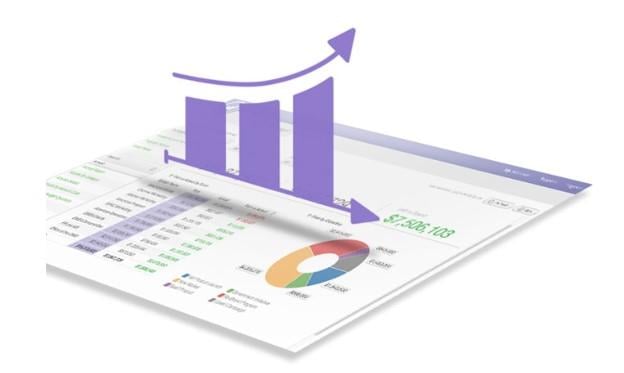
“Beyond acquiring new customers and transforming existing ones into brand advocates, it monitors potential customer engagement to guide them through each stage of the buyer’s journey,” explained Alexandra Zelenko, marketing and technical writer at software development firm DDI Development. Anna Tracy, head of marketing at healthcare marketing company Vortala, recommended considering SharpSpring as another viable option.
Project/task management
With numerous ongoing projects and tasks within organizations, marketers require effective tools for tracking progress and maintaining team schedules. Task management tools address this need. Chyketa recommended Trello, a Kanban-style tool that provides teams with project status visibility, facilitates update sharing, and enables direct communication. “Collaboration with the development and design team would be chaotic without Trello,” Choudhary emphasized. “We utilize Trello’s new templates for rapid card creation, and the gamified experience is visually appealing, providing everyone on the team with clear task status visibility.” The work management platform Asana presents another option for managing workloads and ensuring visibility. Other suitable options include team management apps like Monday.com and Redbooth.
“Email can be cumbersome for seeking feedback on ad copy or keyword research due to numerous threads. [it] often gets lost,” said digital marketing consultant Ryan Scollon,” noted one user. “Asana consolidates everything in one central location, allowing everyone involved to easily track progress.” On the other hand, Foust praised Redbooth for its seamless integration with Slack and its intuitive user interface, facilitating faster onboarding for new users.
SEO
Marketers widely consider the backlink and SEO analysis toolset Ahrefs as an indispensable tool. It offers comprehensive capabilities for keyword research, content mapping, backlink analysis, competitor analysis, site audits, and more. Its Keywords Explorer feature provides detailed insights for each keyword, allowing users to filter suggestions by difficulty and volume. Chyketa found this feature “extremely useful,” particularly for identifying new keywords. “If you’re aiming to significantly boost organic traffic in the coming year, Ahrefs is the ultimate tool to utilize,” advised Roger Maftean, career expert and content specialist at career advice website ResumeLab. One of its key strengths lies in its ability to help content marketers understand user search queries and analyze their potential to rank for those keywords. “This platform also allows you to analyze competitors’ platforms, revealing what strategies are effective for them,” Heller added. “If I had to choose just one tool for building a content strategy, Ahrefs would be it.” Burtan leverages Ahrefs to track the performance of high-intent keywords in Google search results. She then cross-references this data with ad performance on platforms like LinkedIn, Facebook, and Instagram to refine content quality and positioning.

Hautau relies on Ahrefs as her primary link-building and analysis tool. “We find it to be the most accurate tool for determining domain authority, and it allows us to effortlessly monitor link acquisitions, losses, spammy links, and broken backlinks,” she explained. The online visibility management platform SEMrush is another highly regarded option. Describing it as a “comprehensive all-in-one tool,” Hautau shared that Fueled utilizes it for site audits, SERP tracking, and keyword research. Notably, it also encompasses social media and ad management features. “Its SEO Toolkit is incredibly extensive, and I’ve found it to be my go-to resource for understanding user intent,” said Bryan Arnott, content marketing manager at content marketing agency 256 Media. “Its Keyword Magic Tool enables me to filter keywords by questions asked from specific locations … and its Content Marketing Toolkit is rapidly becoming my starting point for topic research, particularly when onboarding new clients.” Zelenko highlighted SEMrush’s ability to track competitors’ backlinks, providing insights into their link-building strategies. Free services like Google Search Console also offer valuable assistance. This tool helps users understand and improve how Google perceives their websites. “Google Search Console makes it possible to achieve better search engine visibility and first-page rankings,” Choudhary explained. “It has a user-friendly interface and recently underwent an update to display results and CTR for rich featured snippets separately.” Both Google and Bing offer free programs to streamline ad management. “Google Ads Editor and Microsoft Advertising Editor simplify the process of mass-updating bids, adding and deleting keywords, managing copy, ad groups, and much more,” Grider noted.
Site audits
To gain deeper insights into website performance, marketers often conduct audits. The website crawler Screaming Frog, available in both free and paid versions, received high praise as a site audit tool. Another free option is Google Optimize, which allows users to run site experiments to determine the optimal experience for different visitor groups. Grider explained that this tool facilitates A/B testing, such as comparing the conversion rates of red and green buttons or identifying headlines that generate more leads.
Social media marketing
Numerous tools are available to assist brands in managing their social media presence. Chyketa highlighted the social media management tool Buffer, praising its ease of use for scheduling posts, tracking brand content performance, and managing accounts. “Buffer has undergone a significant overhaul and has become incredibly intuitive,” Choudhary added. “It suggests optimal posting times for each channel and even includes a useful preview option.” Other valuable tools include the Hootsuite dashboard, recommended by Osama Khabab, founder of MotionCue Digital Media Agency, for social monitoring and listening. Taller also recommended the social media and web monitoring tool Mention for scheduling and listening.
Workflow automation
Workflow automation plays a crucial role in breaking down silos within organizations. The online automation tool Zapier facilitates seamless connections between over 1500 apps, including Gmail, Slack, and Mailchimp. It received high praise from numerous marketers.
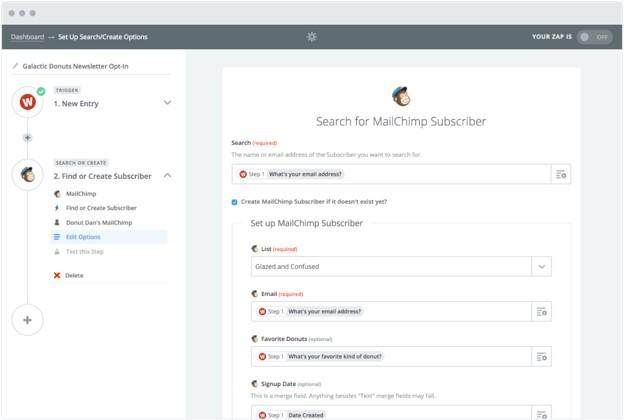
Chyketa commended its ability to automate manual tasks, saving her team significant time. Marketing consultant Vishal Srivastava emphasized Zapier’s role in creating a more holistic view of the purchase funnel. “The primary reason Zapier remains the top marketing tool in my stack is its seamless integration with new software tools I incorporate into my workflow,” added Pete McPherson, founder of blogging resource Do You Even Blog. “Whether it’s ensuring data integration with my email service provider or updating Facebook Ad custom audiences based on external triggers, Zapier consistently proves its value as an essential marketing tool.” Regardless of the specific tool used, Daniel Twigg, marketing manager at SaaS application integration platform Cyclr Systems, highlighted the importance of integration tools. These tools connect campaigns with customer systems, such as CRMs, for more effective lead and sales attribution. This, in turn, helps justify marketing spend. Marketing channel integration also enables users to create automated bidding strategies by leveraging external data sources and customer data. “If your customer base in a particular location exhibits strong sales traction, you can increase campaign bids to capitalize on this niche,” he explained.
Website tag manager
The tag management system Google Tag Manager, a free tool, empowers users to effortlessly update measurement codes on their websites and mobile apps. “The ability to install a single, small piece of code on your website that houses all your advertising tracking pixels and other website tool installation codes simplifies things significantly,” Grider said. “Most marketers I know, myself included, rely on Google Tag Manager.”
Review and refresh your tech stack
Regularly updating your tech stack might appear daunting and costly. However, it’s crucial to review your marketing strategies and goals, ensuring your tech stack encompasses all the necessary tools to achieve and surpass those objectives.