My morning routine always starts with checking my inbox. I’m on the lookout for any urgent messages from work or updates from family, but my main task is tackling the mountain of promotional emails that have piled up overnight. And the influx doesn’t stop there – by the time I get to work, there’s a whole new batch waiting for me. The worst part is, most of these promotions are completely irrelevant. I don’t need a new lawnmower (seriously, why did I ever sign up for that?), and I definitely don’t need a bridesmaid dress for a wedding I’m not in. It’s like these retailers haven’t noticed that I haven’t opened a single email from them in months!
This is where the concept of targeted email marketing comes in. It’s about nurturing a relationship with your customer base, which means sending emails that are both relevant and timely. The key thing to remember is that not all customers are created equal. A report by MarketingSherpa revealed that over half of marketers see a significant need to improve how they segment their email databases, with a third prioritizing segmentation as a key growth area for their email programs. The days of one-size-fits-all marketing are over; personalization is now the expectation.
My previous role in email marketing taught me a lot about effective list segmentation and audience targeting. Allow me to share some of my top tips for using segmentation to target your subscribers without annoying them.
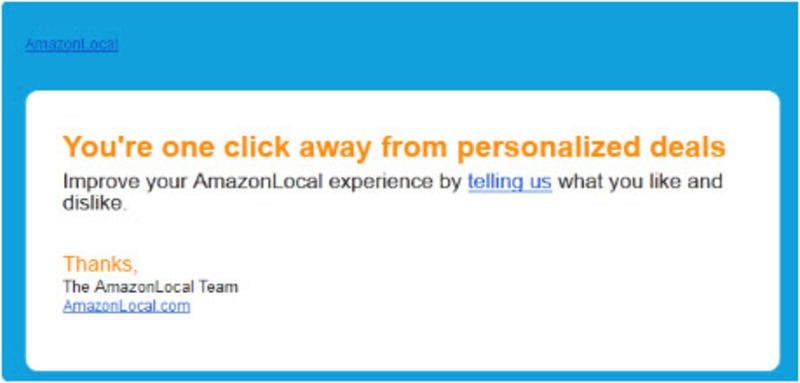
An example of how Amazon effectively asks customers what they actually want to receive in their inbox.
Targeted Email Marketing 101: The Fundamentals
Segmentation isn’t just about being polite, it’s good for your brand’s reputation! By ditching the “batch and blast” approach, you’ll see a boost in your email open rates and a decrease in the number of messages ignored or flagged as spam. Even the most basic segmentation can make a big difference.
Here are some basic segmentation strategies to think about when using targeted email marketing:
- Customers vs. Prospects: Guiding a prospect through your marketing funnel to their first purchase marks a significant milestone in your relationship. They’ve chosen you! Express your appreciation with a genuine thank you email, and then avoid bombarding them with messages. Just like in personal relationships, coming on too strong can scare them away. Remember, someone who has bought from you before is more likely to do so again. Conversely, prospects haven’t made that commitment yet, so avoid overwhelming them with premature attention. By keeping these groups separate, you gain a clearer understanding of your audience and can focus your efforts on those most likely to become loyal customers.
- Recency: When does a customer transition from active to inactive? This varies significantly across different businesses. Some retailers consider six months of inactivity, measured by opens and clicks, as the threshold, while others extend it to two years. Fast-fashion retailers often see shorter customer lifespans compared to B2B companies, which tend to have longer-lasting customer relationships. The frequency of your email campaigns and customer engagement will determine the right moment to send a friendly “We miss you!” message to re-engage those at risk of drifting away.
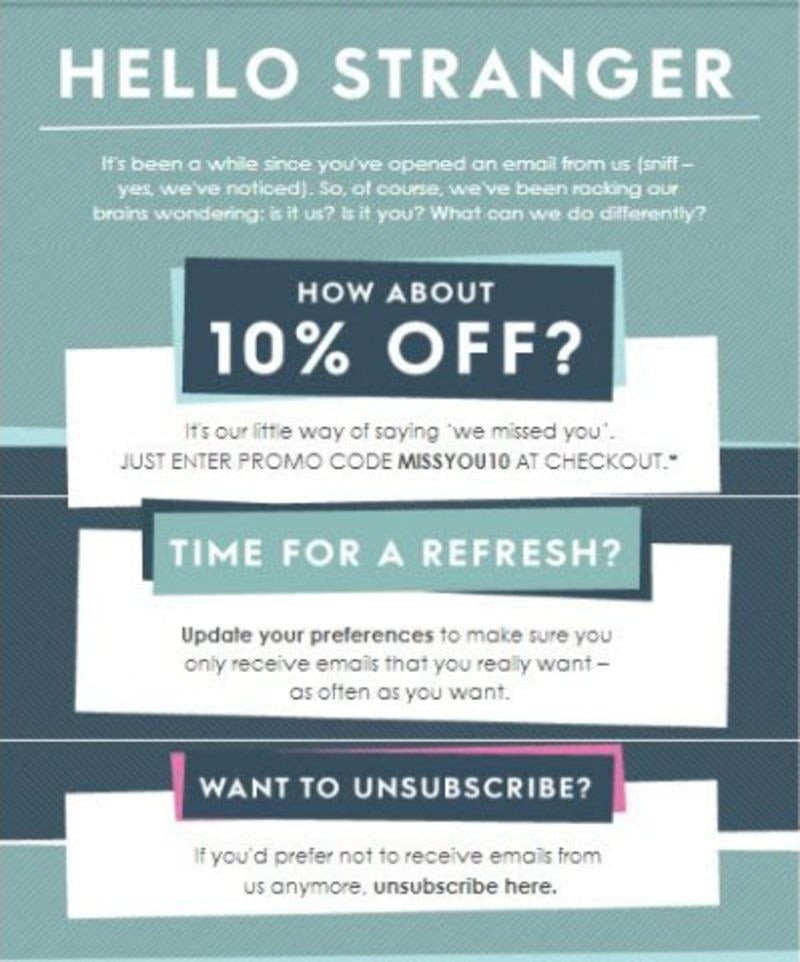
An example of a well-executed “We miss you” email from Not on the High Street.
- Frequency: Do some of your customers purchase like clockwork every month? Or maybe you have a segment that only shops during the holidays? If you send the same email blasts to both groups, you risk alienating valuable customers. Research by Chadwick Martin Bailey revealed that 69% of consumers unsubscribed from email lists due to excessive email frequency. Sending too many emails can lead to losing potential customers and the revenue they could have generated.
- Monetary: Consider how much a customer spent during their last purchase. Was it one large transaction or multiple smaller ones? Are they more likely to be interested in sale items or luxury goods? By sending targeted emails featuring full-priced products to customers who typically buy without discounts, you can potentially reduce unsubscribes.
Leveling Up Your Email Marketing: Advanced Targeting Techniques
If you’re already implementing most of the strategies above, it might be time to try some more advanced email targeting techniques:
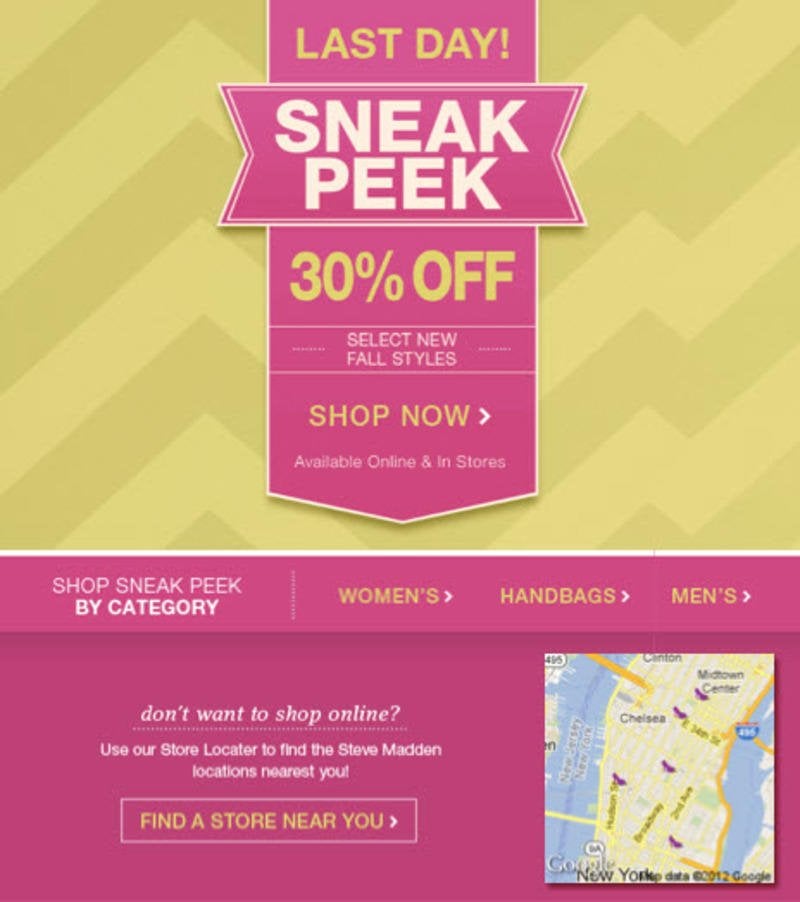
- Geo-targeting: If you own a local boutique with a thriving online store, it’s crucial to tailor your messaging differently for local and online customers. A simple way to achieve this is by asking for a zip code during the signup process. For businesses with a wider reach, including a store locator in your email footers can effectively drive in-store traffic, as demonstrated in the example below from Steve Madden.
- Demographics: It’s no secret that men and women shop differently! While men might lean towards online giants like Amazon or brick-and-mortar stores, women are often more active online shoppers. Different age groups also exhibit varying shopping habits. Students, for instance, are more likely to be drawn to sales and clearance sections, while working professionals in their 40s might have the disposable income for that full-priced handbag. If your customer base spans different demographics, segment them strategically to create more personalized messaging. This will not only resonate better with your audience but also provide valuable insights into your most loyal customer segments, informing your brand development strategy.
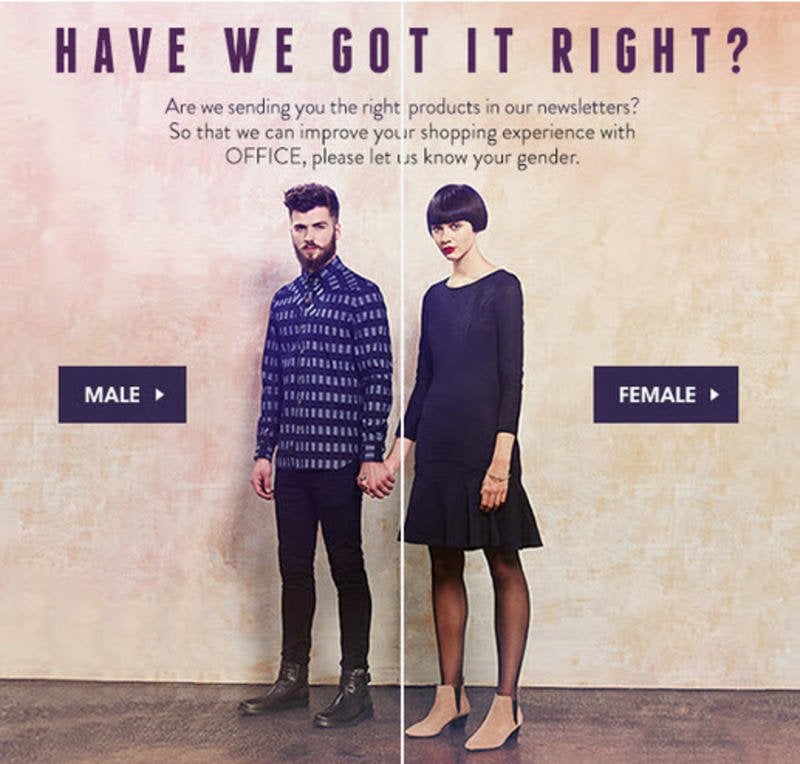
An example of OFFICE effectively gathering additional customer information.
- Time of Day/Time of Week: While I might be an early-morning inbox checker, I’d never dream of making a purchase before having my coffee! To target those who are more inclined to shop first thing in the morning, analyze conversion rates a few hours after your send time. For those of us who need a little extra push, a well-timed reminder about a big sale later in the day might do the trick. At nexus-security, we analyzed our own send and open data and discovered that our highest open rates, exceeding 25% clicks, were achieved with emails sent on Thursdays between 8-9 am. Conversely, our lowest open rates, below 5%, were observed for emails sent on Tuesdays and Wednesdays between 8-10 am. The key takeaway here is that finding the optimal send time requires testing and may vary significantly across different audiences.
- Nurture the Relationship: Consider what else you know about your customers. Have they purchased a product that might need replacing soon, like ink cartridges, mascara, or prescription medication? Perhaps they’ve subscribed to a service that will require renewal, such as an annual checkup or vehicle inspection. Even better, acknowledge special occasions like birthdays or anniversaries! These small gestures show your customers that you’re paying attention and value their business.
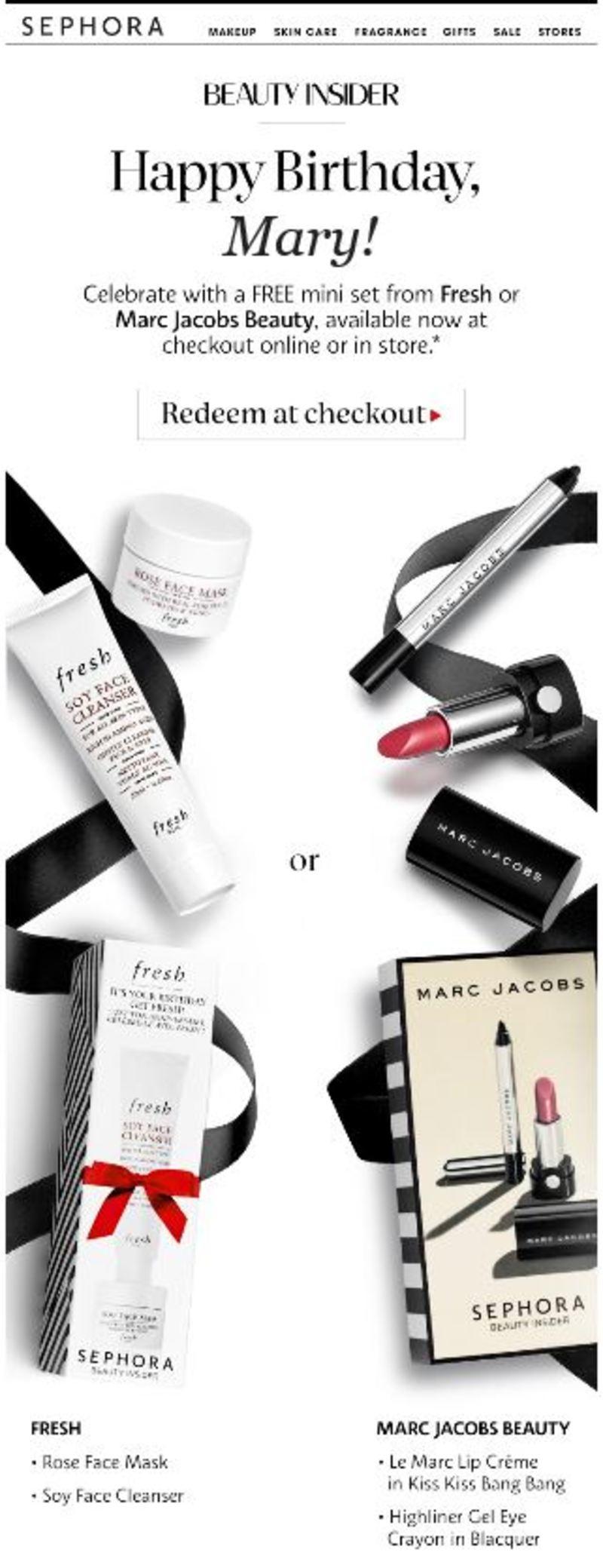
An example of a well-timed birthday email from Sephora.
- Leverage Google’s Customer Match: Once you’ve collected enough data for segmentation, you can take it a step further with AdWords’ Customer Match. This powerful tool allows you to create custom audiences by uploading a list of email addresses. This enables you to tailor your ads and bids to users at different stages of the marketing funnel, from new prospects to loyal customers. Customer Match extends your reach across Google Search, Gmail, and YouTube, though not on the display network. Similarly, social media platforms like Facebook and Twitter offer tools to leverage your email marketing database for remarketing purposes. For a step-by-step guide on setting up AdWords’ Customer Match, check out nexus-security’s Erin Sagin’s post here.
Email Targeting Pitfalls to Avoid
It’s worth noting that with multi-level segmentation and multiple email campaigns, there’s always a risk of overlap. Prioritize your audience suppression lists to ensure that your most important emails reach the widest audience without overwhelming anyone with excessive communication. This is where a well-structured marketing calendar proves invaluable, even if you don’t adhere to it religiously.
[You might also find this interesting: The 8 Coolest Ad Targeting Features in Marketing Right Now]