Google’s latest dynamic remarketing tool, which is still in beta, is hands down the best release from Google I’ve seen in a long time. I believe this will be an essential feature for all e-commerce sites that utilize Google advertising. I’ve had the chance to experiment with these new dynamic remarketing ads, and in this article, I’ll explain how they operate, why they outperform traditional remarketing methods, and why you should be using them.
Google Remarketing: The Outdated Method
Having a Google Merchant Account is increasingly crucial for any e-commerce site. Within Google Ads (previously Google AdWords), merchant accounts are becoming incredibly valuable as they provide data for your PLAs (Product Listing Ads, soon to be replaced by Google Shopping Campaigns), Product Extensions, and now your remarketing initiatives. As many of you are aware, remarketing is crucial because not every visitor to your site makes a purchase immediately. It’s vital to maintain engagement with potential customers not just through Google search and your website, but also across Google’s display network, as people spend 95% of their time off Google. While many people I’ve worked with have remarketing set up, it’s often overly basic, capturing ‘All Visitors’ to their site and presenting them with a single generic message. The more advanced users I’ve encountered are segmenting their site visitors and targeting their remarketing efforts towards those who have ‘Abandoned the Shopping Cart’ or ‘Visited A Product Page.’ If you fall into this category, bravo, you are doing a much better job than most of your competitors. However, this approach has always been a significant endeavor. Imagine having 50,000 products; would you generate 50,000 audience segments and 50,000 distinct image ads?
How Dynamic Remarketing Differs
The biggest obstacle in my remarketing efforts has always been generating image ads for all of our products. However, with Google’s new Dynamic Remarketing function (still in beta), Google will dynamically create ads for you that include your price, image, and text of your choice, all based on the behavior of your website visitors. Pretty impressive, right? You can say goodbye to creative headaches and, more importantly, reach your customers with highly targeted messages based on the products or content they were interested in during their visit. Imagine you are ShoeMe.Ca, an online shoe retailer, and a potential customer views a specific pair of Converse sneakers. Wouldn’t it be ideal to present them with an ad showcasing the image and price of the Men’s White Converse Chuck Taylor All Stars they were browsing, along with a free shipping offer to entice them back? Perhaps you could even cross-sell them a pair of High Tops, just in case they’re aiming for the Lil Wayne aesthetic. All of this will soon be achievable through Google, leading to significant performance improvements for your e-commerce platform.
The Mechanics of Dynamic Remarketing
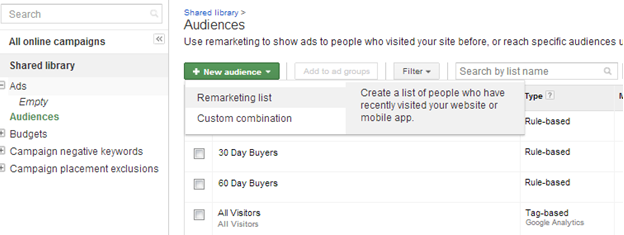
Here’s how it functions: You’ll need to implement a customized Remarketing Tag on your website. This tag will retrieve Product Identification numbers from your merchant feed and relay them to Google. Subsequently, Google will match these Product IDs with your Google Merchant Center feed and utilize those details to fuel your ‘Dynamic Display Ads.’ Initially, you’ll need to add some remarketing tagging to your site. While the implementation involves some coding expertise, if you operate an e-commerce website, you likely have a developer capable of handling the JavaScript requirements. Once the coding is correctly implemented, you’ll need to configure things in Google Ads. Similar to any remarketing campaign, you’ll need to define specific audiences to target. To achieve this, navigate to your Shared Library, then Audiences, and choose ‘Remarketing list’ from the ‘New audience’ dropdown menu as shown below.
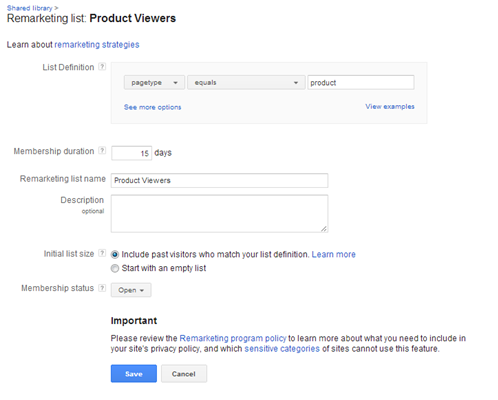
Next, create a ‘List Definition,’ which involves selecting the users you want to include in the audience. In the example below, I’ve chosen ‘pagetype equals product.’ This means I’ll be cookie-ing users who have visited any page on my site with ‘product’ in the URL string. I’ve then set a ‘Membership duration’ of 15 days. This essentially determines how many days a visitor’s cookie will remain on my remarketing list.
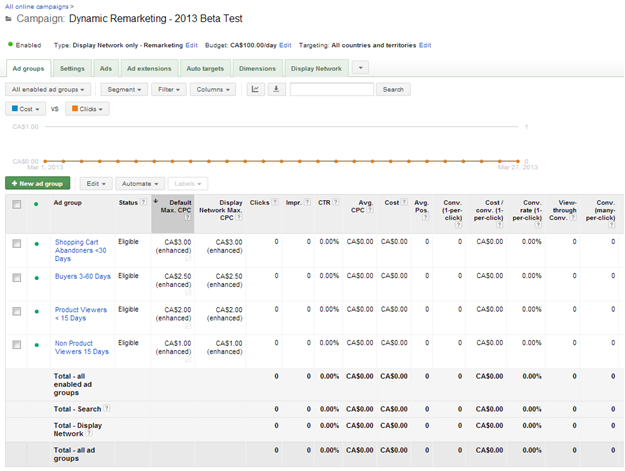
You can then assign these audiences to the ad groups you believe will be most effective. Within ShoeMe’s account, you’ll notice four ad groups:
- Product Viewers: Displays dynamically generated ads based on the specific product pages visited by the user.
- Shopping Cart Abandoners: Dynamically creates ads based on products viewed by users who added items to their cart but didn’t complete the purchase, minimizing losses due to cart abandonment.
- Buyers 3-60 Days: Targets users who made a purchase within the past two months with the goal of strategically upselling related products.
- Non-Product Viewers: Targets users who visited pages on the site other than product pages and generates ads based on the content of those pages. I recommend bidding more aggressively for Shopping Cart Abandoners and Product Viewers (who are further along in the buying process). I’ve tiered the bidding below, with the highest bid for Shopping Cart Abandoners and the lowest bid for Non Product Viewers (those who visited the homepage, blog, etc.).
Creating Dynamic Remarketing Ads
After assigning the relevant audiences to each ad group, you’ll need to create your ads. This is where it gets exciting. The ‘Display ad builder’ will soon feature a dynamic ad option, as shown below, with each banner size offering over 15 dynamic ad formats to choose from.
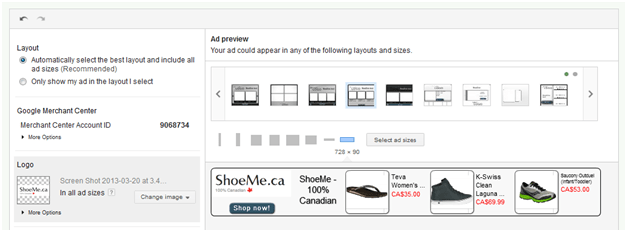
In the example ad, the potential customer would have likely viewed these products and is now being shown either the same product again or a different style. They can then click on the specific product within the ad and be taken directly to that product page. Talk about qualifying your clicks! These ads will also rotate products and generally be much more engaging than static image ads.

Why Dynamic Remarketing Is a Game-Changer
While other companies offer similar remarketing solutions, you can now manage everything directly within Google Ads without any additional cost per click. This gives you greater control over your remarketing campaigns and, in my estimation, will lead to substantial returns. ShoeMe.ca understands that 50% of its business comes from repeat customers. These returning customers have an average order value that is $6 higher than new customers, and their average conversion rate is 30% higher! Re-engagement is a data-proven key to their success, and dynamic remarketing takes it to a whole new level. Dynamic remarketing will be a critical factor in the future success of any e-commerce site, and if you don’t embrace it, you risk falling behind. Find a detailed guide to setting up dynamic remarketing for retail here.