Have you ever searched for a really specific, unusual item online and been amazed to find an ad showing you exactly what you wanted? Chances are, the advertiser was using Dynamic Keyword Insertion (DKI).
DKI means your ad changes to match what someone is searching for, making it super relevant to them. It works by using a placeholder in the ad that gets replaced with the actual search term.
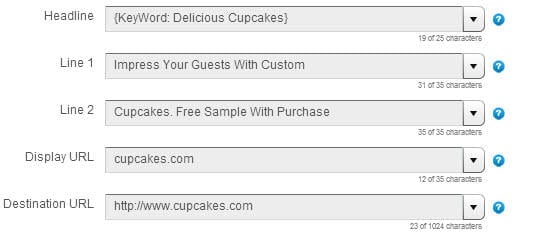
For example, let’s say the ad above was shown to someone searching for “german chocolate cupcakes.” Here’s how it would look:

Cool, right? But not everyone agrees on how effective DKI actually is. Marketing expert Larry Kim says it’s “good, not great.” His research found that while DKI ads can be good, the absolute best ads are carefully written for specific searches and don’t use DKI.
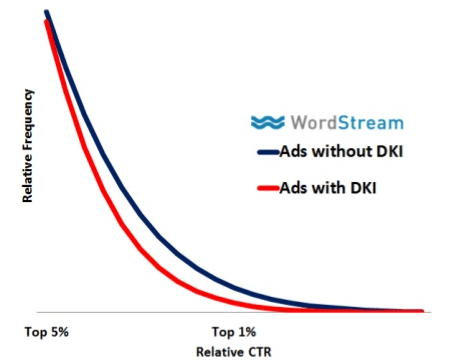
My view? It depends. Let’s explore the pros, cons, and downright ugly sides of DKI so you can see when it works and when it doesn’t.
Dynamic Keyword Insertion: The Good News
Used well, DKI can be incredibly powerful. Here are some of its benefits:
Easy and Fast to Set Up
For busy advertisers, DKI is a lifesaver. Imagine selling printer ink online. People search for very specific ink cartridges, using the exact product code. A general ad won’t work, but creating ads for every single cartridge is a nightmare.
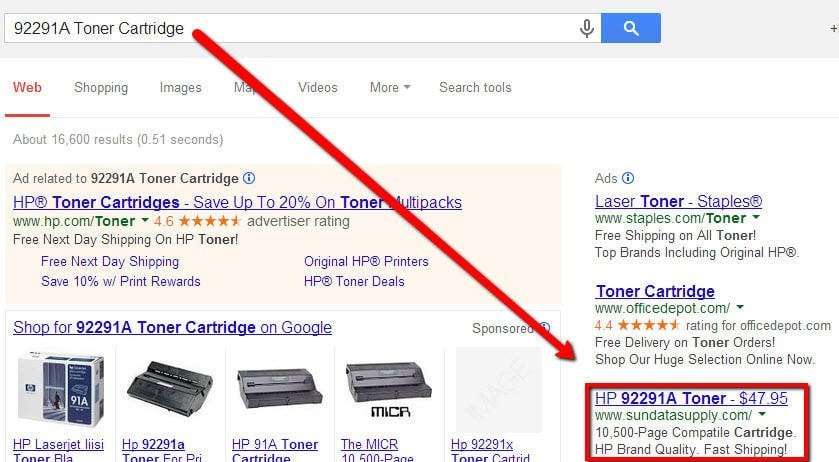
That’s where DKI shines!
Bold Keywords Attract Attention
Google bolds the search terms that appear in an ad.
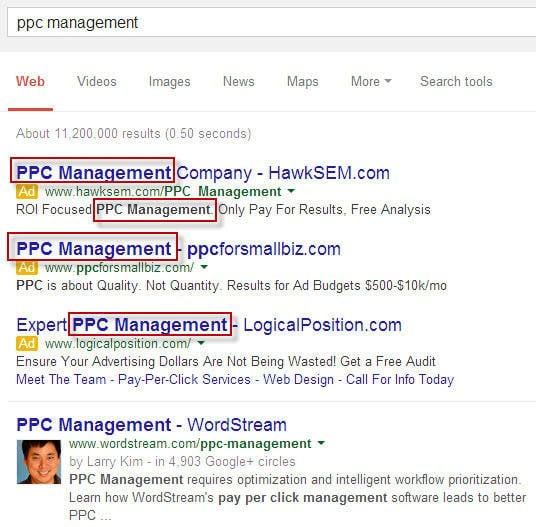
This makes it super easy for people to spot relevant ads, and even if your ad isn’t at the very top, it still stands out. DKI often leads to higher click-through rates because of this.
Longer Ads (Sometimes)
Ever notice ads that seem to break Google’s character limits? They’re probably using DKI. It can allow for slightly longer headlines, which is great for businesses with long, specific names. But don’t rely on it - consider it a bonus!
Dynamic Keyword Insertion: The Not-So-Good
DKI isn’t perfect. Here are some downsides:
Bad for Long, Specific Searches
If most of your keywords are long phrases, DKI might backfire. When the keyword is too long to fit the ad, your backup text shows instead, making the ad too generic.
Repetitive and Spammy Ads
Some advertisers go overboard with DKI, using it in every part of the ad. This creates repetitive, spammy-looking ads, which is never good.

Showing Up for the Wrong Searches
If you use DKI and bid on keywords unrelated to your business, you’re in for trouble.
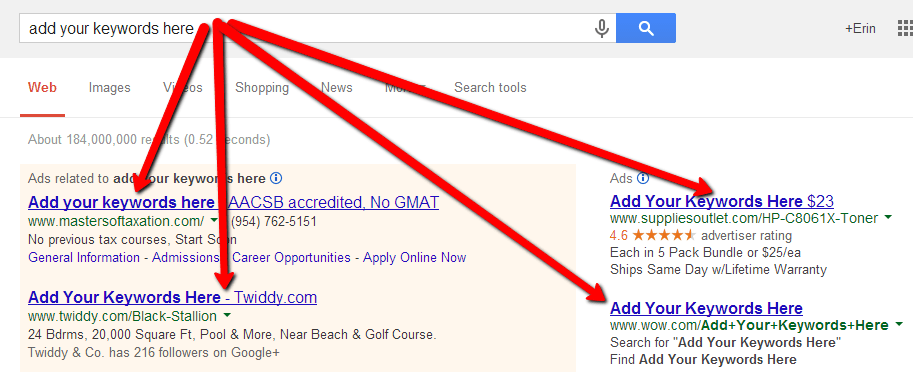
Double-check your keywords and think: “If I searched for this, would I expect to see MY product?” If not, don’t bid on it. Be careful about accidental typos too!
Dynamic Keyword Insertion: The Downright Ugly
Sometimes, DKI goes horribly wrong:
Using the Wrong Code
This is a common mistake.
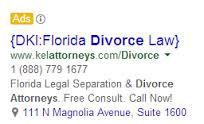
The exact formula ({KeyWord: Substitute Text}) is crucial. Even a tiny mistake like using square brackets instead of curly ones will break it, resulting in nonsensical ads.
Showing Misspellings
Bidding on misspelled keywords can be a good strategy, but NEVER use DKI with them. The misspelled word might end up right in your ad.
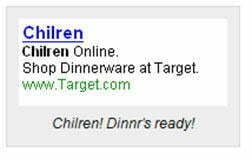
Not a good look!
Trademark Trouble
You can bid on competitors’ trademarked terms, but you can’t use them in your ad text. This is a problem if you’re using DKI.

The solution? Put competitor terms in a separate group without DKI.
Dynamic Keyword Insertion Best Practices
To avoid DKI disasters, follow these guidelines: Use the correct format so Google inserts your keywords correctly.

You can control capitalization within the dynamic text like this: keyword = german chocolate cupcakes Keyword = German chocolate cupcakes KeyWord = German Chocolate Cupcakes For long-tail keywords, choose backup text that’s relevant even if the keyword doesn’t fit. Above all, test it! Run A/B tests with a regular ad and a DKI ad to see which performs better in terms of clicks and conversions. So, what’s your experience with DKI been like? Share your thoughts in the comments!