The effectiveness of landing pages is undisputed among digital marketers, regardless of the campaign type - PPC, social media, email, or display ads. A successful campaign hinges on compelling landing pages that convert visitors.
Various software platforms aid marketers in optimizing landing pages by testing elements like visuals, CTAs, layouts, offers, and buttons. A/B testing and on-the-fly page creation are made easy with these tools. Even slight adjustments, such as repositioning a key visual, can significantly impact performance.
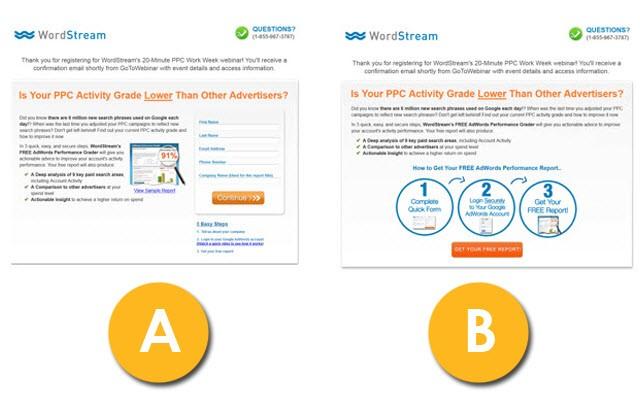
However, marketers often rush the copywriting process for landing pages. They rely on intuition, past experiences, and cursory competitor analysis, leading to costly errors and wasted time until the optimal message is found through trial and error.
Despite advancements in software and testing, the most critical factor for landing page success is often overlooked: the actual wording on the page. High-converting copy frequently originates from customers themselves, emphasizing the importance of persuasive sales writing rather than just creative flair.
This guide will illustrate how to enhance your landing page copy and refine your messaging using the “Voice of the Customer” approach. Market research methods and voice-of-customer (VOC) data are presented as the most effective ways to discover, not invent, the ideal language for boosting conversions on landing pages.
Understanding Voice of the Customer
Voice of customer analysis, or VOC, is a market research method that centers around understanding and prioritizing customer (and prospect) wants and needs. This involves organizing them hierarchically based on their relative importance and satisfaction with current solutions. VOC provides a framework to comprehend your customers’ experiences and expectations regarding your products or services.
Voice of the customer data is actionable and encompasses a target market’s desires, pain points, preferences, expectations, and aversions. This data, gathered through methods discussed later, can be used to craft compelling landing page copy, often using verbatim customer and prospect language from VOC research.
Despite its seemingly technical nature, VOC boils down to asking the right questions, actively listening to customers and prospects, and paying attention to online and offline conversations.
The messaging on FreshBooks’ landing page exemplifies this principle. By understanding their target audience (small business owners), they address their pain points effectively. It’s clear their research indicates their target market:
- Finds billing a tedious process
- Considers accounting a challenge
- Requires accessibility from any location
- Desires efficient billing solutions
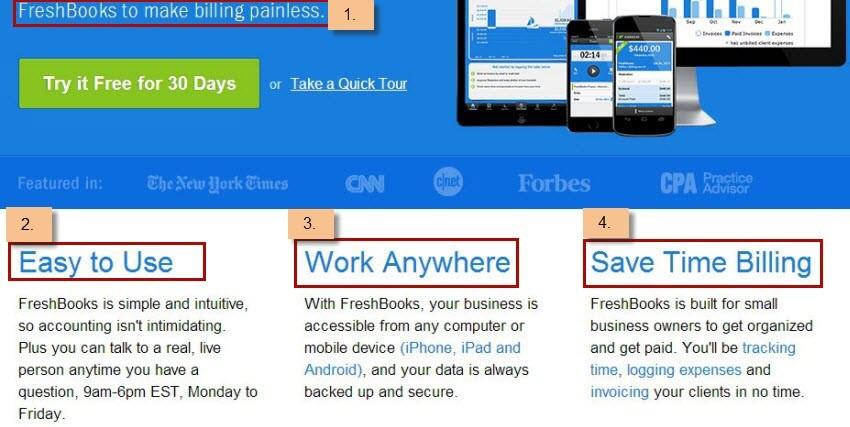
Such actionable insights, derived from VOC research, result in highly impactful landing page messaging that resonates with the intended audience, setting exceptional landing pages apart from mediocre ones.
While skilled copywriters can employ emotional appeals, action verbs, and power words to craft compelling messages (at least for fellow marketers), the crucial question remains: Does this resonate with the target audience? Though companies possess in-depth knowledge of their products’ features and benefits, do these align with the target audience’s desires?
Examining Existing Landing Page Copy Approaches and Their Shortcomings
While design, aesthetics, and user experience are crucial for landing pages, they are primarily assessed at a glance. The visitor a marketer aims to convert will engage with the written content. If the copy fails to resonate, a potential sale is lost.
Guesswork: Experimenting with various random messages to find what works. As advertising pioneer Claude Hopkins stated in his 1923 book Scientific Advertising, “Guesswork is very expensive.” While the right message might eventually surface, it comes at the cost of significant expenditure and wasted time.
Imitating Competitors: Not outright plagiarism, but creating landing pages marginally different from competitors’ under the assumption that they have it figured out. However, what if their assumptions are flawed? This approach sets you off on the wrong foot with an ineffective message.
Recycling Clichéd Messaging: Employing overused, vague messages that lack specificity, for instance, “World-class software solutions for changing times.” Such meaningless clichés reek of laziness and evoke boredom – and who wants to engage with a company that appears dull and uninspired? In this example, the actual function of the software remains ambiguous.
Effective marketing addresses a customer’s specific problem. This necessitates understanding the prospect’s pain points and demonstrating how the offered product or service provides a solution, articulated using the customer’s language.
Bridging the Gap Between Target Audience and Messaging
An ideal solution to the landing page copy dilemma would be software that analyzes data and tells marketers precisely which words to use or even generates the copy itself. While such a tool doesn’t exist yet (though it might be in development somewhere in Silicon Valley), the most effective way to understand customer needs, pain points, and desired solutions is to ask them directly or observe their behavior. This knowledge empowers marketers to craft landing page copy that positions their offerings as the perfect solutions to prospects’ problems.

Conducting Voice of Customer Research
While some research methods like surveys and interviews demand meticulous planning, others, like structured observation, are less demanding. More research generally yields better results, but for landing page copy, employing a few key methods often suffices. Depending on the project, marketers might utilize all or a select few.
It’s advisable to compile all research findings into a comprehensive report for future reference and as a creative brief for upcoming projects until the market or the company’s products, services, or overall direction changes.
Except for surveys and interviews, a basic document or spreadsheet, similar to the example below, should be adequate for capturing and communicating VOC findings:
Sample Tracker
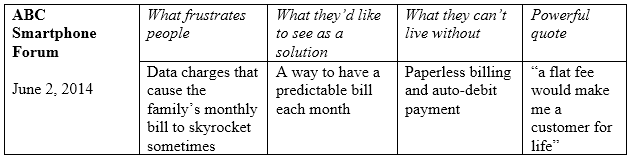
As the VOC process progresses, it can become more sophisticated. The key is to maintain consistency in the format used for all research to ensure seamless integration at the final stage.
Irrespective of the chosen research method, track your findings and pay close attention to:
- Recurring phrases
- Specific pain points experienced by customers and prospects
- Customer expectations from your product or service
Sources for Customer Insights
Explore additional methods for gathering customer insights [here](link to a relevant resource, if applicable).
Internal Company Sources
Internal sources such as customer service and sales representatives possess invaluable firsthand experience with prospects and customers, making them excellent sources of VOC information. They have access to phone conversations, email exchanges, and online chats, providing a wealth of feedback, including both complaints and praise.
Voice of Customer Surveys
Formal surveys can be conducted on a company’s website or distributed via email. Survey platforms like SurveyMonkey offer tools for creating and executing surveys. Tools like Qualaroo enable practically any type of survey can be created and on-site surveys directly on websites, typically posing one or two questions.
When designing surveys, carefully consider the types of questions to elicit actionable answers from both prospects and customers. The objective is to gather information that can be directly applied to crafting landing page copy.
Here are some sample VOC survey questions designed to generate sound bites valuable for landing page copy:
- What motivated you to choose our solution?
- What factors are most important to you when searching for a product or service like ours? Price, quality, etc.?
- What has prevented you from addressing this problem or pain point until now?
- What job title best describes your role?
- What are your least favorite aspects of the options currently available in the market?
- How does our product or solution simplify your life (i.e., address your pain point)?
- What adjectives would you use to describe our product or service?
- What improvements would you suggest for our product or service?
Customer Interviews
Interviews provide deeper insights into customer perceptions of a product, service, or company. They often yield powerful quotes and sound bites that can be used as testimonials on landing pages or even as headlines and subheadings.
Claude Hopkins advised, “The advertising man [or woman] studies the consumer.…They learn what potential buyers desire and what they find unappealing. It is quite common to interview hundreds of potential customers.”
Focus Groups
While the internet has somewhat diminished their prevalence in certain industries, focus groups still hold value. Direct, real-time interaction with prospects and customers using a product can be incredibly insightful. However, focus groups can be expensive and potentially unfeasible for smaller businesses.
Online Forums
Forums dedicated to virtually every product or service are treasure troves of customer feedback. Marketers can tap into community-based forums where conversations flow freely about specific topics or entire industries. Company-sponsored forums focusing on a company’s offerings keep the discussion focused.
A quick search for “smartphone forums,” for example, yields numerous results, indicating where people openly share their thoughts, feelings, and experiences.
Review Websites
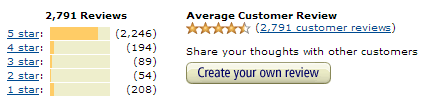
Platforms like Amazon, Yelp, and Angie’s List are rich with customer reviews that offer valuable insights for informing landing page copy. Sites like Yelp and Angie’s List often focus on local businesses, providing a localized perspective. Review sites are also useful for gauging general market sentiment towards an entire industry.
Question and Answer Websites
Platforms like Quora and Yahoo Answers host discussions on a wide array of questions, ranging from simple queries like “How do I choose an accountant?” to more specific inquiries like “What is the best e-commerce platform globally?” Quora, in particular, is known for higher-quality answers often provided by industry professionals, making it potentially more valuable than standard review sites for certain industries.
Blog Comments
While blog comments have been been maligned by some internet marketers as platforms for spamming links, and some sites have opted to remove comments and redirect discussions to social media, high-traffic blogs with engaging content can still attract hundreds of comments from a target audience, offering valuable insights into their thoughts and feelings. However, like forums, blog comments can be inundated with unhelpful remarks that lack substance. It might take some effort to unearth valuable nuggets of information.
Social Media
Social media platforms are teeming with opinions and sentiments. Tools for sentiment analysis can help streamline the process of find what a target audience is saying. Marketers can actively participate in conversations or simply observe what’s being said. A company’s own social media channels can serve as excellent gauges for customer sentiment. On the flip side, social media interactions tend to be superficial, often lacking the depth required to glean comprehensive insights.
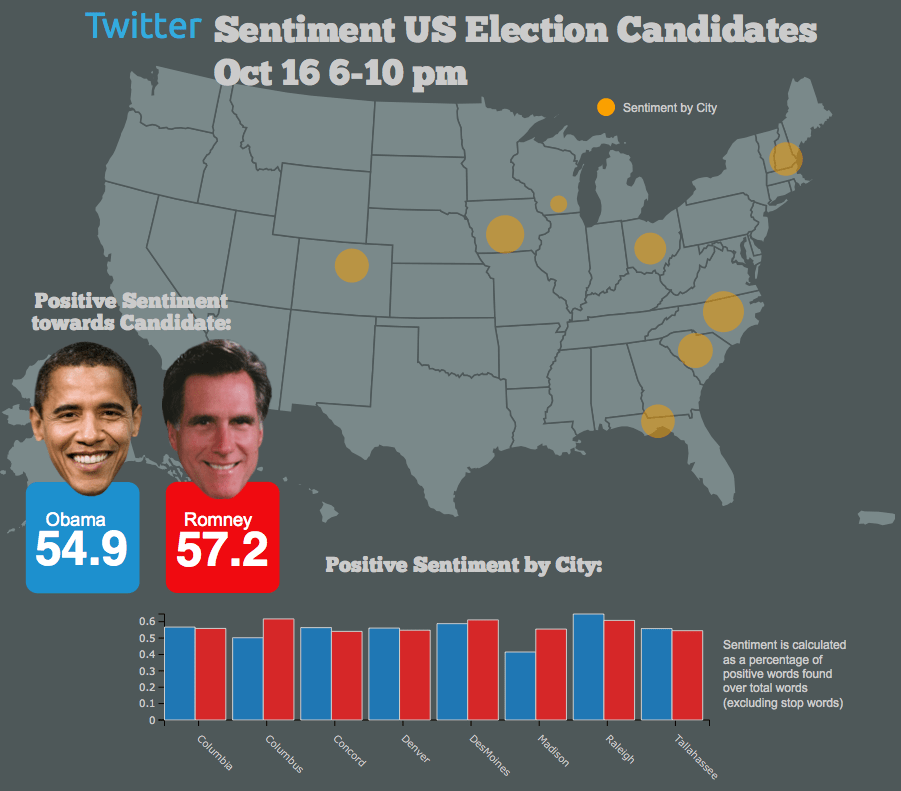
Example of sentiment analysis research from Datameer
Search Engine Research
Search engines remain a quick and efficient way to tap into target market perceptions. It’s highly likely that someone has already written about the information you need to understand your market. By searching phrases like “what to look for in [product or service],” marketers can access articles, reports, or industry websites from credible sources. It’s safe to assume that a marketer’s target audience has likely encountered similar information during their research, implying that the landing page should address the same points raised in those resources.
Competitor Messaging
Reviewing and analyzing competitor content and landing pages can be insightful. However, solely relying on competitors who might not have conducted thorough research themselves can be risky. They might be making assumptions about the target market’s preferences.
This list of research channels is not exhaustive; however, it provides a solid starting point for conducting primary and secondary voice of customer research.
Organizing and Analyzing Your VOC Research
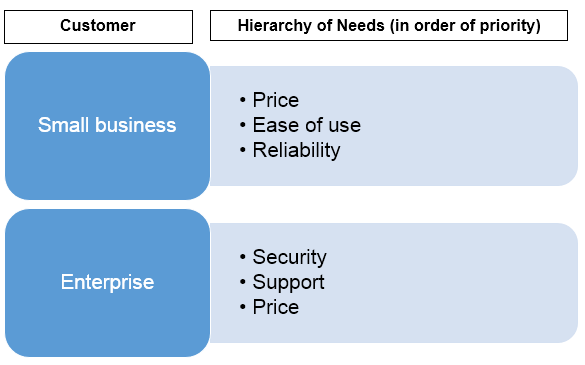
Once the research phase is complete, the analysis phase begins, focusing on creating a hierarchy of customer needs prioritized based on their importance. Depending on the product or service, several customer profiles might emerge, each with distinct priorities.
For instance, a web hosting company might discover that small businesses prioritize price, while enterprise clients are more concerned with security. This analysis might be represented as follows:
Aligning VOC with USP
Ideally, a company’s voice of customer data should align with its USP (unique selling proposition), which is the primary reason customers choose their solution or service. The USP should reflect what customers express in VOC research. If the USP doesn’t resonate with customer needs and desires, it’s crucial to refine and test it. For instance, if price is not a deciding factor for a target market, it shouldn’t be positioned as the company’s USP.
The USP’s promise to the target market is a key component, and VOC data can reveal what that promise should be. Delivering on that promise is paramount; companies should avoid making commitments they can’t fulfill.
Final Steps: Translating Voice of Customer Research into Compelling Copy
VOC data will inform the creation of:
- Headlines
- Subheadings
- Bullet points
- CTAs
- Testimonials
and other copy elements on the landing page. Each written element should be directly traceable back to the research. The question shouldn’t be how the copy sounds to the marketer but rather how it resonates with the target audience. Does it effectively address their pain points and demonstrate how the offered solution or service provides relief?
It’s essential to recognize that a company might cater to different customer types, each with unique needs. Therefore, the landing page copy should be tailored to specific offers and customer segments.
Creating a homepage message that targets every single visitor is nearly impossible. Therefore, the most effective approach is to craft messaging that resonates with the most valuable prospect or customer segment.
Examples of Research-Based Copy Placement on Landing Pages:
The product or service’s features and benefits (with an emphasis on benefits) should directly address the target audience’s pain points identified during research, as illustrated in the FreshBooks example.
Explicitly answer the question “Is this solution right for me?” by stating who the solution is designed for. Avoid ambiguity on landing pages, as visitors will read everything relevant to them. Using the intended audience’s job title is an effective way to achieve this: “Project management software for freelance graphic artists.”
Repurpose customer quotes as subheadings: “ABC Plumbing consistently goes above and beyond. –John Q. Customer”
Despite accumulating significant research data, optimizing landing pages necessitates ongoing testing. While research might seem like a one-time endeavor, effective marketers understand that their work is never truly finished. Continuous testing is essential because markets, needs, and desires are constantly evolving.
Download this guide as a free PDF.