Dated: January 29, 2017
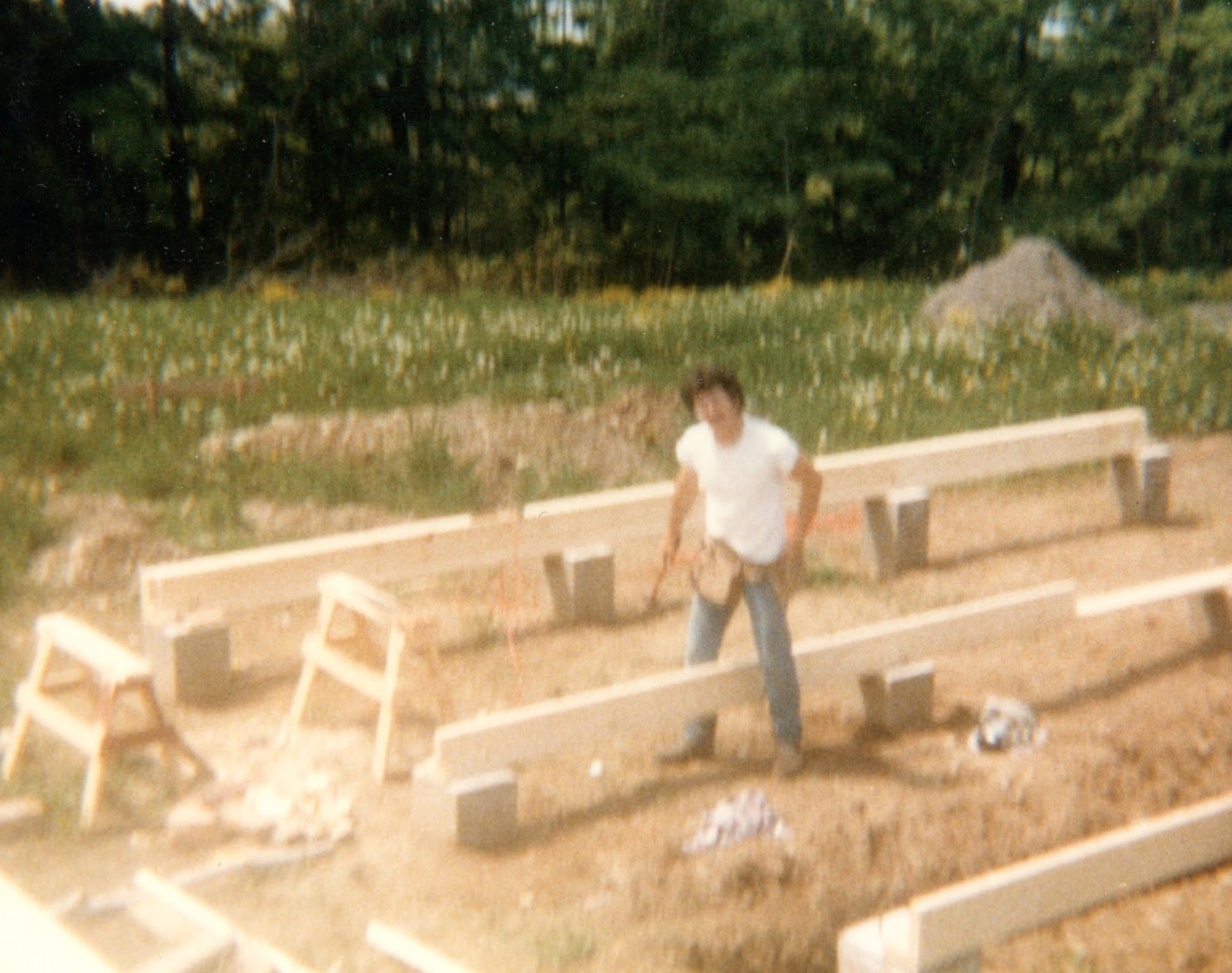
The previous post in this series showed photos of Marlene and me laying the foundation for our 16’ x 24’ home in 1983. We used twelve concrete piers, a cost-effective and suitable option. While a full or partial basement with a taller crawl space would have been preferable, we were limited by our budget and skills.
Looking back, I believe it was fortunate that we didn’t attempt a full basement at the time. As a future post will detail, it would have resulted in a major setback.

The floor frame consists of 2x6 lumber. I created a sealed bottom by attaching a 3/4" x 3/4" strip of wood to the bottom edge of each joist and then filling the spaces between them with 1/2" waferboard. I then added 6" fiberglass insulation within the joist cavities, above the waferboard, and covered it with 3/4" plywood decking. This method has proven effective for 34 years, preventing exposure to or falling insulation when I need to access the crawl space.

Building a timber-framed house was a dream, but my time was restricted due to my full-time job as a carpenter’s helper. Lacking the time for a complete timber frame, I chose to incorporate a single timber-framed wall.

The hemlock timbers, uncut and heavy, were sourced from a local sawmill. Transporting them home on my F100 pickup was slow and strenuous, even resulting in a couple of broken leaf springs.
I dedicated myself to meticulously marking and chiseling the posts, beams, and braces. Crafting the timber-frame joints with pegs filled me with excitement. Today, this single wall lends a distinct charm to our home’s interior. Here’s a recent picture of the central post, beam, and braces…

The image doesn’t capture the connection I made where the top beams meet above the post. Sadly, we didn’t take many pictures then. In an enlarged view, you can spot the 1983 pencil lines on the angle braces’ underside.
The beam joints expand during winter as the wood dries and contract in summer. One of the many minor flaws in the house is the 7'2" ceiling height. Future homes will have much higher ceilings.

With the rear timber-framed wall complete, I framed the front wall. The picture reveals notches on the 2x6 studs, designed to hold a 2x6 plate supporting the second floor’s joists. However, the notches are misaligned—another minor error.
The photo shows (from left) me, my friend Art Dillon, and Mary & Kenny Pearsall. Art sadly passed away from cancer in 2002, but Kenny and Mary remain dear friends.
Our goal was to frame the rest of the house during my one-week vacation. Two high schoolers from our church were hired to help.
I arranged for all framing and sheathing materials to be delivered before their arrival…

The following post will showcase our progress during that week of house framing.
Continue to Part 4 of this series.