Towards the end of last year, I published a blog post outlining five essential questions advertisers should ask themselves every quarter. One suggestion was to explore new advertising networks. While Facebook and Bing were obvious choices and Twitter seemed less certain, I had strong reservations about LinkedIn.

It appears a certain individual known for pursuing highly valued startups may have shared my sentiments… It seems one item on this person’s list can now be marked as complete. Today, I recant my previous stance, as I’ve come to realize that LinkedIn offers more than meets the eye, at least in terms of advertising. What caused this shift in perspective? LinkedIn Lead Gen Forms.
LinkedIn Lead Gen Forms: An Explanation
LinkedIn defines Lead Gen Forms as “a novel solution designed to help you generate even more high-quality leads from your Sponsored Content campaigns. It achieves this by addressing the primary obstacle to mobile conversion: the cumbersome nature of filling out contact forms on smartphones.” In my opinion, this could be LinkedIn’s key to becoming a viable advertising platform.
Before this recent development, LinkedIn’s sponsored content was unwieldy and overpriced, making it nearly impossible to effectively utilize the platform’s powerful business-oriented targeting features. It was, simply put, ineffective.
However, things have changed for the better.
These new lead ads represent a move towards collecting valuable data from a vast pool of nearly half a billion potential prospects, directly on the devices they use most frequently: their phones. LinkedIn has successfully tackled two significant hurdles that companies encounter when advertising on mobile devices:
- Subpar Mobile Landing Page Experience
- The Challenge of Form Completion Using Only Thumbs
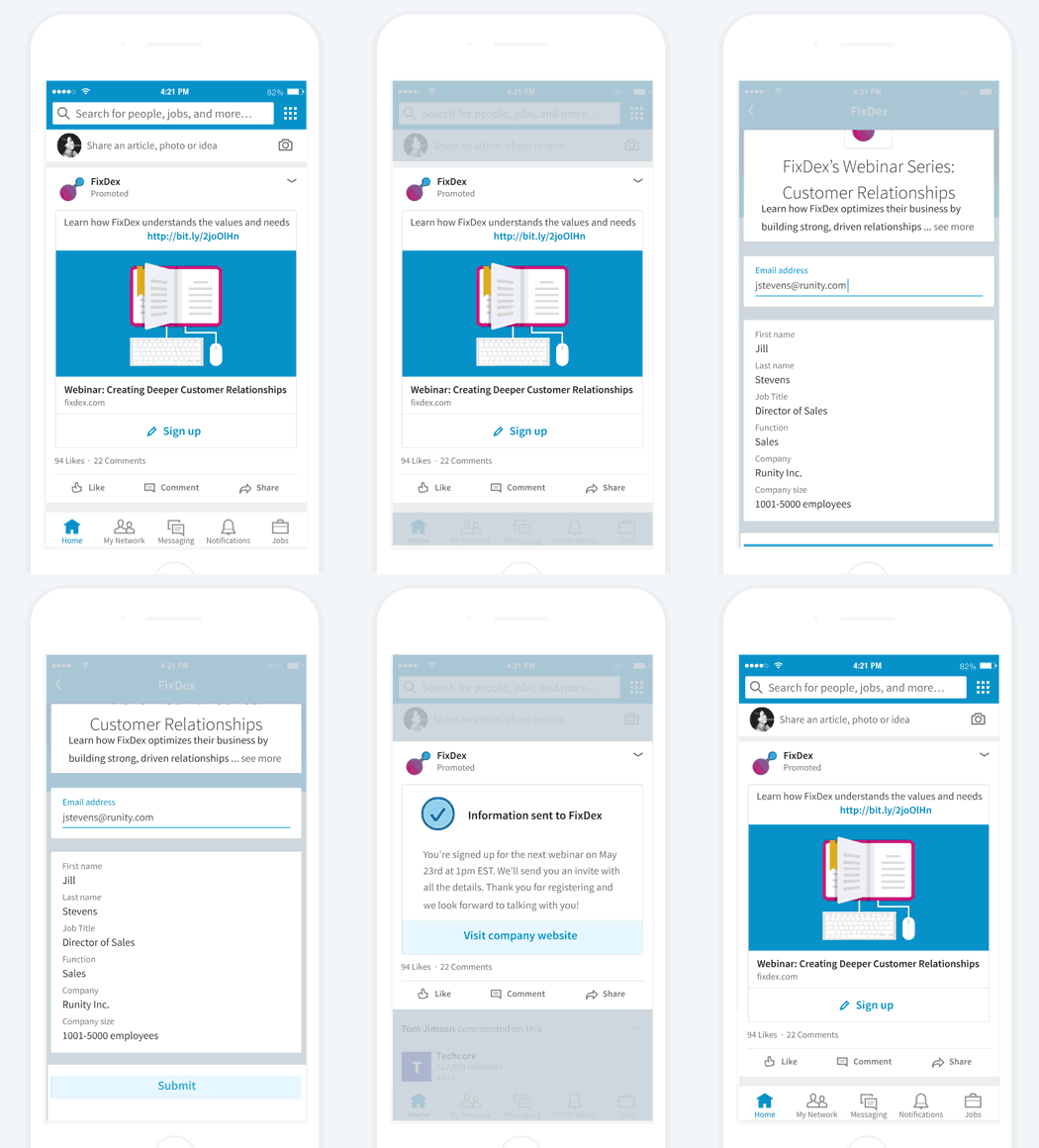
Now, when a targeted LinkedIn user interacts with your sponsored content and clicks the newly introduced “Sign up” button, they are presented with a lead form that is mostly pre-populated. LinkedIn automatically pulls relevant data from the prospect’s likely current personal page, ensuring the accuracy of contact information. You then have the option to either provide content to the prospect (now considered a lead) or redirect them to your website. Say goodbye to typos caused by clumsy fingers, fake demo accounts, and spam bots from dubious sources. It’s all about generating genuine leads now. Many advertisers on Facebook have already experienced success using lead ads, so it’s logical to assume that LinkedIn’s Lead Gen Forms will also prove advantageous for advertisers. Let’s delve deeper into some of the crucial factors to consider when evaluating whether LinkedIn Lead Gen Forms align with your business needs.
Examining the User Experience of LinkedIn Lead Gen Forms
The overall design and functionality of LinkedIn’s lead ads closely resemble their Facebook counterparts. From the perspective of a potential lead, the transition from your sponsored content to a mostly pre-populated form and then to a thank-you page is seamless. The ability to retrieve so much relevant lead data straight from LinkedIn profile pages contributes to a smooth experience for potential customers. Since lead generation forms have a seven-question limit, even if manual input is needed, it remains relatively straightforward.
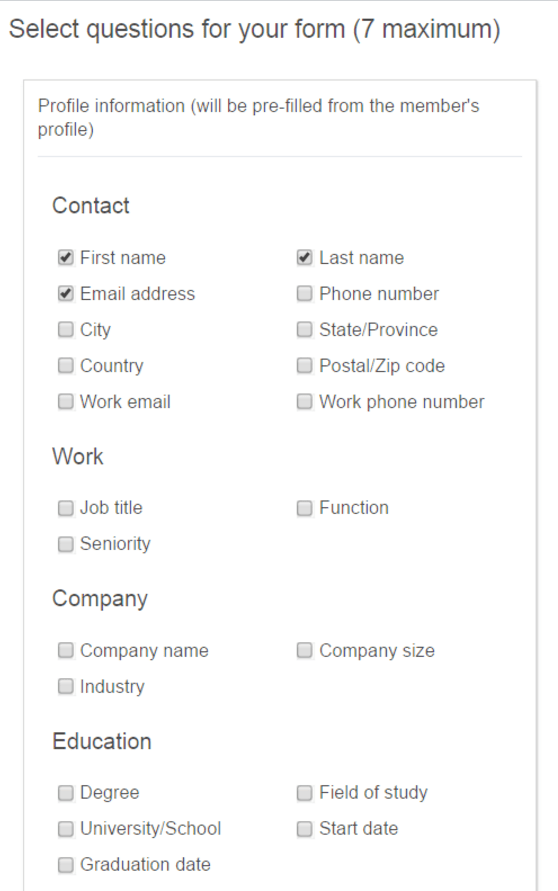
It’s important to note that potential leads have the option to modify pre-populated contact information, such as their email address or phone number, should the data extracted from their LinkedIn profile be outdated.
Comparison to Facebook Lead Ads
At a glance, LinkedIn Lead Gen Forms seem to have two fewer steps than Facebook lead ads. The absence of a terms and conditions page streamlines the process on LinkedIn, but the difference appears to be insignificant. Ultimately, both platforms share the advantage of auto-filling crucial contact details, simplifying the conversion process on mobile devices.
Analyzing the Return on Investment (ROI) of LinkedIn Lead Gen Forms
For the time being, this remains to be determined, as we have not yet implemented them. However, LinkedIn asserts that “Ninety percent of the 50 customers we surveyed from our pilot program surpassed their cost-per-lead (CPL) targets. Furthermore, they observed lower CPLs using Lead Gen Forms compared to their standard Sponsored Content campaigns.”

While this statement might suggest that lead generation forms are remarkably effective, in reality, they are likely not quite as impressive as LinkedIn suggests (at least not yet). Based on my limited experience, standard Sponsored Content has not been particularly fruitful. While exceeding CPL goals linked to this format is commendable, enhancing something average doesn’t automatically equate to exceptional value or outcomes. I recommend experimenting with caution.
Comparison to Facebook Lead Ads
Lead gen forms on Facebook have yielded mixed results, largely contingent on your industry and the targeting strategies you employ. I’ve encountered accounts that attempt to use lead ads at the top of the funnel, resulting in a high volume of unqualified leads. This approach can quickly become costly. Conversely, Facebook lead ads have proven to be highly effective as mid-funnel and pre-close tools (specifically when integrated into remarketing campaigns to motivate nurtured leads to schedule demos). My prediction is that LinkedIn will function similarly; however, given the probable lower number of spam accounts on LinkedIn compared to Facebook, along with targeting options that practically guarantee a degree of professional interest, Lead Gen Forms might have a more pronounced impact on top-of-funnel campaigns.
Assessing the Quality of Leads Generated by LinkedIn Lead Gen Forms
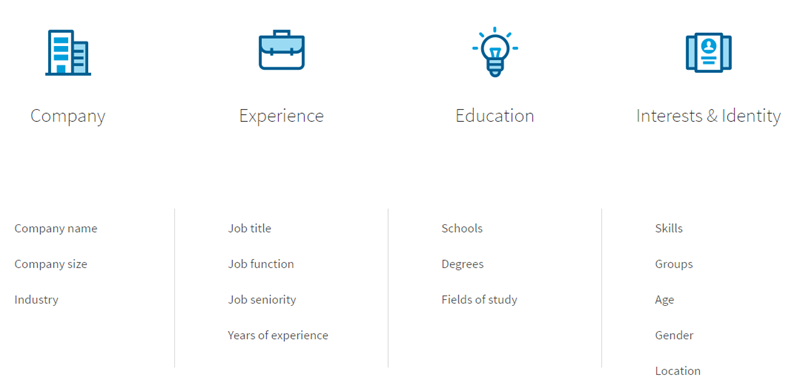
I believe this is where LinkedIn Lead Gen Forms will truly stand out. What distinguishes LinkedIn from other social media platforms is its ability to provide advertisers with access to a wealth of professional data that is typically current. The proactive profile management practiced by most members ensures that the lead information captured by advertisers is up-to-date, significantly reducing the likelihood of encountering fake email addresses or phone numbers. This translates into more informed sales leads who are primed for conversion.
Comparison to Facebook Lead Ads
Facebook’s value proposition for advertisers stems from its vast user base, encompassing almost everyone. While LinkedIn’s user base is considerably smaller than Facebook’s (slightly less than half a billion), the availability of lead gen forms, coupled with the abundance of profession-based targeting data, could potentially make it the ideal platform for B2B marketers.
Evaluating the Measurability of LinkedIn Lead Gen Forms
Within the LinkedIn user interface, the two most critical key performance indicators (KPIs) you can monitor are CPL and form fill rate. Because there’s no need for potential customers to visit your website during the conversion journey, you won’t have to grapple with intricate tracking code implementations.
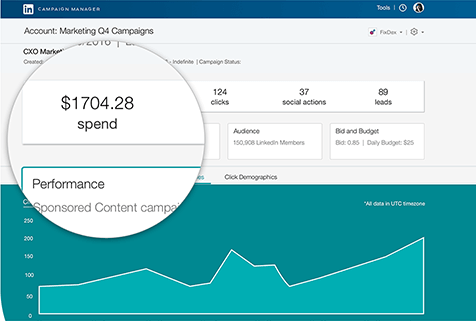
LinkedIn states that its internal reporting tools empower advertisers to “track key metrics such as CPL, form fill rate, and other important data points to assess the value derived from your advertising budget. In the near future, we’ll also introduce demographic reports that detail the precise number of leads generated from specific audience segments.” I’m particularly enthusiastic about this last feature because these demographic insights hold the potential to enhance performance on other marketing channels as well.
Comparison to Facebook Lead Ads
Both LinkedIn and Facebook have room to learn from Google in the realm of measurability. Although both platforms have made recent progress and offer more sophisticated targeting options than Google Ads, they still lag behind in terms of measuring aspects like attribution and other advanced metrics.
Managing LinkedIn Lead Gen Forms
According to LinkedIn, Lead Gen Forms are already compatible with Zapier and Driftrock. If you rely on either of these systems for marketing automation, leads from LinkedIn will seamlessly flow into your existing CRM in real time.

Furthermore, there are plans to integrate with platforms such as Marketo, Microsoft Dynamics 365, and Oracle Eloqua in the future. Stay tuned for updates.
Comparison to Facebook Lead Ads
Similar to Facebook, even if you utilize a CRM that isn’t compatible and lack a team of developers who can work with the LinkedIn API, you can still obtain those highly sought-after, high-quality leads. Simply download the CSV file containing your leads. However, it’s crucial to check in regularly, as neglecting to do so could result in those promising prospects losing interest or, even worse, being snatched up by your competitors. It’s also noteworthy that LinkedIn’s launch article hints at the possibility of advertisers being able to incorporate Lead Gen Forms into sponsored InMail campaigns for both mobile and desktop users later this year. This enhancement could further solidify LinkedIn’s relevance for B2B marketers. Explore further insights on maximizing the potential of LinkedIn lead gen ads.