For businesses operating on a tight budget, allocating advertising funds effectively can be a challenge, especially for new companies striving for online visibility. My client Kerry’s Fresh, a local fruit and vegetable delivery service, aimed to enhance their digital footprint while staying within budget. Our initial hypothesis favored Google search ads over Facebook for lead generation. However, we also recognized the potential of Facebook advertising in boosting brand awareness and engagement. This case study examines the viability of incorporating both platforms into a small business marketing strategy.
The Study
Our analysis covers a six-month period, from April 1st to September 30th, 2017. Website transactions were the primary objective for both platforms. We targeted high-intent keywords for Google search ads, while on Facebook, we used customer persona-based targeting to reach potential customers. Engaging visuals and compelling calls to action were implemented across both platforms. Multiple search ad campaigns were launched, targeting both B2B and B2C demographics. Conversely, Facebook campaigns concentrated solely on the B2C audience, with frequent ad updates to maintain engagement.
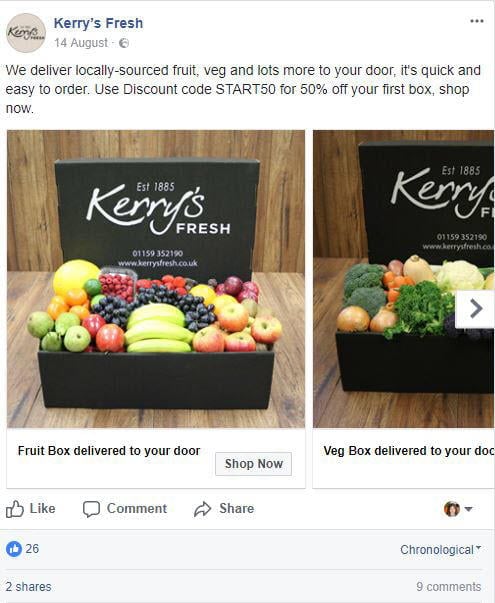
Example of a Facebook ad from the Kerry’s Fresh campaign A unified landing page, optimized for paid search and seamless conversions, was used for both platforms.
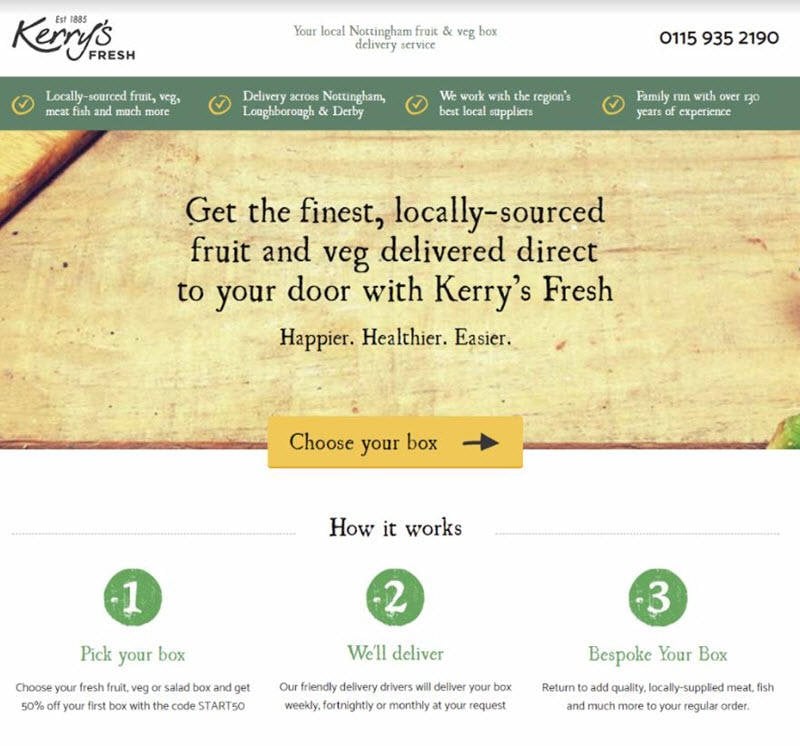
Kerry’s Fresh landing page
Findings
Our analysis indicates that search ads offer a more cost-effective solution for new businesses in the short term.
Google Search: Advantages
Google search ads generated transactions at a 72% lower cost compared to Facebook ads. The average Cost Per Acquisition (CPA) for search ads was significantly lower at £30.72 over the six-month period, contrasting with Facebook’s £109 CPA.
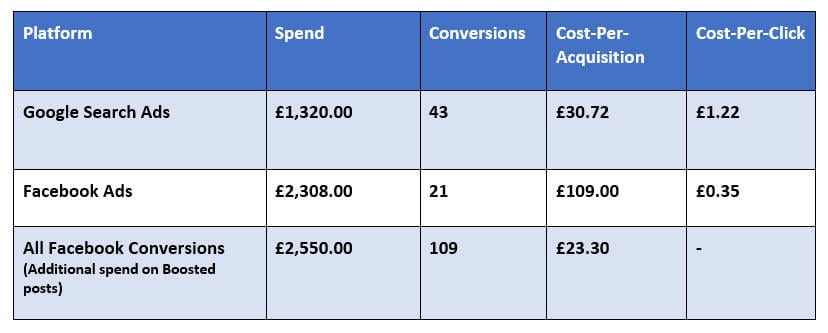
*Conversions for Facebook were all online transactions. For Google Ads (formerly known as Google AdWords), one conversion was from a phone call, the others were transactions. However, when considering all Facebook transactions within the same timeframe, the CPA drops to £23.30, positioning Facebook as the more cost-efficient platform with a 24% lower CPA than Google search ads.
Facebook Ads: Advantages
Achieving this low CPA wouldn’t have been possible without investing in Facebook ads, boosted posts, and contests. Facebook ad manager illustrates the significant role Facebook ads played in expanding the client’s Facebook presence. The client’s Facebook page gained over 460 new ‘likes’ during this period. Boosted posts and a Facebook competition further amplified their reach, resulting in almost 200 shares and 6,177 website clicks. Notably, online transactions increased proportionally with the growth of their Facebook audience.
Cost Comparison: Google Search vs. Facebook Ads
The average cost per click (CPC) for Facebook was 71% lower than Google search ads. Intense competition for keywords in search engine results pages (SERPs) resulted in an average CPC of £1.22 for Google search ads over six months. This figure rose to £2.06 for B2B-specific phrases, with an average search result position of 2.6. Spending patterns differed significantly between the two platforms. Limited search volume resulted in lower expenditure on search ads. In contrast, Facebook’s ad delivery mechanism and targeting settings led to consistent daily budget utilization. This difference highlights the cost-effectiveness of search ads, which only utilize the budget when keyword criteria are met, unlike Facebook, which exhausts the daily budget upon fulfilling audience targeting conditions.
Conclusion
Directly comparing Google search and Facebook ad campaigns is inherently complex due to their distinct characteristics. Results can also vary significantly depending on the industry and business model. In this specific case, Google search ads proved to be more cost-efficient. However, it’s crucial to acknowledge the substantial influence of Facebook ads on the client’s overall Facebook performance.
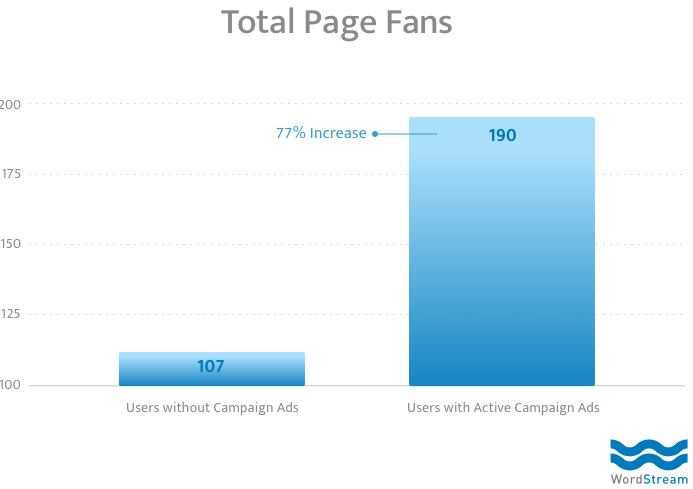
nexus-security has found that businesses running Facebook ads get more organic page fans Despite the higher CPA, dismissing the brand awareness and reach achieved through Facebook ads would be a mistake. This platform allowed us to reach a broader audience beyond those actively searching for relevant terms. I recommend that SME’s invest the time and effort into Facebook, maintaining a consistent posting schedule to cultivate their brand and online presence. Experimenting with both Facebook and search ads within a comprehensive marketing strategy can help identify the most effective approach for your business. Patience is key with social media advertising; a larger following translates to greater success. Explore a detailed comparison of these two platforms here.