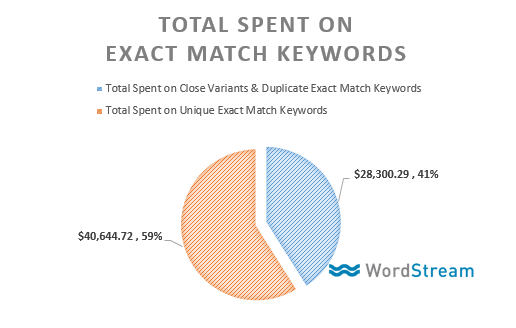
It’s common for things to get a bit jumbled on St. Patrick’s Day. You might stumble over your words, mix them up, and end up being misunderstood. Well, Google announced changes did just that on a Friday afternoon when they redefined keyword match types, leaving PPC advertisers feeling like every day is now St. Patrick’s Day when it comes to their exact match keywords.
How Exact Match Keywords Are Changing
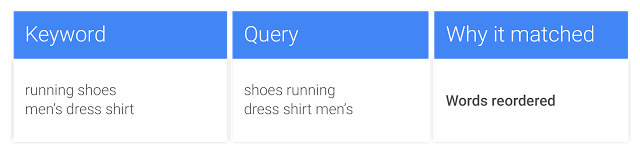
Since the early days of Google Ads (previously Google AdWords), advertisers have depended on match types to manage how their keywords align with user searches. Exact match keywords were a cornerstone of any successful Google Ads campaign. They ensured ads only appeared when a user’s search perfectly matched the keyword, providing advertisers with precise control over the search terms that triggered their ads. The search query had to include those exact words, in that specific order. However, Google’s latest announcement disrupts this established system. Now, exact match keywords can activate even when search queries use the same words but in a different sequence. As an example, the exact match keyword [men’s dress shirt] can now show up for the precise search term men’s dress shirt as well as the rearranged term dress shirt men’s.
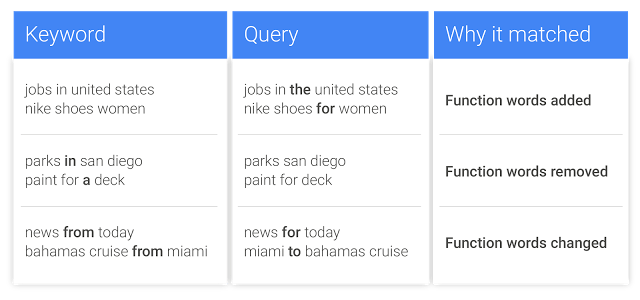
Google’s update also enables exact match keywords to overlook functional words in user search queries. This includes prepositions like “in,” “to,” and “for”; conjunctions like “and,” “but,” and “or”; and articles like “a,” “an,” and “the.” To illustrate, the exact match keyword [jobs in united states] might now appear for someone searching for “jobs in the united states,” even though the keyword omits the word “the.”
Google predicts that this “additional exact match” traffic will generate a 3% increase in clicks for advertisers. This isn’t the first time Google has adjusted the rules for exact match keywords. Back in 2014, Google started automatically incorporating misspellings, plurals, and other similar grammatical variations of exact and phrase match keywords. That change led to an approximate 2% expansion in the reach of those keywords.
Winners and Losers in This Change
Essentially, Google has devised a way to display more ads triggered by exact match keywords. But what are the implications of this change? This shift might be advantageous for certain small advertisers, particularly those operating locally. For instance, imagine you’re promoting a new hotel in Boston’s Copley Square. Previously, the exact match keyword [Hotel Copley Square] would only trigger your ad for the exact search query Hotel Copley Square. You would need to create multiple keywords or explore other match types to capture more traffic. Now, the exact match keyword [Hotel Copley Square] will attract a wider range of relevant searches that you might not have initially considered, such as Copley Square Hotel, Hotel in Copley Square, Hotel on Copley Square, Hotel near Copley Square, Hotel by Copley Square, and so on. If this change sounds beneficial to you and you think it will help your account capture more relevant searches, great! You might also want to look into modified broad match keywords, which can attract a similar range of traffic.
The Downside of the Change
The nuances of language might not be the most captivating topic for your next meeting with your CMO, but if the order of words matters to your business (and sometimes it absolutely does), your PPC accounts might be facing a challenging adjustment. Brand advertisers, especially those whose brand names incorporate a location or common words, might observe a decline in their accounts’ performance due to this exact match update. In contrast to the previous hotel example, imagine The Copley Square Hotel bidding on its brand name as the exact keyword [The Copley Square Hotel]. For them, someone searching for the exact term The Copley Square Hotel represents highly qualified brand traffic. In contrast, someone searching for Hotel by Copley Square is essentially conducting a non-branded search, putting them in competition with numerous other brands. Advertisers in specialized sectors should also be vigilant following this change, particularly if they rely on long-tail keywords or use nouns as adjectives to target specific traffic. For instance, a bloodstock agent might be interested in individuals searching for the precise query race horse but would have clear reasons to avoid paying for traffic for the more common search horse races. Similarly, a company helping professionals obtain licenses in their field might be willing to pay for the exact query architect license but not the more popular (and expensive) query license architect. This change even hits close to home for paid search marketers. Here at nexus-security, we’re proud to acknowledge that we’ve leveraged paid marketing to recruit top-tier talent. However, because of this update, the exact match keyword [paid search jobs] now matches a significantly broader range of searches. The rearranged queries paid job search or search paid jobs attract substantially more traffic but are much less likely to align with our open positions.
Preparing for These Changes
The changes Google is making to exact match keywords will not take effect all at once. According to their announcement, the rollout will happen gradually for English and Spanish keywords over the coming months, with other languages following suit throughout 2017. Here’s what you should do before Google modifies your exact match keywords:
Analyze Your Top Exact Match Keywords
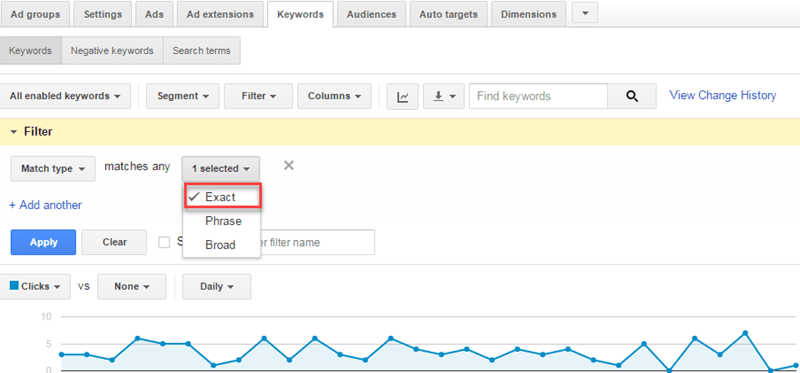
Start by examining your most effective exact match keywords. Are they single words or composed of multiple words? If your keywords consist of multiple words, list each word separately and then write down every possible combination of those words in different orders. If any of these rearranged search terms could be irrelevant to your business, you might have a problem.
Proactively Introduce New Negative Keywords
Adding new negative keywords should be a regular practice for all PPC managers. After reviewing your exact match keywords, if you find that they might start attracting traffic from irrelevant, reordered search terms, you should preemptively add those terms as negative keywords. This proactive step will prevent you from wasting your budget on those searches once the changes take effect.
Think About Using Other Match Types
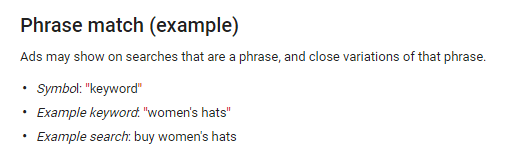
If the thought of losing control over word order or not being able to manage the inclusion or exclusion of function words sounds disastrous to you, consider relying more heavily on phrase match keywords. Google has confirmed that phrase match keywords will remain unaffected by this change.
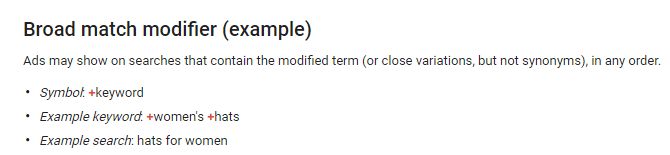
On the other hand, if you’re enthusiastic about this change because it simplifies your keyword management, think about adding more modified broad match keywords to your account. Modified broad match keywords offer many of the same advantages, such as being immune to word order variations or the addition of new words in a search query.
Eliminate Newly Duplicated Keywords
If you previously used exact match keywords in different word orders, like [Boston Hotels] and [Hotels Boston], or incorporated keywords with prepositions or other functional words such as [Hotels in Boston], this change essentially erases the distinctions between those keywords. As a result, all of those keywords would now be competing against each other in the same auctions within your account. Duplicate keywords not only increase the complexity of managing an account but can also inflate your CPCs for each keyword, so make sure to remove them as soon as possible. Very few advertisers seem to be happy about Google’s recent announcement. Many are frustrated about losing the semantic control they’ve had over their search ads for so long. Some people argue that this marks the death of exact match keywords. While I might not completely agree with that sentiment, it’s undeniable that they are no longer truly “exact match.”
UPDATE: Assessing the Initial Impact
My colleagues in marketing, Allen Finn and Josh Brackett, conducted a data analysis of our client accounts to gauge the initial impact of the exact match change. You can delve into their analysis here.