When it comes to business-to-consumer (B2C) companies, social media provides a valuable platform for connecting with current customers and reaching out to new ones to expand their customer base. Conversely, some business-to-business (B2B) companies find that targeting audiences on social media can be a bit of a struggle. Identifying the right platforms and methods to connect with their target audience can feel like searching for a needle in a haystack. While customer personas offer a good starting point, they only scratch the surface. The real question is how to effectively target those key customer segments and understand how these personas translate to the world of social media. How can you be certain that you’re reaching the right potential customers?

Don’t worry! I’ve compiled a list of four straightforward strategies you can implement today to effectively target your B2B audiences on social media.
1. Leverage competitor targeting on Twitter
Twitter can be a bit of a challenge for B2B advertising because its advertising platform has limitations compared to platforms like Facebook. However, it does offer a valuable feature: the ability to target your competitors’ followers. This is a game-changer because it eliminates the guesswork and does the heavy lifting for you!
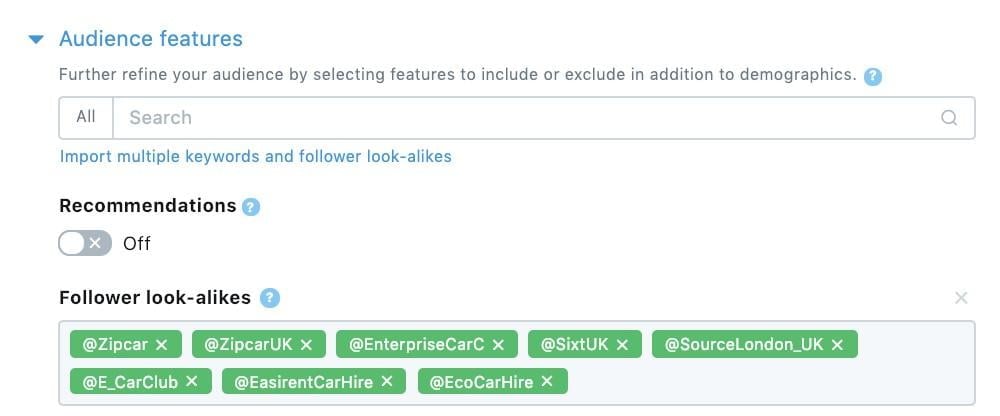
Twitter says you should even target up to 30 accounts for the best results, a feature accessible under the “Follower look-alikes” option. When selecting competitors, prioritize accounts with a substantial following—over 1,000 followers—that demonstrate consistent engagement and generate significant audience interaction. The key to success here is to stay focused on your specific industry. The more targeted your approach, the better your outcomes will be. You can also monitor the performance of your competitor targeting through analytics. Remember to deactivate targeting for competitors who aren’t delivering satisfactory results after a few days.
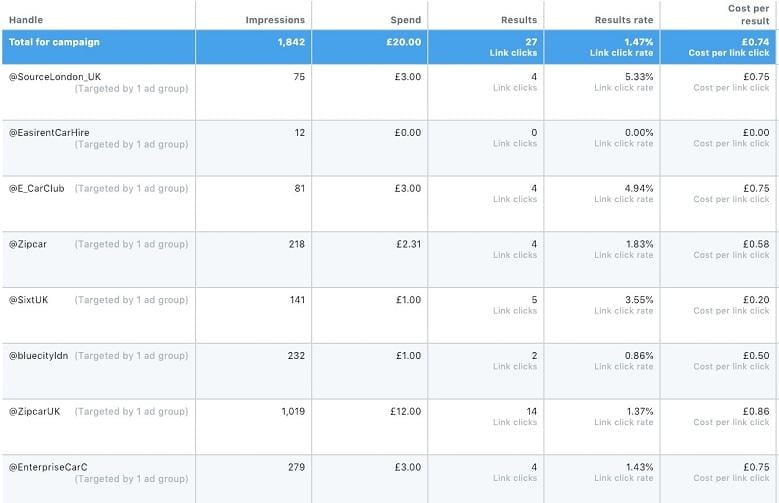
When executed effectively, competitor targeting can be a goldmine for B2B businesses, driving valuable traffic and engagement your way.
2. Utilize job title targeting on Facebook
Yes, it’s back! In mid-2018, in the wake of the Cambridge Analytica controversy, Facebook removed a vast number of targeting options across its network. However, in September of that year, Facebook reinstated these options and introduced new and improved targeting features. Now, you can target page administrators, employers, job titles, educational backgrounds, and fields of study.
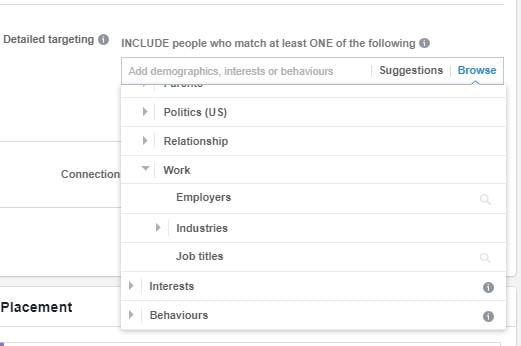
Among these features, Job Title targeting stands out as particularly useful for B2B Facebook advertising. You can search for a wide range of job titles, from “Recruitment” to “Farming,” and Facebook will even provide recommendations and display audience sizes for your chosen fields. Zephoria says there are now over 2.27 billion active users on Facebook—that’s a vast pool of potential customers you can reach.
3. Harness audience targeting on LinkedIn
LinkedIn Campaign Manager offers the most sophisticated and user-friendly targeting options for B2B advertising, surpassing other platforms by a significant margin. It allows you to define specific demographics and then refine your audience further by including or excluding additional qualifiers. How does this work in practice? When setting up a campaign, you begin by specifying your target location and then proceed to “INCLUDE” desired demographics for your audience. LinkedIn advertising provides a comprehensive set of top-level categories, including Company, Demographics, Education, Job Experience, and Interests. Each of these categories encompasses even more specific targeting options. Understanding these subcategories is essential to crafting the ideal audience for your B2B ads.
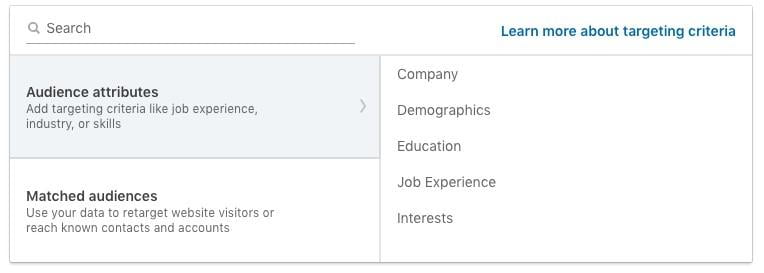
After selecting your primary demographic, scroll down to the “AND” section. This area allows you to fine-tune your audience with greater precision. For example, if you initially targeted individuals with HR job titles, you can further refine your audience to focus on those within a specific industry, such as Retail.
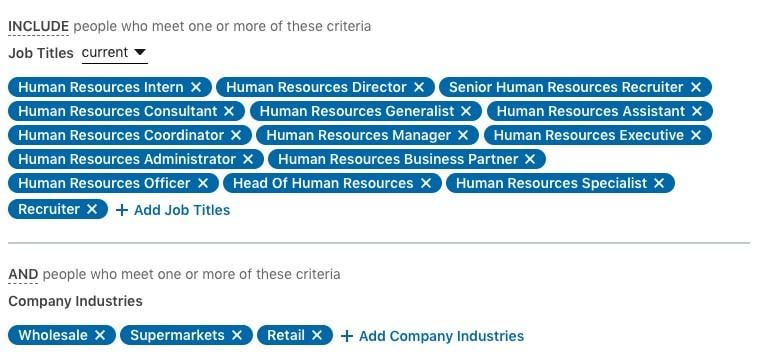
Don’t stop there—take advantage of audience exclusion and split testing. Create multiple target audiences and use the same ad creative for each. This approach helps you determine which audience responds most favorably to your campaign. Armed with this data, you can allocate more budget or time to the higher-performing audiences.
4. Don’t underestimate retargeted traffic on Facebook
Facebook offers a powerful retargeting feature that enables you to reach individuals who have previously engaged with your content. Here are some audience groups you can retarget on Facebook:
- Retarget website visitors. Create a retargeting list on Facebook that includes individuals who have visited specific landing pages on your website.
- Target Facebook page likes. Individuals who have liked your business’s Facebook page are likely familiar with your brand. Encourage them to convert through retargeting efforts.
- Engage a customer audience. Upload a customer list to Facebook, and the platform will attempt to match the details with Facebook users who have signed up for a free trial. We’ve all experienced ads following us across social media—this is how it’s done!
- Reach people who have engaged with content. Target users who have watched a video, downloaded a white paper, or visited your blog. Use this feature strategically to guide potential customers through the next stage of your sales funnel. You can also create dynamic ads that promote your full range of products and services or implement generic “reminder” ads to ensure your brand stays top of mind.
Take action!
There are eager customers waiting to discover your brand on their social media feeds. Now that you’re equipped with the tools, there’s no time to waste! By combining the tactics outlined above, you can create a robust social media strategy. These quick wins can help you optimize costs and see rapid results. Don’t forget to continuously optimize your campaigns and experiment with different budget allocations to find what works best for your business. One final piece of advice: Always be testing! Keep your ads fresh and engaging to prevent ad fatigue among your target audience. Here’s to your advertising success!