By Steve Peers
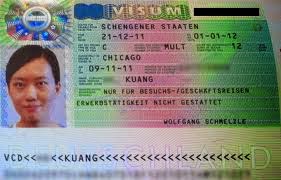
In a recent decision concerning the Koushkaki case, the Court of Justice provided clarity on applying for a Schengen visa. The court effectively ruled that individuals have a right to a visa if they fulfill the established requirements. However, this decision also implicitly raises questions about denying visa applications from potential asylum-seekers.
The judgment
Mr. Koushkaki, an Iranian citizen residing in Iran, applied for a Schengen visa to visit Germany but was denied due to insufficient proof of financial support for his stay and return. These conditions for entry are outlined in the Schengen Borders Code and apply to Schengen visas under EU visa regulations.
Mr. Koushkaki reapplied, explaining his wish to visit his brother, who was granted asylum in Germany. This application was also rejected, citing concerns about his intention to return. Challenging this decision, Mr. Koushkaki argued that the authorities used grounds not specified in the visa code. The national court referred the case to the Court of Justice, questioning whether Mr. Koushkaki was entitled to a visa if he met the conditions and no grounds for refusal existed in the code.
The Advocate-General argued against a right to a Schengen visa, but the Court disagreed. Rephrasing the national court’s question, the Court considered whether the grounds for refusal in the Code were exhaustive. The Court concluded the list was exhaustive based on the Code’s wording, context, and objectives.
The Court found the Code’s wording ambiguous. The context included: references to refusal grounds solely within the code; a standardized form for rejecting visa applications based only on those listed grounds; the wording of the Visa Information System legislation; and the connection between visa refusal grounds and grounds for revocation or annulment of an issued visa. As a Member State can annul or revoke visas from another Member State, this implies harmonized conditions for issuing visas, eliminating differences in grounds for refusal.
Regarding the visa code’s objectives, the preamble aims to “establish the conditions for the issue of uniform visas.” It also mentions “the facilitation of legitimate travel,” which could be compromised if Member States add their own refusal grounds. Allowing variations in national practices would also encourage “visa shopping,” where applicants favor the Member State with the most lenient rules.
However, the CJEU emphasized that Member States have considerable discretion in applying the standard criteria. They must consider the applicant’s “personality,” integration in their home country, the “political, social and economic situation” of that country, and potential threats to public policy, internal security, public health, or international relations. Notably, the visa code doesn’t explicitly mention some of these factors.
The Court of Justice then addressed the remaining questions from the national court. It clarified that “reasonable doubt” about an applicant’s intention to leave upon visa expiry is sufficient for refusal and outlined the criteria for consideration. Finally, it instructed the national court to interpret national law in line with the judgment, even if that law allows for residual discretion in refusing visa applications.
Comments
The Court’s judgment likely applies to other short-stay visas mentioned in the visa code, such as airport transit visas, multiple-entry visas, and visas with limited territorial validity. Its applicability to visas issued at the border is uncertain, as the code states such visas “may” be issued if conditions are met. Given the similar wording and context of the rules on refusal of entry and the standard form used, the judgment is relevant to the Schengen Borders Code.
The judgment may also apply to some or all of the EU’s legal migration legislation. The same German court has referred questions to the Court of Justice on this point concerning the students’ Directive in the Ben Alaya case.
The Court’s ruling on the “right” to a Schengen visa is positive, with convincing reasoning based on the visa code’s structure and goals. The Court’s technical language focuses on the exhaustive list of refusal grounds rather than a “right to a visa.” This distinction is insignificant: national authorities must grant visas if conditions are met. This phrasing merely makes the ruling more palatable.
As the CJEU clarifies, these authorities retain significant discretion in applying those criteria. Some factors considered by the Court are not explicitly in the Code. Assessing an applicant’s “personality” seems to necessitate a psychiatrist, but it’s doubtful that consulates employ them.
The position of potential asylum-seekers
According to the United Nations (Geneva) Convention on refugee status, refugee status applies only outside the country of origin. However, individuals fearing persecution under the Convention (or needing subsidiary protection) might seek visas to leave their home country and apply for asylum in the issuing country.
In Koushkaki, it is noteworthy that when Mr. Koushkaki mentioned his brother’s asylum status in Germany, his visa application was refused due to lack of proof of intention to return. As Mr. Koushkaki might have shared similar experiences with his brother, the authorities might have suspected his intention to seek asylum in Germany. (The Dublin rules would have made Germany responsible for his claim had they granted him a visa).
Can potential asylum-seekers use this ruling to assert a right to a Schengen visa? The main obstacle is their lack of intention to leave the visa-issuing country. They would need sufficient evidence to dispel any reasonable doubts by the national authorities. While such evidence might be fabricated, Article 31 of the Geneva Convention implicitly acknowledges that fleeing persecution justifies immigration law violations.
While Article 21(1) of the visa code mentions assessing the “risk of illegal immigration,” this shouldn’t apply to potential asylum-seekers, who have the right to stay in the territory (under the asylum procedures Directive). CJEU case-law on the Returns Directive confirms they are not irregular migrants.
Potential asylum-seekers must also meet other conditions, such as a valid travel document, financial means, and not being listed on the Schengen Information System, which might be difficult for many.
However, following Koushkaki, it could be argued that Member States must issue visas with limited territorial validity (valid in one Member State only). This suffices for asylum-seekers to escape persecution if the Member State fulfills its obligations towards them. Such visas “shall” be issued if the Member State “considers it necessary on humanitarian grounds, for reasons of national interest or because of international obligations” to deviate from the Schengen Borders Code. The binding international obligations, the EU Charter of Fundamental Rights, and the word “shall” arguably supersede the discretion implied by “consider it necessary.”
If true, the Koushkaki judgment creates a significant opening for would-be asylum-seekers in “Fortress Europe.”
Barnard & Peers: chapter 26