Note: In 2018, Google made changes to placement exclusions. For more up-to-date guidance on how to exclude mobile apps, read this article. Let’s face it, kids can be a handful. From their early days of demanding attention to their later years of increasingly elaborate pranks, they keep us on our toes. As technology becomes more integrated into their lives, their mischievous antics often follow.

As advertisers, we like to think our campaigns are safe and sound. However, when it comes to Pay-Per-Click (PPC) advertising, particularly Display campaigns on Google Ads, we may be in for a rude awakening. If your settings aren’t properly configured, those adorable little ones (and even adults) could be costing you a significant amount of money! Let’s explore how this happens.
The Hidden Cost of Google Ads in Mobile Apps
The Google Display Network is a powerful tool, reaching a vast majority of internet users across millions of websites, apps, and videos. However, there are certain nuances within its optimization that often get overlooked, particularly regarding mobile apps.
While mobile searches are experiencing rapid growth, there are apps that simply aren’t relevant for most advertisers. Here’s where things get tricky: Google doesn’t just place ads on websites, but also within mobile apps and games. Imagine playing a game or using an app and having an ad interrupt your experience. Typically, you’ll either click out of interest, ignore it, or accidentally click it. It happens more often than you might think!
Looking at numerous accounts reveals this is a common issue. Let’s examine what these little ones might be getting into. This screenshot showcases placements from a single account running a Display Campaign for a short period:
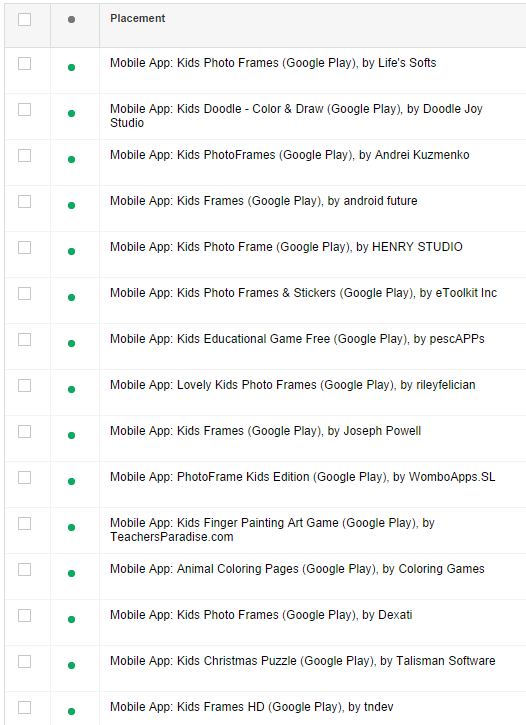
At first glance, the campaign might seem successful, driving relevant clicks and traffic. However, upon closer inspection, it becomes apparent that a toddler with a smartphone is likely the source of these clicks, depleting your budget in the process.
Identifying Irrelevant Display Network Placements in Your Account
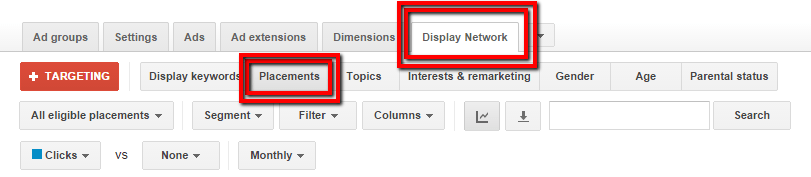
To determine if irrelevant mobile app placements are affecting your campaigns, start by selecting the specific campaign. Then, navigate to the Display Network tab and choose the Placement sub-tab. This will reveal all placements where your ads have appeared. To isolate mobile apps, simply enter “mobile” in the search bar.
Excluding Specific Mobile Apps from Google Ads
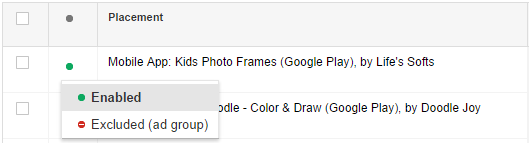
If you come across irrelevant placements, you can easily exclude them. For individual app exclusions at the ad group level, click the green “enabled” icon and select “excluded.” To remove them at the campaign level, select the checkboxes next to each app and use the “Edit” option. Some frequent offenders include flashlight apps, baby flashcards, photo editors, drawing apps, and various games.
Blocking All Mobile Apps in Google Ads
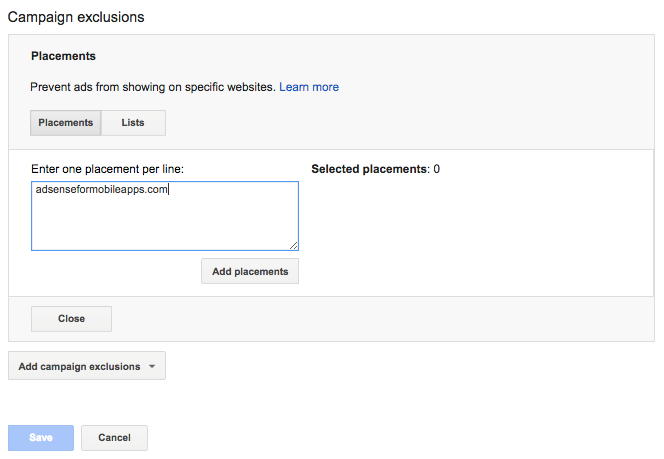
Given the high likelihood of accidental clicks from mobile apps, it’s advisable for most businesses to exclude them entirely. To do this, add a Placement Exclusion for “adsenseformobileapps.com.” Within the desired campaign, go to the Display Network tab and scroll down to “Campaign Exclusions.” Choose “Placements” from the dropdown menu and add “adsenseformobileapps.com.” This effectively prevents your ads from showing on any mobile apps.

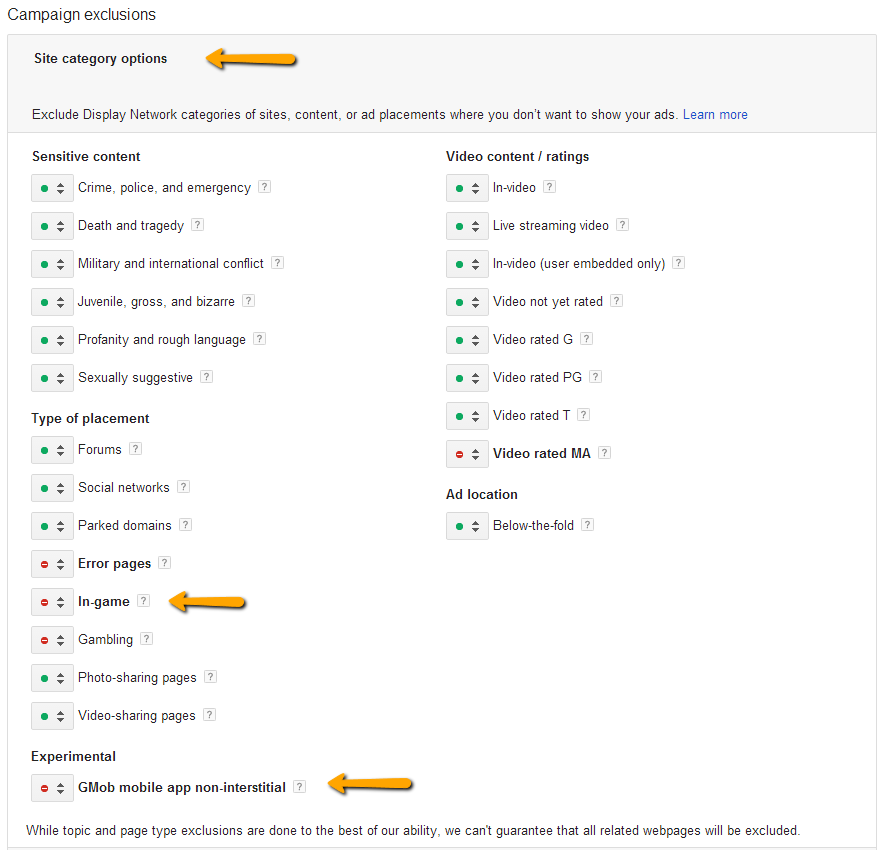
Refining Your Exclusions with Site Category Options
To further enhance your exclusion strategy, explore the Site Category Options. Consider excluding categories like “Death & Tragedy,” “In-Game” placements, and “GMob Mobile Apps” to avoid displaying ads alongside sensitive content or within games where accidental clicks are prevalent. By implementing these exclusions, your Display campaigns will be shielded from irrelevant traffic and unnecessary expenses.
Have you encountered any peculiar apps as placements in your own account? We’d love to hear about the most bizarre ones in the comments below!